
Introduction: AI Bot Traffic Is Changing the Rules of the Internet
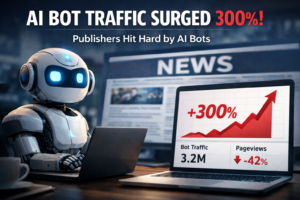
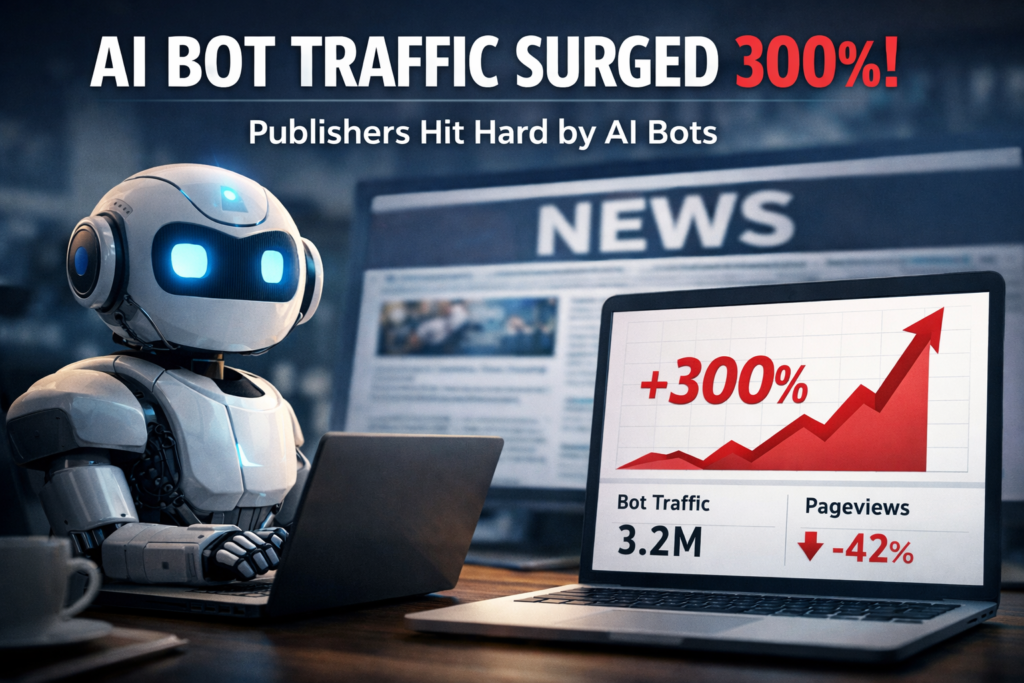
AI Bot Traffic is rapidly becoming one of the most disruptive forces in the digital ecosystem. Over the past year, AI Bot Traffic surged by 300%, creating serious challenges for publishers, bloggers, and website owners.
This surge is not just about increased crawling activity. AI Bot Traffic is fundamentally changing how users consume content, shifting behavior away from traditional search clicks toward instant AI-generated answers.
As a result, publishers are experiencing:
- Declining organic traffic
- Reduced attribution
- Rising infrastructure costs
In this article, we’ll break down what AI Bot Traffic really means, why it matters for SEO, and how you can adapt to stay competitive in 2026 and beyond.
What Is AI Bot Traffic and Why Is It Increasing So Fast?
AI Bot Traffic refers to automated requests generated by artificial intelligence systems that crawl, extract, and process website content.
Unlike traditional search engine bots, AI Bot Traffic serves a different purpose. These bots are designed to:
- Collect data for training AI models
- Fetch real-time content for instant answers
- Power AI-driven platforms and chat interfaces
The rapid growth of AI Bot Traffic is directly linked to the rise of AI tools that deliver answers without requiring users to visit websites.
Types of AI Bot Traffic Affecting Publishers
Not all AI Bot Traffic behaves the same way. There are two major categories that publishers need to understand.
1. Training Bots
Training bots are responsible for gathering large datasets used to train AI models. This type of AI Bot Traffic operates at scale and focuses on long-term data collection.
While impactful, training-related AI Bot Traffic is not the biggest immediate threat.
2. Fetcher Bots (The Biggest Threat)
Fetcher bots represent the most dangerous form of AI Bot Traffic.
This type of AI Bot Traffic:
- Extracts real-time content
- Generates instant answers
- Reduces the need for users to click on websites
Fetcher-based AI Bot Traffic captures value at the moment content is published, making it extremely difficult for publishers to monetize their work.
Why AI Bot Traffic Matters for SEO and Publishers
The rise of AI Bot Traffic is directly impacting how SEO works and how websites generate revenue.
1. Decline in Organic Traffic
One of the biggest effects of AI Bot Traffic is the decline in organic visits. As AI platforms provide direct answers, fewer users click through to websites.
2. Loss of Attribution
Even when AI Bot Traffic uses your content, proper credit is often missing or ineffective. Users rarely click cited links, reducing the value of being referenced.
3. Increased Costs from AI Bot Traffic
Ironically, while traffic drops, AI Bot Traffic increases server load.
This leads to:
- Higher bandwidth consumption
- Increased CDN usage
- Greater hosting expenses
All without generating revenue.
4. Weakening of Business Models
For many publishers, AI Bot Traffic is disrupting core monetization strategies:
- Advertising revenue declines
- Subscription growth slows
- Affiliate conversions decrease
This makes AI Bot Traffic a serious business challenge, not just a technical one.
AI Bot Traffic vs Traditional Search Traffic
To understand the impact of AI Bot Traffic, it’s important to compare it with traditional search behavior.
Traditional Search Model
- User searches a query
- Clicks on a website
- Publisher earns traffic and revenue
AI-Driven Model with AI Bot Traffic
- User asks a question
- AI generates a full answer
- No click is required
This shift shows how AI Bot Traffic is turning the web into a zero-click environment.
How AI Bot Traffic Is Reducing Clicks
Recent insights highlight the severity of AI Bot Traffic:
- AI-driven referrals generate ~96% less traffic than traditional search
- Only ~1% of users click on cited sources
These numbers clearly show how AI Bot Traffic is limiting website visibility and engagement.
How Publishers Are Responding to AI Bot Traffic
Publishers are taking strategic steps to manage AI Bot Traffic rather than blocking it entirely.
1. Monitoring AI Bot Traffic
Advanced tools are being used to:
- Track bot behavior
- Classify types of AI Bot Traffic
- Identify harmful patterns
2. Selective Blocking
Instead of banning all bots, publishers are controlling AI Bot Traffic by:
- Blocking malicious scrapers
- Slowing aggressive bots
- Allowing trusted crawlers
3. Controlled Access Models
Some publishers are leveraging AI Bot Traffic by allowing access only through partnerships or licensing agreements.
The Rise of Pay-Per-Crawl Models for AI Bot Traffic
A major shift in handling AI Bot Traffic is the introduction of monetization systems.
What Is Pay-Per-Crawl?
Pay-per-crawl allows publishers to charge for AI Bot Traffic accessing their content.
Instead of free scraping, AI Bot Traffic becomes:
- Trackable
- Measurable
- Monetizable
Why This Matters
This model transforms AI Bot Traffic from a threat into a potential revenue stream.
AI Bot Traffic and the Future of SEO (GEO)
The rise of AI Bot Traffic is redefining SEO.
From SEO to GEO
Traditional SEO focused on rankings and clicks.
Now, AI Bot Traffic is pushing the industry toward:
- Generative Engine Optimization (GEO)
- AI citation visibility
- Content structuring for AI extraction
Why AI Bot Traffic Changes Everything
With increasing AI Bot Traffic, success is no longer about ranking #1.
It’s about being:
- Referenced by AI
- Trusted by algorithms
- Recognized as an authority
How to Adapt to AI Bot Traffic in 2026
To succeed in the age of AI Bot Traffic, publishers must evolve.
1. Build Strong Brand Authority
A strong brand ensures that even if AI Bot Traffic reduces clicks, users still recognize and trust your content.
2. Optimize Content for AI Extraction
Make your content easier for AI Bot Traffic to process:
- Use clear headings
- Provide concise answers
- Structure information logically
3. Diversify Traffic Sources
Relying only on search is risky in the era of AI Bot Traffic.
Focus on:
- Email marketing
- Social media
- Direct audience building
4. Implement Technical Controls
Manage AI Bot Traffic using:
- Bot detection tools
- Rate limiting
- Access control systems
5. Explore New Revenue Models
Turn AI Bot Traffic into an opportunity:
- Licensing content
- Paid API access
- Subscription-based models
The Bigger Picture: AI Bot Traffic and the Future of Publishing
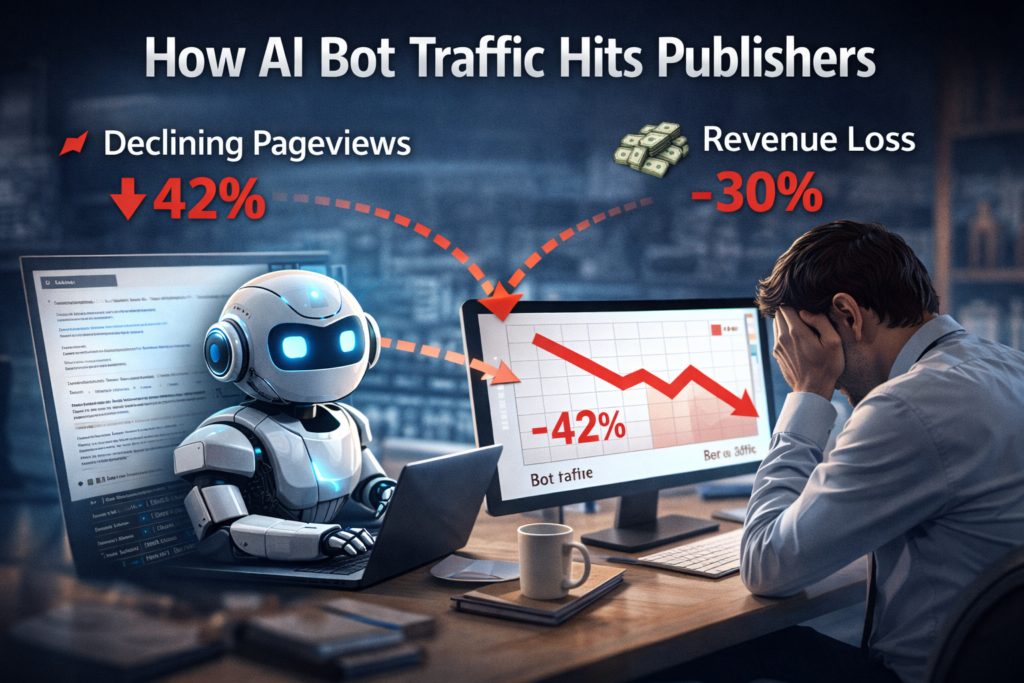
The rise of AI Bot Traffic represents a major shift in the digital economy.
On one side:
- Users benefit from instant answers
On the other:
- Publishers lose traffic and revenue
This tension will define the next phase of the internet.
Conclusion: AI Bot Traffic Is a Challenge and an Opportunity
AI Bot Traffic is no longer a minor trend it is a defining force shaping the future of SEO and digital publishing.
While AI Bot Traffic is reducing clicks and increasing costs, it also presents new opportunities for innovation and monetization.
The key is adaptation.
Publishers who understand and strategically manage AI Bot Traffic will be able to:
- Maintain visibility
- Protect their content
- Build sustainable revenue models
Those who ignore it risk falling behind in an AI-driven world.