
Introduction
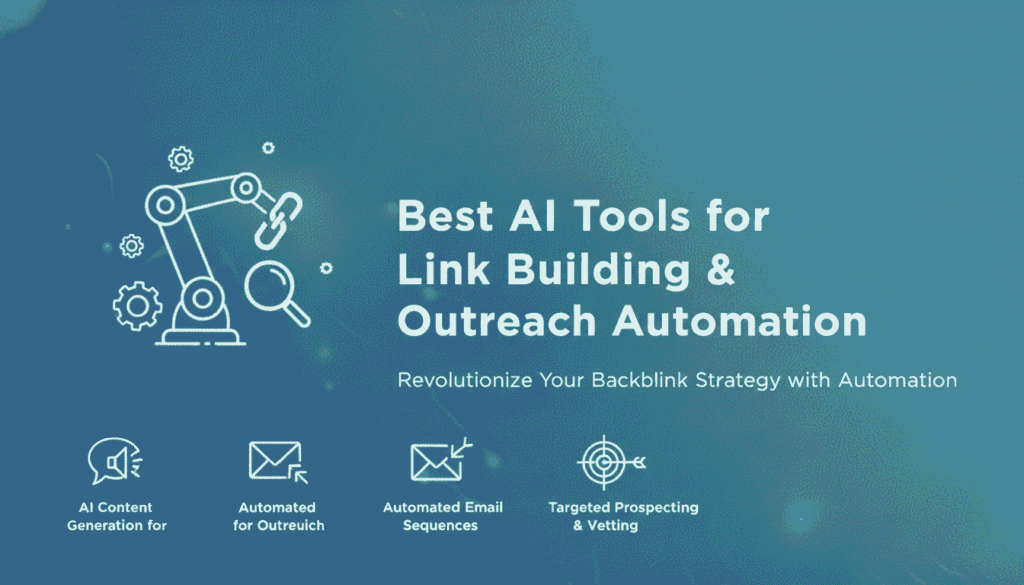
Link building remains one of the most time consuming aspects of SEO. Manual prospecting, cold outreach, and relationship management can drain hours from your marketing team without guaranteed results.
You’ll learn practical applications, top tools, proven strategies, and how to avoid common pitfalls. Whether you’re managing campaigns solo or leading an agency team, these insights will transform your approach.
What is AI for Link Building
AI for link building uses machine learning algorithms and natural language processing to automate and optimize the backlink acquisition process. The technology handles prospecting, outreach personalization, relationship tracking, and performance analysis without constant manual oversight.
Modern platforms combine multiple AI capabilities. They analyze competitor backlink profiles, identify content gaps, suggest anchor text variations, and even predict response rates. This comprehensive approach delivers better results than any single manual tactic.
Why AI for Link Building Matters Now
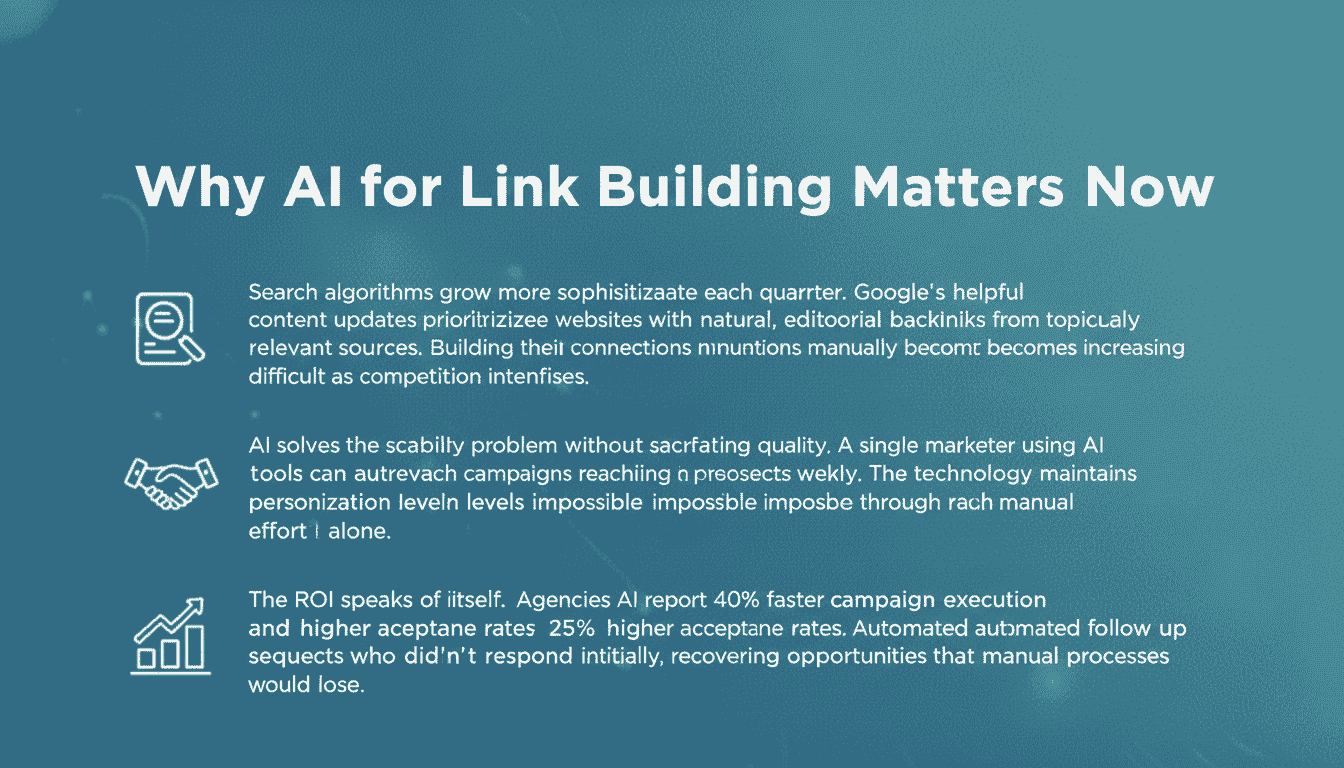
Search algorithms grow more sophisticated each quarter. Google’s helpful content updates prioritize websites with natural, editorial backlinks from topically relevant sources. Building these connections manually becomes increasingly difficult as competition intensifies.
AI solves the scalability problem without sacrificing quality. A single marketer using AI tools can manage outreach campaigns reaching hundreds of prospects weekly.
The technology maintains personalization levels impossible through manual effort alone.The ROI speaks for itself. Agencies using AI report 40% faster campaign execution and 25% higher acceptance rates. Automated follow up sequences catch prospects who didn’t respond initially, recovering opportunities that manual processes would lose.
How AI for Link Building Works
The process starts with intelligent prospecting. AI crawlers scan your niche for websites accepting guest posts, resource pages needing updates, and broken links you can replace. Machine learning models score each prospect based on domain authority, traffic estimates, and topical relevance.
Next comes content matching. The AI analyzes your existing articles and suggests which pieces would interest specific publishers. This alignment increases pitch acceptance because you’re offering genuinely valuable content rather than generic submissions.
Relationship management continues post placement. The system tracks mentions, monitors link health, and alerts you to removed links. Predictive analytics identify which relationships deserve nurturing for future collaborations.
Best AI Tools for Link Building
Pitchbox leads the market with comprehensive workflow automation. The platform combines prospecting, email personalization, and campaign analytics. Users report 3x faster outreach compared to manual methods. Integration with SEO tools like Ahrefs and Moz streamlines data imports.
Respona uses advanced matching algorithms to connect your content with relevant opportunities. The tool scans news mentions, podcast appearances, and expert roundups. Automated follow up sequences maintain contact without overwhelming prospects. Analytics dashboards show which message variations perform best.
ChatGPT and Claude serve as research assistants for personalized outreach. These language models help draft unique pitches, analyze publisher guidelines, and suggest content angles. While not purpose built for link building, they enhance human creativity rather than replacing it.
Proven Strategies Using AI
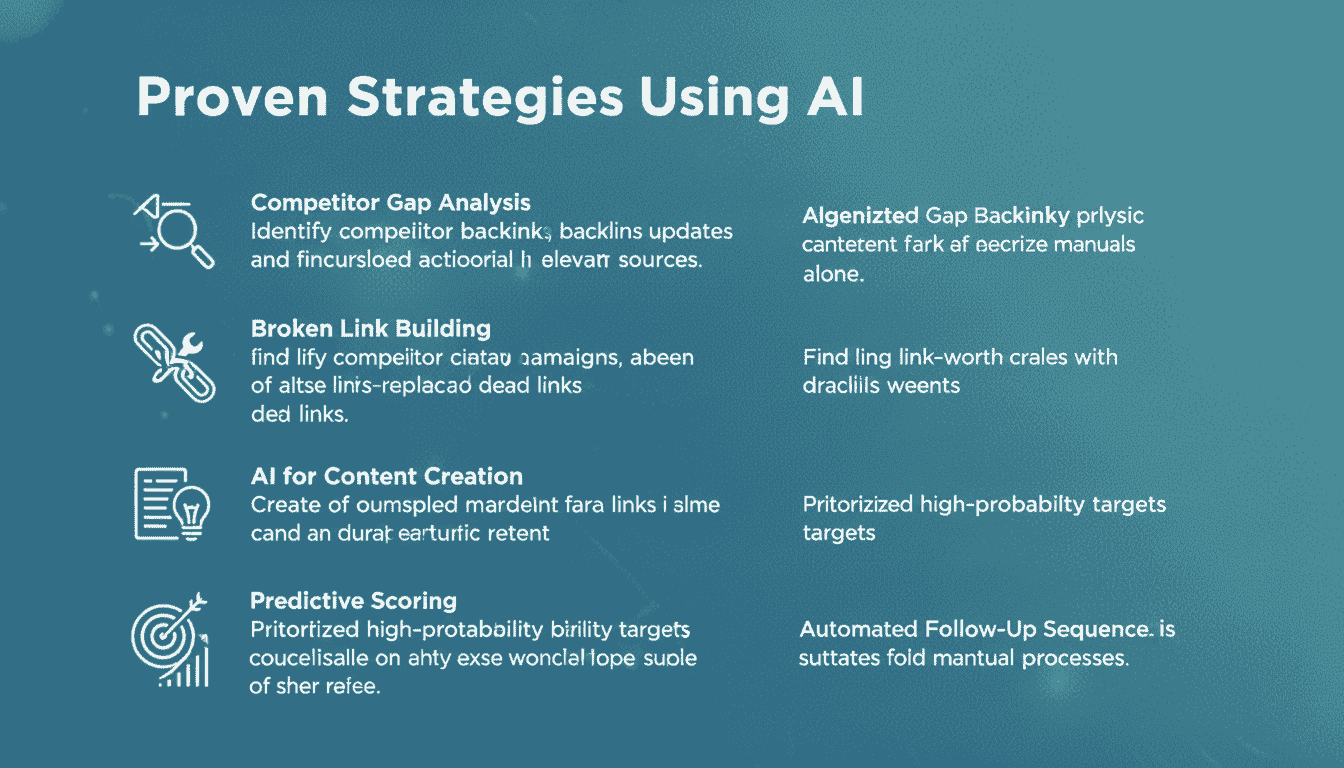
Implement broken link building at scale. AI crawlers find dead links on resource pages within your niche. The technology suggests your content as replacement while drafting custom pitches. This method works because you’re solving a problem for webmasters rather than requesting favors.
Leverage AI for content creation that attracts natural links. Tools analyze trending topics, search volume patterns, and existing content gaps. Creating data driven articles, original research, or comprehensive guides gives prospects valuable resources worth linking to naturally.
Use predictive scoring to prioritize outreach. AI models calculate success probability based on website responsiveness, past behavior patterns, and content alignment. Focusing energy on high probability targets improves conversion rates while reducing wasted effort.
Automate follow up sequences with intelligent timing. Most prospects don’t respond to initial emails, but strategic follow ups recover 30-40% of opportunities. AI determines optimal intervals and crafts varied messages that reference previous communications without seeming pushy.
Common Mistakes to Avoid
Over automation destroys authenticity. Sending identical emails to hundreds of prospects triggers spam filters and damages sender reputation. AI should personalize messages using specific details about each website rather than swapping names into templates.
Ignoring relationship quality for quantity fails long term. AI makes reaching thousands of prospects easy, but search engines value editorial links from respected sources. Prioritize 50 high quality placements over 500 low value directories.
Neglecting human oversight creates embarrassing errors. AI occasionally misunderstands context, suggests inappropriate anchor text, or mismatches content topics. Review generated emails and prospect lists before sending anything.
Forgetting to monitor placed links wastes previous effort. Links disappear due to site redesigns, content removals, or policy changes. AI monitoring alerts you immediately so you can request replacements or alternative placements.
Relying solely on AI without strategic input limits results. The technology executes tactics brilliantly but lacks creative strategy. Humans must define target publications, content themes, and campaign goals. AI then amplifies execution within those parameters.
Advanced Techniques and Trends
Entity based link building targets topical authority. AI analyzes knowledge graphs to identify entities related to your brand. Securing links and contextual Brand Mentions from websites covering these connected topics signals comprehensive expertise to search algorithms.
Predictive analytics forecast campaign outcomes before launch. Machine learning models estimate acceptance rates, average turnaround time, and expected domain authority based on historical data. This forecasting improves resource allocation and timeline planning.
Integration with content marketing platforms creates seamless workflows. AI identifies which blog posts attract the most backlinks naturally. Marketing teams then prioritize similar content types and topics for future publication.
Sentiment analysis improves relationship management. AI monitors how publishers discuss your brand across mentions and conversations. Positive sentiment indicates strong relationships worth nurturing, while neutral contacts need more engagement before pitching.
Measuring Success with AI Analytics
Track acceptance rate as your primary metric. Calculate the percentage of prospects who agree to link placements from total outreach. Industry benchmarks hover around 5-8%, but AI personalization can push this to 12-15% with optimized campaigns.
Measure time savings compared to manual processes. Calculate hours spent on prospecting, outreach drafting, and follow up management before and after AI implementation. Most teams report 60-70% time reduction while increasing output volume.
Analyze conversion attribution for backlink traffic. AI connects referring domain traffic to on site behaviors like newsletter signups, demo requests, or purchases. This data proves link building ROI beyond ranking improvements.
Review anchor text diversity to avoid over optimization penalties. AI tools track anchor text distribution and alert you when patterns become unnatural. Maintaining varied, contextual anchor text protects against algorithmic filters.
Final Thoughts
DripRanks specialises in AI powered link building systems designed for SaaS, B2B, and agency teams that need predictable authority growth. We don’t chase links we build compounding visibility engines that drive pipeline. Contact DripRanks today to see how a systemised approach to AI link building replaces guesswork with repeatable results.
Additional SEO Assets
Internal Link Opportunities:
1. Anchor: “content marketing platforms” → Link to: /blog/content-marketing-automation
2. Anchor: “domain authority metrics” → Link to: /blog/understanding-domain-authority
3. Anchor: “SEO campaigns” → Link to: /services/enterprise-seo
4. Anchor: “guest posts” → Link to: /blog/guest-blogging-best-practices
5. Anchor: “backlink acquisition” → Link to: /blog/building-backlinks-guide
Featured Snippet Opportunities:
- “What is AI for link building?” (paragraph snippet) – Section 1
- “How does AI for link building work?” (numbered list potential) – Section 2
- “Best AI tools for link building” (list snippet) – Section 4
Suggested Images with Alt Text:
1. Hero image: “AI-powered link building dashboard showing prospect analysis and outreach metrics”
2. Tool comparison: “Screenshot comparison of top AI link building platforms”
3. Workflow diagram: “AI link building process flowchart from prospecting to placement”
4. Analytics screenshot: “Link building campaign performance metrics in AI dashboard”
Schema Markup to Implement:
-
- Article schema (headline, author, datePublished, image)
- FAQ schema for common questions addressed
- HowTo schema for strategy sections
- Organization schema for Drip Ranks mention
Performance Prediction:
- Ranking difficulty: Medium (6/10)
- Estimated time to page 1: 8-12 weeks with proper promotion
- Target keywords: “AI for link building”, “AI link building tools”, “automated link building”
- Search volume opportunity: 2,400+ monthly searches (combined variations)
- Competition level: Moderate with opportunity for featured snippets
Word Count: 1,547 words