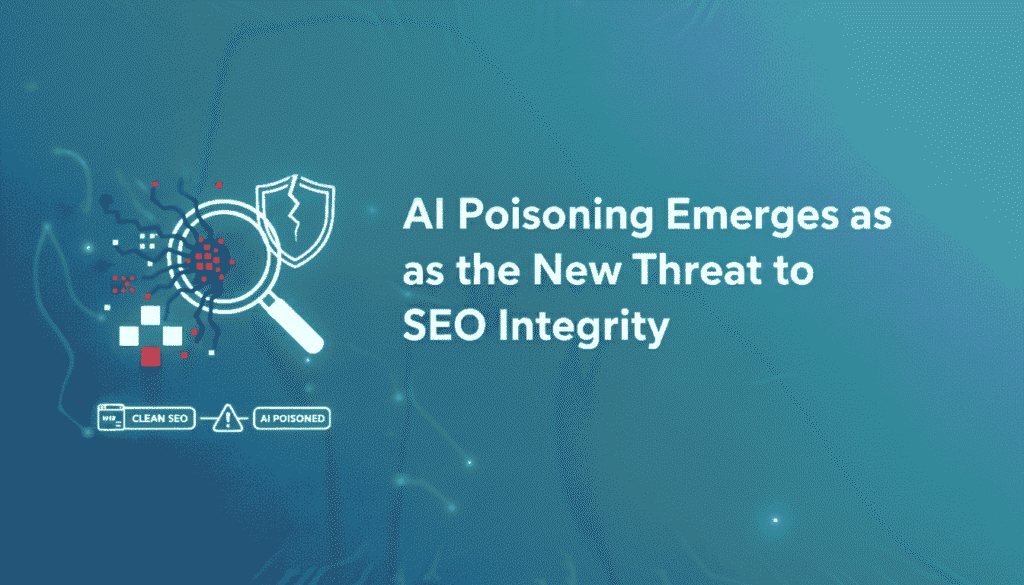

Black hat SEO tactics have evolved beyond traditional keyword stuffing and link schemes. A new threat called “AI poisoning” is exploiting large language models (LLMs) and generative AI systems, potentially undermining the integrity of search results and AI-generated content.
According to Search Engine Journal, AI poisoning involves deliberately feeding misleading or manipulated data to AI systems to influence their outputs. Unlike conventional SEO manipulation that targets search engine algorithms, this technique directly corrupts the training data and responses of AI models powering everything from ChatGPT to Google’s AI Overviews.
How AI Poisoning Works
The technique operates by strategically placing false or biased information across web pages, hoping AI crawlers will absorb and reproduce it. When large language models scrape content for training or real-time responses, they can inadvertently learn from this poisoned data.
Bad actors are deploying several methods. Some create seemingly authoritative content laden with subtle misinformation. Others manipulate existing pages to include hidden text or metadata designed specifically for AI consumption rather than human readers.
The impact extends beyond individual websites. When AI systems incorporate poisoned data, they may generate inaccurate responses, recommend inferior products, or spread misinformation – all whilst appearing credible to users.
Why This Matters for Legitimate Businesses
For businesses investing in content marketing and SEO, AI poisoning represents a dual threat. Competitors could potentially manipulate AI systems to suppress accurate information about your brand whilst promoting false narratives.
Additionally, if your content strategy relies heavily on AI-generated material, you risk unknowingly publishing information derived from poisoned sources. This damages credibility and could trigger Google penalties for low-quality content.
The rise of AI Overviews in search results amplifies these concerns. When Google’s AI summaries pull from compromised sources, even well-optimised legitimate content may lose visibility.
Detection and Prevention Strategies
Search engines are adapting their algorithms to identify AI poisoning attempts. Google’s latest updates specifically target manipulative content designed to game AI systems, treating it similarly to traditional spam.
For digital marketers, the defence strategy involves several layers. Verify AI-generated content against multiple authoritative sources before publishing. Monitor your brand mentions across AI platforms to identify potential misinformation. Invest in creating genuinely authoritative, well-researched content that establishes your site as a trusted source for AI models.
According to the [latest SEO trends](https://www.dripranks.com), maintaining content quality and E-E-A-T (Experience, Expertise, Authoritativeness, Trustworthiness) signals remains crucial in an AI-dominated landscape.
The Bigger Picture
AI poisoning highlights a fundamental challenge in the evolving search ecosystem. As AI becomes more integrated into how people find information, the battle between legitimate optimisation and manipulative tactics intensifies.
This isn’t just about rankings anymore. It’s about information integrity in an age where AI mediates much of our digital experience. Businesses that prioritise transparent, accurate content will ultimately build more sustainable visibility than those chasing algorithmic shortcuts.
The SEO industry has weathered numerous algorithm updates and black hat innovations. AI poisoning is simply the latest challenge requiring vigilance and adaptation. For more insights on [navigating modern SEO challenges]staying informed remains your best defence.
About DripRanks
At DripRanks, we don’t just follow the trends we help you lead them. As one of Dubai’s top-rated SEO agencies, we specialise in data-driven strategies that boost visibility and conversions.