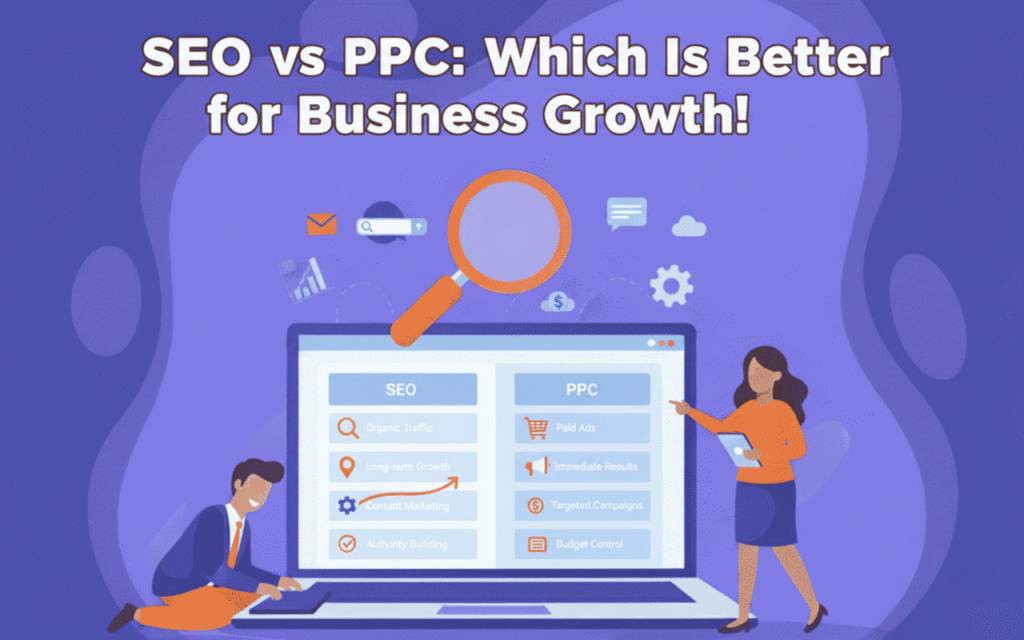

Search engine visibility can make or break your business online. But when it comes to getting found on Google, most companies face a critical question: should you invest in SEO or PPC? Both strategies promise to bring traffic to your site, but they work very differently. SEO builds long-term organic rankings, while PPC delivers instant visibility through paid ads. Understanding the strengths and weaknesses of each approach helps you allocate your marketing budget wisely.
Many businesses waste thousands of dollars because they choose the wrong channel. Some pour money into PPC without building organic authority. Others wait months for SEO results while competitors capture customers through ads. The truth is, both strategies have unique benefits depending on your goals, timeline, and industry. Choosing the right one requires a clear understanding of how each works and what outcomes you can expect.
This guide breaks down SEO and PPC side by side. You’ll learn how each strategy functions, what they cost, and which one delivers better results for different business scenarios. By the end, you’ll know exactly which approach fits your needs or whether a blended strategy makes the most sense.
What is SEO?
What is SEO? SEO stands for search engine optimization. It refers to the process of improving your website to rank higher in organic search results without paying for ad placements. When someone searches for a product or service you offer, SEO helps your site appear on the first page of Google naturally. This involves optimizing on-page elements like title tags and content, building backlinks, and ensuring your site loads quickly.
Unlike paid ads, SEO results take time to develop. You don’t pay Google for each click, but you invest in content creation, technical fixes, and ongoing optimization. The goal is to earn trust with both search engines and users so your pages rank for relevant keywords. Once your site ranks well, it can generate consistent traffic without ongoing ad spend.
SEO works best for businesses looking to build long-term authority and reduce acquisition costs over time. It requires patience and expertise, but the payoff can be substantial. A well-optimized site continues delivering traffic months or even years after the initial work is done.
What is PPC?
PPC stands for pay-per-click advertising. This model allows you to bid on keywords and display ads at the top of search results or across other websites. You only pay when someone clicks your ad, making it a performance-based marketing channel. Google Ads is the most popular PPC platform, but Facebook, Bing, and LinkedIn also offer PPC options.
PPC campaigns start delivering traffic almost immediately after launch. You set a budget, choose target keywords, write ad copy, and your ads go live within hours. This speed makes PPC ideal for product launches, promotions, or businesses that need instant visibility. You control exactly how much you spend and can pause campaigns anytime.
The downside is that PPC requires continuous investment. Once you stop paying, your traffic disappears. You also compete in real-time auctions where ad costs fluctuate based on demand and competition. Still, PPC offers unmatched speed and precision when targeting specific audiences or testing new offers.
How Does SEO Work?
SEO improves your site’s visibility by aligning it with Google’s ranking algorithms. Search engines use hundreds of factors to decide which pages deserve top positions. These factors include content quality, keyword relevance, site speed, mobile usability, and backlinks from other trusted sites. SEO professionals optimize each of these elements to boost rankings.
The process starts with keyword research to identify what your audience searches for. Then you create high-quality content that answers those queries better than competing pages. Technical SEO ensures your site is crawlable and fast. Off-page SEO builds authority through backlinks and brand mentions across the web.
Results from SEO compound over time. A page that ranks well today can continue attracting visitors for months without additional work. This creates a snowball effect where older content keeps driving traffic while new content adds more visibility. However, SEO requires ongoing monitoring because algorithm updates and competitor activity can shift rankings.
How Does PPC Work?
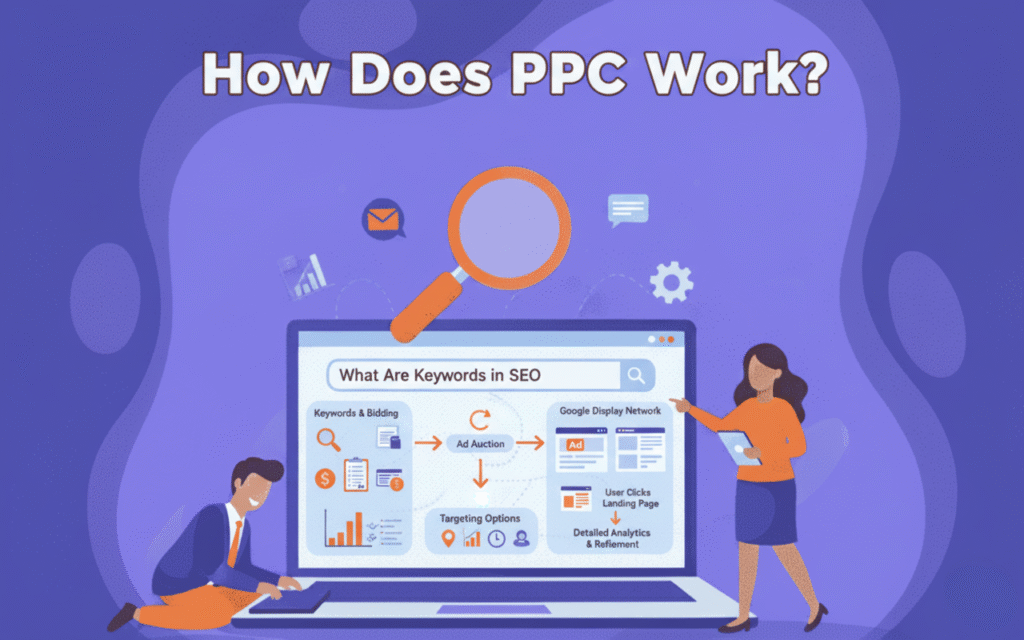
PPC operates through auction-based bidding systems. When someone searches for your target keyword, Google runs an instant auction among all advertisers bidding on that term. Your ad’s position depends on your bid amount and quality score, which measures ad relevance and landing page experience. Higher quality scores let you pay less per click than competitors.
You start by selecting keywords and writing compelling ad copy. Then you set a daily budget and maximum cost-per-click. Google displays your ads when users search those keywords or visit sites within its display network. Each click sends a visitor to your landing page, and you pay the bid amount.
PPC platforms provide detailed analytics showing which keywords, ads, and audiences convert best. This data lets you refine campaigns quickly and shift budgets toward high-performing elements. You can also target users by location, device, time of day, and demographics. This precision makes PPC highly effective for reaching specific customer segments.
Cost Comparison: SEO vs PPC
SEO requires upfront investment but pays dividends over time. Most businesses spend between two thousand and ten thousand dollars monthly on SEO services, depending on competition and goals. This covers content creation, technical optimization, link building, and ongoing adjustments. The cost per click drops significantly once you rank organically because you don’t pay for individual visits.
PPC costs vary widely based on industry and keyword competition. Average cost-per-click ranges from one dollar to fifty dollars or more for competitive terms like insurance or legal services. A modest PPC budget of three thousand dollars monthly might generate a few hundred clicks in expensive industries. However, you can scale spending up or down instantly based on performance.
SEO delivers better long-term ROI if you can wait for results. A well-ranked page continues attracting visitors without ongoing costs. PPC offers predictable, immediate traffic but requires continuous spending. Many businesses find that combining both strategies works best, using PPC for quick wins while building SEO for sustainable growth.
Speed of Results: Which Works Faster?
PPC delivers traffic within hours of launching a campaign. Once your ads are approved, they appear immediately in search results or across display networks. This makes PPC perfect for time-sensitive promotions, new product launches, or businesses that need leads right away. You can test different offers and audiences quickly to find what converts best.
SEO takes significantly longer to show results. Most sites need three to six months before seeing meaningful ranking improvements. Competitive keywords can take a year or more to reach the first page. This timeline frustrates many business owners who need traffic today. However, SEO’s delayed payoff comes with long-term stability that PPC can’t match.
If your business needs immediate visibility, PPC is the clear winner. If you can invest in future growth, SEO builds a foundation that reduces dependency on paid ads. Smart marketers use PPC to generate revenue now while developing SEO assets that will lower acquisition costs later.
Targeting and Control Differences
PPC offers granular targeting options that SEO can’t replicate. You can show ads only to users in specific cities, using certain devices, or searching at particular times. Demographic filters let you target by age, gender, income, and interests. This precision helps reduce wasted spend and improve conversion rates.
SEO targets users based on search intent but lacks the same control. You optimize for keywords and topics, but you can’t exclude certain demographics or locations as easily. Anyone searching relevant terms can find your site. This broader reach can be beneficial, but it also means attracting some unqualified visitors.
PPC also lets you test messaging and offers rapidly. You can run multiple ad variations simultaneously and see which performs best within days. SEO testing takes much longer since content changes need time to impact rankings. However, SEO builds trust more effectively because users often skip paid ads and prefer organic results.
When to Choose SEO Over PPC
SEO makes sense when you have time to invest and want sustainable growth. If your business model depends on low customer acquisition costs, organic traffic delivers the best margins. SEO also works well for content-rich businesses like publishers, education platforms, or service providers with deep expertise to share.
Choose SEO if you operate in industries with extremely high PPC costs. Legal, medical, and financial services often pay twenty to seventy dollars per click. Building organic rankings in these verticals can save enormous amounts over time and deliver long-term SEO benefits. SEO also benefits local businesses that want to dominate map pack results and organic listings for location-based searches.
SEO is ideal for building brand authority and trust. High organic rankings signal credibility to potential customers. People tend to trust organic results more than ads. If your sales cycle is long and requires multiple touchpoints, SEO helps nurture prospects over time through valuable content.
When to Choose PPC Over SEO
PPC is the better choice when you need immediate results. Launching a new product, running a limited-time promotion, or testing a new market all require fast traffic. PPC lets you validate ideas quickly before committing to long-term SEO investments. It’s also perfect for seasonal businesses that need traffic during specific periods.
Choose PPC if your industry has low competition and affordable click costs. Some niche markets offer highly qualified traffic for under two dollars per click. If your profit margins can absorb these costs and convert well, PPC can scale profitably without waiting for SEO results.
PPC works well for businesses with proven offers and landing pages. If you know your funnel converts, paid ads let you simply buy more traffic. You can also use PPC to target bottom-of-funnel keywords where users are ready to buy immediately. SEO tends to attract more top-of-funnel traffic that needs nurturing.
Combining SEO and PPC for Maximum Impact
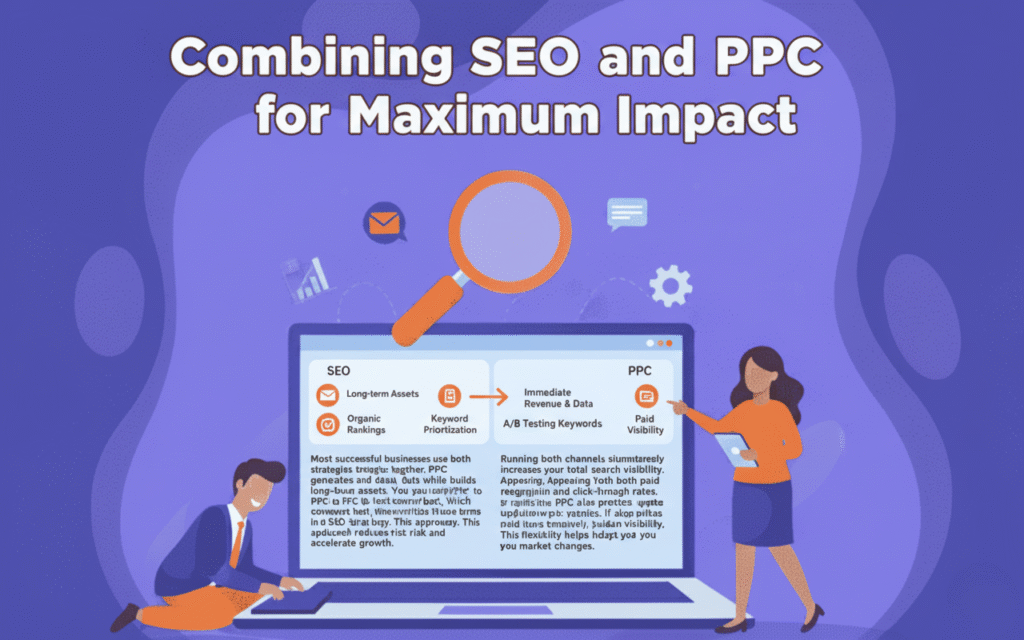
Most successful businesses use both strategies together. PPC generates revenue and data while SEO builds long-term assets. You can use PPC to test which keywords convert best, then prioritize those terms in your SEO strategy. This approach reduces risk and accelerates overall growth.
Running both channels simultaneously increases your total search visibility. Appearing in both paid and organic results boosts brand recognition and click-through rates. Users often click multiple results, and owning more real estate on the page improves your chances of capturing traffic.
PPC also protects your organic rankings. If algorithm updates drop your positions temporarily, paid ads maintain visibility while you recover. You can shift budget between channels based on performance and business needs. This flexibility helps you adapt to market changes and seasonal fluctuations.
Common Mistakes to Avoid
Many businesses choose PPC without optimizing their landing pages first. Sending traffic to poorly designed pages wastes money and lowers quality scores. Always ensure your conversion funnel works before scaling ad spend. Test different offers and page layouts to maximize ROI.
Another mistake is expecting instant results from SEO. Some companies invest in optimization for a few weeks, see no traffic, and give up. SEO requires sustained effort and patience. Stopping too early means you never reach the tipping point where rankings accelerate.
Avoid putting all your budget into one channel. Relying only on PPC makes you vulnerable to rising costs and platform changes. Depending solely on SEO risks traffic loss from algorithm updates. Diversification across both channels creates stability and multiple paths to growth.
Tools and Resources for SEO and PPC
SEO requires tools for keyword research, rank tracking, and technical audits. Google Search Console and Google Analytics are free essentials. Paid platforms like SEMrush, Ahrefs, and Moz offer deeper insights into keywords, backlinks, and competitor strategies. These SEO tools help identify opportunities and track progress over time.
PPC management benefits from Google Ads Editor, which streamlines campaign creation and optimization. Conversion tracking through Google Tag Manager ensures you measure results accurately. Third-party tools like Optmyzr and WordStream automate bid management and identify wasted spend. Landing page builders like Unbounce help you test different designs quickly.
Both strategies require strong analytics. Understanding which channels drive revenue, not just traffic, is critical. Use attribution models to see how SEO and PPC work together across the customer journey. This data helps you allocate budget effectively and maximize overall ROI.
Measuring Success: Key Metrics for Each
SEO success is measured by organic traffic growth, keyword rankings, and conversion rates from organic visitors. Track how many pages rank in top positions and monitor changes over time. Domain authority and backlink quality indicate your site’s overall strength. Revenue attributed to organic search shows the true business impact.
PPC performance is evaluated through cost-per-click, click-through rate, conversion rate, and cost-per-acquisition. Your return on ad spend reveals whether campaigns are profitable. Quality score affects your costs, so improving this metric lowers overall expenses. Impression share shows how often your ads appear compared to total available opportunities.
Both channels should be judged on their contribution to business goals. Traffic alone doesn’t matter if visitors don’t convert. Focus on metrics that connect directly to revenue, lead generation, or other key performance indicators. Regular reporting helps you spot trends and adjust strategies before small issues become big problems.
Final Thoughts
Most SaaS, B2B, and agency teams treat digital marketing the same way: run campaigns, hope they perform, and wonder why results aren’t predictable. At Drip Ranks, we knew there had to be a better way. So we built a system, not a service.
Forensic audits uncover your highest-ROI opportunities across both SEO and PPC. Intent-mapped strategies ensure paid and organic campaigns capture demand at every stage of the buyer journey, while scalable execution multiplies results without increasing headcount. The difference? Your marketing becomes measurable, repeatable, and revenue-focused, not a black box that relies on guesswork.
Drip Ranks develops custom SEO and PPC strategies tailored to your goals and resources. Contact us today for a free audit and discover the right mix of paid and organic tactics to maximize visibility, traffic, and revenue.