
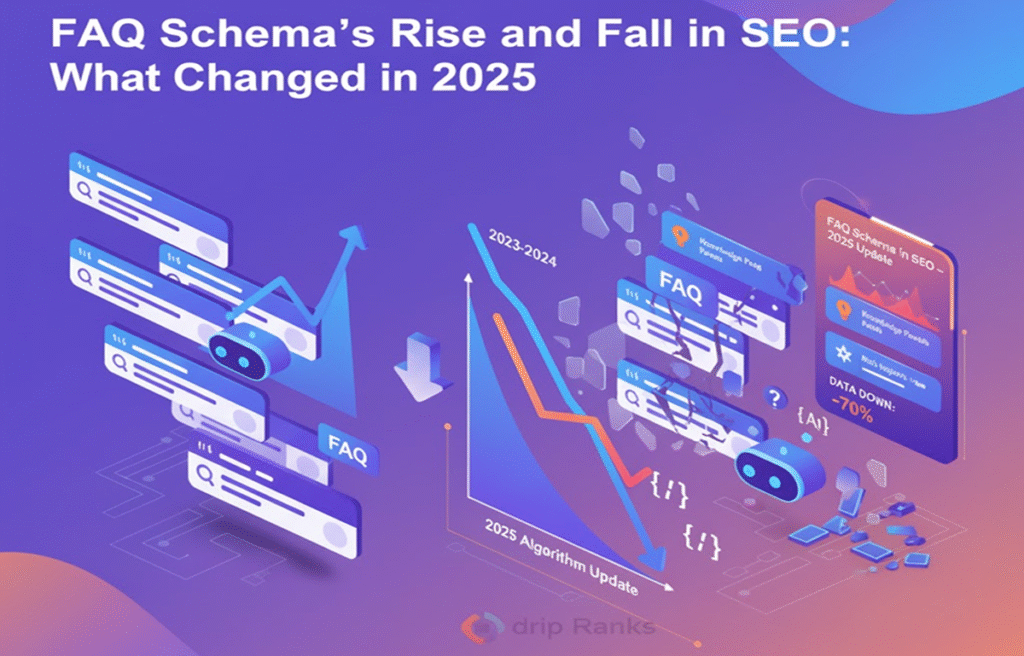

Once a Rich Result Powerhouse, FAQ Schema Has Been Quietly Retired by Google
Remember when FAQ schema markup dominated search results with expandable rich snippets? Those days are over. Google has silently phased out FAQ rich results, leaving many SEO professionals scrambling to understand why and what comes next.
The Golden Era of FAQ Schema
FAQ schema was introduced by Google in 2019, quickly becoming one of the most popular structured data formats among SEO specialists. The markup allowed websites to display frequently asked questions directly in search results, often capturing significant real estate on the SERP.
Websites across industries – from e-commerce to SaaS, healthcare to finance – rushed to implement FAQ schema. The benefits were clear: increased visibility, higher click-through rates, and enhanced credibility. For a time, adding FAQ schema felt like an easy win for digital marketers seeking to outrank competitors.
According to Reports, the markup format gained traction so quickly that by 2021, it appeared across millions of web pages globally. Many SEO strategies were built around this single structured data type.
The Sudden Decline
In August 2023, Google made a pivotal change. The search giant restricted FAQ rich results to “well-known, authoritative government and health websites.” For most businesses, FAQ schema vanished from SERPs overnight.
The move wasn’t entirely unexpected. Google had been tightening controls on rich results for months, concerned about misuse and low-quality implementations. Still, the restriction caught many off guard.
By early 2024, Google effectively discontinued FAQ rich results altogether. Even authoritative sites lost their FAQ snippets. The structured data itself remains valid, but it no longer triggers enhanced SERP displays.
Why Google Pulled the Plug
Google’s decision centres on user experience and content quality. The company found that FAQ schema was frequently misused – stuffed with keyword-heavy questions, irrelevant content, or duplicated information that didn’t genuinely help searchers.
Additionally, the proliferation of FAQ snippets created cluttered search results. Instead of diverse content types, SERPs became dominated by repetitive accordion-style answers. This undermined Google’s goal of delivering varied, high-quality results.
The tech giant has consistently prioritised authenticity and relevance. When structured data doesn’t serve users, Google acts decisively.
What This Means for SEO Today
The disappearance of FAQ schema doesn’t mean structured data is dead. Far from it. Google still supports and rewards other schema types, including Product, Review, HowTo, and Article schema.
SEO professionals should pivot their strategies accordingly. Focus on:
- HowTo schema for step-by-step content
- Product schema for e-commerce sites
- Review schema for building trust and credibility
- Video schema for multimedia content
Quality content remains king. Rather than relying on markup tricks, invest in genuinely useful answers, clear formatting, and user-focused design. Google’s algorithms increasingly reward comprehensive, well-structured content – with or without schema.
Internal linking, mobile optimisation, and page experience signals matter more than ever. These fundamentals drive sustainable SEO success in 2025.
The Takeaway
FAQ schema’s meteoric rise and fall offers a crucial lesson: SEO tactics that game the system rarely last. Google’s mission centres on user satisfaction, not shortcuts. While structured data remains valuable, it must support – not replace – high-quality content.
As search evolves, adaptability becomes essential. The best SEO strategies balance technical optimisation with genuine value creation.
About DripRanks
At DripRanks, we don’t just follow the trends – we help you lead them. As one of Dubai’s top-rated SEO agencies, we specialise in data-driven strategies that boost visibility and conversions.
→ Get a Free SEO Consultation Today