
Introduction
Your competitors are already ranking higher than you. They control page one search results while your website struggles to break into the top ten. The secret advantage they hold isn’t better content or smarter keywords it’s their backlink profile.
Competitor backlinks represent one of the most overlooked goldmines in modern SEO. Every link pointing to a rival website is a relationship you could replicate or improve. These connections signal trust to Google and directly influence domain authority scores.
Drip Ranks helps ambitious brands identify, analyse, and acquire the exact backlinks powering competitor success. Our data driven approach turns rival link profiles into your strategic roadmap for faster rankings and sustainable organic growth.
This guide reveals how to extract competitor backlink data, evaluate link quality, and execute outreach campaigns that convert. You’ll discover advanced tools, proven frameworks, and actionable tactics that transform competitor intelligence into your ranking advantage.
What Are Competitor Backlinks?
Competitor SEO backlinks are inbound links pointing to websites within your industry niche. These links come from blogs, news sites, directories, forums, and resource pages that already cover topics related to your business.
Example: If a fitness blog links to three competing supplement brands, that blog represents a qualified linking opportunity. The site already covers your niche and has demonstrated willingness to link out to commercial pages.
Why Competitor Backlinks Matter for SEO Growth
Backlinks remain a top three ranking factor according to multiple Google algorithm studies. Pages with strong backlink profiles consistently outrank content with superior on-page optimisation but weaker link authority.
Competitor backlinks analysis accelerates your link building timeline. Instead of cold prospecting random websites, you target domains with proven relevance and existing editorial relationships within your space.
Strategic benefit: Stealing competitor backlinks simultaneously strengthens your authority while diluting theirs. Every shared link you acquire reduces their relative advantage in SERPs.
How to Find Competitor Backlinks Effectively
Start by identifying your true SEO competitors. These aren’t always your direct business rivals. Look for websites ranking in positions one through ten for your primary target keywords.
Use tools like Ahrefs Site Explorer, SEMrush Backlink Analytics, or Moz Link Explorer to extract complete backlink profiles. Enter competitor URLs and export their referring domain lists with metrics like Domain Rating and link context.
Filter results by link quality indicators:
-
- Domain Authority above 30 (preferably 40+)
- Organic traffic to linking page (minimum 100 visits monthly)
- Dofollow status (passes link equity)
- Contextual placement (within article body, not sidebar)
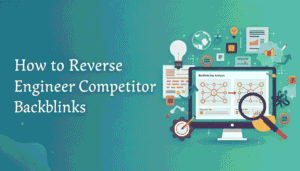
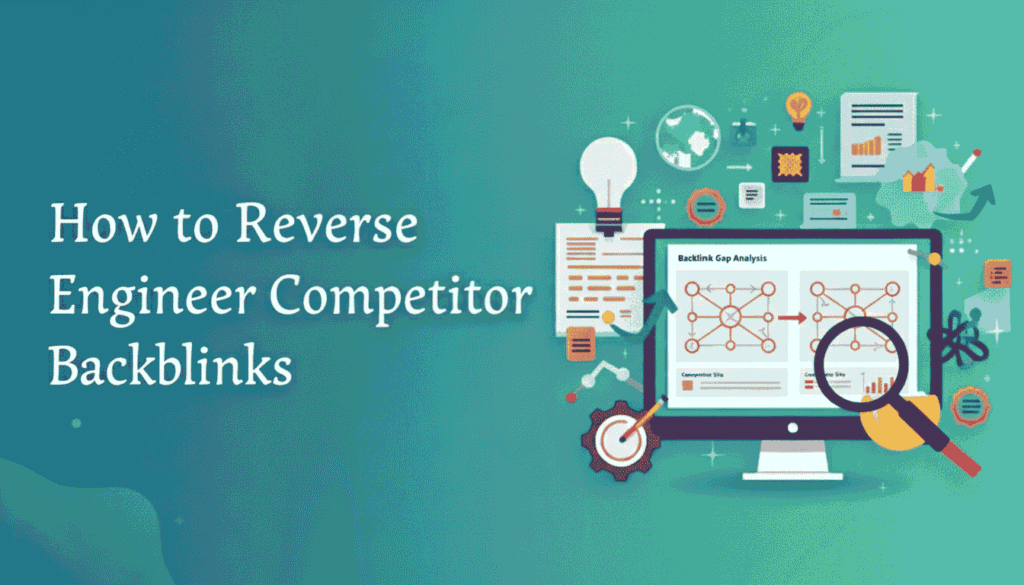
Cross-reference multiple competitors. Create a spreadsheet comparing backlink sources across three to five rival sites. Domains linking to multiple competitors represent high value targets with established niche relevance.
Look for gap opportunities. Sites linking to competitors but not to you represent immediate acquisition targets. These publishers have demonstrated topic interest and editorial openness.
Evaluating Competitor Backlinks Quality
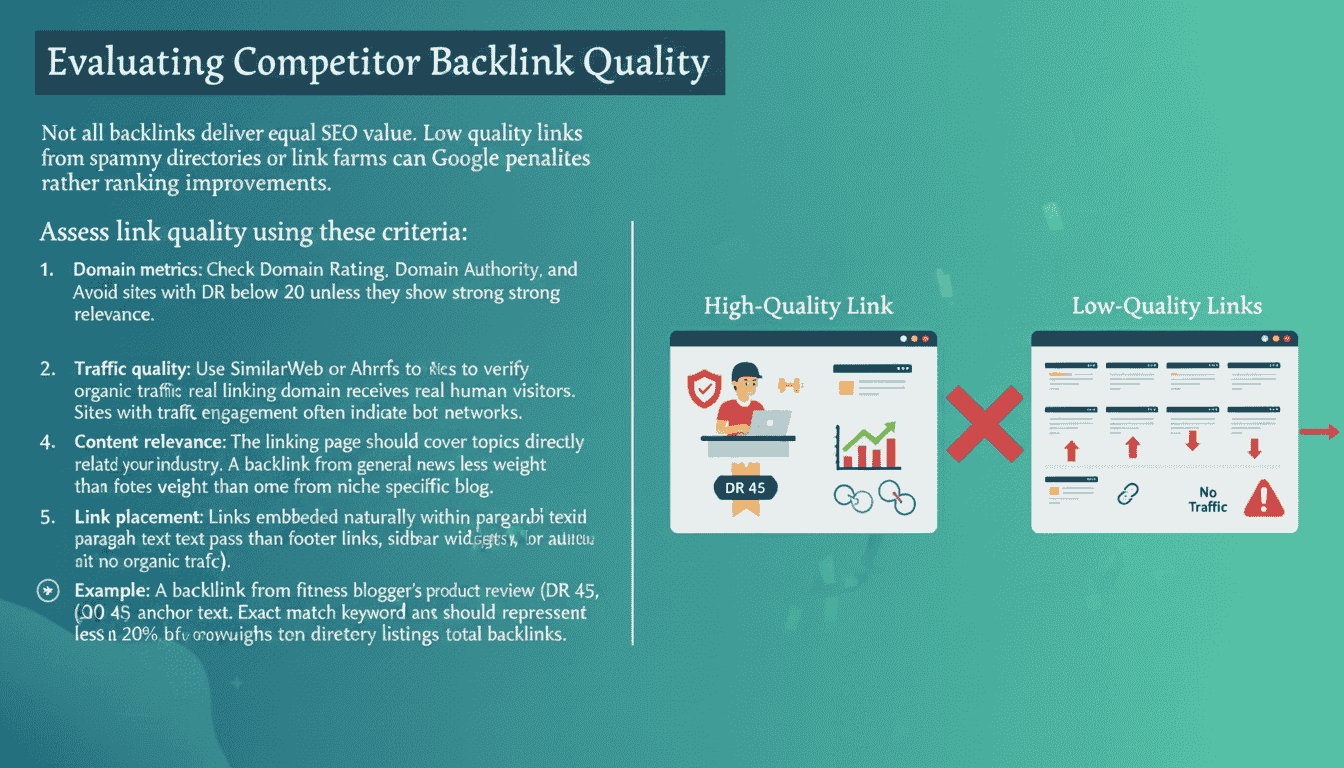
Not all backlinks deliver equal SEO value. Low quality links from spammy directories or link farms can trigger Google penalties rather than ranking improvements.
Assess link quality using these criteria:
Domain metrics: Check Domain Rating, Domain Authority, and organic traffic. Avoid sites with DR below 20 unless they show strong topical relevance.
Traffic quality: Use SimilarWeb or Ahrefs to verify the linking domain receives real human visitors. Sites with traffic but no engagement often indicate bot networks.
Content relevance: The linking page should cover topics directly related to your industry. A backlink from a general news site carries less weight than one from a niche specific blog.
Link placement: Links embedded naturally within paragraph text pass more authority than footer links, sidebar widgets, or author bios.
Anchor text diversity: Healthy backlink profiles include varied anchor text. Exact match keyword anchors should represent less than 20% of total backlinks.
Example: A backlink from a fitness blogger’s product review (DR 45, 5,000 monthly visitors, dofollow, body placement) outweighs ten directory listings with no organic traffic.
Best Strategies to Steal Competitor Backlinks
Replicate Resource Page Inclusions
Identify resource pages linking to competitors. These curated lists (like “Top 50 Marketing Tools” or “Best SaaS Solutions”) actively seek quality recommendations.
Email the page curator with a personalised pitch explaining why your tool, guide, or service deserves inclusion alongside existing entries. Reference specific page sections to demonstrate you’ve read their content.
Improve Outdated Linked Content
Use the Wayback Machine to find dead or outdated content receiving backlinks. Create superior updated versions, then contact sites linking to obsolete pages.
Pitch template: “Your article on [topic] links to [outdated resource]. We’ve created a comprehensive 2025 update covering [new data]. Would you consider updating your reference?”
Claim Unlinked Brand Mentions
Monitor the web for text mentions of your brand without hyperlinks. Tools like Ahrefs Content Explorer or Google Alerts track these references automatically.
Contact authors politely requesting they convert mentions into clickable links. This tactic requires minimal effort since content already references your brand.
Guest Post on Linking Domains
Publishers linking to competitors often accept guest contributions. Pitch original article ideas aligned with their content calendar and audience interests.
Include one contextual backlink to your site within the contributed content. Focus on providing genuine value rather than promotional messaging.
Broken Link Building
Scan competitor backlinks profiles for broken outbound links (404 errors). These represent immediate replacement opportunities with minimal friction.
Create content matching the broken resource’s original topic, then notify webmasters their link no longer works. Offer your fresh content as an alternative.
Top Tools for Competitor Backlinks Analysis
Ahrefs provides the largest backlink index with over 14 trillion known links. The Site Explorer tool reveals referring domains, anchor text distribution, and link acquisition timelines.
SEMrush Backlink Analytics excels at competitive gap analysis. The tool automatically identifies domains linking to competitors but missing from your profile.
Moz Link Explorer offers beginner friendly interface with proprietary Domain Authority scores. Spam Score metrics help filter low quality link sources quickly.
Majestic SEO specialises in historical backlink data and Trust Flow measurements. Use Citation Flow and Trust Flow together to evaluate link profile health.
Ubersuggest delivers basic competitor backlink data at lower price points. Ideal for small businesses starting backlink analysis without enterprise budgets.
Google Search Console shows your existing backlink profile directly from Google’s index. Compare this data against competitor profiles to identify gaps.
Common Mistakes When Analysing Competitor Backlinks
Chasing quantity over quality represents the most frequent error. A single backlink from an authoritative industry publication outweighs hundreds of directory submissions.
Ignoring link velocity patterns can trigger spam filters. Sudden backlink spikes appear unnatural to Google’s algorithms. Aim for steady, consistent link acquisition matching organic growth patterns.
Copying toxic backlinks harms your rankings. Just because a competitor has a backlink doesn’t guarantee it provides value. Always verify link quality before replication efforts.
Overlooking nofollow links misses relationship building opportunities. While nofollow links don’t pass direct authority, they drive referral traffic and establish publisher relationships for future dofollow opportunities.
Neglecting internal link structure while focusing externally creates imbalanced optimisation. Strong internal linking maximises the SEO value extracted from each earned backlink.
Failing to track results prevents strategy optimisation. Monitor ranking changes, organic traffic growth, and domain authority improvements monthly to measure backlink campaign effectiveness.
Advanced Competitor Backlinks Tactics
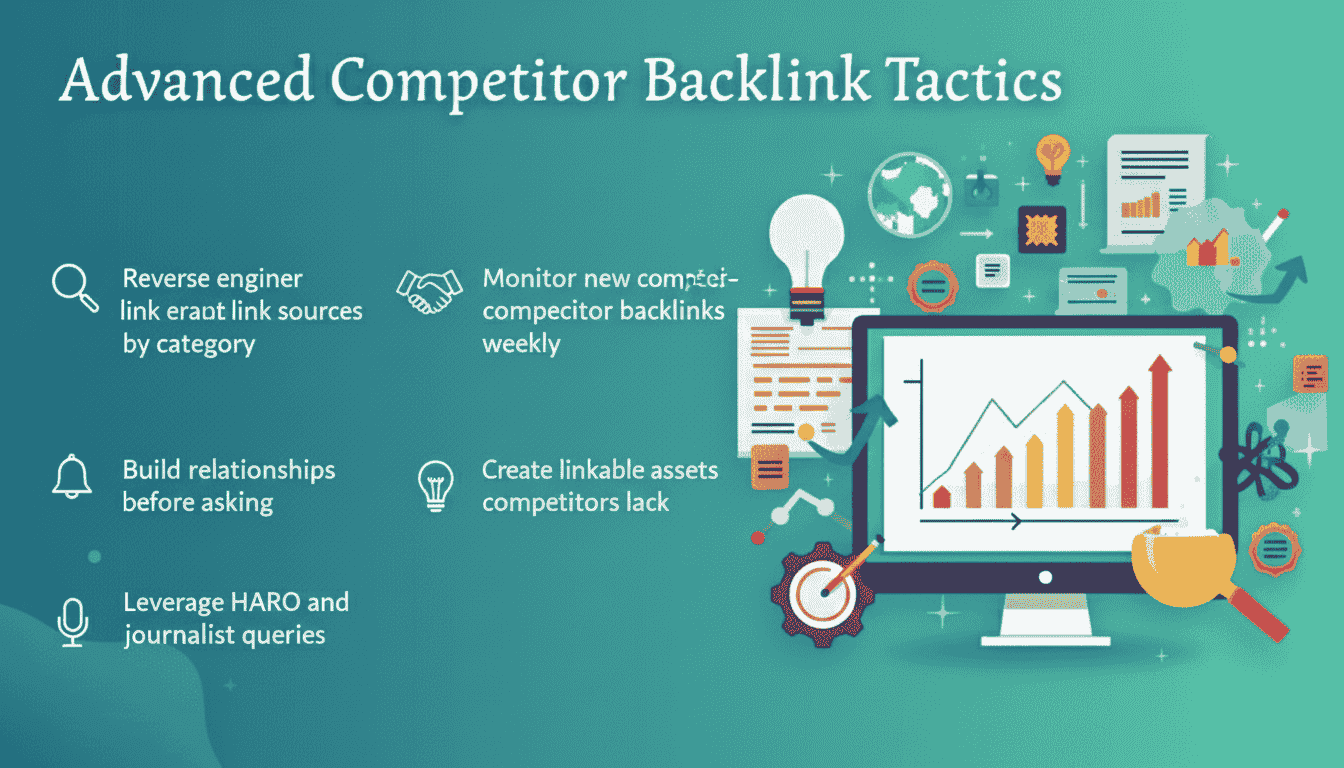
Reverse engineer link earning content. Identify which specific pages on competitor sites attract the most backlinks. Analyse content format, depth, and unique data to understand what triggers natural links.
Target competitor link sources by category. Segment referring domains into groups like industry blogs, news sites, directories, and forums. Develop specialised outreach strategies for each category.
Monitor new competitor backlinks weekly. Set up automated alerts for fresh links pointing to rival sites. Contact these publishers immediately while your content is still timely and relevant.
Build relationships before asking. Engage with target publishers through social media, blog comments, and email newsletters before pitching backlink requests. Warm outreach converts at three times the rate of cold emails.
Create linkable assets competitors lack. Original research, industry surveys, interactive tools, and comprehensive guides naturally attract backlinks. Invest in content types with proven link earning potential.
Leverage HARO and journalist queries. Platforms like Help A Reporter Out connect you with journalists actively seeking expert sources. Competitor backlinks from news sites often originate from these query responses.
Measuring Competitor Backlink Campaign Success
Track domain authority growth monthly. Use consistent measurement tools (pick Moz DA or Ahrefs DR) to monitor long term trajectory rather than daily fluctuations.
Monitor keyword ranking improvements. Correlate backlink acquisitions with SERP position changes for target keywords. Quality backlinks should produce measurable ranking lifts within 30 to 90 days.
Measure organic traffic increases. Google Analytics reveals whether backlink efforts translate into real visitor growth. Filter for organic channel to isolate SEO impact.
Calculate link acquisition cost. Divide total campaign investment by number of quality backlinks earned. This metric helps optimise budget allocation across outreach tactics.
Assess referral traffic quality. Backlinks should drive qualified visitors who engage with your content. High bounce rates indicate poor audience targeting despite successful link placement.
Compare link velocity to competitors. Track whether your link acquisition rate matches, exceeds, or lags behind rivals. Adjust outreach intensity to maintain competitive pace.
Future Trends in Competitor Backlinks Analysis
AI powered link opportunity identification will automate much of manual backlink prospecting. Machine learning algorithms already predict which domains are most likely to link based on historical patterns.
Entity based link building focuses on topical authority rather than raw link counts. Google’s Knowledge Graph increasingly values links from entities recognised as authorities within specific domains.
Video and multimedia backlinks gain importance as search results diversify beyond text. YouTube descriptions, podcast show notes, and infographic embeds represent emerging backlink formats.
Brand mention signals without links may influence rankings through implied association. Google’s algorithms increasingly understand brand relationships even without explicit hyperlinks.
Final Thoughts
Most SaaS, B2B, and agency teams treat backlink strategy the same way: guess which links might help, replicate randomly, and wonder why rankings don’t improve predictably. At DripRanks, we knew there had to be a better way. So we built a system, not a service.
Forensic competitor backlinks analysis uncovers your highest ROI link opportunities. Intent mapped acquisition captures links that matter at every stage of your content and audience strategy. Scalable outreach multiplies authoritative backlinks without multiplying headcount.
The difference? Your backlink strategy becomes measurable, repeatable, and revenue focused not a black box that requires blind faith. Contact DripRanks today for a comprehensive competitor backlink audit and custom link acquisition roadmap.