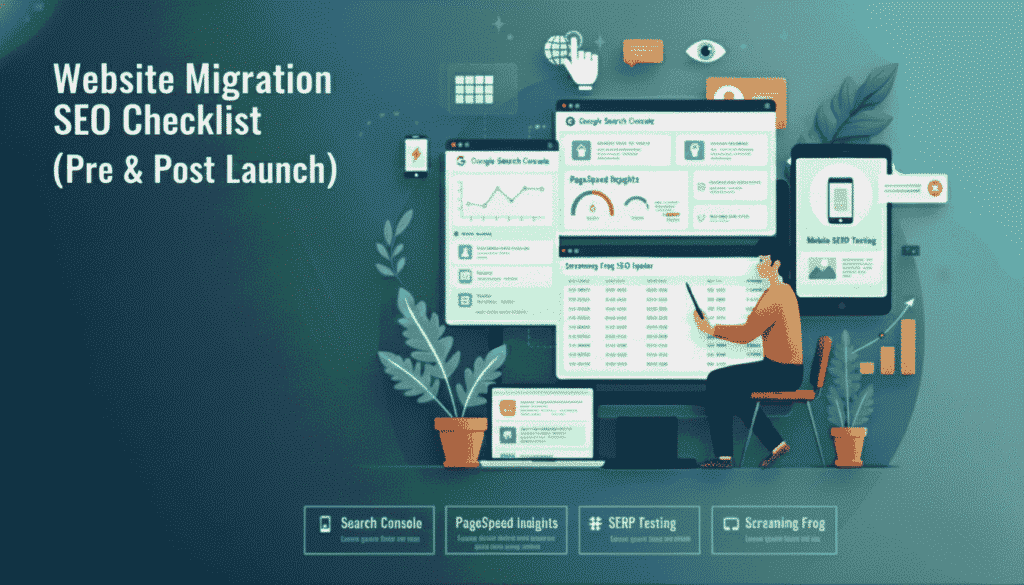

Thousands of websites lose up to 50% of their organic traffic during poorly planned migrations. Whether you’re switching platforms, redesigning your site, or changing domain names, website migration remains one of the riskiest technical SEO operations you can undertake.
A recent study shows that 73% of businesses experience temporary ranking drops after migration, while 29% never fully recover their previous traffic levels. These statistics aren’t meant to scare you but to highlight the importance of proper planning and execution.
Website migration involves moving your site from one environment to another, which could mean changing your hosting provider, CMS platform, URL structure, or domain name. Each type carries unique challenges and risks to your search engine visibility and user experience.
This guide walks you through every critical step of website migration, from pre launch preparation to post migration monitoring. You’ll learn proven strategies to protect your rankings, preserve link equity, and ensure a smooth transition for both users and search engines.
What is Website Migration?
Website migration refers to any substantial change to your website’s structure, technology, design, location, or user experience that could significantly affect search engine visibility. This isn’t simply updating a few pages or adding new content.
Common migration scenarios include moving from HTTP to HTTPS, changing your domain name, switching from WordPress to Shopify, redesigning your site architecture, or consolidating multiple sites into one. Each scenario requires careful planning to maintain your SEO performance and avoid catastrophic traffic loss.
Google treats migrations seriously because they can confuse crawlers and disrupt the user experience. A migration done right tells search engines exactly where your content moved and how to update their index accordingly.
Why Website Migration Requires Strategic Planning
Your website represents years of SEO investment, accumulated link equity, and established search rankings. A hasty migration can destroy this value overnight, forcing you to rebuild your organic presence from scratch.
Search engines need clear signals about what changed and where your content now lives. Without proper redirects, updated sitemaps, and technical preparation, crawlers may treat your new site as completely separate from the old one.
Traffic loss during migration creates a domino effect that impacts revenue, lead generation, and brand visibility. The cost of recovering lost rankings often exceeds the initial migration budget by 300% or more.
Types of Website Migration
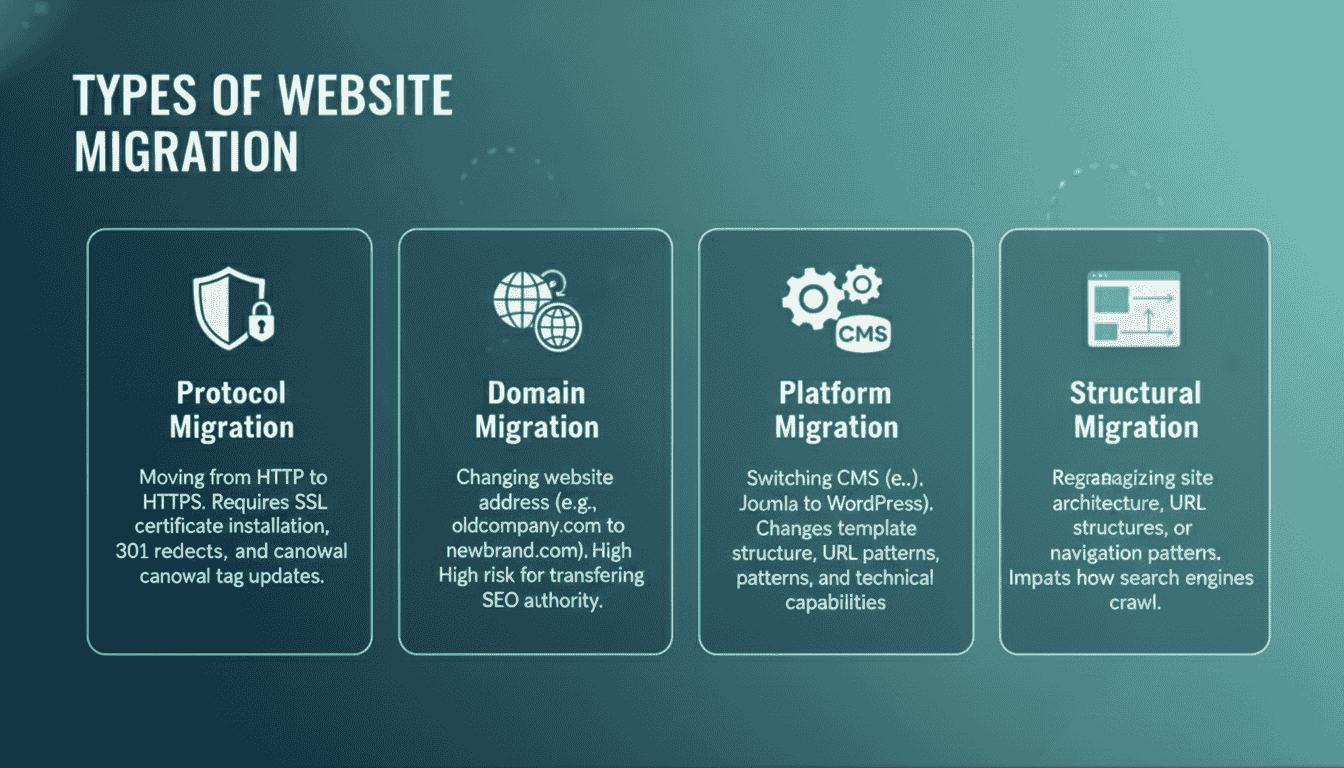
Protocol migration involves moving from HTTP to HTTPS, which Google now considers a ranking factor. This type requires SSL certificate installation, 301 redirects for every URL, and canonical tag updates to avoid duplicate content issues.
Domain migration means changing your website’s address entirely, such as rebranding from oldcompany.com to newbrand.com. This carries the highest risk because you’re asking search engines to transfer all accumulated trust and authority to a completely new domain.
Platform migration involves switching content management systems, like moving from Joomla to WordPress or from a custom CMS to Shopify. Template structures, URL patterns, and technical capabilities often change dramatically during platform switches.
Structural migration reorganises your site architecture, changing category hierarchies, URL structures, or navigation patterns. Even without changing platforms or domains, restructuring can significantly impact how search engines crawl and understand your site.
Pre Migration Audit and Preparation
Start by documenting your current SEO performance with a comprehensive baseline audit. Record your top 100 ranking keywords, organic traffic levels, backlink profile, and conversion rates to establish clear success metrics.
Crawl your entire existing site using tools like Screaming Frog or Sitebulb to identify all URLs, especially high value pages that drive traffic and conversions. This inventory becomes your master list for creating redirect mappings.
Analyse your top performing content and landing pages that generate the most organic traffic. These pages require extra attention during migration to ensure their URL structure, content, and technical elements transfer correctly.
Review your backlink profile to identify which pages have the most external links pointing to them. These pages carry significant link equity that must be preserved through proper 301 redirects to maintain domain authority.
Creating Your Migration Redirect Strategy
Map every old URL to its corresponding new URL in a detailed spreadsheet before touching any code. This redirect mapping document serves as your blueprint for maintaining link equity and preventing broken links.
Implement 301 redirects rather than 302 redirects because permanent redirects pass approximately 90-99% of link equity to the new page. Temporary redirects tell search engines the move isn’t permanent and don’t transfer ranking power.
Avoid redirect chains where one URL redirects to another that redirects again to a final destination. Each hop in the chain loses link equity and creates crawling inefficiency that search engines penalise.
Test your redirect implementation thoroughly before launch using redirect checker tools and manual verification. A single mapping error can send valuable traffic to 404 pages or incorrect destinations.
Technical SEO Checklist for Migration
Update your XML sitemap to reflect all new URLs and submit it to Google Search Console immediately after launch. This helps search engines discover and index your new structure faster than waiting for organic crawling.
Verify that all canonical tags point to the correct new URLs rather than old ones. Incorrect canonicals can confuse search engines about which version of your content is authoritative.
Check that your robots.txt file doesn’t accidentally block important sections of your new site. Migration often involves new directory structures that may conflict with existing crawl directives.
Ensure all internal links throughout your site point to new URLs rather than relying on redirects. While redirects preserve link equity from external sources, internal links should directly reference current locations.
Content Preservation During Migration
Maintain identical content on migrated pages whenever possible because changing both location and content simultaneously confuses search engines about matching old pages to new ones. If you must update content, do so gradually after rankings stabilise.
Preserve all metadata including title tags, meta descriptions, header tags, and image alt text that contributed to your original rankings. These elements help search engines verify that new pages correspond to old ones.
Keep the same keyword targeting and topical focus on migrated pages even if you improve the writing quality or design. Dramatic topic shifts can cause search engines to treat pages as entirely new content.
Transfer all structured data markup to new pages to maintain rich snippet eligibility and enhanced search results. Schema markup often gets overlooked during visual redesigns but plays a crucial role in SERP performance.
Monitoring and Post Migration Recovery
Launch your migration during low traffic periods to minimise user impact if technical issues arise. Mid week launches typically work better than Fridays when technical support availability decreases over weekends.
Monitor Google Search Console daily for the first two weeks after migration, watching for crawl errors, indexing issues, and manual actions. Quick identification of problems allows for immediate correction before significant ranking damage occurs.
Track your baseline keywords weekly to identify pages experiencing ranking drops. Temporary fluctuations are normal, but sustained declines indicate problems with specific page migrations that require investigation.
Compare organic traffic patterns using the same time period from the previous year to account for seasonal variations. Month over month comparisons during migration can be misleading if your business has natural seasonal patterns.
Common Website Migration Mistakes
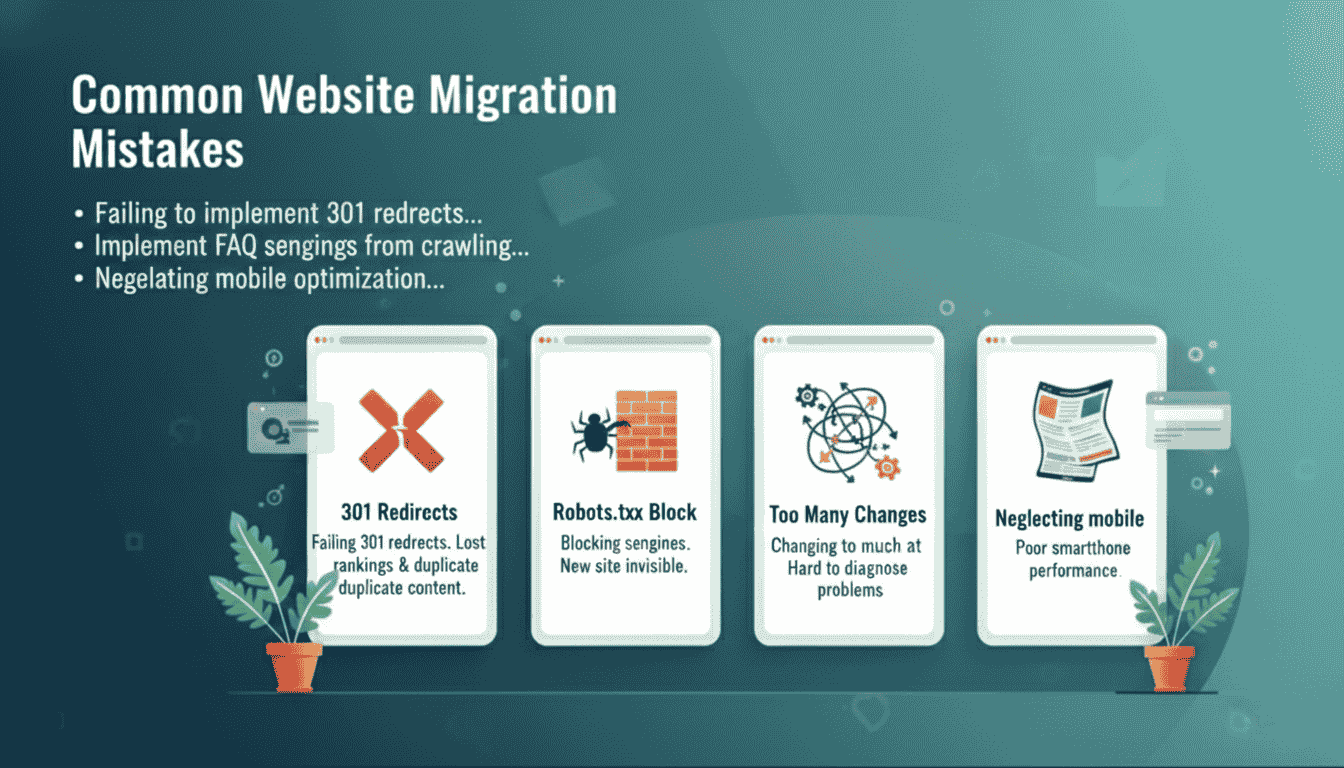
Failing to implement 301 redirects represents the most catastrophic migration mistake because it treats your new site as completely separate from the old one. Search engines won’t automatically connect the two, resulting in duplicate content issues and lost rankings.
Blocking search engines from crawling your staging site makes sense, but forgetting to remove those restrictions after launch leaves your new site invisible to crawlers. Always verify robots.txt and meta robots tags after going live.
Changing too many elements simultaneously makes it impossible to diagnose problems when rankings drop. Separate your migration from major content rewrites or design overhauls by at least 60-90 days when possible.
Neglecting mobile optimisation during migration ignores Google’s mobile first indexing approach where mobile versions determine rankings for all devices. Your new site must perform excellently on smartphones and tablets.
Tools and Resources for Successful Migration
Google Search Console provides essential migration monitoring through its URL inspection tool, coverage reports, and index status tracking. Set up your new property before launch to ensure immediate data collection.
Screaming Frog SEO Spider crawls both old and new sites to verify redirect implementation, find broken links, and compare technical elements. The paid version offers advanced features like custom extraction and JavaScript rendering.
Redirect mapping tools like Redirect Path browser extensions help you verify redirect chains and response codes during testing. These lightweight tools provide quick verification without full site crawls.
Ahrefs or SEMrush track ranking changes and organic traffic patterns with historical data that helps you compare pre and post migration performance. Their site audit features also identify technical issues affecting crawlability.
Advanced Migration Strategies
Implement crawl budget optimisation by consolidating thin content pages before migration rather than redirecting hundreds of low value URLs. This helps search engines focus on your most important content during the re crawling phase.
Consider phased migration for large sites by moving sections incrementally rather than everything simultaneously. This approach reduces risk and allows you to refine your process based on early results.
Preserve URL parameters and query strings that drive traffic from paid campaigns or email marketing. Migration often focuses on clean URLs while accidentally breaking tracking parameters that marketing teams depend on.
Use hreflang tags correctly if your migration involves international sites with multiple language versions. Proper implementation ensures users in different regions continue finding the appropriate version of your content.
Future Proofing Your Migrated Site
Build flexibility into your new site architecture that accommodates future growth without requiring additional migrations. Scalable URL structures and modular content systems reduce the need for disruptive changes later.
Document every technical decision made during migration in a detailed playbook for future reference. When team members change or you need to troubleshoot issues months later, this documentation becomes invaluable.
Schedule quarterly technical SEO audits to catch emerging issues before they become serious problems. Migration often reveals weaknesses in ongoing maintenance that require new processes and monitoring systems.
Final Thoughts
Most SaaS, B2B, and agency teams treat website migrations like routine technical updates: move files, hope rankings hold, and wonder why traffic drops. At Drip Ranks, we knew there had to be a better way. So we built a system, not a service.
Forensic audits uncover your highest ROI opportunities, mapping every redirect, tracking every URL change, and identifying risks before they impact the buyer journey. Intent-mapped strategies ensure your migration supports long-term organic growth, while scalable execution multiplies results without increasing headcount. The difference? Your SEO becomes measurable, repeatable, and revenue-focused, not a black box that relies on guesswork.
Drip Ranks specialises in managing complex website migrations that protect your SEO investment while enabling platform upgrades and structural improvements. Our team handles comprehensive audits, precise redirect mapping, technical oversight, and intensive post-launch monitoring to keep rankings stable. Contact us today for a migration strategy consultation that ensures your website transition succeeds without sacrificing the search visibility you’ve built.