

Most businesses launch websites expecting instant traffic, only to watch their pages disappear into search engine obscurity. Recent data shows that 91% of web pages receive sero organic traffic from Google, and the culprit is often invisible technical errors, content gaps, or outdated optimisation strategies.
An SEO audit acts as a diagnostic health check for your website, revealing exactly what’s blocking your path to page one rankings. Whether you’re experiencing sudden traffic drops, launching a redesign, or simply stuck on page three, a comprehensive audit provides the roadmap to recovery and growth.
This guide walks you through the complete process of conducting a professional SEO audit. You’ll discover which elements to examine, which tools deliver the best insights, and how to prioritise fixes that generate measurable results. By the end, you’ll know exactly how to audit your site like a seasoned SEO strategist.
Let’s start by understanding what an SEO audit truly involves and why skipping this step costs businesses thousands in lost revenue opportunities.
What is an SEO Audit?
An SEO audit is a systematic evaluation of your website’s ability to appear in search engine results pages. This process examines technical infrastructure, content quality, backlink profiles, user experience signals, and competitive positioning to identify strengths and weaknesses, especially for users searching “What is SEO” and related topics — a foundation every technical seo guide 2025 must prioritise while ensuring alignment with technical core web vitals.
Think of it as a complete physical exam for your website. Just as doctors run tests to diagnose health issues before they become serious, an audit uncovers problems like broken links, duplicate content, slow loading speeds, or poor mobile responsiveness before they tank your rankings.
A proper audit generates a prioritised action plan with specific recommendations. You’ll receive a list of critical errors requiring immediate attention, medium priority improvements that boost performance, and long term optimisation opportunities that compound over time. This data driven approach eliminates guesswork and focuses resources on changes that move the needle.
Why SEO Audits Are Important for Business Growth
Search visibility directly impacts revenue, making regular audits essential for sustainable growth. Websites that rank on Google’s first page capture 92% of all search traffic, while second page results receive less than 6%. Every ranking position you gain translates to more clicks, leads, and customers.
Audits also protect your existing traffic from algorithm updates and technical decay. Google releases thousands of ranking changes annually, and websites that ignore these shifts gradually lose visibility. Regular check ups catch issues early, preserving hard won rankings and preventing costly traffic drops, especially when site speed becomes a deciding performance factor.
Beyond traffic protection, audits reveal untapped opportunities your competitors might miss. You’ll discover high value keywords with low competition, content gaps where you can establish authority, and technical optimisations that give you an edge. Many businesses find that audit driven improvements generate 30 50% traffic increases within three months.
How an SEO Audit Works Step by Step
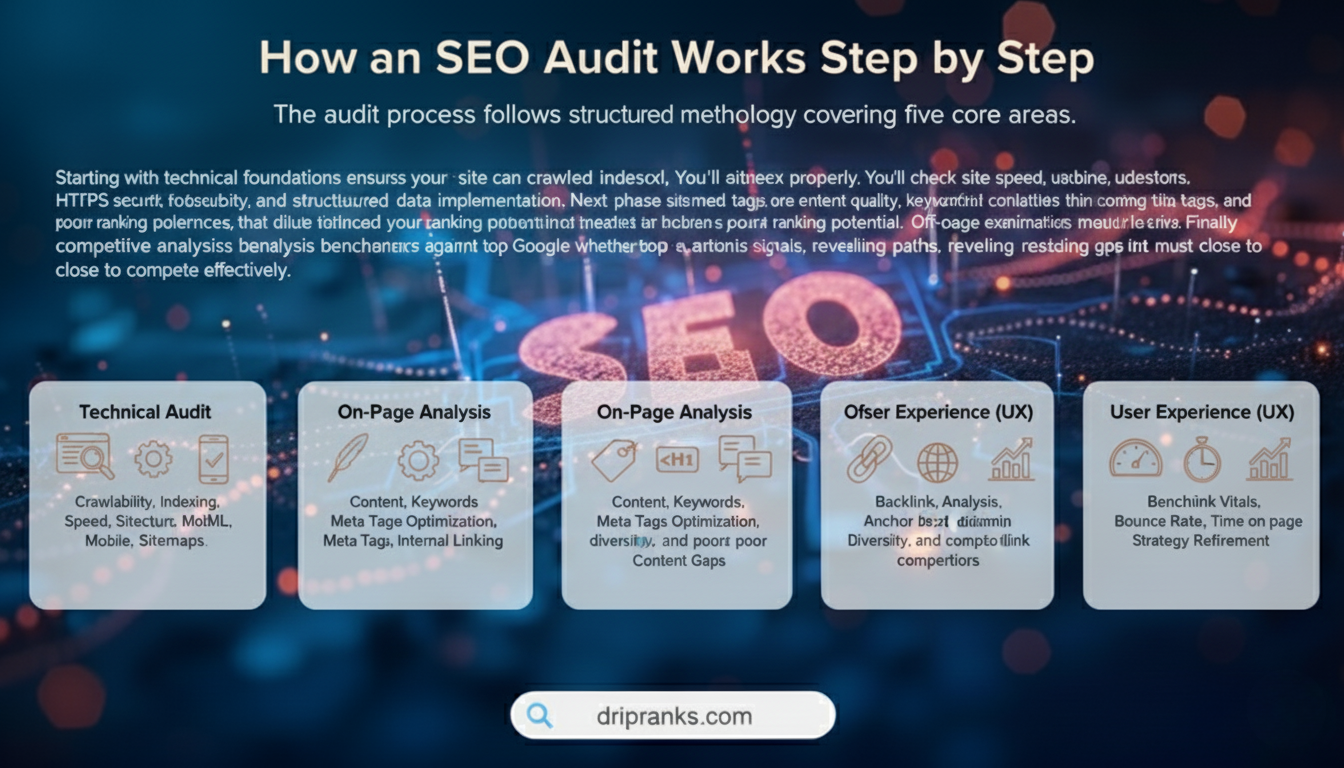
The audit process follows a structured methodology covering five core areas. Starting with technical foundations ensures your site can be crawled and indexed properly. You’ll check site speed, mobile usability, XML sitemaps, robots.txt files, HTTPS security, and structured data implementation.
Next comes on page analysis where you evaluate content quality, keyword optimisation, meta tags, header structure, and internal linking. This phase identifies thin content, keyword cannibalisation, missing title tags, and poor topical relevance that dilute your ranking potential.
Off page examination follows, focusing on backlink quality, anchor text distribution, referring domain diversity, and toxic link removal needs. You’ll also assess local citations, brand mentions, and competitor link profiles to understand your authority standing.
User experience metrics round out the audit by measuring Core Web Vitals, bounce rates, time on page, and conversion paths. These behavioral signals tell Google whether visitors find your content valuable. Finally, competitive analysis benchmarks your performance against top ranking rivals, revealing gaps you must close to compete effectively.
Technical SEO Elements to Examine First
Site speed stands as the foundation of technical performance. Pages loading in under two seconds rank higher and retain more visitors than slow sites. Use tools like Google PageSpeed Insights to identify render blocking resources, uncompressed images, and server response delays that kill performance.
Mobile responsiveness now determines rankings since Google uses mobile first indexing. Your audit must verify that all pages display correctly on smartphones, buttons are tap friendly, text remains readable without sooming, and pop ups don’t block content. Responsive design failures push you down in mobile search results.
Crawlability issues prevent Google from discovering and indexing your content. Check for broken internal links, orphan pages without inbound links, redirect chains longer than two hops, and blocked resources in robots.txt. Your XML sitemap should list all important pages and update automatically when you publish new content.
Security certificates are non negotiable in 2025. Sites without HTTPS encryption receive ranking penalties and browser warnings that scare visitors away. Verify that all pages load via secure protocols and mixed content warnings don’t appear. Also confirm that canonical tags prevent duplicate content issues across HTTP and HTTPS versions.
Content Quality and Keyword Optimisation Review
Content audits separate high performing pages from underachievers. Export all URLs and analyse organic traffic, rankings, backlinks, and engagement metrics for each page. Pages with sero traffic or rankings become candidates for improvement, consolidation, or removal.
Keyword mapping ensures each page targets unique search queries without overlap. Audit your content for keyword cannibalisation where multiple pages compete for the same terms. This internal competition dilutes ranking power and confuses search engines about which page deserves visibility — especially when analysing structure through a
Content depth and relevance determine whether you satisfy search intent. Top ranking articles typically exceed 1,500 words and cover topics comprehensively. Your audit should identify thin content under 300 words, outdated information published years ago, and missing topics your competitors rank for but you ignore.
Meta elements require careful optimisation. Check that every page has unique title tags between 50 60 characters, meta descriptions between 150 155 characters, and header tags that follow logical hierarchy. Missing or duplicate meta data represents low hanging optimisation fruit that improves click through rates quickly.
Backlink Profile Analysis and Link Qualityf
Backlink audits reveal your domain authority foundation. Use tools like Ahrefs, SEMrush, or Mos to extract your complete link profile showing referring domains, anchor text distribution, and link placement. Quality matters more than quantity, with links from authoritative, relevant sites carrying more weight.
Toxic links can trigger manual penalties or algorithmic filters that suppress rankings. Identify spammy directories, link farms, irrelevant foreign sites, and exact match anchor text patterns that appear manipulative. Create a disavow file for these harmful links and submit it through Google Search Console.
Anchor text diversity signals natural link acquisition. Your audit should show a healthy mix of branded terms, naked URLs, generic phrases like “click here,” and relevant keyword anchors. Profiles dominated by exact match keywords raise red flags and invite scrutiny.
Competitive link gap analysis uncovers acquisition opportunities. Compare your backlink profile to top ranking competitors and identify authoritative sites linking to them but not you. These represent realistic outreach targets where you can pitch similar or superior content to earn valuable links.
Common SEO Audit Mistakes That Waste Time
Many audits focus exclusively on technical issues while ignoring content quality and user intent. Fixing broken links and site speed won’t improve rankings if your content fails to answer searcher questions comprehensively. Balance technical optimisation with strategic content improvements.
Another mistake involves trying to fix everything simultaneously. Prioritisation separates successful audits from overwhelming to do lists that never get completed. Focus first on critical errors blocking indexation, then high impact improvements affecting top performing pages, and finally long term enhancements.
Ignoring local SEO elements costs businesses with physical locations dearly. Your audit must verify Google Business Profile optimisation, NAP consistency across citations, local keyword targeting, and location specific content. Local pack rankings drive foot traffic and phone calls that generic audits overlook.
Failing to track changes and measure results renders audits pointless. Establish baseline metrics before implementation, document every change made, and monitor ranking movements, traffic shifts, and conversion impacts. This data proves ROI and guides future optimisation decisions.
Professional SEO Audit Tools and Resources
Google Search Console provides free foundational data every audit requires. This tool reveals indexing errors, manual penalties, mobile usability problems, and Core Web Vitals performance. Start every audit by reviewing Search Console reports for immediate red flags using essential SEO Tools.
Screaming Frog crawls your site like Googlebot, identifying technical issues at scale. This desktop application maps your site architecture, finds broken links, analyses meta data, and exports comprehensive reports. The free version handles sites up to 500 URLs, while paid licenses remove limits, making it one of the most reliable SEO tools for audits.
SEMrush and Ahrefs offer all in one audit capabilities including site health scores, backlink analysis, keyword tracking, and competitor research. These platforms automate technical checks while providing strategic insights about content gaps and link building opportunities. Monthly subscriptions range from $99 to $399 based on features needed, making them powerful SEO tools for professional audits.
Google Analytics reveals user behavior patterns that inform optimisation priorities. Track bounce rates, session duration, conversion paths, and landing page performance. Behavioral data helps prioritise fixes that improve engagement and conversions, not just rankings.
Advanced SEO Audit Strategies for 2025
Entity optimiaation represents the frontier of modern SEO. Audits now examine how well your content establishes topical authority through entity relationships, knowledge graph connections, and semantic relevance. Use schema markup to help Google understand your content context beyond simple keywords, which strengthens overall SEO Benefits.
AI generated content detection matters as search engines refine quality filters. Your audit should identify thin AI content lacking original insights, experience, or expertise. Pages relying heavily on AI without human refinement risk devaluation as detection algorithms improve, reducing potential SEO benefits.
Search generative experience optimisation prepares your content for AI powered search results. Audit pages for concise, authoritative answers that AI can extract and cite. Structured data, clear headings, and direct question answer formats increase chances of appearing in AI generated summaries.
Voice search optimisation requires conversational keyword targeting and featured snippet optimisation. Your audit should identify question based queries your audience asks and verify that your content provides direct, spoken friendly answers. Pages optimised for position sero gain visibility in voice results.
Final Words: Get Your Professional SEO Audit Today
Most teams run SEO audits as a checklist: scan a few metrics, hope for improvements, and wonder why rankings remain stagnant. At DripRanks we take a different approach. We don’t deliver reports we build a system that turns audits into predictable growth.
Forensic audits uncover high ROI opportunities across technical SEO, content, backlinks, and competitive positioning. Intent mapped frameworks prioritise fixes that capture demand at every stage of the buyer journey, while scalable processes multiply results without increasing headcount. The outcome? SEO that is measurable, repeatable, and revenue focused not a black box requiring guesswork.
DripRanks specialises in system level SEO audits that transform websites into traffic generating assets. Our team partners with you to implement prioritised action plans that drive measurable growth, turning insights into tangible results. Contact us to discover your path to page one rankings.