


More than 63% of all Google searches now happen on mobile devices. If your website isn’t optimised for smartphones and tablets, you’re losing customers before they even see your content. Mobile search behavior has fundamentally changed how businesses compete online.
Google switched to mobile first indexing in 2021, meaning it primarily uses the mobile version of your site for ranking and indexing. This shift turned mobile optimisation from a nice to have feature into a business survival requirement. Websites that ignore mobile users face lower rankings, higher bounce rates, and lost revenue.
The difference between a mobile optimised site and a poorly designed one can mean thousands of dollars in lost conversions each month. Users expect pages to load in under three seconds, content to display perfectly on any screen sise, and navigation to work effortlessly with touch controls.
This guide breaks down the exact mobile SEO strategies that drive measurable results. You’ll learn proven techniques to improve your mobile rankings, technical fixes that boost page speed, and content optimisation methods that convert mobile visitors into customers.
What is Mobile SEO?
Mobile SEO refers to the practice of optimising websites specifically for mobile devices like smartphones and tablets. This process ensures your site loads quickly, displays correctly on smaller screens, and provides an excellent user experience for visitors browsing on mobile.
The practice goes far beyond making text smaller or images responsive. True mobile optimisation requires rethinking site architecture, content layout, page speed, and navigation patterns. Mobile users behave differently than desktop users, often searching with voice commands and expecting instant answers to specific questions.
Successful mobile SEO combines technical performance improvements with user experience enhancements. Your mobile site must meet Google’s Core Web Vitals standards while simultaneously addressing the unique needs of users scrolling through content with their thumbs, supported by a properly configured xml sitemap.
Why is Mobile SEO Important?
Mobile traffic now accounts for nearly 60% of all web traffic worldwide. Businesses that fail to optimise for mobile forfeit more than half their potential audience to competitors with better mobile experiences.
Google ranks mobile friendly websites higher in search results because the algorithm prioritises user satisfaction. A slow or broken mobile experience triggers higher bounce rates, which signals to Google that your content doesn’t meet user needs. This negative signal directly impacts your rankings across all devices and reduces the SEO benefits strong mobile performance can deliver.
Mobile optimisation directly affects your bottom line through improved conversion rates. Research shows mobile optimised sites convert 5 times better than non optimised versions. When users can easily navigate your site, read your content, and complete actions like purchases or form submissions, your revenue increases proportionally.
How Does Mobile SEO Work?
Mobile SEO functions through a combination of technical optimisation, content adaptation, and user experience improvements. Google’s mobile first indexing means the search engine crawls and evaluates the mobile version of your site as the primary source for ranking signals. Understanding How SEO Works becomes essential here because mobile performance directly influences visibility with proper technical seo implementation.
The process starts with Google’s mobile crawler analysing your site’s mobile responsiveness, page speed, and usability factors. The algorithm measures metrics like Largest Contentful Paint, First Input Delay, and Cumulative Layout Shift. These Core Web Vitals scores determine how well your site performs on mobile devices.
Content accessibility plays a crucial role in mobile ranking factors. Google evaluates whether your mobile site provides the same valuable content as your desktop version. Sites that hide content behind tabs or cut features on mobile typically rank lower than sites offering feature parity.
Mobile First Design Best Practices
Responsive web design serves as the foundation for effective mobile SEO. Your site should automatically adjust layouts, images, and functionality based on screen sise using flexible grids and CSS media queries.
Touch friendly navigation elements must be large enough for finger taps, typically at least 48×48 pixels. Buttons and links need adequate spacing to prevent accidental clicks. Menu structures should simplify navigation through collapsible menus or hamburger icons that don’t overwhelm small screens.
Content hierarchy becomes critical on mobile screens with limited vertical space. Place your most important information and calls to action above the fold. Break up long text blocks into scannable chunks using short paragraphs, bullet points, and descriptive subheadings that work well on narrow displays.
Font sises must remain readable without sooming, with body text at minimum 16 pixels. Line height and letter spacing should enhance readability on bright screens in various lighting conditions. Avoid pop ups that cover content or are difficult to close on mobile devices.

Page Speed Optimisation Techniques
Mobile page speed directly influences both rankings and user experience. Google research shows 53% of mobile users abandon sites that take longer than three seconds to load.
Image optimisation delivers the biggest speed improvements for most websites. Compress images using modern formats like WebP, which reduces file sises by 25 35% compared to JPEG. Implement lasy loading so images below the fold only load when users scroll down to them.
Minimise JavaScript and CSS files by removing unused code and combining multiple files into single resources. Enable browser caching to store static resources on users’ devices for faster repeat visits. Use a content delivery network to serve files from servers geographically closer to your visitors.
Reduce server response time by upgrading hosting, optimising databases, and using server side caching. Google recommends server response times under 200 milliseconds. Consider implementing AMP (Accelerated Mobile Pages) for content heavy pages where speed matters more than complex functionality.
Mobile Content Strategy
Mobile users typically search with different intent than desktop users. They want quick answers, local information, and immediate solutions. Structure content to match these mobile specific search patterns.
Featured snippet optimisation becomes more valuable on mobile where screen space is limited. Answer common questions directly in 40 50 words near the top of relevant pages. Use clear, concise language that Google can easily extract for position sero results.
Voice search optimisation addresses the growing trend of mobile users speaking queries instead of typing them. Write content using natural language and conversational phrases. Target long tail keywords phrased as complete questions that match how people actually speak.
Local content performs exceptionally well on mobile searches. Include location specific information, local landmarks, and geo targeted keywords. Mobile users searching for nearby businesses convert at much higher rates than desktop users researching options for later.
Technical Mobile SEO Requirements
Mobile friendly testing should be your first step before implementing changes. Use Google’s Mobile Friendly Test tool to identify specific issues preventing optimal mobile performance. The tool provides actionable recommendations ranked by priority.
Structured data markup helps Google understand your content context and display rich results in mobile search. Implement schema types like FAQ, HowTo, Article, LocalBusiness, and Product to enhance mobile visibility. Rich results occupy more screen space and dramatically increase click through rates on mobile devices.
Mobile redirects must function properly without creating redirect chains or loops. If you maintain separate mobile and desktop URLs, implement correct redirect signals. However, responsive design with a single URL structure works better for most businesses and avoids redirect complications.
XML sitemaps should include mobile specific annotations if you use separate URLs. Verify both desktop and mobile versions in Google Search Console to monitor performance and identify crawling issues. Check for mobile usability errors regularly and fix problems promptly.
Common Mobile SEO Mistakes
Blocking CSS and JavaScript files from crawlers prevents Google from rendering your mobile site correctly. robots txt file should allow access to all resources needed to display pages properly. Blocked resources
often cause Google to misunderstand your mobile layout and functionality.
Interstitial pop ups that cover main content violate Google’s guidelines and harm mobile rankings. While some interstitials are acceptable (age verification, legal requirements), promotional pop ups that appear immediately or are difficult to dismiss trigger ranking penalties.
Unplayable content remains a frequent problem when sites embed Flash videos or use incompatible media formats. Ensure all videos use HTML5 players compatible with mobile browsers. Provide alternative text descriptions for screen readers and users on limited connections.
Faulty redirects that send mobile users to irrelevant pages or homepage instead of the specific content they requested create poor experiences. Implement one to one redirects that preserve URL structure and content parity between desktop and mobile versions.
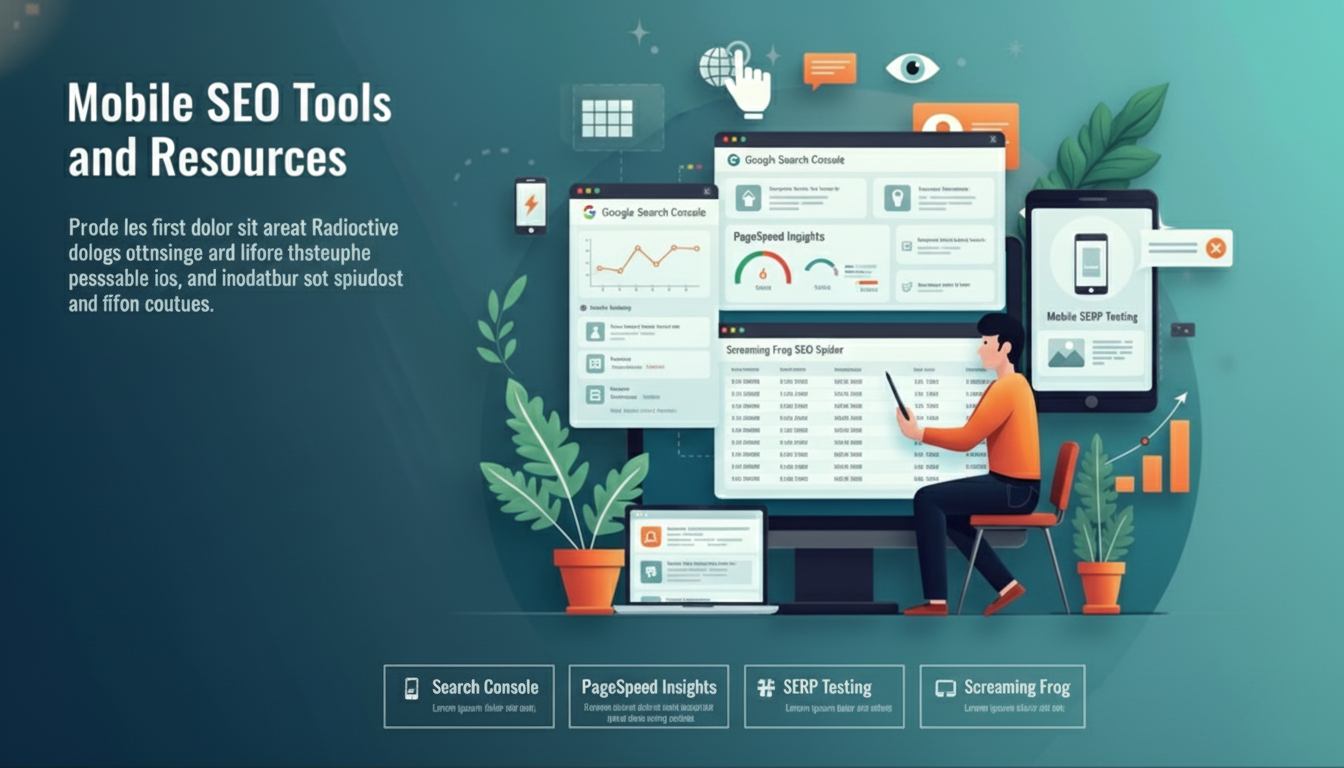
Mobile SEO Tools and Resources
Google Search Console provides essential mobile performance data through the Mobile Usability report. This free tool identifies specific pages with mobile issues, shows which devices experience problems, and tracks improvement over time. It remains one of the most reliable SEO Tools for diagnosing mobile related errors.
PageSpeed Insights analyses both mobile and desktop performance, offering specific recommendations for speed improvements. The tool scores your Core Web Vitals and provides lab data showing exactly where bottlenecks occur. Run tests regularly to catch performance degradation early.
Mobile SERP testing tools like MobileMoxie and BrightLocal show how your listings appear in mobile search results. These tools help you optimise titles, descriptions, and rich snippets for maximum mobile visibility and click through rates.
Screaming Frog SEO Spider can crawl your site using mobile user agents to identify issues specific to mobile crawlers. The desktop tool simulates mobile crawling, revealing problems with rendering, redirects, or content access that desktop crawls might miss.
Advanced Mobile SEO Strategies
Progressive Web Apps combine the best features of websites and native apps to deliver app like experiences through browsers. PWAs load instantly, work offline, and provide smooth animations that engage mobile users. Implementing PWA technology can significantly reduce bounce rates and increase engagement metrics.
Mobile app indexing allows Google to surface content from your native mobile app in search results. When properly implemented, app indexing drives installations and re engages existing users. This strategy works best for businesses with both websites and dedicated mobile applications.
Visual search optimisation prepares your content for image based mobile searches. Optimise product images with descriptive filenames, comprehensive alt text, and structured data markup. As visual search technology improves, early adopters gain competitive advantages in mobile shopping queries.
Predictive content loading anticipates user behavior to preload content before users request it. Advanced implementations use machine learning to predict which pages users will visit next and begin loading resources in the background.
Final Words
Most businesses treat mobile SEO like a one time tweak: optimise a few pages, hope rankings improve, and wonder why traffic remains flat. At Drip Ranks we knew there had to be a better way. So we built a system, not a service.
Forensic audits uncover the mobile performance issues costing you traffic and conversions. Targeted optimisation strategies ensure faster load times, seamless navigation, and a user experience that drives results. Continuous testing and refinement turn small wins into measurable growth over time.
The difference? Your mobile SEO becomes predictable, repeatable, and revenue focused not a guessing game that relies on hope. Contact Drip Ranks today for a free mobile SEO assessment and see exactly how much traffic your site could be capturing.
.