


Modern websites rely heavily on JavaScript frameworks to deliver interactive user experiences. Yet many businesses struggle to achieve strong search visibility because search engines cannot properly process their dynamic content. This disconnect creates a significant challenge for companies investing in React, Vue, Angular, or similar frameworks while expecting organic traffic growth.
Google has improved its ability to render JavaScript over recent years. However, relying solely on Google’s rendering capabilities remains risky and often results in indexing delays, missing content, or incomplete page understanding. Sites built entirely with JavaScript frameworks frequently experience lower rankings despite offering valuable content and excellent user experiences.
Understanding how search engines interact with JavaScript helps you avoid common pitfalls that harm organic performance. The right technical approach ensures your content gets crawled, rendered, and indexed efficiently. This guide covers proven JavaScript SEO strategies that help your dynamic website achieve the visibility it deserves.
At Drip Ranks, we specialise in technical SEO solutions for JavaScript heavy websites, helping businesses overcome rendering challenges and maximise their organic search potential.
What is JavaScript SEO
JavaScript SEO refers to the practice of optimising websites that use JavaScript frameworks to ensure search engines can properly crawl, render, and index their content. Unlike traditional HTML websites, JavaScript applications often generate content dynamically after the initial page load. This creates unique challenges for search engine crawlers that must execute JavaScript code to access the full page content.
Search engines follow a three step process when encountering JavaScript: crawling the initial HTML, queuing pages for rendering, and finally executing JavaScript to reveal dynamic content. This rendering step requires significant computational resources and happens separately from the initial crawl. Pages may wait hours or even days in the rendering queue before Google processes their JavaScript and discovers the full content.
The gap between crawling and rendering creates real SEO consequences. Important content hidden behind JavaScript may not get indexed quickly enough to rank competitively. Meta tags, structured data, and internal links added through JavaScript might not get recognised during the initial crawl phase. Understanding this process helps you implement strategies that make your JavaScript content accessible to search engines without unnecessary delays.
Why JavaScript SEO Matters for Your Business
JavaScript frameworks power some of the most engaging websites across industries. Companies choose these technologies for their ability to create seamless user experiences with instant page transitions and dynamic content updates. However, these same features can severely limit organic search visibility when not implemented correctly.
Google processes JavaScript differently than static HTML, creating potential blind spots in how search engines see your content. When search engines cannot efficiently render your pages, they may miss critical content, fail to understand page relationships, or index incomplete versions of your pages. This results in lower rankings, reduced organic traffic, and missed revenue opportunities from search channels.
The business impact extends beyond just rankings. Slow rendering affects how quickly new content appears in search results, delaying the ROI from content marketing investments. Products added to e-commerce catalogs may take weeks to show up in Google Shopping results. Blog posts meant to capture timely search trends might get indexed after the topic loses relevance. Proper JavaScript SEO implementation ensures your content reaches search engines and potential customers without these costly delays.

How Search Engines Process JavaScript Content
Search engines use specialised systems to handle JavaScript powered websites. When Googlebot encounters a page, it first downloads the raw HTML and processes any content immediately available. This initial HTML often contains minimal content on JavaScript frameworks, with most elements loaded through script execution.
After the initial crawl, Google adds qualifying pages to a rendering queue. The rendering process happens in a second wave using headless Chrome browsers that execute JavaScript like a real user’s browser would. Google allocates limited resources to rendering, meaning not every page gets rendered immediately or even at all. Pages with low perceived importance may wait extended periods before rendering occurs.
Several factors influence rendering priority and success. Page load speed affects whether rendering completes successfully. JavaScript errors that crash the page prevent proper content extraction. External resource dependencies create additional complexity when third party scripts fail to load during rendering. Understanding these technical requirements helps you optimise your JavaScript implementation for better search engine compatibility and faster indexing of your dynamic content.
Best Practices for JavaScript SEO Success
Implementing server side rendering or static site generation provides the most reliable solution for JavaScript SEO challenges. SSR generates the full HTML content on the server before sending it to browsers or crawlers. This approach gives search engines immediate access to complete page content during the initial crawl without waiting for rendering.
Pre rendering offers a middle ground solution that serves static HTML snapshots to search engines while delivering the full JavaScript experience to users. Tools like Prerender.io or Rendertron generate and cache HTML versions of your pages specifically for crawlers. This technique works well for sites that cannot implement full SSR but need guaranteed content accessibility for search engines.
Dynamic rendering detects search engine crawlers and serves them pre rendered content while regular users receive the standard JavaScript application. Google officially supports this approach as a workaround for rendering challenges. However, this method requires careful implementation to avoid cloaking penalties and ensure the rendered version accurately matches what users see.
Lasy loading content strategically prevents important SEO elements from being hidden behind user interactions. Critical content, internal links, and structured data should load immediately in the initial HTML. Images and below the fold content can use native lasy loading attributes that search engines understand. Never hide primary navigation, headings, or body content behind click events that search engines may not trigger during rendering.
Optimise your JavaScript bundle size and loading strategy to improve rendering success rates. Large JavaScript files take longer to download and execute, increasing the chance of rendering timeouts. Code splitting breaks your application into smaller chunks that load as needed. Minification and compression reduce file sizes without changing functionality. Faster rendering means quicker indexing and better preservation of your crawl budget.
Common JavaScript SEO Mistakes to Avoid
Blocking JavaScript files in robots.txt remains one of the most damaging mistakes. Some developers incorrectly block JS and CSS resources thinking this saves crawl budget. However, search engines need access to these files to render pages properly. Blocking them forces Google to guess at your page layout and content, usually resulting in incomplete indexing and poor understanding of your pages.
Relying solely on client side rendering without a backup strategy puts your entire SEO program at risk. Pure client side JavaScript applications show minimal content until scripts execute. If rendering fails or gets delayed, search engines index nearly blank pages. Always implement at least one fallback method like pre rendering, SSR, or dynamic rendering to guarantee content accessibility.
Infinite scroll and pagination implemented purely with JavaScript creates crawlability problems. Search engines may not trigger the scroll events needed to load additional content. This pattern hides product listings, blog archives, and other important page collections from search engines. Implement paginated URLs with proper link elements that crawlers can follow without executing complex JavaScript interactions.
Single page applications that change content without updating URLs prevent search engines from discovering and indexing distinct pages. Each unique content piece needs its own URL that loads the correct content even without JavaScript. Use the History API to update URLs as content changes and ensure each URL returns the appropriate content in the initial HTML response.
Placing critical meta tags and structured data exclusively in JavaScript delays or prevents their recognition. Title tags, meta descriptions, canonical tags, and schema markup should exist in the initial HTML whenever possible. While Google can process JavaScript generated metadata, it happens during rendering rather than the initial crawl, creating unnecessary delays in how search engines understand your pages.
Tools and Resources for JavaScript SEO Testing
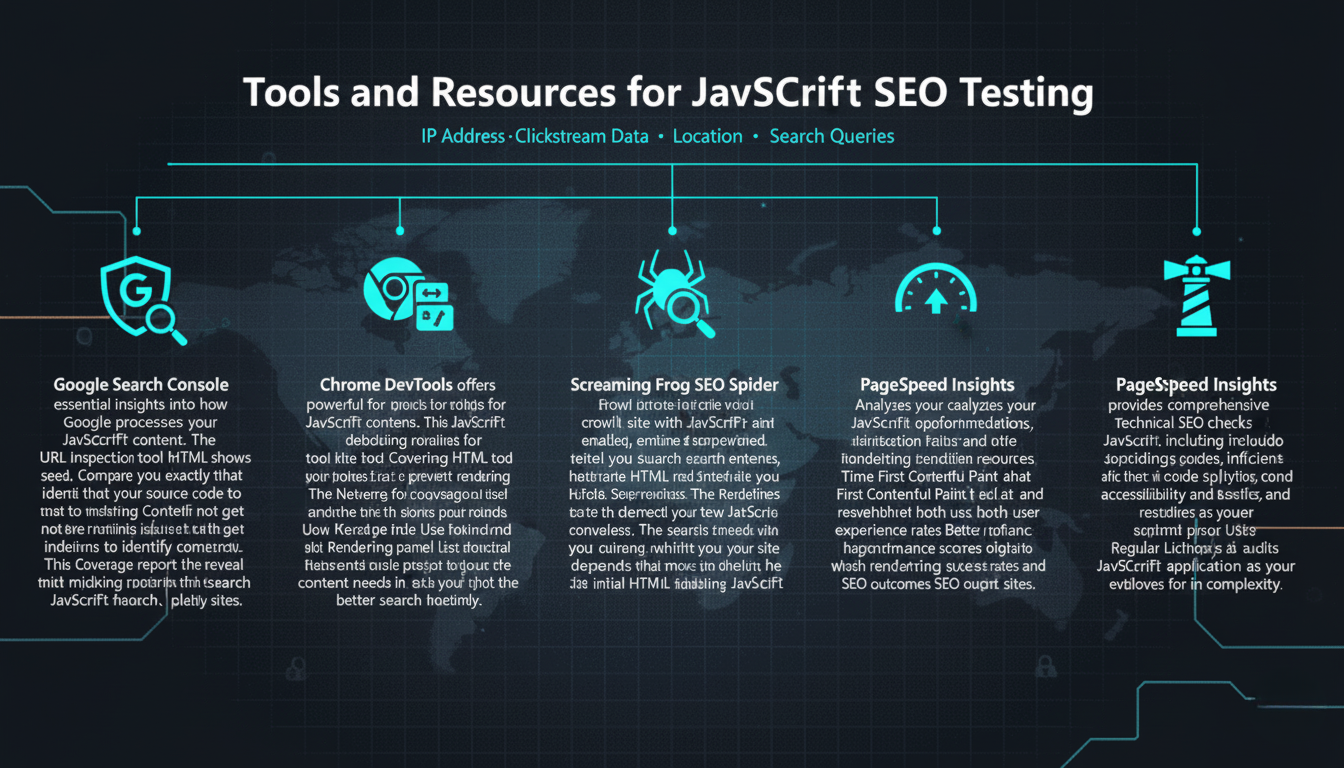
Google Search Console provides essential insights into how Google processes your JavaScript content. The URL Inspection tool shows you exactly what Google sees after rendering your page. Compare the rendered HTML to your source code to identify content that might not get indexed properly. The Coverage report reveals indexing issues that may stem from rendering problems.
Chrome DevTools offers powerful capabilities for debugging JavaScript SEO issues. The Network panel helps you identify resource loading problems that might prevent successful rendering. Use the Coverage tool to find unused JavaScript code that slows rendering. The Rendering panel lets you test how your site appears to search engine crawlers by disabling JavaScript entirely.
Screaming Frog SEO Spider can crawl your site with JavaScript rendering enabled, helping you audit how search engines experience your content. The tool identifies differences between raw HTML and rendered content, revealing elements that depend on JavaScript execution. This comparison helps prioritise which content needs to move into the initial HTML for better search visibility.
PageSpeed Insights analyses your JavaScript performance and provides specific optimisation recommendations. The tool measures key metrics like First Contentful Paint and Time to Interactive that affect both user experience and search rankings. Better performance scores correlate with higher rendering success rates and improved SEO outcomes for JavaScript heavy sites.
Lighthouse audits provide comprehensive technical SEO checks including JavaScript specific issues. The tool flags problems like render blocking resources, inefficient code splitting, and accessibility issues common in JavaScript frameworks. Regular Lighthouse audits help maintain SEO best practices as your JavaScript application evolves and grows in complexity.
Advanced JavaScript SEO Strategies
Implementing hybrid rendering combines the benefits of static and dynamic approaches. Critical pages like your homepage, category pages, and top performing content get full SSR treatment for maximum search visibility. Less important pages use client side rendering to reduce server costs. This strategic approach balances SEO requirements with infrastructure investment and development complexity.
Progressive enhancement builds your site’s foundation on solid HTML that works without JavaScript. Enhanced functionality layers on top through JavaScript, creating better experiences for capable browsers while maintaining baseline accessibility for all users and crawlers. This philosophy naturally aligns with SEO requirements by ensuring core content exists in the initial HTML.
Optimising for mobile first indexing requires special attention for JavaScript sites. Google predominantly uses the mobile version of your content for indexing and ranking. Ensure your JavaScript renders properly on mobile devices and delivers the same content across device types. Mobile rendering often faces stricter resource constraints that can cause rendering failures if not properly optimised.
Monitoring Core Web Vitals helps you understand how your JavaScript implementation affects user experience signals that impact rankings. Large JavaScript bundles often hurt Largest Contentful Paint scores. Excessive client side processing delays First Input Delay metrics. Layout shifts from dynamically loaded content harm Cumulative Layout Shift scores. Optimising these metrics improves both user satisfaction and search performance.
Creating XML sitemaps that include JavaScript generated URLs ensures search engines discover all your important pages. Dynamically generated content often lacks traditional internal linking that helps crawlers find pages. A comprehensive sitemap compensates for this weakness by explicitly listing all indexable URLs regardless of how they get generated. Update your sitemap automatically as new content gets created through your JavaScript application.
Future Trends in JavaScript SEO
Search engines continue improving their JavaScript processing capabilities with each update. Google now uses an evergreen version of Chromium for rendering, meaning it supports modern JavaScript features and APIs. This evolution reduces but does not eliminate the need for JavaScript SEO best practices. Understanding current capabilities helps you make informed decisions about which optimisation strategies your site requires.
The rise of framework specific SEO solutions simplifies implementing best practices. Next.js for React and Nuxt.js for Vue provide built in SSR and static generation capabilities designed specifically for SEO. These frameworks handle many technical complexities automatically, lowering the barrier to implementing proper JavaScript SEO. Choosing SEO friendly frameworks from the start prevents costly refactoring later.
Edge computing and CDN rendering represent emerging technologies that improve JavaScript SEO performance. These solutions render JavaScript closer to users and crawlers, reducing latency and improving rendering success rates. Services like Cloudflare Workers and Lambda@Edge enable server side logic without managing traditional servers. This infrastructure evolution makes SSR and dynamic rendering more accessible and affordable for businesses of all sizes.
Voice search and AI driven search experiences increase the importance of proper content rendering. Virtual assistants and AI chatbots need structured, accessible content to provide accurate answers. JavaScript that hides content from traditional crawlers also hides it from AI systems trying to understand your pages. Proper implementation ensures your content participates in these emerging search experiences.
Your JavaScript SEO Action Plan
Start by auditing your current implementation to identify specific rendering issues affecting your site. Use Google Search Console’s URL Inspection tool to check how Google sees your most important pages. Document differences between your source HTML and rendered output. This baseline assessment reveals priority issues that need immediate attention.
Prioritise implementing at least one rendering solution that guarantees content accessibility. Choose SSR, pre rendering, or dynamic rendering based on your technical resources and site requirements. Even a basic implementation dramatically improves search visibility compared to pure client side rendering. This foundational step protects your SEO investment regardless of future algorithm changes.
Test your implementation thoroughly before deploying changes to production. Verify that rendered HTML contains all critical content, meta tags, and structured data. Check that internal links work properly and point to correct URLs. Confirm that page load speed remains acceptable after implementing your rendering solution. Proper testing prevents trading JavaScript SEO problems for new technical issues.
Monitor your search performance and indexing status after implementing changes. Track rankings for target keywords to measure improvement. Watch coverage reports in Search Console for changes in indexed pages. Analyse organic traffic patterns to confirm your JavaScript content reaches searchers effectively. Ongoing monitoring helps you refine your approach and identify new optimisation opportunities.
Final Words
Most SaaS, B2B, and agency teams treat JavaScript SEO like an afterthought: build interactive features, hope Google indexes them, and wonder why organic traffic isn’t predictable. At Drip Ranks, we knew there had to be a better way. So we built a system, not a service.
Forensic audits uncover your highest-ROI opportunities, identifying exactly where JavaScript content blocks crawlability, rendering, or indexing. Intent-mapped strategies ensure every dynamic element supports the buyer journey, while scalable execution multiplies results without increasing headcount. The difference? Your SEO becomes measurable, repeatable, and revenue-focused, not a black box that relies on guesswork.
Drip Ranks specialises in solving complex JavaScript SEO challenges for modern websites. Our technical experts implement proven solutions, SSR, pre-rendering, or hybrid approaches, that maximise crawlability, rendering, and indexing. Contact us today for a comprehensive JavaScript SEO audit and discover how we can help your dynamic website achieve the organic visibility it deserves.