
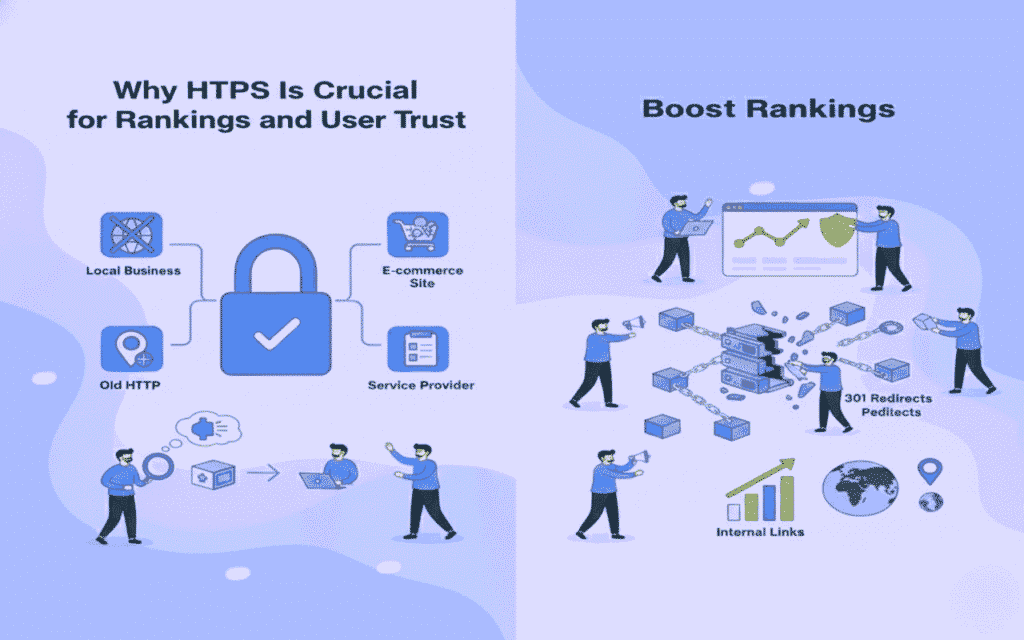

Google penalises websites without HTTPS security, dropping them lower in search results every year. Recent data from Google Chrome shows that over 95% of browsing time now occurs on HTTPS secured pages, making security a non negotiable ranking factor. If your website still runs on HTTP, you’re losing visibility, traffic, and customer trust.
HTTPS affects more than just security. It influences click through rates, conversion rates, and how search engines crawl your pages. Many business owners assume switching to HTTPS is purely technical, but it carries major SEO implications that require careful planning and execution.
This guide explains everything you need to know about HTTPS SEO. You’ll discover why HTTPS matters for rankings, how to migrate safely without losing traffic, and what mistakes to avoid during the transition. At Drip Ranks, we’ve helped dosens of businesses execute HTTPS migrations without ranking drops, and we’ll share proven strategies that work in 2025.
Whether you’re planning a migration or troubleshooting post migration issues, this article provides actionable steps to protect and improve your search performance.
What is HTTPS SEO?
HTTPS SEO refers to optimising your website’s security protocol to improve search engine rankings and user experience. HTTPS stands for Hypertext Transfer Protocol Secure, which encrypts data between your server and visitors. Search engines like Google prioritise secure websites because they protect user information from hackers and data breaches, making security a key part of What is SEO in modern optimisation.
Google officially confirmed HTTPS as a ranking signal in 2014, and its importance has grown steadily. Websites with HTTPS receive a small ranking boost compared to identical HTTP sites. Modern browsers also display warning messages on HTTP pages, which damages credibility and increases bounce rates before visitors even read your content.
HTTPS SEO involves mobile seo implementation, redirect management, and ongoing monitoring. It’s not just installing an SSL certificate you must update internal links, fix mixed content warnings, and ensure search engines index the secure version. Proper HTTPS implementation protects both your rankings and your reputation.
Why is HTTPS Important for Search Rankings?
HTTPS directly impacts how Google evaluates trustworthiness and user safety. Search algorithms reward sites that protect visitor data because security reduces risk for users. Google wants to send searchers to safe destinations, so HTTPS sites get preference over HTTP competitors in search results.
User behavior metrics improve dramatically on HTTPS sites. Chrome browsers display a padlock icon and “Secure” label on HTTPS pages, which increases trust and click through rates. Research shows that 84% of users abandon purchases if a site isn’t secure, meaning HTTP sites lose conversions even when they rank well.
HTTPS also enables modern web technologies that boost performance. HTTP/2 protocol, which requires HTTPS, loads pages faster than older HTTP versions. Faster sites rank higher because site speed is a confirmed ranking factor. HTTPS unlocks technical advantages that HTTP sites simply cannot access in 2025.
How Does HTTPS Impact SEO Performance?
HTTPS creates encrypted connections between browsers and servers using SSL/TLS certificates. When a visitor requests your page, the server sends a certificate proving identity and authenticity. The browser verifies this certificate, then encrypts all data transferred during the session to prevent interception.
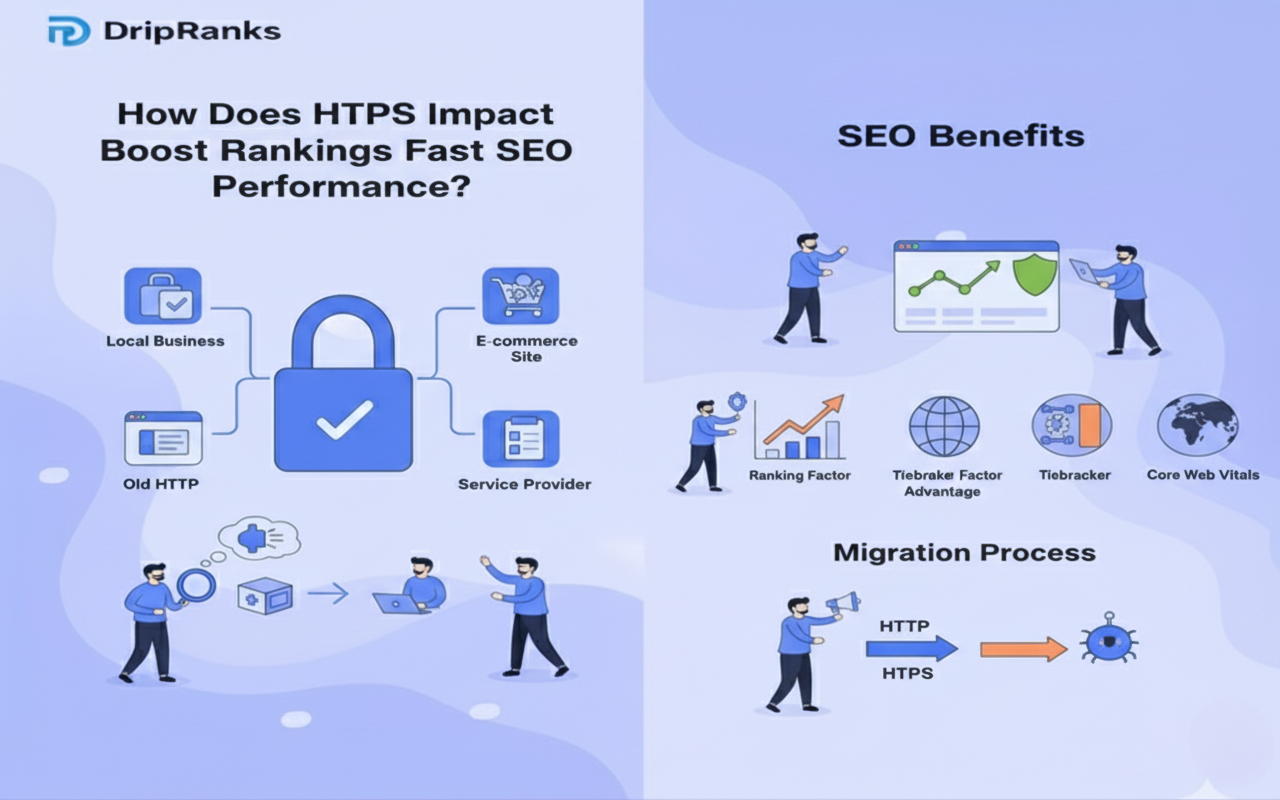
Search engine crawlers recognise HTTPS as a trust signal and factor it into ranking algorithms. Google’s John Mueller confirmed that HTTPS provides a tiebreaker advantage when two pages are otherwise equal, offering clear SEO benefits. While not the strongest ranking factor, HTTPS tips the scale when content quality and backlinks are comparable.
The migration process itself requires careful SEO management. You must implement 301 redirects from HTTP to HTTPS versions to preserve link equity. Search engines need time to recrawl and reindex your entire site under the new protocol, which can temporarily affect rankings if done incorrectly.
HTTPS affects Core Web Vitals measurements because it enables HTTP/2 and HTTP/3 protocols. These newer protocols improve Largest Contentful Paint scores by loading resources faster. Better Core Web Vitals scores directly improve rankings, creating additional SEO Benefits from HTTPS implementation beyond the direct security signal.
Best Practices for HTTPS SEO Migration
Purchase an SSL certificate from a trusted certificate authority before starting your migration. Extended Validation certificates provide the strongest trust signals, while Domain Validation certificates offer basic security at lower cost. Choose based on your industry and customer expectations—financial sites need EV certificates, while blogs can use DV certificates.
Implement site wide 301 redirects from HTTP to HTTPS versions of every URL. Individual page redirects preserve link equity better than domain level redirects alone. Test redirects thoroughly to ensure each old URL points to its corresponding HTTPS version without redirect chains or loops.
Update all internal links to use HTTPS URLs instead of HTTP. Hard coded HTTP links create mixed content warnings that browsers flag as security risks. Use search and replace functions in your CMS or database to change protocol references across your entire site systematically.
Submit the HTTPS version to Google Search Console as a new property. Update your XML sitemap to reference HTTPS URLs and resubmit it. Change canonical tags to point to HTTPS versions, and update any rel=alternate hreflang tags for international sites.
Monitor search performance closely for four to six weeks after migration. Check Google Search Console for crawl errors, mixed content issues, and index coverage problems. Rankings may fluctuate briefly as search engines recrawl your site, but should stabilise within a month if implemented correctly.
Common HTTPS SEO Mistakes to Avoid
Failing to redirect all HTTP versions creates duplicate content problems that confuse search engines. Many site owners redirect the homepage but forget subpages, creating two versions of the same content. Every single URL needs an individual 301 redirect to its HTTPS equivalent to consolidate ranking signals properly.
Mixed content errors occur when HTTPS pages load HTTP resources like images or scripts. Browsers block insecure content on secure pages, breaking layouts and functionality. Check your site’s source code for hard coded HTTP references and update them to HTTPS or protocol relative URLs.
Not updating backlinks and citations wastes the authority those links provide. While 301 redirects pass most link equity, some value diminishes through redirects. Reach out to sites linking to your HTTP URLs and request updates to HTTPS versions to maximise link value.
Choosing weak SSL certificates undermines the trust benefits of HTTPS. Self signed certificates trigger browser warnings that scare visitors away. Always use certificates from recognised authorities that browsers automatically trust to avoid security warnings that tank conversion rates.
Forgetting to update tools and integrations causes tracking gaps. Google Analytics, Google Tag Manager, and advertising pixels need HTTPS URLs in their settings. Social media meta tags should reference HTTPS versions to ensure proper preview images when shared.
Tools and Resources for HTTPS Implementation
SSL certificate providers like Let’s Encrypt offer free certificates that auto renew every 90 days. For businesses requiring extended validation, DigiCert and Sectigo provide premium certificates with warranty protection. Most web hosts include SSL certificates in hosting plans, simplifying installation for non technical users.
Why No Padlock provides detailed diagnostics for mixed content issues on HTTPS sites. SSL Checker by SSL Shopper verifies proper certificate installation and identifies configuration problems. These free SEO Tools help troubleshoot common HTTPS implementation errors before they affect rankings.
Screaming Frog SEO Spider crawls your site to identify HTTP resources on HTTPS pages. Google Search Console’s Coverage report shows which HTTPS URLs are indexed versus excluded. Use both tools together to ensure complete migration without orphaned pages or redirect loops.
Content delivery networks like Cloudflare offer free HTTPS encryption with performance benefits. They provide SSL certificates and automatically rewrite mixed content to HTTPS. For large sites, CDNs simplify HTTPS implementation while improving page speed through global caching.
WordPress plugins like Really Simple SSL automate HTTPS migration for WordPress sites. They detect SSL certificates, update internal links, and implement redirects with minimal technical knowledge required. For other platforms, consult platform specific migration guides to avoid platform unique pitfalls.
Advanced HTTPS SEO Strategies
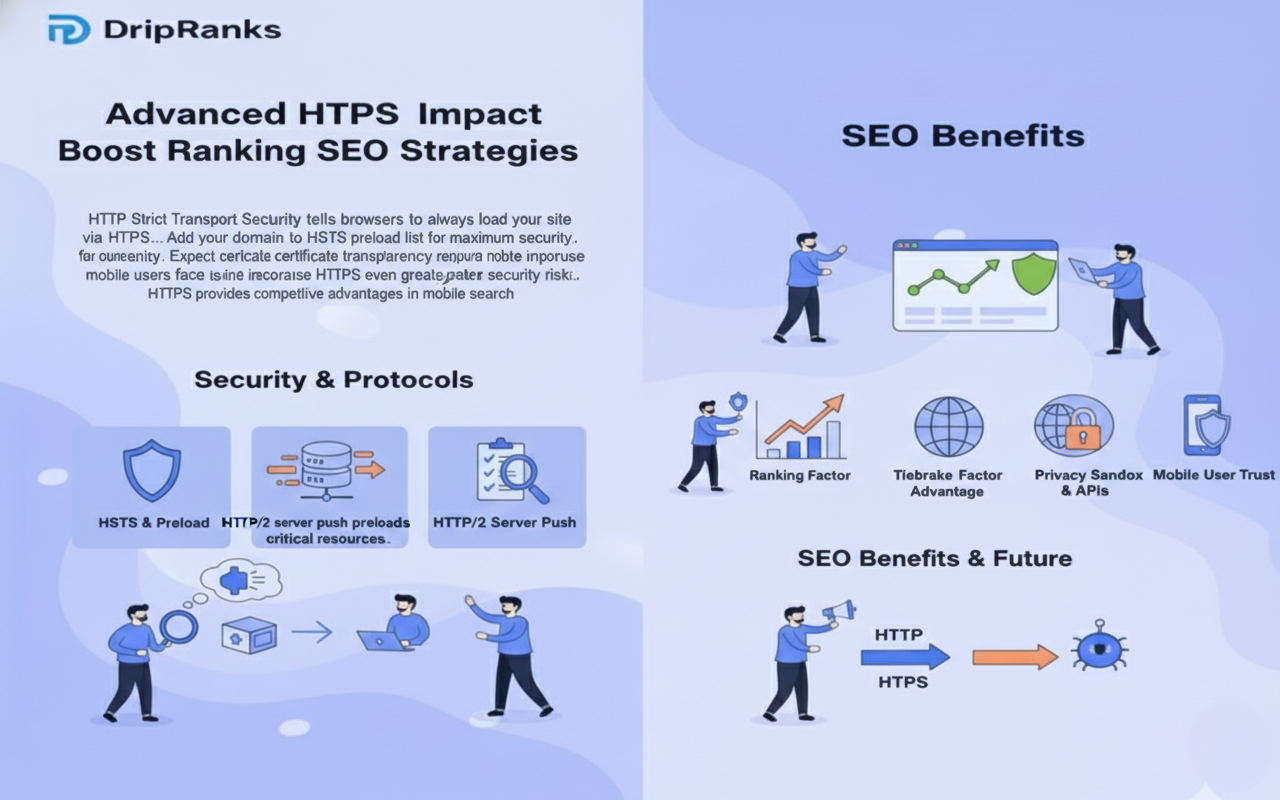
HTTP Strict Transport Security tells browsers to always load your site via HTTPS. Implementing HSTS headers prevents protocol downgrade attacks and eliminates the brief HTTP request before redirects occur. Add your domain to the HSTS preload list for maximum security and a slight ranking advantage.
HTTP/2 server push preloads critical resources before browsers request them, improving page speed. Since HTTP/2 requires HTTPS, implementing push strategies compounds the performance benefits of security. Analyse your critical rendering path and push CSS and JavaScript files that block initial rendering as part of a seo audit.
Expect certificate transparency requirements to become ranking factors as Google emphasises user security. Certificate transparency logs create public records of SSL certificates, preventing fraudulent certificates from going undetected. Use CT compliant certificates and monitor logs for unauthorised certificate issuance against your domain.
HTTPS becomes more critical as Google rolls out privacy focused initiatives like Privacy Sandbox. Secure contexts are required for many modern web APIs, meaning HTTP sites lose access to features that enhance user experience. HTTPS positions your site for emerging technologies that improve engagement metrics.
Mobile first indexing makes HTTPS even more important because mobile users face greater security risks on public WiFi. Google’s mobile first index evaluates your mobile site’s security as part of ranking decisions. HTTPS provides competitive advantages in mobile search results where most traffic originates.
Measuring HTTPS SEO Success
Track organic traffic changes in Google Analytics after migration to identify ranking fluctuations. Compare traffic 30 days pre migration to 30 days post migration to measure overall impact. Filter by landing page to spot specific URLs that gained or lost visibility after switching protocols.
Monitor keyword rankings for your top pages using tools like SEMrush or Ahrefs. Rankings may dip temporarily during recrawling but should recover within two to four weeks. Persistent ranking drops indicate technical issues like redirect problems or mixed content errors requiring investigation.
Check conversion rates before and after HTTPS implementation to measure trust signal impact. HTTPS sites typically see 5 10% conversion rate improvements because security badges reduce purchase anxiety. E commerce sites especially benefit from the psychological reassurance that HTTPS provides customers.
Analyse bounce rate and time on site metrics for signs of improved user confidence. HTTPS sites generally retain visitors longer because security indicators build credibility. Lower bounce rates send positive engagement signals that indirectly boost rankings through behavioral metrics.
Review Google Search Console’s Security Issues report for warnings that could affect rankings. Manual actions for compromised sites damage rankings severely, so monitor security reports weekly. HTTPS reduces hacking risks that lead to manual penalties and search result removals.
Final Words
Most websites treat HTTPS like an optional upgrade: enable SSL, hope rankings hold, and wonder why traffic stagnates. At Drip Ranks we knew there had to be a better way. So we built a system, not a one off fix.
Forensic audits identify the HTTPS and security gaps that are hurting rankings, user trust, and engagement. Strategic migrations protect existing search equity while positioning your site for future algorithm updates. Continuous monitoring ensures your secure setup delivers measurable gains without surprises.
The difference? Your HTTPS implementation becomes predictable, repeatable, and revenue focused not a risky technical change that relies on luck. Contact Drip Ranks today for a free SEO audit and see exactly how much rankings and conversions a proper migration could unlock.