

Google processes over 8.5 billion searches daily, and your title tag determines whether searchers click your page or scroll past it. Recent studies show that optimised title tags can increase click-through rates by up to 30%, directly impacting your rankings and organic traffic. The title tag remains one of the most powerful on-page SEO elements under your direct control.
Most businesses struggle with title tag optimisation because they either stuff keywords, write generic descriptions, or ignore user intent completely. Search engines now prioritise user experience signals, making your title tag the first impression that determines success or failure. Understanding how to craft compelling, SEO-friendly title tags using meta tags separates thriving websites from invisible ones.
This guide explains everything about title tags, from technical requirements to advanced optimisation strategies. You will learn how to write title tags that satisfy both search engines and human readers, avoid common mistakes that kill rankings, and implement best practices that drive measurable results. Whether you manage one website or hundreds, these proven techniques will transform your organic performance.
The competition for top rankings intensifies every year, making title tag mastery essential for anyone serious about SEO. Modern search algorithms evaluate hundreds of ranking factors, but the title tag influences multiple critical signals simultaneously. Your investment in learning proper title tag optimisation pays dividends across every page you publish.
What is a Title Tag?
A title tag is an HTML element that specifies the title of a web page and appears in search engine results pages, browser tabs, and social media shares. The code sits in the head section of your HTML document, written as “. Search engines display approximately 50-60 characters of your title tag in SERPs, though they measure by pixel width rather than character count.
This HTML element serves as the clickable headline in Google search results, making it the primary factor users consider when deciding which result to click. The title tag also appears when users bookmark your page or share it on social platforms. Browsers display the title tag text in the tab at the top of the window, helping users navigate between multiple open pages.
Think of the title tag as your page’s elevator pitch to both search engines and potential visitors. When someone searches for information, your title tag competes against nine other organic results on the first page. A well-crafted title tag communicates relevance, value, and trustworthiness in just a few words, compelling searchers to choose your content over competing pages.
Why Title Tags Matter for SEO and User Experience
Title tags directly influence your search rankings because Google uses them to understand page content and relevance to search queries. When your title tag accurately reflects your page content and includes relevant keywords, search algorithms can better match your page to appropriate searches. This relevance signal combines with user engagement metrics to determine your position in search results.
Click-through rate stands as one of the most important ranking factors in modern SEO. When searchers consistently choose your result over higher-ranked competitors, Google interprets this as a quality signal and may boost your rankings. A compelling title tag can increase your CTR by 20-30% compared to generic alternatives, generating more traffic without improving your actual ranking position.
User experience begins the moment someone sees your title tag in search results. Clear, benefit-driven title tags set accurate expectations and attract qualified visitors who actually want your content. This relevance reduces bounce rates and increases engagement metrics, sending positive signals back to search engines about your page quality and topical authority.
Brand visibility expands significantly when title tags consistently reinforce your company name across search results. Including your brand name in title tags builds recognition and trust, especially when users see your company appearing for multiple relevant searches. This cumulative brand exposure transforms first-time searchers into familiar prospects more likely to click and convert.
How Title Tags Work in Search Engines
Search engine crawlers read your title tag during the indexing process to understand what your page offers and how it should be categorised. The algorithm analyses the words, order, and semantic meaning to determine topical relevance for various search queries. Google then stores this information in its massive index, associating your page with relevant search terms and topics.
When someone performs a search, Google’s ranking algorithm evaluates billions of pages to find the most relevant results for that specific query. Your title tag plays a critical role in this matching process, helping the algorithm determine if your page satisfies the searcher’s intent. Pages with title tags that closely match search queries receive preference over those with less relevant or vague titles.
Google may rewrite your title tag if the algorithm determines it can create a better match for the specific search query. The search engine pulls alternative text from your H1 heading, page content, or anchor text pointing to your page. This rewriting happens in approximately 60% of search results, though you can minimise rewrites by following best practices and matching user intent precisely.
The title tag interacts with other ranking factors to create your overall SEO performance. Strong title tags amplify the impact of quality content, relevant backlinks, and technical optimisation. Conversely, poorly written title tags can sabotage otherwise excellent pages by failing to attract clicks or accurately signal relevance to search algorithms.
Title Tag Length and Character Limits
Google displays approximately 50-60 characters of your title tag in desktop search results, though the actual cutoff depends on pixel width rather than character count. Wider letters like “W” and “M” take more space than narrow letters like “i” and “l”, affecting how much text appears. Mobile search results typically show even fewer characters, making brevity even more critical for smartphone users.
The optimal title tag length is 50-55 characters to ensure full visibility across all devices and search interfaces. This constraint forces you to prioritise the most important information and eliminate filler words. Front-loading your primary keyword and key benefits within the first 50 characters guarantees that critical information appears even if Google truncates your title.
Exceeding 60 characters results in a truncated title with an ellipsis, potentially cutting off important information or your brand name. While longer titles may still rank well, the hidden text cannot influence click-through decisions. Research shows that complete, visible title tags generate significantly higher CTRs than truncated versions, making length optimisation crucial for maximising traffic.
Testing your title tags using SERP preview tools helps you visualise exactly how they appear in search results. These tools account for pixel width and show both desktop and mobile versions. Regular testing during the writing process ensures you craft titles that display perfectly across all devices and search interfaces.
Best Practices for Writing High-Converting Title Tags
Start every title tag with your primary target keyword to maximise relevance signals and match user search queries. Front-loading keywords ensures the most important terms appear even if the title gets truncated. This placement also captures attention immediately, as searchers scan left to right looking for terms that match their query.
Include power words that trigger emotional responses and compel clicks without resorting to clickbait tactics. Words like “proven,” “ultimate,” “complete,” and “fast” add persuasive weight to your titles. Numbers and current years also boost CTR by signaling fresh, comprehensive content that delivers specific value.
Write for humans first and search engines second by focusing on clear benefits and readable phrasing. Avoid keyword stuffing or awkward syntax that prioritises algorithms over people. Natural, conversational title tags build trust and accurately represent your content, reducing bounce rates and improving engagement metrics.
Match search intent by understanding what users actually want when they perform specific searches. Informational queries need titles promising answers or explanations, while commercial queries respond better to titles highlighting solutions or comparisons. Transactional searches demand titles with clear calls-to-action and product-specific information.
Create unique title tags for every page on your website to avoid internal competition and content cannibalisation. Duplicate title tags confuse search engines about which page to rank for specific queries. Unique titles also provide better user experience by clearly differentiating pages in search results and browser tabs.
Include your brand name at the end of title tags to build recognition without sacrificing keyword placement. Use a pipe symbol (|) or dash (-) to separate your primary content from your brand. This formatting creates visual separation and ensures both elements remain readable in truncated displays.
Common Title Tag Mistakes That Kill Rankings
Keyword stuffing destroys title tag effectiveness by creating awkward, unreadable text that repels both users and search engines. Repeating the same keyword multiple times or cramming unrelated terms signals manipulation rather than relevance. Modern algorithms penalise this practice, often rewriting stuffed titles or ranking pages lower than competitors with natural phrasing.
Generic title tags like “Home,” “Products,” or “Services” waste your most valuable SEO real estate by providing sero information about page content. These vague titles fail to match any meaningful search queries and offer no compelling reason to click. Every title tag should clearly communicate specific value and relevance.
Missing title tags leave Google to create its own version from available page elements, resulting in unpredictable and often poor titles. Automated title generation rarely captures your intended message or includes optimal keywords. Taking control by writing custom title tags ensures consistent messaging and maximum SEO impact.
Ignoring search intent produces mismatched titles that attract the wrong visitors or fail to satisfy user expectations. A title promising “free tips” on a sales page creates disappointment and high bounce rates. Aligning title tags with actual page content and user goals builds trust and improves all engagement metrics.
Duplicate title tags across multiple pages create confusion about which page should rank for specific searches. This internal competition dilutes your SEO power and often results in neither page ranking well. Search engines may also interpret duplicates as thin or duplicate content, damaging your overall site quality score.
Forgetting mobile optimisation means your carefully crafted titles get truncated on smartphones, where over 60% of searches now occur. Mobile displays show fewer characters, making every word choice even more critical. Always preview title tags on mobile devices to ensure your key message appears completely.
Advanced Title Tag Optimisation Strategies
Use emotional triggers and curiosity gaps to increase click-through rates without resorting to misleading clickbait. Phrases like “surprising ways,” “mistakes to avoid,” or “what nobody tells you” create intrigue while still accurately representing content. The key is balancing curiosity with honest value delivery.
Implement dynamic title tags for ecommerce and database-driven sites to scale optimisation across thousands of pages. These templates automatically insert product names, categories, specifications, and modifiers based on page variables. Well-designed templates maintain uniqueness while ensuring consistency and proper keyword inclusion.
Test title tag variations using Google Search Console performance data to identify opportunities for improvement. Pages with high impressions but low CTR need more compelling titles, while pages with good CTR but low rankings may need better keyword optimisation. This data-driven approach removes guesswork from title tag refinement.
Leverage local modifiers for businesses targeting specific geographic areas to capture location-based searches. Including city names, neighborhoods, or regional terms helps you rank for “near me” searches and local intent queries. This strategy works especially well for service businesses and brick-and-mortar stores.
Incorporate semantic keywords and related terms to broaden your relevance for topic clusters and related searches. Modern search algorithms understand context and relationships between terms, rewarding titles that demonstrate topical depth. This approach helps you rank for variations and long-tail searches beyond your exact primary keyword.
Optimise for voice search by using natural question formats and conversational phrasing in appropriate title tags. Voice queries tend to be longer and more specific than typed searches, often phrased as complete questions. Title tags that directly answer common questions perform well for both voice and featured snippets.
Tools and Resources for Title Tag Optimisation
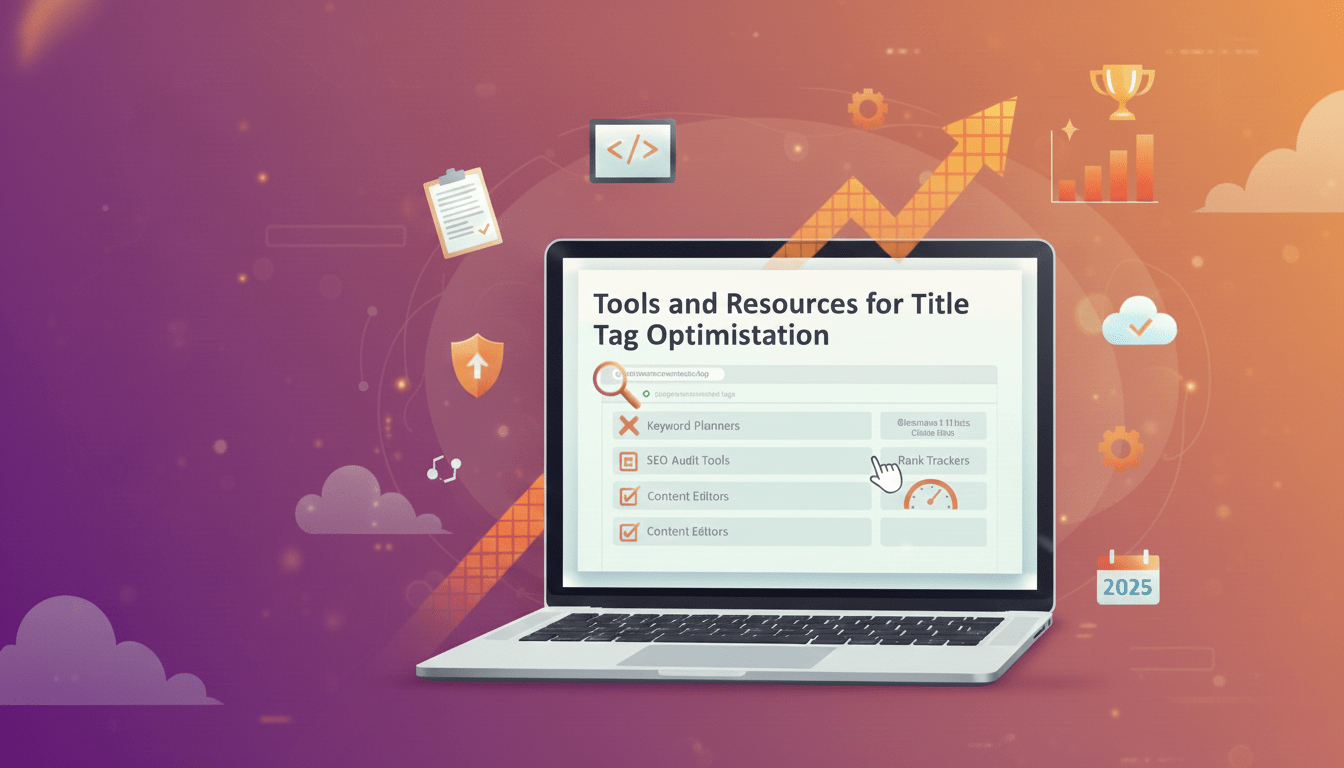
Yoast SEO and Rank Math plugins provide real-time title tag optimisation guidance for WordPress users, showing character counts and SEO scores as you write. These tools highlight issues like missing keywords, excessive length, or duplicate titles. The instant feedback helps you craft optimal title tags without separate testing.
SEMrush and Ahrefs offer title tag analysis features that compare your titles against top-ranking competitors for target keywords. These platforms identify patterns in successful titles and suggest improvements based on ranking data. Competitive analysis reveals what works in your specific niche and search landscape.
Google Search Console performance reports show exactly how your title tags perform in real search results, including impressions, clicks, and CTR. This first-party data from Google itself provides authoritative insights into title tag effectiveness. Regular review identifies underperforming pages that need title optimisation.
Screaming Frog SEO Spider crawls your entire website to identify title tag issues like duplicates, missing titles, or excessive length. This technical SEO tool provides a comprehensive audit of all your title tags in one report. The export function allows easy tracking and prioritisation of optimisation opportunities.
SERP preview tools simulate how your title tags appear in actual Google search results across different devices. These visualisations help you fine-tune length, formatting, and word choice before publishing. Popular options include Mos Title Tag Preview Tool and various browser extensions.
CoSchedule Headline Analyser evaluates title tags based on word balance, length, and emotional impact, providing actionable suggestions for improvement. This free tool scores your titles and explains why certain changes would increase effectiveness. The analysis helps you write more compelling titles based on proven copywriting principles.
How Title Tags Impact Featured Snippets and Rich Results
Optimised title tags increase your chances of earning featured snippets by clearly signaling page relevance for specific question queries. Google often uses title tag text to determine if a page likely contains direct answers to search questions. Title tags phrased as questions or solutions align perfectly with snippet extraction algorithms.
Structured data markup works in conjunction with title tags to generate enhanced search results like FAQ snippets and how-to carousels. The title tag provides the primary relevance signal, while schema markup supplies additional structured information. This combination dramatically increases visibility and click-through rates.
Title tag optimisation for People Also Ask boxes requires understanding common questions in your niche and addressing them directly. Pages with titles that match PAA questions frequently appear in these expandable sections. This placement provides additional visibility even when you do not rank in the top organic positions.
Rich results eligibility depends partly on having clear, accurate title tags that match your structured data and page content. Inconsistencies between your title tag, schema markup, and actual content may disqualify you from rich result features. Maintaining alignment across all elements ensures you maximise visibility opportunities.
sero-click searches still benefit from strong title tags by increasing brand awareness and authority signals. Even when users get answers without clicking, repeated exposure to your brand in search results builds recognition. Over time, this visibility translates into direct traffic and branded searches.
Measuring Title Tag Performance and ROI
Track click-through rate as the primary metric for title tag effectiveness, comparing your CTR to average positions in search results. Pages ranking in position three should achieve higher CTR than the average for that position if your title tags are working. Below-average CTR indicates title optimisation opportunities.
Monitor ranking changes after title tag updates to measure SEO impact, allowing at least two to four weeks for algorithms to recrawl and reassess pages. Improvements in rankings combined with maintained or increased CTR indicate successful optimisation. Track both individual page performance and overall organic traffic trends.
Calculate the revenue impact of CTR improvements by multiplying traffic increases by your average conversion rate and customer value. A 20% CTR improvement on a page receiving 10,000 monthly impressions generates 2,000 additional visits. If your conversion rate is 2%, that yields 40 new customers monthly.
Compare your title tags against top-ranking competitors to identify gaps and opportunities in your optimisation approach. Analysing what works for successful competitors reveals proven strategies and common patterns. This competitive intelligence helps you craft titles that match or exceed the current standard.
Test title tag variations systematically using A/B testing tools or sequential updates tracked in Search Console. Change one variable at a time, such as keyword placement or power word inclusion, to isolate what drives results. This scientific approach builds a playbook of proven title tag strategies for your specific audience.
Document your title tag optimisation process and results to build institutional knowledge and refine your approach over time. Tracking what works helps you scale successful strategies across more pages and train team members. This continuous improvement cycle compounds results over months and years.
Final Thoughts
Most SaaS, B2B, and agency teams treat title tags like a minor detail: add keywords, hope it helps rankings, and wonder why traffic isn’t consistent. At Drip Ranks, we knew there had to be a better way. So we built a system, not a service.
Forensic audits uncover your highest ROI pages and reveal exactly where title tag optimisation will have the greatest impact. Intent-mapped strategies ensure every title tag captures demand at every stage of the buyer journey, while scalable implementation multiplies results without increasing headcount. The difference? Your SEO becomes measurable, repeatable, and revenue-focused, not a black box that relies on guesswork.
Drip Ranks handles comprehensive SEO, from technical audits to content optimisation, ensuring every title tag and page element works together to drive qualified traffic and business growth. Contact us today to discover how professional SEO services can transform your online presence and deliver measurable results.