
Introduction
You spend hours crafting the perfect blog post, optimising every keyword, and publishing it with high hopes. Yet your click through rate remains disappointingly low, even when you rank on page one. The culprit? A weak or missing meta description that fails to convince searchers your content is worth their time.
Meta descriptions act as your digital storefront window. They appear below your page title in search results and directly influence whether someone clicks through to your site or scrolls past to a competitor. With Google’s algorithm updates prioritising user experience and engagement metrics, a compelling meta description can make the difference between ranking success and obscurity.
This guide reveals everything you need to know about writing meta descriptions that drive clicks, match search intent, and support your overall SEO strategy. You’ll discover character limits, formatting rules, common mistakes to avoid, and proven techniques used by top ranking pages across every industry.
At Drip Ranks, we’ve tested thousands of meta descriptions across client campaigns and identified the exact patterns that generate the highest click through rates. Our data driven approach combines technical SEO requirements with persuasive copywriting principles to maximise visibility and conversions.
What is a Meta Description?
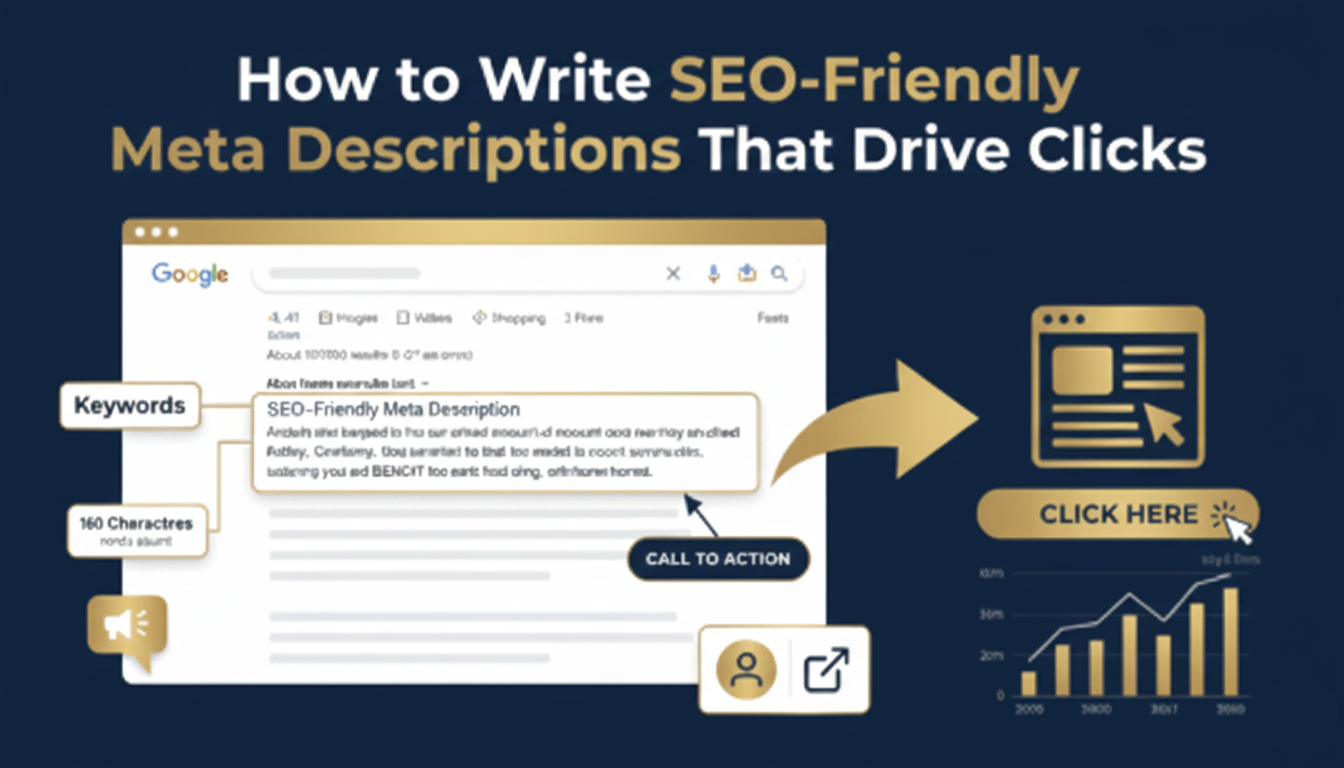
A meta description is an HTML element that summarises the content of a webpage in 75 to 155 characters. This snippet appears beneath the page title in search engine results pages and gives searchers a preview of what they’ll find if they click through. As part of your broader Meta Tags strategy, a well crafted meta description helps search engines and users quickly understand what your page offers.
Google and other search engines use meta descriptions to help users determine content relevance before visiting a page. While meta descriptions don’t directly impact rankings as a ranking factor, they significantly influence click through rate, which does affect your position over time. A well written description can improve CTR by 20 to 30 percent compared to a generic or auto generated alternative.
Think of your meta description as a micro advertisement for your content. It competes with nine other organic results on the first page, each fighting for the same searcher’s attention. Your description must immediately communicate value, match the user’s search intent, and provide a compelling reason to choose your result over others.
Why Meta Descriptions Matter for SEO
Meta descriptions directly impact your organic traffic volume even when your rankings stay constant. A higher click through rate signals to Google that users find your result relevant and valuable, which can improve your position over time through behavioral metrics. Pages with optimised descriptions consistently outperform those with auto generated or missing descriptions, especially when paired with strong on-page practices like URL Optimisation, which further strengthens relevance signals.
Click through rate serves as a critical quality indicator for search algorithms. When users consistently choose your result over higher ranked competitors, Google interprets this as a relevance signal and may boost your position. This creates a positive feedback loop where better descriptions lead to more clicks, which leads to better rankings and even more visibility.
Meta descriptions also control your brand message in search results. Without a custom description, Google auto generates one from your page content, often selecting fragments that lack context or fail to communicate your unique value. This hands your messaging to an algorithm instead of controlling the narrative yourself.
Beyond organic search, meta descriptions appear when people share your content on social media platforms. A compelling description improves social click through rates and encourages more engagement across multiple channels, extending your content’s reach beyond search engines alone.
How to Write Meta Descriptions That Get Clicks
Start every meta description with your primary keyword positioned near the beginning of the sentence. Google bolds matching keywords in search results, making your listing visually stand out when it matches the searcher’s query. This simple technique increases perceived relevance and attracts more attention in crowded result pages.
Include a clear benefit or outcome that answers the implicit question every searcher asks: “What’s in it for me?” Describe what the user will learn, achieve, or gain by clicking through to your content. Specific promises outperform vague statements, so replace “learn about SEO” with “boost organic traffic by 40% using these proven tactics.”
Add a call to action that creates urgency or prompts immediate engagement. Phrases like “discover how,” “get started today,” or “see the full guide” encourage clicks by suggesting actionable next steps. CTAs work especially well for commercial and transactional queries where users want to take specific actions.
Match the search intent behind your target keyword. Informational queries need educational descriptions, while commercial terms require benefit focused copy that addresses buyer concerns. A mismatch between intent and description kills CTR even when your page ranks well and delivers excellent content.
Write in active voice using direct, conversational language that speaks to your target audience. Passive constructions and corporate jargon create distance and reduce engagement. Your description should sound like a helpful friend recommending valuable content, not a corporate announcement.
Meta Description Character Limits and Formatting
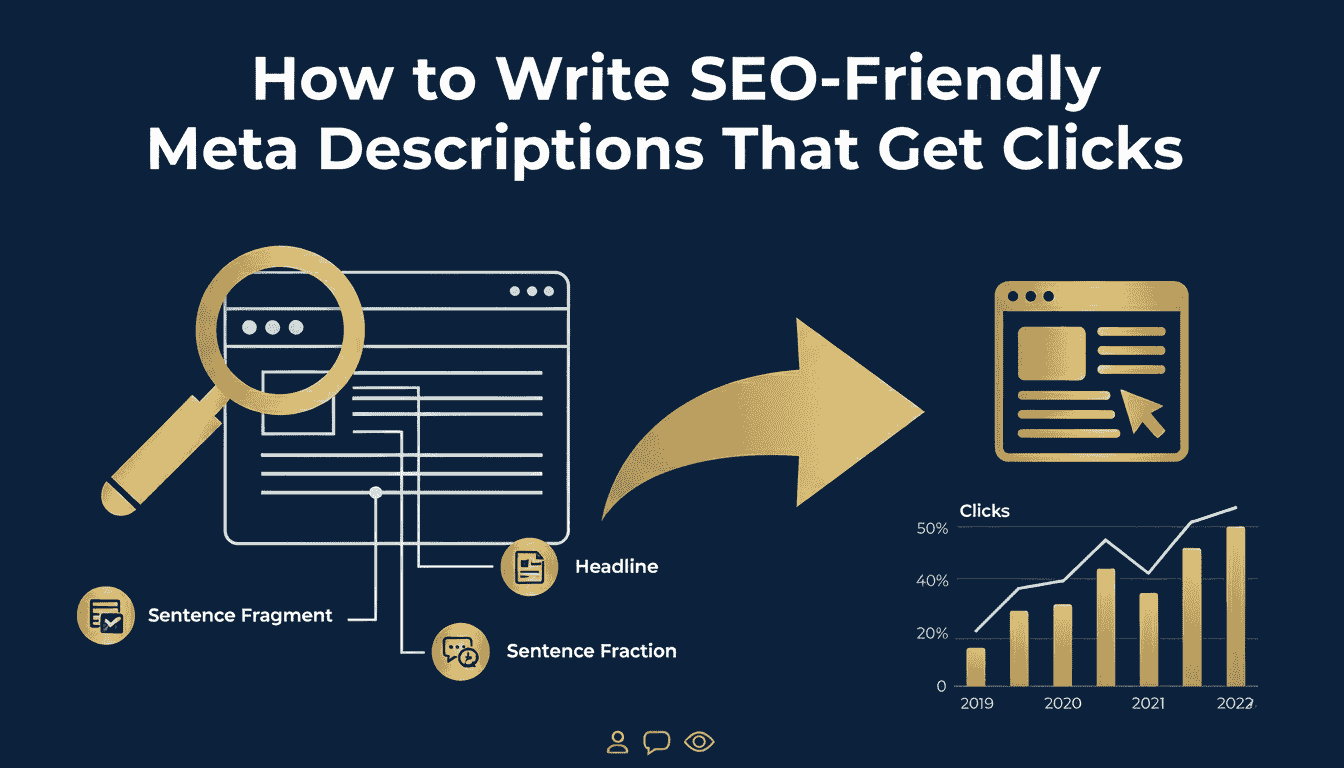
Google displays approximately 920 pixels of meta description text, which translates to 75 to 155 characters depending on letter width. Mobile results show fewer characters, typically around 120, so front load your most important information to ensure visibility across all devices. Exceeding the character limit causes truncation, cutting off your message mid sentence. Strong meta descriptions work best when paired with solid Internal linking practices, helping search engines understand page relevance and context more clearly.
Test your descriptions using tools like Mos or Yoast to preview how they’ll appear in actual search results. These tools show desktop and mobile versions, helping you optimise for both contexts. Remember that Google sometimes ignores your custom description and generates its own based on the search query and page content.
Avoid special characters like quotation marks, which Google may interpret as code and replace with HTML entities. Stick to standard punctuation like periods, commas, and pipes. Numbers and symbols like percentages can improve visibility and CTR when used strategically to highlight specific benefits or data points.
Structure longer descriptions with natural breaks using pipes or dashes to separate distinct ideas. This improves scannability and allows searchers to quickly identify relevant information. For example: “SEO tips for small business | Boost local rankings | Free audit included” communicates three separate benefits clearly.
Common Meta Description Mistakes to Avoid
Many sites duplicate the same meta description across multiple pages, wasting a valuable opportunity to target different keywords and intents. Every page needs a unique description tailored to its specific content and target query. Duplication confuses search engines and reduces your chances of ranking for diverse keyword variations.
Keyword stuffing destroys readability and triggers spam filters that can harm your overall SEO performance. Repeating the same keyword three or four times in 155 characters creates unnatural, awkward copy that searchers instinctively avoid. Use your primary keyword once, then incorporate related semantic variations naturally.
Generic descriptions like “Learn more about our services” or “Read our blog post” provide sero value and fail to differentiate your content. These vague statements give searchers no reason to choose your result over others offering specific benefits and outcomes. Specificity always beats generality in competitive search results.
Missing meta descriptions entirely forces Google to auto generate descriptions from your page content. These algorithmic selections often pull the first sentence or random fragments that lack context and persuasive power. Taking three minutes to write a custom description can improve CTR by 15 to 25 percent immediately.
Misleading descriptions that promise content you don’t deliver create terrible user experiences. Searchers who click through and find irrelevant information immediately bounce back to search results, sending negative engagement signals that harm your rankings. Always ensure your description accurately represents your page content.
Best Practices for Different Page Types
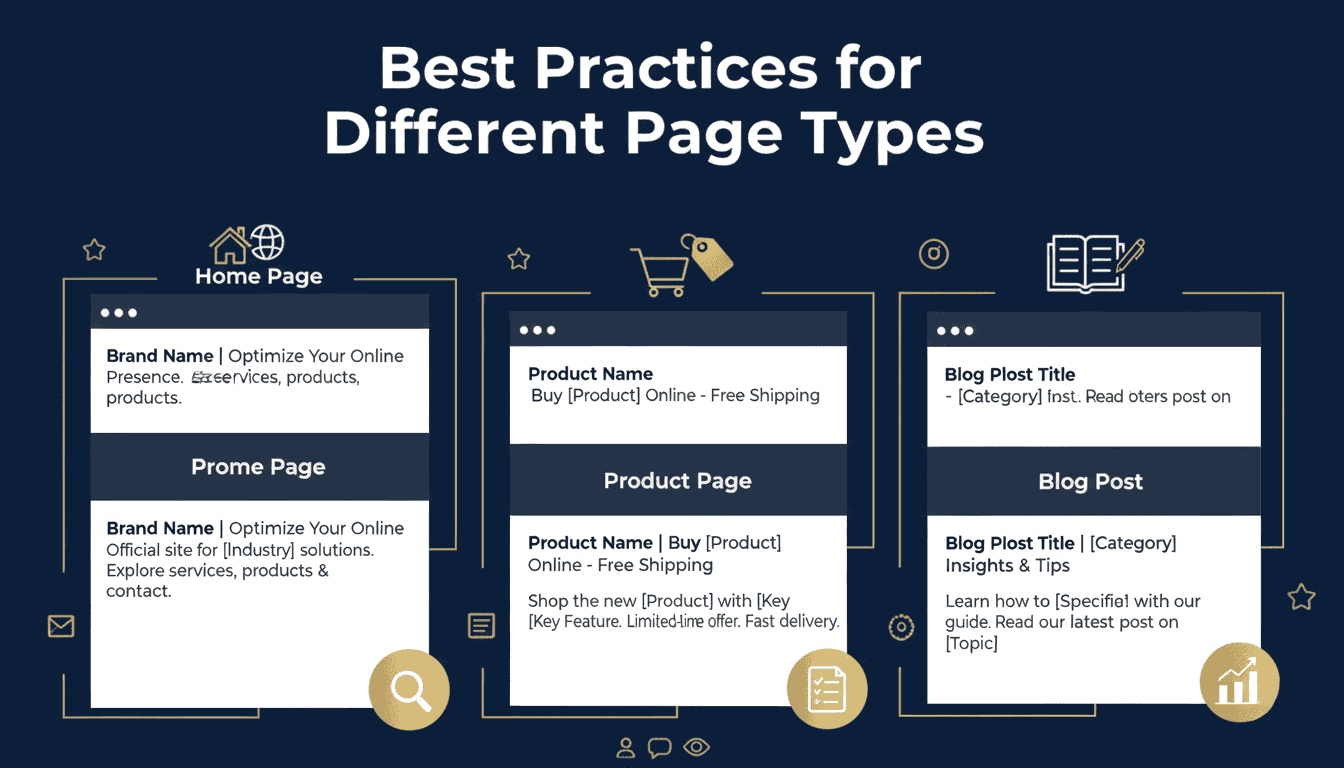
Homepage meta descriptions should communicate your core value proposition and primary service offerings. Include your brand name, main keywords, and a brief statement of what makes you different. For example: Drip Ranks delivers data driven SEO strategies that increase organic traffic and revenue for growing businesses nationwide.”
Product pages need descriptions that highlight key features, benefits, and differentiators from competing products. Include price points, availability, or special offers when relevant. Commercial searchers want specific information to inform purchase decisions, so provide the details they need to click confidently.
Blog posts should describe the main takeaway or solution the article provides. Include the primary keyword, a benefit statement, and a content promise that sets expectations. Informational queries respond well to descriptions that frame the content as answering specific questions or solving particular problems.
Service pages require descriptions that address common customer pain points and explain how your service solves them. Include geographic modifiers for local businesses to capture location based searches. Mention credentials, experience, or guarantees that build trust and credibility before the click.
Category pages benefit from descriptions that explain the breadth of products or topics covered while including primary category keywords. Help searchers understand what they’ll find and how your collection differs from competitors offering similar products or content.
Tools and Resources for Meta Description Optimisation
Yoast SEO and Rank Math are popular WordPress plugins that provide real time feedback on meta description length and quality. These tools show pixel width previews and flag common issues like missing keywords or excessive length. They integrate directly into your content management workflow, making optimisation simple and consistent.
Google Search Console reveals which pages receive impressions but low click through rates, identifying optimisation opportunities. Sort by impressions and filter for pages below a 2 percent CTR to find descriptions that need improvement. Test new descriptions and monitor CTR changes over the following weeks to measure impact.
SEMrush and Ahrefs include meta description analysis in their site audit tools, flagging duplicates, missing descriptions, and length issues. These platforms also show competitor meta descriptions for target keywords, providing inspiration and benchmarking data. Study top ranking descriptions to identify patterns and techniques worth adapting.
SERP preview tools like Portent’s SERP Preview allow you to test descriptions before publishing. These simulators show exactly how your title and description will appear in Google results, helping you optimise visual appeal and message clarity. Use them to experiment with different formats and wording.
Advanced Meta Description Strategies
Include current year dates in descriptions for time sensitive content to signal freshness and relevance. Searchers prefer recent information for topics like tax laws, algorithm updates, or technology guides. Adding “2025” to your description can improve CTR for these query types by 10 to 15 percent.
Test emotional triggers and power words that create curiosity or urgency. Terms like “secret,” “proven,” “simple,” or “fast” can increase engagement when they align with your content. Avoid overuse, but strategic placement of one or two power words often improves click through rates measurably.
Incorporate questions in your meta descriptions for query based searches. If someone searches “how to rank higher on Google,” a description starting with “Want to rank higher on Google?” creates immediate relevance and connection. This pattern matching technique improves perceived relevance and CTR.
Use structured data markup to enhance your descriptions with rich snippets. FAQ schema, review stars, and product information can expand your search listing and provide additional reasons to click. These enhanced results occupy more screen space and naturally attract more attention than standard text listings.
How Meta Descriptions Support Voice Search
Voice search queries tend to be longer and more conversational than typed searches. Optimise descriptions to answer natural language questions directly and concisely. When someone asks Alexa or Google Assistant a question, clear, direct descriptions help search engines identify your content as the best answer.
Featured snippets often pull content from pages with well optimised meta descriptions that directly answer common questions. Structure descriptions to provide immediate value in the first 40 to 50 words, as this portion may appear in voice search results or position sero featured snippets.
Local businesses should include location information in meta descriptions to capture “near me” and local voice searches. Voice assistants prioritise geographically relevant results, so mentions of your city, neighborhood, or service area improve visibility for local queries conducted through smart speakers and mobile voice search.
Measuring Meta Description Performance
Track click through rate changes in Google Search Console after implementing new meta descriptions. Compare CTR data from the 30 days before and after your updates to measure impact. Successful optimisations typically show 15 to 30 percent CTR improvements within two to four weeks.
Monitor ranking positions alongside CTR to identify cases where better descriptions improve rankings through increased engagement. Pages that maintain position but gain clicks may subsequently rise in rankings as Google recognises their higher relevance. This secondary benefit makes meta description optimisation particularly valuable.
Use A/B testing tools like Google Optimise to test different description variations on high traffic pages. Run tests for at least two to four weeks to gather statistically significant data. Document which patterns, word choices, and structures perform best for future optimisation efforts.
Final Thoughts
Most SaaS, B2B, and agency teams treat meta descriptions as an afterthought: write them quickly, hope they drive clicks, and wonder why traffic isn’t predictable. At Drip Ranks, we knew there had to be a better way. So we built a system, not a service.
Forensic audits identify your highest ROI pages for optimisation, while intent-mapped copy ensures each meta description captures demand at every stage of the buyer journey. Scalable processes allow us to improve dozens or hundreds of pages without multiplying headcount. The difference? Your SEO becomes measurable, repeatable, and revenue-focused not a black box that relies on guesswork.
Drip Ranks specialises in technical SEO and conversion-focused copywriting, optimising meta descriptions to improve CTR, rankings, and traffic. Contact us today for a free SEO audit and discover how professional optimisation can turn meta descriptions into high-impact, traffic-generating assets.