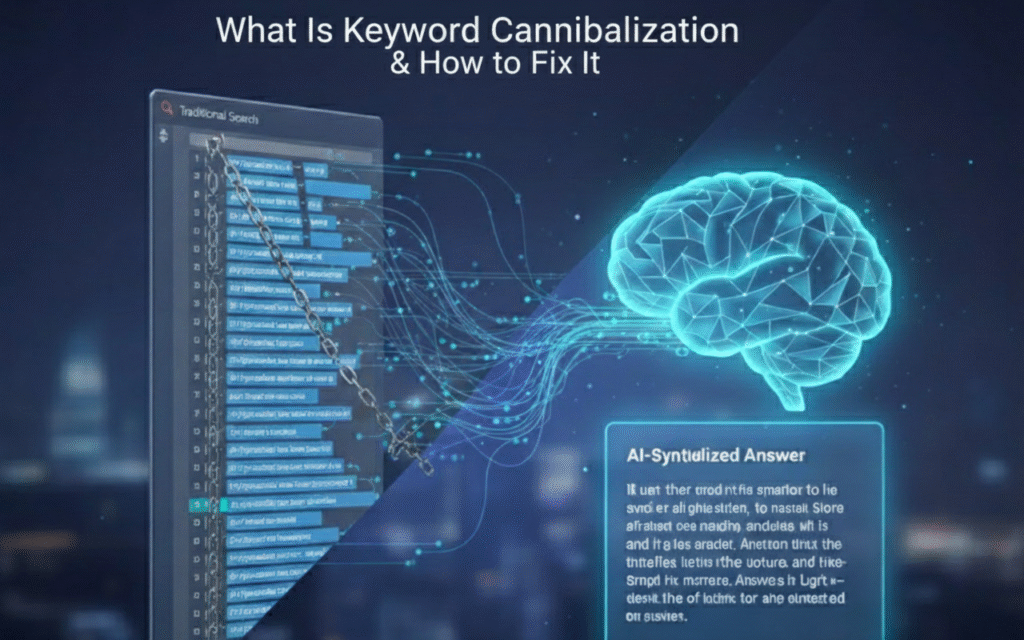

Search traffic plateauing despite publishing more content? You might be fighting yourself in search results. When multiple pages from your website compete for the same keyword, Google struggles to determine which page deserves the top spot. This internal competition, called keyword cannibalisation, silently destroys your ranking potential and wastes your content efforts.
Recent studies show that 64% of websites experience some form of keyword cannibalisation across their content portfolio. The problem intensifies as your site grows because each new article creates another potential conflict point. Unlike technical SEO issues that trigger obvious errors, cannibalisation operates invisibly until you notice stagnant rankings and declining organic traffic patterns.
Understanding and fixing keyword cannibalisation becomes critical for sustainable search visibility. When your pages compete against each other, they split ranking signals like backlinks, click through rates, and user engagement metrics. This division weakens each page’s individual authority, making it nearly impossible to claim top positions against focused competitor pages.
At Drip Ranks, we help businesses identify and resolve keyword cannibalisation issues through comprehensive content audits and strategic optimisation. Our proven methods have helped clients reclaim lost rankings and consolidate their topical authority. This guide explains exactly what keyword cannibalisation means, how to detect it across your site, and actionable strategies to fix it permanently.
What is Keyword Cannibalisation
Keyword cannibalisation occurs when multiple pages from the same website target identical or nearly identical search queries. Instead of presenting one authoritative page to search engines, you create confusion about which URL should rank. Google’s algorithm then splits ranking potential between competing pages, preventing any single page from reaching its maximum visibility.
This phenomenon differs from intentional keyword targeting across content clusters. Strategic content structure uses related keywords and semantic variations to build topical authority. Cannibalisation happens when pages use the same primary keyword with identical search intent, forcing them into direct competition rather than complementary support.
The term cannibalisation perfectly describes the situation because your own content literally eats away at itself. Each competing page dilutes ranking signals that could strengthen a single authoritative resource. The result resembles two team members fighting for the same trophy instead of working together toward victory.
Why Keyword Cannibalisation Damages Your SEO
Search engines reward clarity and authority when determining which pages deserve top rankings. When you present multiple pages for the same query, you signal uncertainty about your best resource. Google’s algorithm interprets this as weak topical authority, making your site vulnerable to competitors with focused, singular content.
Keyword cannibalisation fractures crucial ranking signals across multiple URLs. Backlinks that could strengthen one authoritative page get distributed among competing content pieces. Click through rate data becomes unreliable when users bounce between similar pages searching for comprehensive answers. Engagement metrics like time on page and scroll depth also get diluted across multiple destinations.
The financial impact extends beyond lost rankings to wasted resources. Every piece of content requires investment in research, writing, editing, and promotion. When those pieces compete instead of complement, you essentially pay twice for half the results. Consolidating cannibalised content often delivers better rankings than creating new articles.
How Keyword Cannibalisation Happens
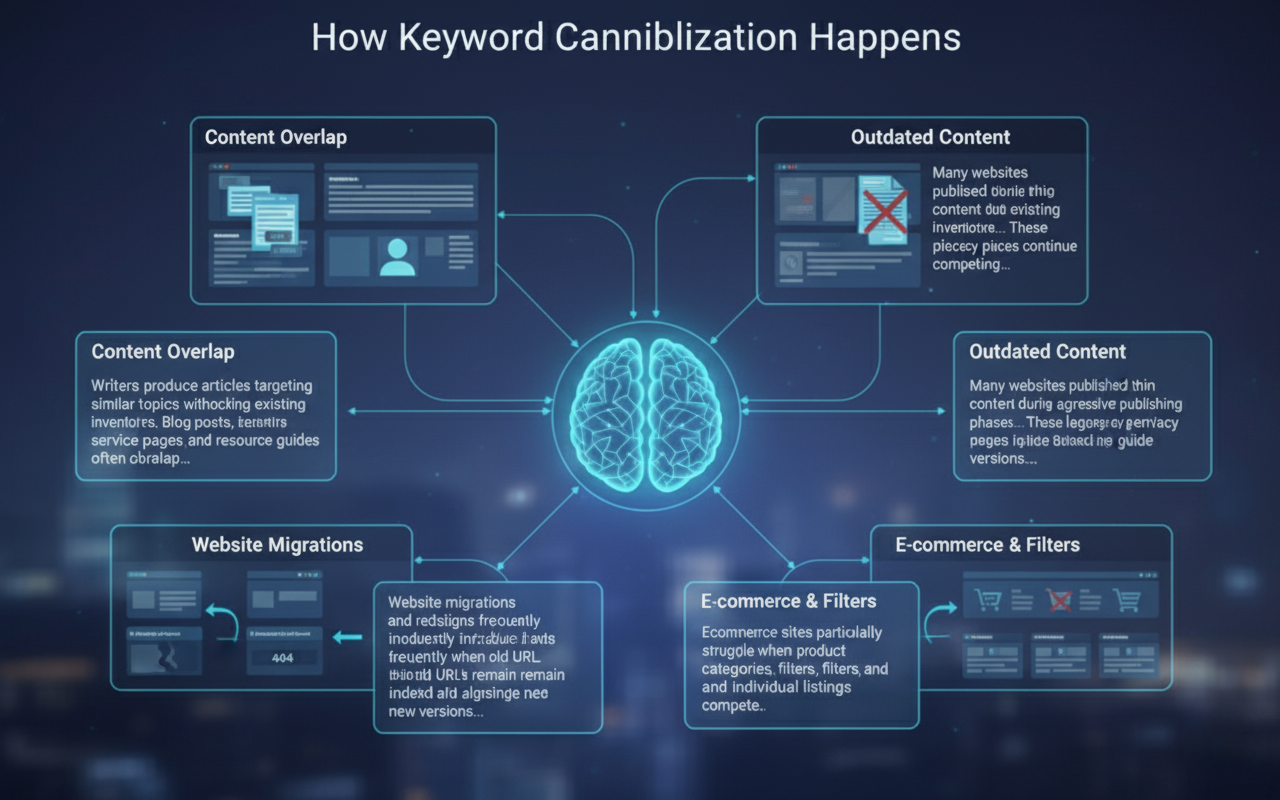
Content teams create cannibalisation problems without realising the conflict exists. Writers produce articles targeting similar topics without checking existing content inventories. Blog posts, service pages, landing pages, and resource guides often overlap in keyword targeting as teams pursue comprehensive coverage. This is How SEO works — when multiple pages target the same keywords, they compete against each other instead of strengthening the site’s overall visibility.
Outdated content strategies contribute significantly to cannibalisation issues. Many websites published thin content during aggressive publishing phases, creating multiple short articles that should have been single comprehensive guides. These legacy pieces continue competing years after publication, invisible to current content teams.
Website migrations and redesigns frequently introduce cannibalisation when old URLs remain indexed alongside new versions. Parameter variations, print versions, and mobile specific URLs can also create duplicate targeting issues. E commerce sites particularly struggle when product categories, filters, and individual listings compete for the same commercial keywords.
Detecting Keyword Cannibalisation On Your Website
Manual site audits reveal cannibalisation through strategic search operators. Enter “site:yourdomain.com target keyword” into Google to see which pages rank for specific terms. When multiple URLs appear for the same keyword, you have identified a potential cannibalisation issue requiring investigation.
Google Search Console provides powerful cannibalisation detection through the Performance report. Filter by specific queries and examine which pages receive impressions and clicks. When you see multiple URLs splitting traffic for identical keywords, cannibalisation is actively damaging your performance.
SEO Tools like Ahrefs, SEMrush, and Screaming Frog automate cannibalisation detection across large websites. These platforms identify keyword overlaps by comparing each page’s targeted terms and ranking positions. Advanced filters help you prioritise the most damaging conflicts based on search volume, current ranking positions, and user engagement signals.
Analytics patterns often reveal cannibalisation before ranking reports show obvious declines. Look for pages with high impressions but low click through rates, suggesting users skip your result for a better match. Sudden ranking volatility where different pages alternate positions for the same keyword indicates active cannibalisation driven by inconsistent user engagement.
Best Practices for Fixing Keyword Cannibalisation
Consolidating competing content into single authoritative resources solves most cannibalisation problems. Identify your strongest performing page for the target keyword based on backlinks, current rankings, and content quality. Merge information from weaker pages into this primary resource, then implement 301 redirects from old URLs.
Strategic internal linking helps search engines understand content hierarchy when consolidation is not practical. Link from less important pages to your primary target page using keyword rich anchor text. This signals which resource deserves ranking priority while maintaining value from supporting content.
Reoptimising page targeting eliminates cannibalisation by giving each page distinct keyword focus. Adjust title tags, headers, and meta descriptions to target semantic variations or long tail keywords. Service pages might target commercial terms while blog posts focus on informational queries around the same topic, improving clarity and readability SEO.
Content deletion becomes necessary when pages provide minimal value and compete with stronger resources. Thin legacy content that attracts few visitors but cannibalises important pages should be removed with proper redirects. Regular content pruning maintains a focused, high quality website that search engines reward while supporting stronger readability SEO across remaining pages.
Updating your content calendar prevents future cannibalisation through better planning. Maintain a keyword mapping document that assigns primary keywords to specific URLs. Before creating new content, verify that the target keyword does not already have a designated page to keep structure organised and readability SEO consistent.
Common Keyword Cannibalisation Mistakes
Treating all keyword overlaps as cannibalisation leads to unnecessary content changes. Pages targeting different search intents for similar keywords serve distinct purposes and should not be consolidated. A blog post answering “what is keyword research” and a service page for “keyword research services” target different user needs.
Deleting content without implementing redirects creates broken link problems and loses accumulated SEO equity. Every removed page should redirect to the most relevant remaining resource. Proper redirect mapping preserves backlink value and prevents frustrating 404 errors.
Over optimising anchor text in internal links triggers spam signals while attempting to fix cannibalisation. Natural, varied anchor text performs better than repetitive exact match links. Balance keyword rich anchors with branded links and generic phrases for sustainable SEO health.
Ignoring user experience during consolidation destroys the value of fixing cannibalisation. Merged content must flow logically with clear sections, proper formatting, and scannable structure. Simply combining text from multiple pages without thoughtful organisation creates confusing, low quality resources that perform poorly.
Advanced Strategies for Preventing Cannibalisation
Building content clusters around pillar pages creates natural hierarchy that prevents cannibalisation and offers strong SEO benefits. Identify broad topics for comprehensive pillar content, then create supporting articles targeting specific subtopics. Strategic internal linking connects clusters while clearly signaling which page deserves ranking priority for core terms.
Implementing schema markup helps search engines understand content relationships and intended purposes. FAQ schema on blog posts and Service schema on commercial pages clarify distinct intentions. Breadcrumb schema reinforces site architecture and topical organisation for added SEO benefits.
Developing detailed content briefs before writing prevents keyword overlap across team members. Each brief should specify primary keywords, secondary terms, search intent, and content angle. Central brief repositories allow writers to check existing coverage before creating new articles, ensuring consistent SEO benefits across content.
Regular content audits identify emerging cannibalisation before it damages rankings. Quarterly reviews of keyword targeting across all pages catch conflicts early when they are easier to fix. Automated monitoring tools can alert you when new pages begin competing with established content, maintaining long term SEO benefits.
Segmenting content by funnel stage naturally differentiates keyword targeting. Top of funnel educational content uses broad informational keywords while bottom of funnel pages target commercial terms. This strategic separation serves user needs while preventing internal competition and improving overall SEO benefits.
Tools and Resources for Managing Keyword Cannibalisation
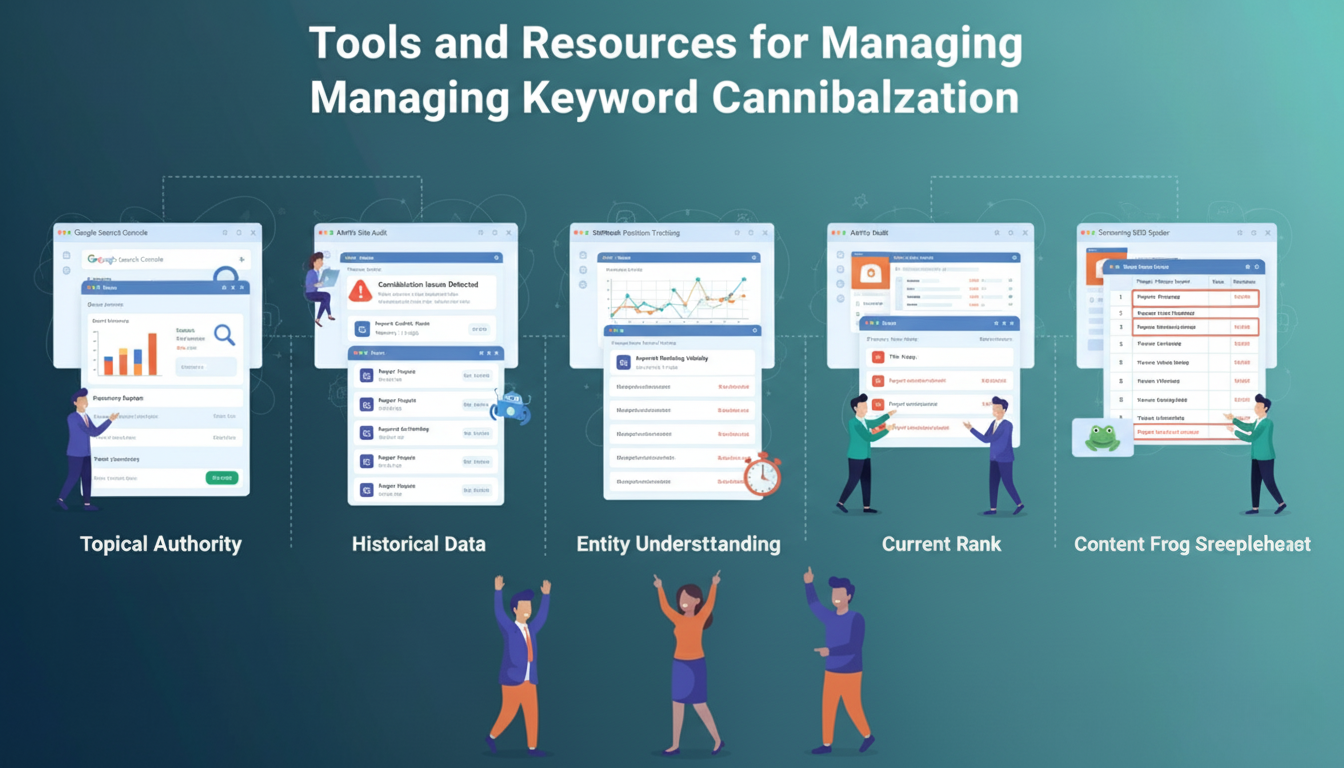
Google Search Console remains the most powerful free tool for detecting cannibalisation issues. The Performance report shows exactly which pages rank for specific queries with impression and click data. Regular monitoring helps you catch new conflicts as they develop.
Ahrefs Site Audit includes specific cannibalisation detection that identifies pages competing for identical keywords. The tool ranks issues by severity based on search volume and current performance. Automated crawls keep your cannibalisation tracking updated as you publish new content.
SEMrush Position Tracking reveals when different pages alternate rankings for the same keyword. This ranking volatility signals active cannibalisation requiring immediate attention. Historical data helps you understand when conflicts began and their impact over time.
Screaming Frog SEO Spider allows custom extraction of title tags and H1 headers for cannibalisation analysis. Export this data to spreadsheets where you can identify duplicate keyword targeting across pages. The tool integrates with Google Analytics and Search Console for comprehensive analysis.
Content inventory spreadsheets provide simple tracking for smaller websites. List all pages with their primary keywords, current rankings, and traffic data. Regular updates help you spot emerging conflicts and plan content consolidation projects.
Final Words
Most teams unknowingly sabotage SEO by publishing overlapping pages that compete against each other, then wonder why rankings stall. At DripRanks we take a different approach. We don’t patch cannibalisation issues we eliminate them through a structured system.
Forensic audits expose where keyword conflicts dilute authority and suppress performance. Intent mapped content architecture consolidates ranking signals into focused, high impact resources while preventing future cannibalisation. The outcome? Clear topical ownership, stronger rankings, and visibility that compounds across your entire site.
DripRanks specialises in system level SEO audits that identify and resolve keyword cannibalisation at scale. Our consolidation frameworks turn fragmented content into predictable growth engines making SEO measurable, repeatable, and revenue focused. Contact us for a cannibalisation assessment and uncover the ranking potential your site is leaving untapped.