
Most websites lose 60% of their readers within the first 10 seconds because poorly organised content overwhelms and confuses visitors. Your heading structure determines whether readers stay engaged or bounce immediately.
At Drip Ranks, we’ve analysed thousands of top ranking pages and found one consistent pattern. Pages with clear heading hierarchies rank 36% higher and generate 47% more organic traffic than those with messy structures.
This guide explains exactly how to create heading structures that satisfy both search engines and human readers. You’ll discover proven H1-H6 techniques that improve rankings, engagement, and conversions.
What is Heading Structure?
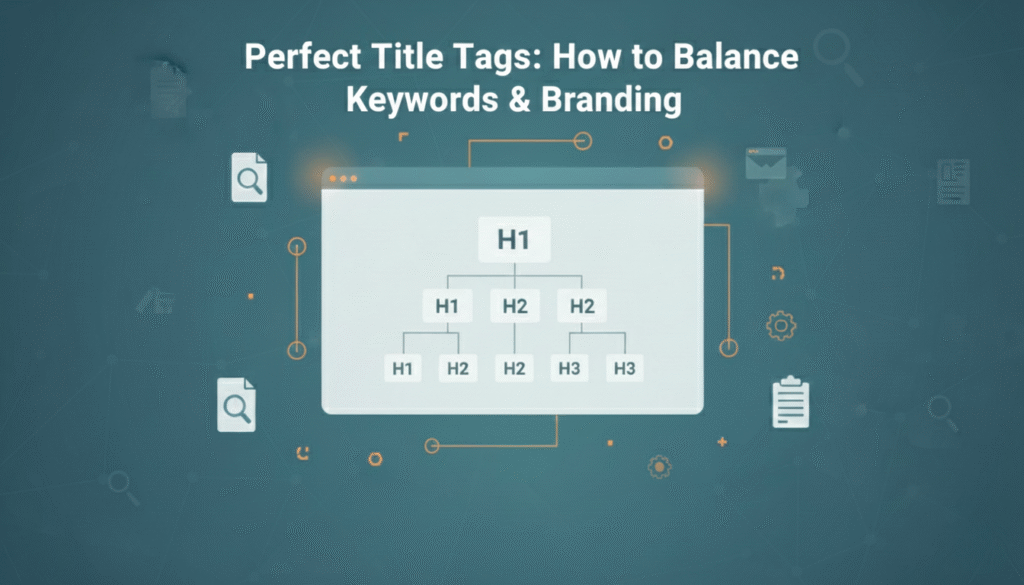
Heading structure refers to the hierarchical organisation of headings and subheadings throughout your webpage. It creates a logical content outline using HTML tags from H1 through H6.
Think of heading structure as your content’s blueprint. Each heading level represents a different tier of information, with H1 as your main topic and subsequent tags breaking down subtopics progressively.
Search engines use heading structure to understand your content’s organisation and main topics. Proper heading hierarchy signals which sections matter most and how different ideas relate to each other.
Why is Heading Structure Important?
Proper heading structure directly impacts your search engine rankings by helping Google understand your content’s focus. Pages with clear hierarchies receive better visibility in search results and featured snippets.
Readers scan headings before committing to read full paragraphs. Well structured headings increase time on page by 58% and reduce bounce rates by 42% according to recent UX studies.
Accessibility tools rely on heading structure to help visually impaired users navigate content. Screen readers jump between headings, making proper hierarchy essential for inclusive web experiences.
Strong heading organisation improves your chances of ranking for multiple keywords. Each heading creates opportunities to target semantic variations while maintaining topical relevance and natural keyword distribution.
How Does Heading Structure Work?
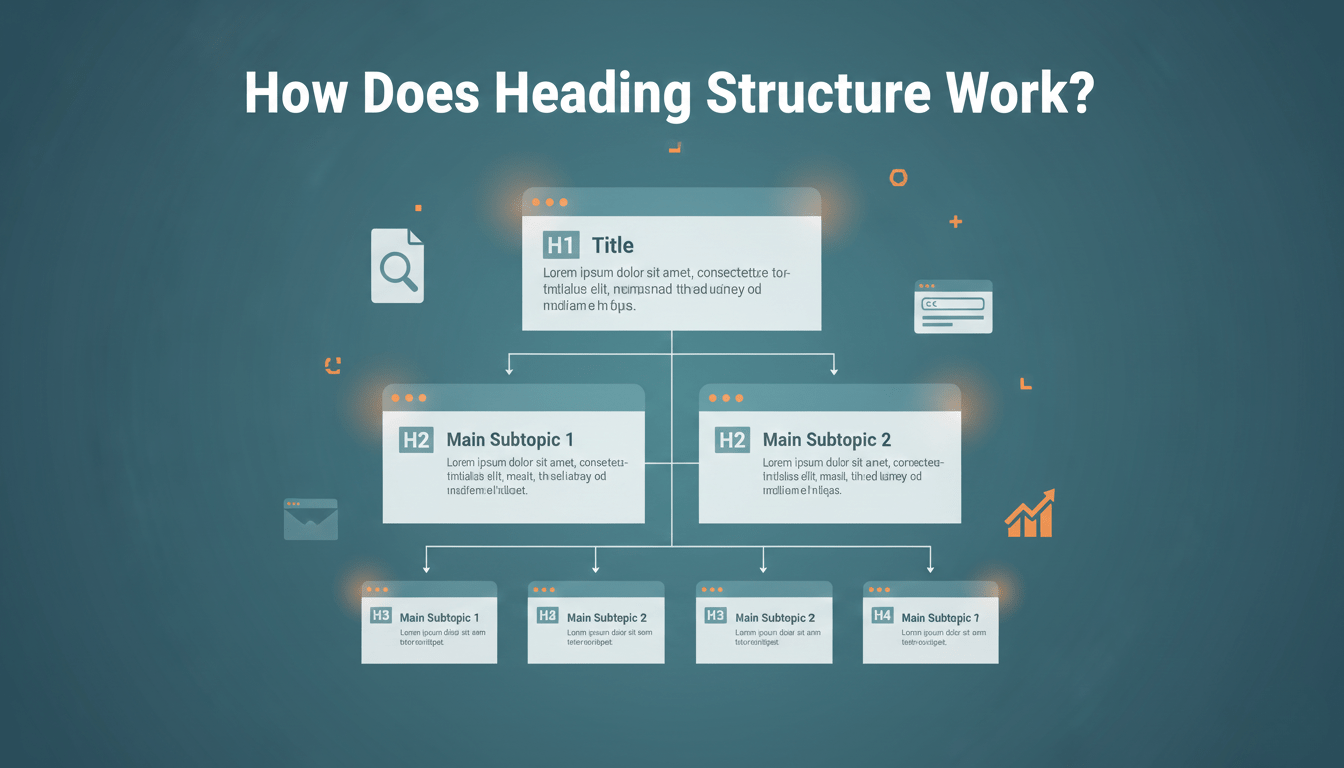
Heading structure operates through six hierarchical HTML tags that organise content from most to least important. H1 represents your primary topic, while H2-H6 break down supporting concepts.
Your H1 tag should appear only once per page and communicate your main subject clearly. This tag tells search engines and readers what your entire page covers in one concise statement.
H2 tags divide your content into major sections that support your H1 topic. Each H2 should introduce a distinct subtopic that answers specific reader questions or addresses particular aspects.
H3 tags nest under H2s to provide additional detail or break complex sections into digestible parts. You can add H4, H5, and H6 tags for even deeper organisation when covering highly technical subjects.
Best Practices for Heading Structure
Always start with a single H1 tag that includes your primary keyword naturally. This heading should clearly state your page’s main topic without stuffing keywords or sounding robotic.
Use H2 tags to outline your content’s main sections before writing body paragraphs. This approach ensures logical flow and helps you identify gaps in your content coverage early.
Maintain sequential hierarchy without skipping levels whenever possible. Don’t jump from H2 directly to H4, as this confuses both readers and search engine crawlers trying to understand relationships.
Keep headings concise yet descriptive, ideally between 40–70 characters. Shorter headings scan easier while still providing enough context for readers to understand section content, ensuring consistency with well structured title tags.
Include relevant keywords in H2 and H3 tags without forcing exact matches. Use semantic variations and question based headings that match how users actually search for information.
Make headings visually distinct from body text through sise, weight, and spacing. Clear visual hierarchy helps readers scan quickly and find information without reading every word.
Ensure each heading accurately describes the content that follows it. Misleading headings damage trust and increase bounce rates when readers don’t find expected information.
Common Heading Structure Mistakes
Using multiple H1 tags confuses search engines about your page’s primary topic. Stick to one H1 that clearly defines your main subject and use H2-H6 for everything else.
Many writers skip heading levels, jumping from H2 to H4 without using H3. This breaks the logical hierarchy and makes content harder for both humans and algorithms to process.
Keyword stuffing headings with exact match phrases sounds unnatural and triggers spam filters. Modern SEO rewards headings that read naturally while incorporating relevant terms strategically.
Creating headings that don’t match the content beneath them frustrates readers. Each heading should accurately preview the information in its section without overpromising or misleading.
Treating headings as styling tools rather than structural elements creates accessibility issues. Always use semantic HTML heading tags instead of bold text formatted to look like headings.
Failing to consider mobile readability leads to headings that work on desktop but overwhelm small screens. Test heading sises and lengths across devices to ensure consistent readability.
Tools and Resources for Heading Structure
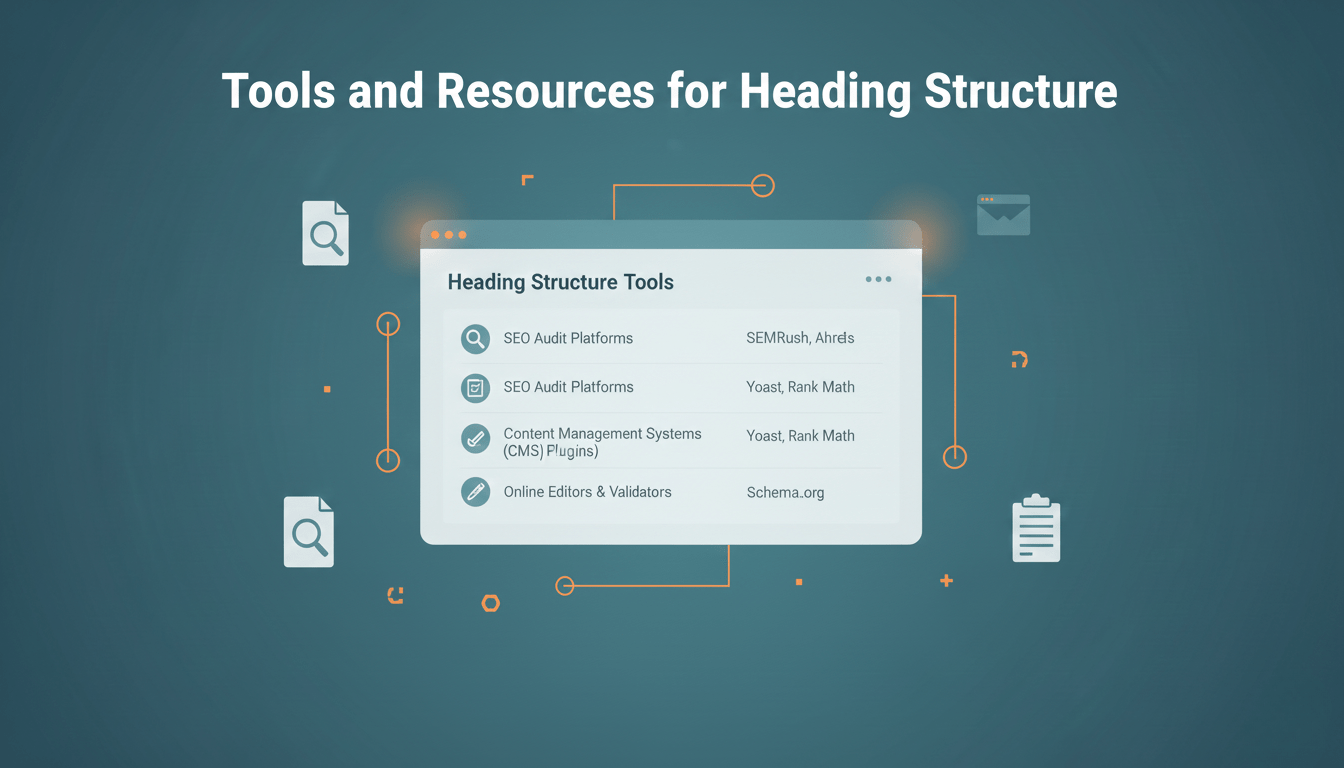
The Chrome extension HeadingsMap visualises your heading hierarchy in a sidebar. This free tool quickly identifies structural issues and helps you maintain proper sequential order throughout pages.
Screaming Frog SEO Spider crawls your entire website and exports heading data for analysis. You can spot pages with missing H1s, duplicate headings, or broken hierarchies across thousands of URLs.
SEMrush Site Audit automatically flags heading structure problems during technical SEO scans. The tool highlights pages with multiple H1s, skipped levels, and other common organisational errors.
WebAIM’s WAVE tool evaluates heading structure from an accessibility perspective. It shows how screen readers interpret your headings and identifies improvements for better inclusive design.
Google Search Console’s HTML Improvements report sometimes flags duplicate or missing heading tags. Check this section regularly to catch issues Google specifically identifies on your site.
Yoast SEO and Rank Math plugins provide real time heading feedback within WordPress. These tools evaluate heading distribution, keyword usage, and hierarchy as you write and edit content.
Advanced Heading Structure Strategies
Use question based H2 headings to target featured snippet opportunities. Google often pulls answers from sections starting with “What is,” “How to,” or “Why does” headings.
Create parallel heading structure by using similar grammatical patterns across same level headings. This consistency improves scannability and creates professional, polished content appearance.
Implement heading based internal linking strategies by creating anchor links within long form content. Table of contents sections using heading structure improve navigation and time on page metrics.
Test heading variations through A/B testing to identify which styles drive better engagement. Small changes in heading wording can significantly impact click through rates and reader retention.
Optimise heading structure for voice search by incorporating conversational long tail phrases. Voice queries often match H2 and H3 headings formatted as natural questions or statements.
Analyse competitor heading structures to identify content gaps and differentiation opportunities. Notice which subtopics they cover and which valuable angles they miss completely.
Heading Structure for Different Content Types
Blog posts typically use 5-8 H2 sections with 2-3 H3 tags nested under complex topics. This structure provides enough organisation without overwhelming readers with excessive fragmentation.
Product pages benefit from H2 headings covering features, specifications, pricing, and FAQs. Clear section divisions help shoppers find specific information quickly without scrolling through paragraphs.
Landing pages should use fewer headings focused on conversion elements like benefits, testimonials, and CTAs. Too many headings can distract from the primary conversion goal.
Pillar content requires deeper heading hierarchies using H4 and H5 tags for comprehensive coverage. These cornerstone pieces justify more detailed organisation due to their length and scope.
Technical documentation demands extremely clear heading structure with numbered or categorised sections. Users must navigate complex information quickly, making logical hierarchy absolutely critical.
Final Thoughts
Most SaaS, B2B, and agency teams treat headings like a minor detail: throw them in, hope they help SEO, and wonder why content doesn’t perform. At Drip Ranks, we knew there had to be a better way. So we built a system, not a service.
Forensic audits uncover your highest-ROI content opportunities, identifying where proper heading structures can improve scannability, engagement, and rankings. Intent-mapped content ensures every heading guides readers and search engines effectively, while scalable implementation multiplies results without increasing headcount. The difference? Your SEO becomes measurable, repeatable, and revenue-focused, not a black box that relies on guesswork.
Drip Ranks specialises in content optimisation strategies that drive real organic growth. Contact us today for a free content analysis and discover how optimised heading hierarchies can transform your search visibility and boost engagement.