
Google’s latest algorithm updates show that technical optimisation alone no longer guarantees top rankings. Recent data reveals that 88% of high ranking pages demonstrate strong E-E-A-T signals, while technically perfect sites without credibility struggle to break into the top 10.
The shift happened when Google added “Experience” to their quality guidelines in December 2022. This change fundamentally altered how search engines evaluate content quality and author credibility. Your website now needs more than keywords and backlinks to succeed.
This guide reveals how E-E-A-T works, why it matters for your rankings, and actionable strategies to build each component. You’ll learn proven methods that Drip Ranks uses to help clients establish credibility and dominate search results through authentic expertise signals.
What is E-E-A-T in SEO
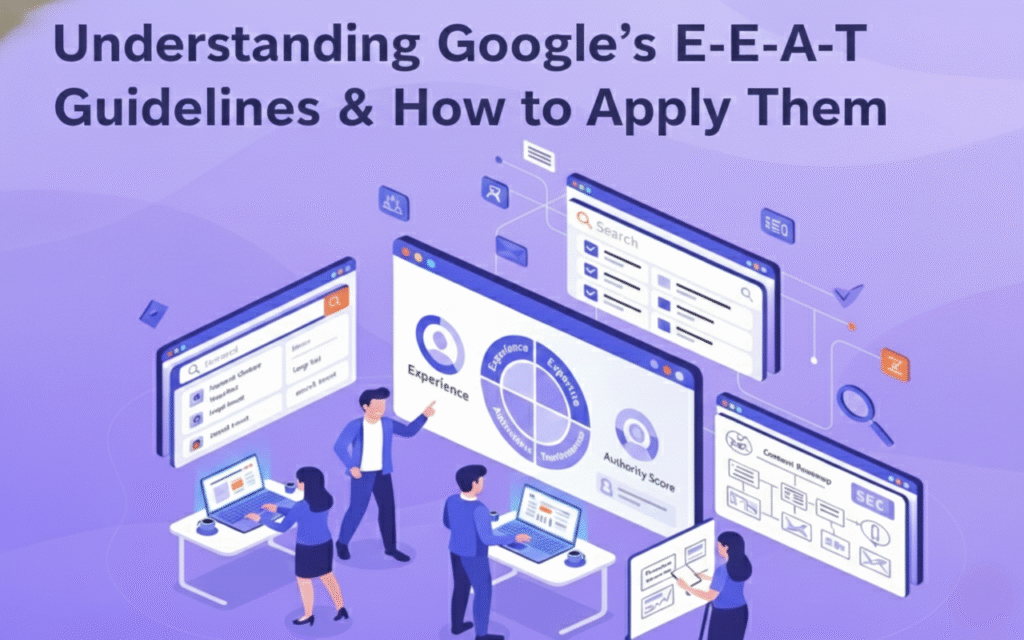
E-E-A-T stands for Experience, Expertise, Authoritativeness, and Trustworthiness. Google’s Search Quality Rater Guidelines use this framework to evaluate content quality and determine which pages deserve higher rankings. Search algorithms assess these signals through multiple data points across your website, and understanding what is SEO helps in optimising content to meet these quality standards, especially when implementing image SEO for better visibility.
The framework guides both human quality raters and machine learning systems. When raters review search results, they look for clear evidence of real world experience, demonstrated knowledge, industry recognition, and transparent business practices. These human evaluations train Google’s algorithms to recognise quality patterns.
For example, a medical article written by a board certified doctor with patient care experience scores higher than generic health content from unknown writers. Google’s systems detect authorship credentials, publication history, and external validation signals that confirm the doctor’s qualifications.
Why E-E-A-T Matters for Search Rankings
E-E-A-T directly impacts your visibility for competitive keywords. Google confirmed that these quality signals influence how algorithms assess content, particularly for topics that affect health, finances, safety, or major life decisions. Sites with weak E-E-A-T face ranking penalties even with perfect technical SEO.
The business impact shows clearly in case studies. Websites that improved author credibility and expertise signals saw average ranking increases of 34% within six months. Conversely, sites hit by Helpful Content Updates typically showed poor E-E-A-T scores before traffic drops occurred.
Your Your Money Your Life pages need especially strong E-E-A-T. Financial advice, medical information, legal guidance, and major purchase decisions require content creators with verifiable credentials. Google protects users by demoting low quality information that could cause harm or financial loss.
How Google Evaluates E-E-A-T Signals
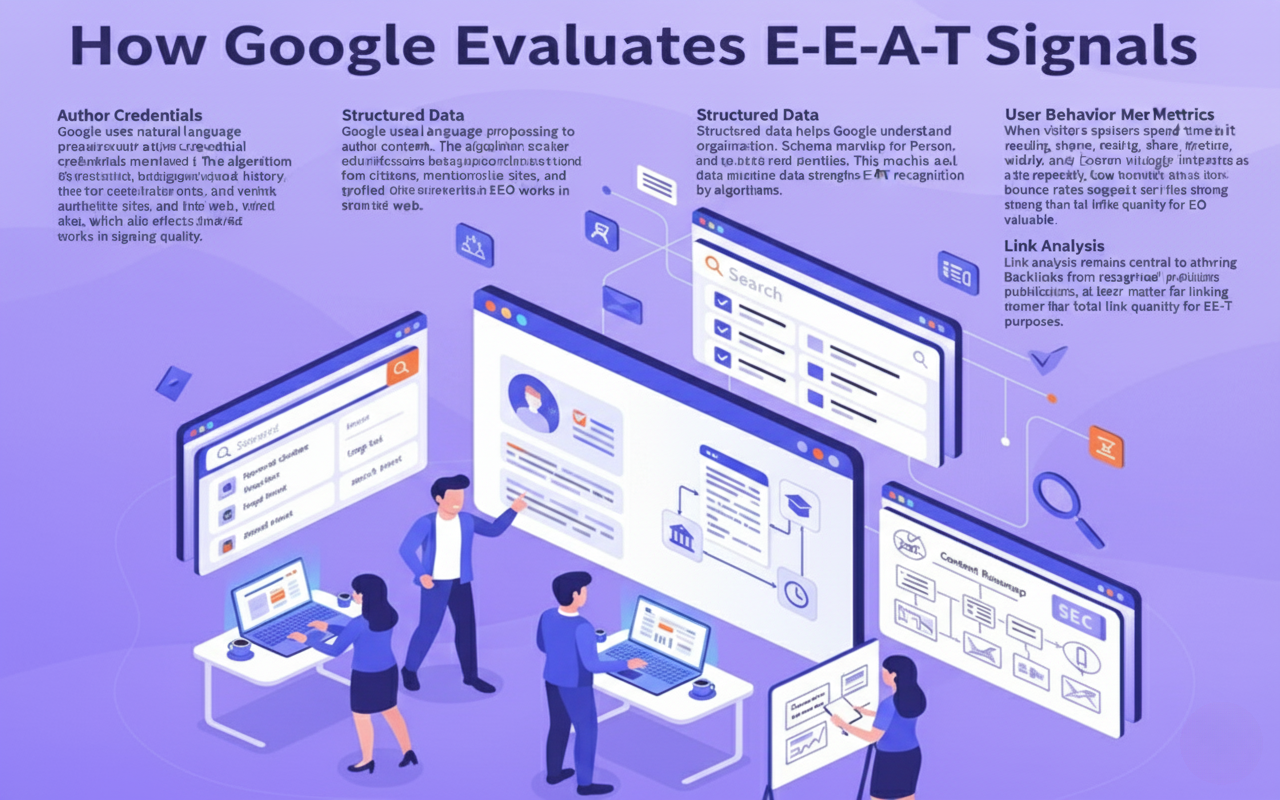
Google uses natural language processing to analyse author credentials mentioned within content. The algorithm scans for professional titles, certifications, educational background, and work history that establish expertise. External validation comes from citations, mentions on authoritative sites, and verified profiles across the web, which also reflects how SEO works in signaling quality.
Structured data helps Google understand author and organisation information. Schema markup for Person, Organisation, and Article entities provides clear signals about who created content and their qualifications, supporting clarity alongside proper title tags. This machine readable data strengthens E-E-A-T recognition by algorithms.
User behavior metrics also play a role. When visitors spend more time reading content, share it widely, and return to a site repeatedly, Google interprets these patterns as trust signals. Low bounce rates and strong engagement suggest users find the information credible and valuable.
Link analysis remains central to authority assessment. Backlinks from recognised industry publications, educational institutions, and government sites transfer authority. The quality and relevance of linking domains matter far more than total link quantity for E-E-A-T purposes.
Building Experience Signals That Google Recognises
Experience means first hand involvement with the topic you’re writing about. Google’s guidelines specifically ask whether content demonstrates practical knowledge gained through direct use, participation, or professional practice. This separates authentic insights from rehashed information copied from other sources.
Demonstrate real experience by including specific details only someone with hands on knowledge would know. Share personal observations, unique data from your own projects, original photos or screenshots, and specific outcomes from testing. Generic advice anyone could write fails to signal genuine experience.
For product reviews, experience means actually using the item over time. Show timestamps on photos, discuss performance after extended use, and compare results across different conditions. Google’s algorithms can detect the difference between compiled research and authentic product testing through language patterns and specific details.
Service providers should showcase client work with concrete results. Case studies with specific metrics, project timelines, and before after comparisons demonstrate real professional experience. Client testimonials with full names and verifiable businesses add credibility to your experience claims.
Establishing Expertise in Your Niche
Expertise requires demonstrated knowledge depth that goes beyond surface level information. Google looks for educational credentials, professional certifications, industry awards, speaking engagements, and published work that validates your subject matter knowledge. Your digital footprint should prove specialised knowledge.
Create comprehensive author pages that detail relevant qualifications. List degrees, certifications, years of experience, notable clients, and professional affiliations. Link to your LinkedIn profile, published articles, conference presentations, and any industry recognition you’ve received.
Publish content that showcases specialised knowledge competitors cannot easily replicate. Technical deep dives, original research, proprietary methodologies, and advanced strategies signal expertise. Avoid basic tutorials that any beginner could write after quick research.
Guest posting on recognised industry publications builds visible expertise signals. When authoritative sites publish your insights, it validates your knowledge to both users and algorithms. Focus on quality placements over quantity, targeting publications Google already considers authoritative.
Contributing to industry discussions demonstrates ongoing expertise. Answer questions on professional forums, participate in LinkedIn groups, speak at conferences, and engage with other experts publicly. These activities create a digital trail that algorithms can follow to verify your credentials.
Developing Authoritativeness Across the Web
Authoritativeness means recognition by other experts and institutions within your field. Google measures this through citations, references, links from trusted sources, and brand mentions across reputable platforms. Your reputation must extend beyond your own website properties.
Build relationships with authoritative sites through genuine collaboration. Contribute research, provide expert quotes for journalist inquiries, partner on studies, and participate in industry initiatives. These activities generate natural mentions and links from high authority domains.
Media coverage amplifies authority signals dramatically. Getting featured in major publications, industry journals, or news outlets creates powerful validation. Submit expert commentary through services like HARO, pitch unique story angles to journalists, and build relationships with reporters covering your industry.
Professional associations and certifications provide institutional authority. Membership in recognised organisations, board positions, advisory roles, and official certifications all strengthen authority signals. Display these credentials prominently and link to verifying organisations.
Awards and recognition from industry bodies serve as third party authority validation. Apply for relevant awards, encourage clients to nominate you, and pursue speaking opportunities at major conferences. Each recognition creates content opportunities and citation sources that boost authority.
Creating Trustworthiness Through Transparency
Trustworthiness depends on transparency, security, and consistent positive user experiences. Google evaluates trust through technical signals like HTTPS encryption, clear privacy policies, accessible contact information, and transparent business practices. Users must feel safe interacting with your site.
Display trust signals prominently throughout your website. Include physical business addresses, phone numbers, email contacts, and verified social media profiles. Hidden or difficult to find contact information raises red flags for both users and algorithms.
Implement comprehensive security measures that users can verify. Use SSL certificates, display security badges, clearly explain data handling practices, and provide transparent terms of service. Payment pages need especially robust security signals for e commerce sites.
Customer reviews and third party ratings strengthen trust significantly. Encourage satisfied clients to leave reviews on Google Business Profile, industry specific review platforms, and trusted sites like Trustpilot. Respond professionally to all feedback, including negative reviews.
Accurate, well cited content builds trust over time. Link to authoritative sources for factual claims, update content regularly to maintain accuracy, correct errors promptly when discovered, and avoid exaggerated marketing claims. Honesty and accuracy compound into strong trust signals.
Common E-E-A-T Mistakes to Avoid
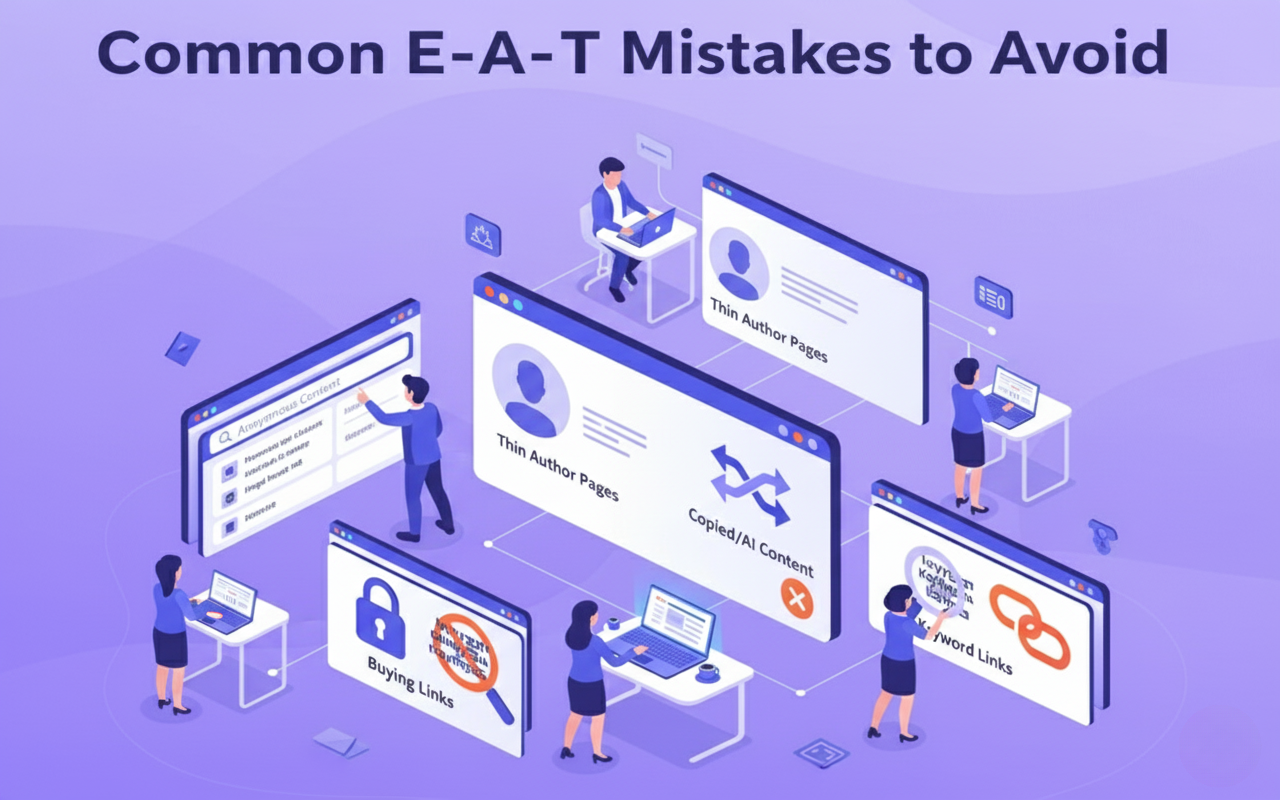
Publishing content without clear authorship damages all E-E-A-T components. Anonymous articles raise questions about who wrote the information and whether they have relevant qualifications. Every piece should have an attributed author with a detailed bio.
Thin author pages or missing author information sabotage expertise signals. A one sentence bio without credentials, links, or verification provides no evidence of qualifications. Build comprehensive author profiles that prove knowledge and experience.
Copying content from other sources destroys experience signals. Rewritten or AI generated content without original insights fails to demonstrate first hand knowledge. Google’s algorithms detect derivative content that lacks unique value.
Ignoring technical trust factors undermines credibility. Missing HTTPS encryption, broken pages, intrusive ads, and poor mobile experiences all signal low quality. Technical issues directly impact perceived trustworthiness regardless of content quality.
Over optimisation, keyword placement, and keyword stuffing conflicts with E-E-A-T principles. Content written primarily for search engines rather than humans appears manipulative. Natural, user focused writing demonstrates genuine expertise better than keyword dense text.
Buying links from irrelevant sites harms authority assessment. Google’s algorithms identify unnatural link patterns and may penalise sites engaging in manipulative practices. Focus on earning links through valuable content and genuine relationships.
E-E-A-T Optimisation Tools and Resources
Google’s Search Quality Rater Guidelines provide the official framework for understanding E-E-A-T. This document explains exactly what quality raters look for and how they evaluate experience, expertise, authority, and trust. Review it regularly as Google updates these guidelines.
Author rank monitoring tools track your growing expertise footprint. Brand24 and Mention help monitor brand mentions across the web. Google Alerts notifies you when your name or brand appears online, helping you track authority growth, and these are essential SEO tools.
Schema markup generators simplify adding structured data for E-E-A-T. Use Google’s Structured Data Markup Helper to create Person, Organisation, and Article schema. Validate implementations with Google’s Rich Results Test tool.
Backlink analysis platforms like Ahrefs and Semrush help evaluate your authority profile. Monitor which authoritative sites link to you, identify new link opportunities, and analyse competitor authority signals. Focus on quality metrics over quantity.
Reputation management tools protect trust signals. ReviewTrackers and Birdeye help monitor and manage reviews across platforms. Respond quickly to feedback and address concerns before they damage your credibility.
Advanced E-E-A-T Strategies for Competitive Niches
Multi author content teams strengthen E-E-A-T for sites covering diverse topics. Rather than one person writing about everything, assign topics to authors with relevant expertise. A finance site should have accountants write tax content and investment advisors handle portfolio articles.
Original research and proprietary data create unmatched expertise signals. Conduct industry surveys, compile original statistics, or perform unique studies that generate citations from other sites. This positions you as a primary source rather than secondary content creator.
Strategic partnerships with recognised experts boost authority quickly. Collaborate with established authorities on co authored content, expert roundups, or interview features. Their credibility transfers partially to your site through association.
Video and multimedia content demonstrates experience more effectively than text alone. Show yourself performing services, using products, or explaining concepts on camera. Visual proof of hands on experience creates stronger signals than written descriptions.
Continuous content updates maintain freshness and accuracy. Regularly review and update existing content with new information, recent data, and current examples. Google favors sites that maintain accuracy over time versus abandoned content.
Final Words
Most SaaS, B2B, and agency teams treat E-E-A-T like a checkbox: publish content, hope Google trusts it, and wonder why rankings aren’t predictable. At Drip Ranks, we knew there had to be a better way. So we built a system, not a service.
Forensic audits uncover your highest ROI opportunities for establishing genuine expertise, authority, and trust. Intent-mapped content ensures every asset demonstrates real experience, aligns with user intent, and earns third-party validation, while scalable execution multiplies results without increasing headcount. The difference? Your SEO becomes measurable, repeatable, and revenue-focused, not a black box that relies on guesswork.
Drip Ranks specialises in building authentic E-E-A-T signals that Google rewards. Our team helps businesses create credible author profiles, earn authoritative placements, and produce content that showcases real expertise. Contact us today to audit your current E-E-A-T standing and develop a strategic plan for dominating your niche through proven credibility-building techniques.