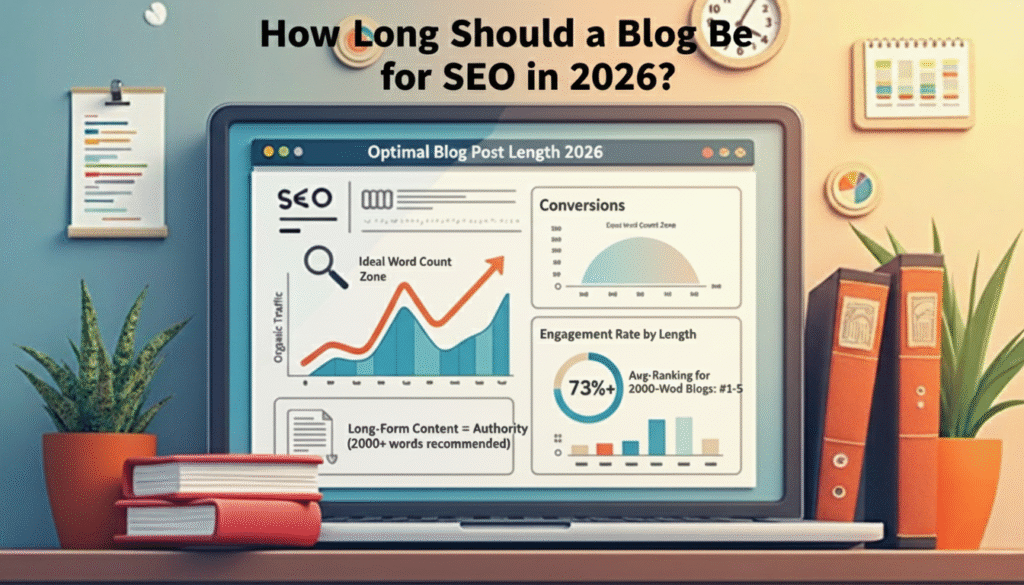

Google’s algorithm updates have made content quality more critical than ever before. Many business owners struggle with a fundamental question: how long should their content be to rank well? Recent studies show that top ranking pages average 1,447 words, but length alone doesn’t guarantee success.
Understanding content length strategy helps you create material that satisfies both search engines and human readers. The right word count depends on search intent, competition level, and the complexity of your topic. Many brands waste resources creating unnecessarily long articles that don’t serve their audience.
Smart content creators balance depth with readability to maximise engagement and conversions. Drip Ranks helps businesses develop content strategies that align with audience needs and search behavior. This guide reveals how to determine the perfect content length for every type of page on your website.
You’ll learn research backed strategies, common mistakes to avoid, and practical tools for optimising your content performance. By the end, you’ll know exactly how to structure content that ranks higher and converts better.
What is Content Length in SEO?
Content length refers to the total number of words on a webpage or blog post. This metric includes all visible text that users can read, from headlines to body paragraphs. Understanding What is SEO helps explain why search engines analyse content length as one factor when determining relevance and authority.
Word count serves as a rough indicator of how thoroughly you’ve covered a topic. Longer content typically allows for more comprehensive coverage, detailed examples, and stronger keyword integration. However, search engines prioritise value over arbitrary word counts.
Content length varies significantly based on content type and purpose. A product description might perform best at 300 words, while a pillar guide may require 3,000 words. The key is matching your length to what users expect when they search for specific terms.
Why Content Length Matters for SEO Performance
Longer content tends to rank higher because it signals comprehensive topic coverage. Google’s algorithm looks for content that fully answers user questions without requiring additional searches. Pages with 1,500+ words often include more semantic variations and related concepts that improve semantic seo and topical relevance.
Extended articles earn more backlinks because they serve as authoritative resources. Other websites prefer linking to detailed guides rather than shallow posts that lack substance. Each quality backlink strengthens your domain authority and improves rankings across your entire site.
Content length directly impacts user engagement metrics that influence SEO. Visitors spend more time on pages with valuable long form content, reducing bounce rates. Search engines interpret longer dwell time as a signal that your content satisfies search intent effectively.
How Content Length Impacts User Behavior
Readers scan content before committing to read fully, making structure more important than raw length. Well formatted long articles with clear subheadings allow users to find specific information quickly. Breaking content into digestible sections improves readability seo and keeps visitors engaged longer.
Mobile users prefer scannable content with short paragraphs and frequent visual breaks. Even long form articles must accommodate mobile reading patterns to maintain low bounce rates. Responsive design combined with strategic formatting makes extended content accessible across all devices.
Comprehensive content builds trust by demonstrating expertise and thorough research. When readers find complete answers in one place, they’re more likely to bookmark your page and return. This brand loyalty translates to repeat traffic and higher conversion rates over time.
Optimal Content Length by Content Type
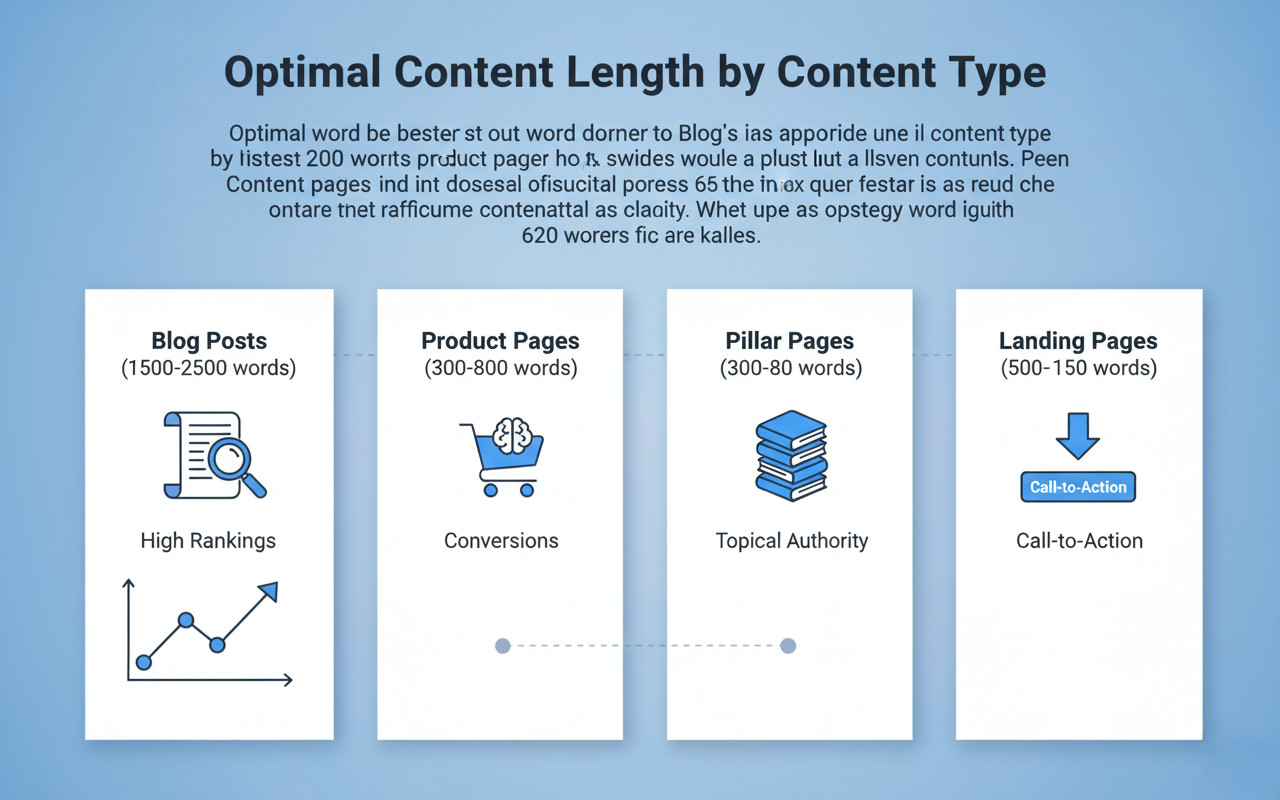
Blog posts perform best between 1,500 and 2,500 words for competitive keywords. This range allows thorough exploration while remaining accessible to casual readers. Listicle posts can succeed with 1,000 words if each point provides genuine value and actionable insights.
Product pages need 300 to 800 words depending on complexity and competition level. E commerce sites must balance SEO needs with conversion optimisation since overly long descriptions can distract buyers. Focus on benefits, specifications, and addressing common questions within this range.
Pillar pages and ultimate guides should exceed 3,000 words to establish topical authority. These comprehensive resources target high value keywords and serve as the foundation for your content clusters. They require extensive research but generate consistent organic traffic for years.
Landing pages typically perform best at 500 to 1,500 words with conversion focused copy. These pages must communicate value propositions clearly without overwhelming visitors with unnecessary information. Every word should move readers toward your desired action.
Best Practices for Determining Content Length
Analyse top ranking competitors to establish baseline length expectations for your target keywords. Search your primary keyword and examine the word count of pages ranking positions one through ten. This research reveals what Google currently considers sufficient coverage for that query.
Match your content length to search intent rather than following arbitrary rules. Informational queries often require longer explanations, while transactional searches need concise persuasive copy. Someone searching “how to build a website” expects a detailed guide, while “buy WordPress hosting” signals readiness to purchase.
Use topic clustering to determine when length should expand or contract. Core pillar content needs comprehensive coverage, while supporting cluster posts can be shorter and more focused. This strategic approach creates a content ecosystem that ranks for hundreds of related keywords.
Test different lengths with your specific audience through analytics and engagement tracking. Monitor metrics like time on page, scroll depth, and conversion rates to identify optimal ranges. Your audience’s preferences may differ from industry averages based on their expertise level and information needs.
Common Content Length Mistakes to Avoid
Adding fluff to reach arbitrary word counts damages both user experience and SEO performance. Search engines have become sophisticated at identifying low value content padding and repetitive statements. Every sentence should provide new information or reinforce key points strategically.
Creating short, superficial content for competitive keywords wastes publishing resources. Thin content rarely ranks for valuable search terms and provides no lasting SEO benefit. If you can’t add genuine value, consider whether the topic deserves its own page.
Ignoring readability while pursuing length targets causes high bounce rates despite meeting word counts. Dense paragraphs without visual breaks overwhelm readers and prevent them from finding specific information. Format long content with subheadings, bullet points, and white space for better engagement.
Copying competitor length without understanding their content strategy leads to misaligned expectations. A high ranking 3,000 word article may succeed because of its backlink profile, not its length. Focus on quality signals like depth, accuracy, and unique insights rather than matching word counts exactly.
Tools for Optimising Content Length Strategy
Clearscope and MarketMuse analyse top ranking content to recommend optimal length ranges. These SEO Tools identify content gaps and suggest topics to cover for comprehensive treatment. They remove guesswork from content planning by providing data driven length targets.
SEMrush and Ahrefs offer content length data within their keyword research tools. You can view average word counts for ranking pages before creating new content. This competitive intelligence helps you allocate writing resources appropriately for different keyword targets.
Surfer SEO provides real time content scoring based on length and other ranking factors. As you write, the SEO tool suggests whether to expand or tighten sections for better optimisation. This immediate feedback improves content quality while maintaining strategic length targets.
Google Search Console reveals which pages perform well despite shorter or longer lengths. Analyse your top performing content to identify patterns in your audience’s length preferences. These insights guide future content decisions based on proven performance with your specific readers.
Advanced Content Length Strategies for 2025
Topic depth now matters more than total word count for modern search algorithms. Google’s BERT and MUM updates prioritise semantic completeness over arbitrary length thresholds. Structure content around comprehensive topic coverage rather than hitting specific word counts.
Multi format content allows you to serve different audience segments with varying length preferences. Create long form guides with shorter companion videos or infographics for visual learners. This approach maximises reach while maintaining SEO benefits from comprehensive written content.
AI detection concerns make authentic, original content more valuable regardless of length. Search engines increasingly penalise generic, template based content that lacks unique perspective or expertise. Invest in quality research and original insights rather than bulk content production.
Voice search optimisation favors concise answers within longer comprehensive articles. Include direct 40 50 word answers to common questions while maintaining overall content depth. This strategy captures both featured snippet opportunities and traditional organic rankings.
Measuring Content Length Performance
Track rankings changes after publishing content to evaluate whether length meets expectations. Compare performance of longer versus shorter content targeting similar keywords in your niche. These patterns reveal your audience’s specific preferences and competitive requirements.
Monitor engagement metrics including average time on page and scroll depth percentage. High word counts mean nothing if readers abandon content after the first section. Heatmap tools show exactly where readers lose interest, allowing targeted improvements.
Conversion rate analysis determines whether content length supports or hinders business goals. Some topics convert better with brief, persuasive copy, while others need educational depth first. Test different lengths on high value pages to optimise both traffic and revenue.
Backlink acquisition rates often correlate with content comprehensiveness and usefulness. Track which content lengths in your portfolio earn the most quality links. This data guides future content investment toward formats that deliver the strongest SEO benefits.
Content Length and Voice Search Optimisation
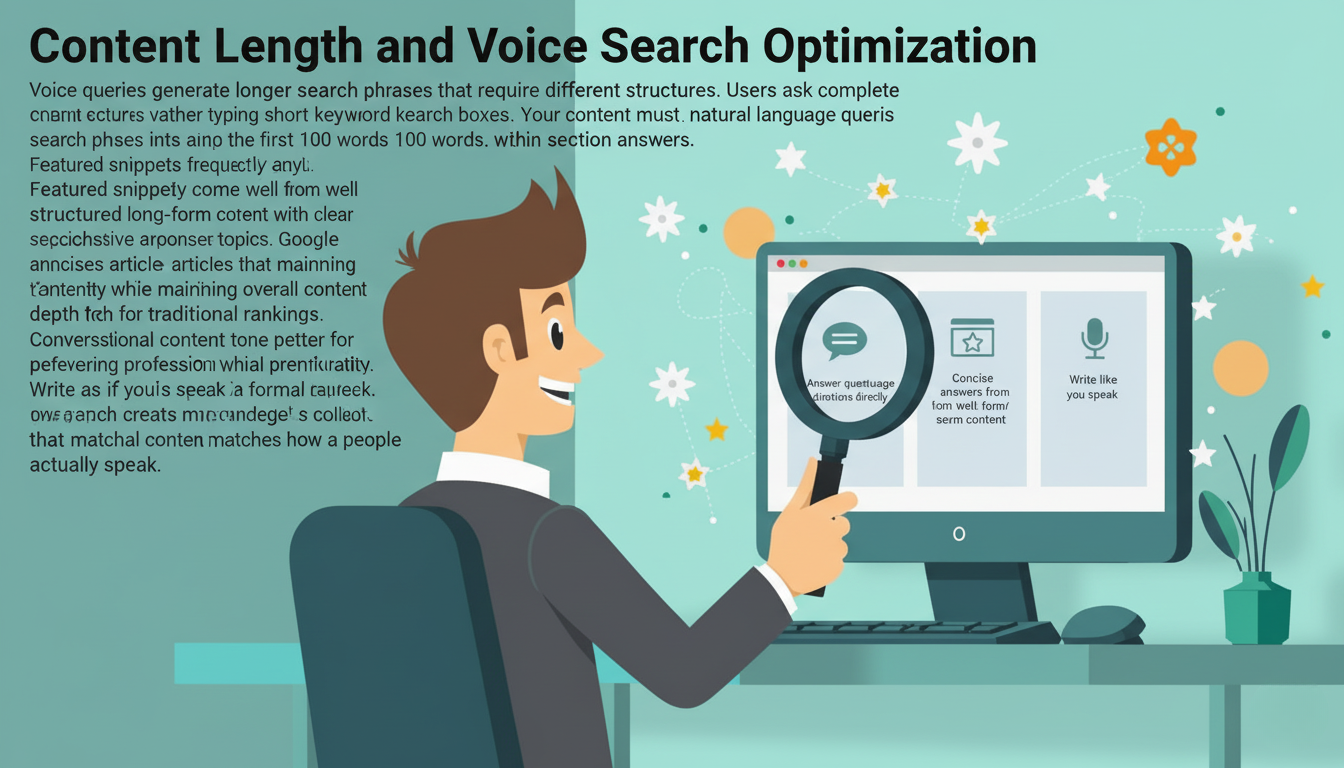
Voice queries generate longer search phrases that require different content structures. Users ask complete questions rather than typing short keyword phrases into search boxes. Your content must directly answer these natural language queries within the first 100 words.
Featured snippets frequently come from well structured long form content with clear section answers. Google extracts concise responses from comprehensive articles that thoroughly cover topics. Position direct answers prominently while maintaining overall content depth for traditional rankings.
Conversational content tone performs better for voice search while maintaining professional authority. Write as if answering a colleague’s question rather than delivering a formal presentation. This approach creates more natural content that matches how people actually speak.
Content Refresh Strategy Based on Length
Updating thin content by expanding length often recovers lost rankings from algorithm updates. Add new sections addressing related questions users commonly ask about the topic. This expansion signals freshness and improved comprehensiveness to search engines, showing clear SEO benefits.
Pruning excessive length from outdated articles can improve performance when information becomes redundant. Remove sections that no longer serve search intent or contain obsolete information. Focused, current content often outperforms bloated legacy posts.
Merge multiple short posts on related topics into comprehensive pillar content. This consolidation strategy eliminates keyword cannibalisation while creating stronger topical authority. Redirect old URLs to the new comprehensive resource to preserve link equity.
Final Words
Most teams choose content length based on guesswork: write more, hope it ranks, and wonder why results feel inconsistent. At DripRanks we take a different approach. We don’t chase word counts we engineer content length as part of a measurable system.
Forensic content audits identify the exact depth required to satisfy search intent and outperform competitors. Intent mapped frameworks align coverage, readability, and engagement at every stage of the buyer journey. Every section earns its place answering questions, building trust, and guiding conversions without unnecessary filler.
DripRanks specialises in data driven content optimisation that turns length into a performance lever, not a vanity metric. Our system makes SEO predictable, repeatable, and revenue focused. Contact our team to audit your content and uncover opportunities to increase rankings, engagement, and conversions.