

Search engines have become smarter, and generic content no longer cuts through the noise. Google’s latest algorithms prioritise expertise, user intent, and engagement over keyword stuffing and thin content. If your website isn’t ranking on page one, you’re missing 95% of potential organic traffic.
SEO content writing combines strategic keyword placement with valuable information that answers real user questions. This approach helps search engines understand your content while keeping readers engaged. Modern content must satisfy both algorithmic requirements and human needs to achieve sustainable rankings.
The digital landscape shifts constantly, with AI overviews and featured snippets changing how users consume information. Writers who master SEO content creation gain competitive advantages in every industry. This guide reveals proven techniques that drive measurable results for businesses of all sises.
You’ll discover how to research keywords, structure articles for maximum visibility, and optimise every element for search performance. By implementing these strategies, you’ll create content that ranks higher, attracts qualified traffic, and converts visitors into customers.
What is SEO Content Writing?
SEO content writing is the practice of creating valuable, relevant content optimised for search engines and human readers simultaneously. This approach integrates keyword research, user intent analysis, and technical optimisation throughout the writing process. Effective SEO content balances readability with strategic element placement, especially for users searching “What is SEO” and related topics.
Unlike traditional copywriting, SEO writing follows specific structural patterns that search algorithms recognise and reward. Writers must understand how Google evaluates content quality through signals like dwell time, bounce rate, and backlink acquisition. Every heading, paragraph, and meta tag serves both informational and optimisation purposes.
The goal extends beyond keyword insertion to creating comprehensive resources that establish topical authority. Google’s helpful content update prioritises articles written for people first, not search engines. Writers must demonstrate expertise through depth, accuracy, and practical value that solves specific problems.
Why is SEO Content Writing Important for Business Growth?
Organic search drives 53% of all website traffic, making it the most valuable marketing channel for sustainable growth. Well optimised content attracts potential customers actively searching for solutions you provide. This targeted traffic converts at significantly higher rates than paid advertising or social media.
Search visibility establishes brand credibility and positions your business as an industry authority. When your content consistently appears for relevant queries, users develop trust before ever contacting you. This pre qualification reduces sales cycles and improves conversion rates across all customer touchpoints.
SEO content provides compounding returns that paid channels cannot match. A single high ranking article generates traffic continuously without ongoing ad spend. Over time, your content library becomes a revenue generating asset that appreciates with proper maintenance and updates.
Businesses that invest in SEO content writing gain market share from competitors relying solely on paid strategies. Search rankings create barriers to entry that protect your position in competitive industries. The cost per acquisition through organic search remains substantially lower than traditional advertising methods.
How Does Effective SEO Content Writing Work?
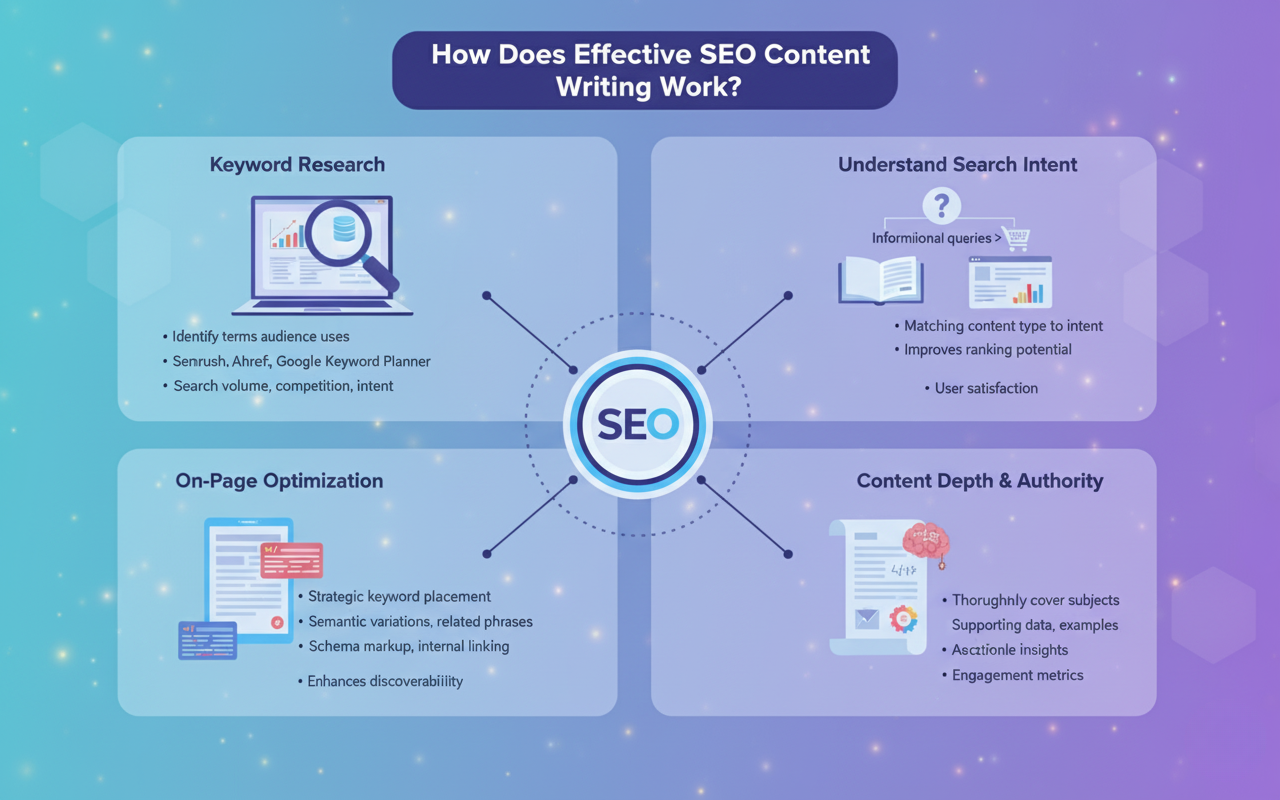
SEO content writing starts with comprehensive keyword research to identify terms your target audience actually uses. Tools like Semrush, Ahrefs, and Google Keyword Planner reveal search volume, competition levels, and user intent behind queries. Writers must select primary keywords with achievable difficulty scores and strong commercial potential to maximise SEO Benefits.
Understanding search intent determines content format and structure before writing begins. Informational queries require educational guides, while commercial keywords need comparison articles or product reviews. Matching content type to intent dramatically improves ranking potential and user satisfaction metrics.
On page optimisation involves strategic keyword placement in titles, headings, meta descriptions, and throughout body content. Writers distribute terms naturally while incorporating semantic variations and related phrases Google expects. Technical elements like schema markup and internal linking enhance content discoverability and context while reinforcing SEO benefits.
Content depth and comprehensiveness signal expertise to search algorithms evaluating topical authority. Articles must cover subjects thoroughly with supporting data, examples, and actionable insights readers can implement. Engagement metrics like time on page and scroll depth validate content quality to ranking systems.
Best Practices and Proven SEO Writing Strategies
Start every article with keyword research that identifies primary terms and supporting LSI variations. Map keywords to specific sections and headings before writing to ensure natural distribution. Avoid keyword stuffing by focusing on topic coverage rather than exact match repetition.
Structure content with clear H2 and H3 headings that include relevant keywords and answer specific questions. Break information into scannable sections that allow readers to find answers quickly. Use short paragraphs of two to three sentences to improve mobile readability and engagement.
Optimise title tags to 50 60 characters with primary keywords positioned at the beginning. Include power words and clear benefits to improve click through rates from search results. Meta descriptions should be 75 155 characters with compelling CTAs that encourage clicks.
Implement internal linking strategies that connect related content and distribute page authority. Use descriptive anchor text that signals relevance to both users and search engines. Link to authoritative external sources to support claims and enhance content credibility.
Add relevant images, videos, and infographics to increase user engagement and time on page. Optimise all media with keyword rich file names and alt text for image search visibility. Compress files to maintain fast page load speeds that impact rankings and user experience.
Target featured snippet opportunities by providing direct answers in 40 50 word paragraphs. Format content with numbered lists, tables, and definitions that match snippet formats. Answer “People Also Ask” questions within your content to capture additional SERP real estate.
Common Mistakes and Misconceptions in SEO Content
Many writers believe keyword density remains a critical ranking factor, but modern algorithms prioritise topical relevance instead. Excessive keyword repetition triggers spam filters and degrades readability. Focus on comprehensive topic coverage using natural language variations.
Creating thin content targeting low value keywords wastes resources without generating meaningful traffic or conversions. Articles under 800 words rarely rank for competitive terms unless targeting very specific long tail queries. Prioritise quality and depth over quantity in content production.
Ignoring search intent results in high bounce rates even when content ranks initially. Informational searchers abandon product pages immediately, damaging engagement metrics and rankings. Always align content format with the specific intent behind target keywords.
Neglecting mobile optimisation creates poor user experiences for the majority of search traffic. Google’s mobile first indexing means mobile performance directly impacts rankings across all devices. Test content on multiple screen sises and ensure fast load times.
Overlooking content updates allows competitors to surpass your rankings with fresher, more comprehensive information. Google favors recently updated content for time sensitive queries and evolving topics. Schedule regular audits to refresh statistics, examples, and recommendations.
Failing to build topical authority by covering subjects superficially across many unrelated topics confuses search algorithms. Develop content clusters around core expertise areas to establish domain authority. Link related articles to demonstrate comprehensive knowledge in specific niches.
Essential Tools and Resources for SEO Content Writers
Keyword research platforms like Ahrefs and Semrush provide search volume data, competition analysis, and content gap identification. These SEO Tools reveal questions and topics your target audience actively searches. Invest in at least one comprehensive SEO suite to guide content strategy.
Content optimisation tools like Surfer SEO and Clearscope analyse top ranking competitors and suggest improvements. These platforms identify missing keywords, optimal content length, and structural elements that enhance rankings. Real time recommendations help writers match or exceed competitor content quality using advanced SEO tools.
Grammar and readability checkers like Grammarly and Hemingway Editor ensure professional quality and appropriate reading levels. Clear, concise writing improves user experience and engagement metrics that influence rankings. Aim for grade 8 9 readability to maximise audience accessibility.
Google Search Console provides invaluable performance data showing which queries drive traffic and where opportunities exist. Monitor click through rates, average positions, and impressions to identify optimisation opportunities. This free tool reveals exactly how Google perceives your content.
Schema markup generators help implement structured data that enhances SERP appearance with rich results. Use FAQ, HowTo, and Article schema to increase visibility and click rates. Schema provides context that helps search engines understand content purpose and relevance through structured SEO tools.
Answer The Public and AlsoAsked visualise question based queries related to your target keywords. These tools reveal content opportunities that address specific user needs and concerns. Incorporate these questions as H2 headings to capture featured snippets.
Advanced Techniques for Maximum SEO Content Performance
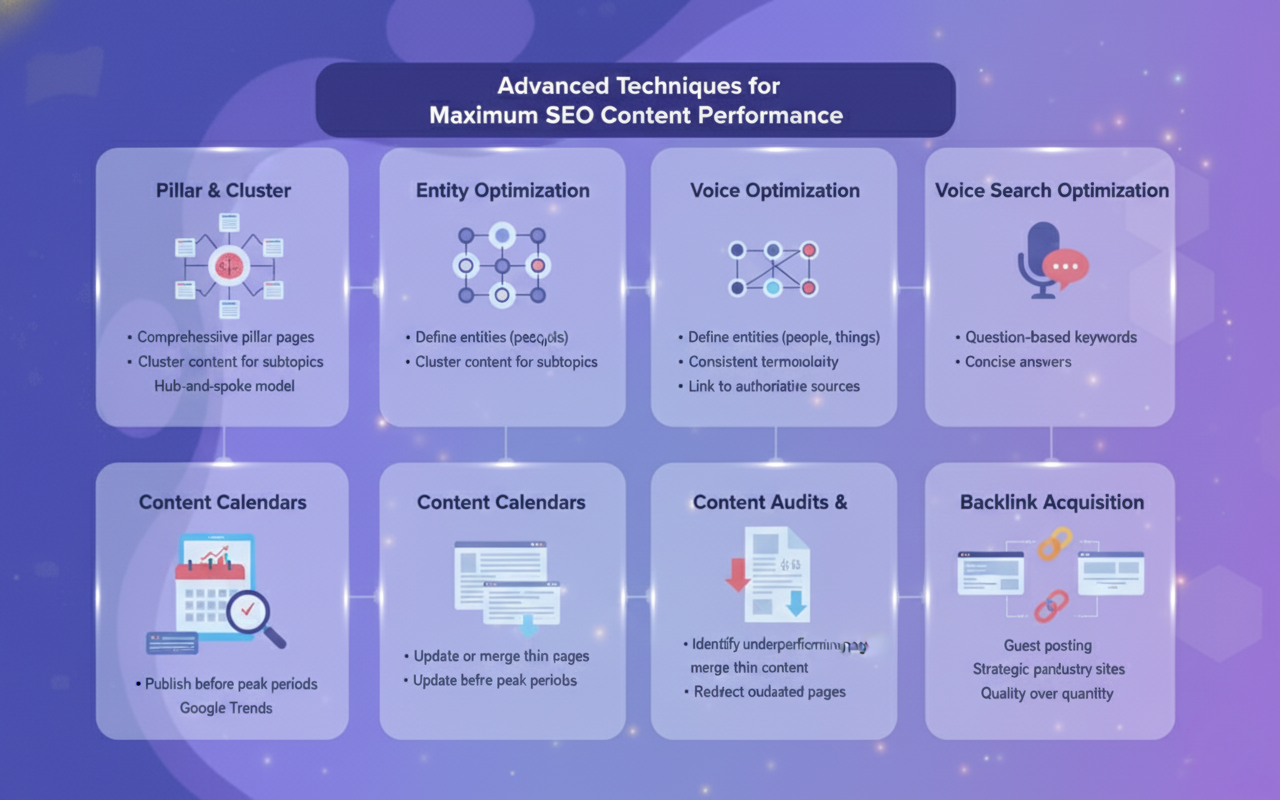
Create comprehensive pillar pages that serve as authoritative resources on broad topics within your expertise. Support these with cluster content targeting specific subtopics and link them strategically. This hub and spoke model establishes topical authority, improves rankings across related queries, and helps avoid duplicate content issues.
Implement entity optimisation by clearly defining people, places, things, and concepts within your content. Use consistent terminology and link to authoritative sources that validate entity relationships. Google’s Knowledge Graph rewards content that demonstrates clear entity understanding.
.
Optimise for voice search by incorporating conversational phrases and question based keywords. Voice queries typically use longer, more natural language patterns than typed searches. Answer common questions directly in concise paragraphs that voice assistants can easily extract.
Develop content calendars aligned with search seasonality and trending topics in your industry. Publish time sensitive content weeks before peak search periods to build authority. Monitor Google Trends to identify emerging opportunities before competitors.
Conduct regular content audits to identify underperforming pages that need updates or consolidation. Merge thin content covering similar topics into comprehensive resources with stronger ranking potential. Redirect outdated pages to preserve link equity while improving overall site quality.
Build strategic partnerships for guest posting and backlink acquisition from authoritative industry sites. Quality backlinks remain a critical ranking factor that signals content value to search algorithms. Focus on relevant, high authority domains rather than quantity of links.
How to Measure and Improve SEO Content Success
Track organic traffic growth using Google Analytics to measure overall content performance and user behavior. Monitor landing page performance, session duration, and conversion rates from organic search. Segment traffic by device, location, and user intent to identify optimisation opportunities.
Measure keyword rankings weekly using tools like SEMrush or Ahrefs to track position changes. Focus on movement for target keywords and identify new ranking opportunities from long tail variations. Celebrate page one achievements while investigating ranking drops that require attention.
Analyse engagement metrics including bounce rate, time on page, and scroll depth to assess content quality. High bounce rates indicate content doesn’t match search intent or fails to engage readers. Improve underperforming content by enhancing introductions, adding visuals, and improving readability.
Monitor click through rates from Google Search Console to identify opportunities for title and meta description optimisation. Low CTR despite high rankings suggests your SERP appearance needs improvement. Test different title formulations and value propositions to increase clicks.
Track conversions and goal completions attributed to specific content pieces to measure business impact. Connect Google Analytics to CRM systems to understand content’s role in customer journeys. Identify high converting topics and formats to guide future content strategy.
Conduct A/B testing on content elements like headlines, CTAs, and formatting to continuously improve performance. Small improvements compound over time to significantly increase traffic and conversions. Document winning variations and apply insights across your content library.
Adapting SEO Content Strategy for 2026 and Beyond
Artificial intelligence tools are transforming content creation workflows while raising quality standards simultaneously. Google’s algorithms increasingly detect AI generated content lacking human expertise and experience. Use AI for research and outlining while ensuring final content demonstrates genuine knowledge.
Search generative experience and AI overviews are changing how users interact with search results. Optimise content to appear in AI generated summaries by providing clear, authoritative answers. sero click searches require new approaches to demonstrate value and encourage site visits.
Video and multimedia content continue gaining prominence in search results and user preferences. Incorporate video summaries, infographics, and interactive elements to increase engagement and time on page. Optimise all media with transcripts and descriptive text for search visibility.
E E A T principles emphasising experience alongside expertise, authoritativeness, and trustworthiness are becoming more critical. Demonstrate real world experience through a case study original research, and practical insights. Author credentials and brand reputation increasingly influence content rankings.
Voice search and conversational AI assistants require content optimisation for natural language processing. Structure content to directly answer questions in formats voice assistants can easily parse. Featured snippet optimisation becomes even more valuable as voice search grows.
Final Thoughts
Most teams approach content creation by publishing articles and hoping they rank, then wonder why traffic doesn’t convert. At DripRanks we take a different approach. We don’t write content in isolation we build a system that turns SEO into a predictable growth engine.
Forensic audits uncover high ROI content opportunities across your niche. Intent mapped frameworks ensure each piece captures demand at every stage of the buyer journey while demonstrating expertise, depth, and practical value. Scalable processes allow content to perform consistently without adding headcount. The result? SEO that is measurable, repeatable, and revenue focused not a black box requiring blind faith.
DripRanks specialises in system level SEO content strategies that turn organic search into predictable business results. Our team combines technical expertise with industry knowledge to create content that ranks, engages, and converts. Contact us to audit your content and discover opportunities to accelerate sustainable growth.