

Most businesses struggle to prove their value online. Visitors scroll through service pages but leave without taking action. Trust is the missing ingredient.
A well written case study bridges that gap by showing real results from real clients. When optimised for search engines, case studies attract high intent traffic and position your brand as a proven authority. They answer the critical question every prospect asks: “Can you actually deliver?”
Search engines reward content that demonstrates expertise and builds trust. Case studies meet both criteria when structured correctly. This guide shows you how to create case studies that rank on Google, engage readers, and drive conversions. You’ll learn the exact format, SEO tactics, and content strategies used by top performing agencies.
What is a Case Study in Digital Marketing
A case study is a detailed account of how your service solved a specific client problem. It includes measurable results, real data, and a clear before and after narrative. Unlike generic testimonials, case studies provide context and proof.
Effective case studies follow a problem solution results framework. They identify the client’s challenge, explain your strategic approach, and showcase quantifiable outcomes. This structure makes them perfect for both human readers and search engine crawlers, especially when supported by clear, well structured ai content.
Most case studies range from 800 to 1500 words. They include client quotes, performance metrics, and visual elements like charts or screenshots. Search engines recognise this format as valuable educational content that answers specific user questions while maintaining ai content consistency for better indexing.
Why Case Studies Matter for SEO and Conversions
Case studies serve dual purposes in digital marketing strategy. They build trust with potential customers while generating organic traffic from search engines, especially from users searching “What is SEO” and related queries. This combination makes them one of the highest ROI content types.
Google prioritises content that demonstrates real world expertise. Case studies naturally include specific industries, challenges, and solutions that match search queries. When someone searches “how to increase ecommerce conversion rates,” a relevant case study can rank and convert simultaneously.
Conversion rates for pages with case studies average 30% higher than standard service pages. Prospects who read case studies are 73% more likely to request a consultation. The combination of social proof and practical education creates a powerful persuasion tool.
How to Structure a High Performing Case Study
Start with a compelling headline that includes the main result and industry. Use numbers when possible. “How We Increased Organic Traffic by 347% for a SaaS Company” performs better than vague titles.
Your introduction should hook readers with the client’s relatable problem. Avoid generic statements. Instead, paint a specific picture of their situation before your intervention. This creates immediate relevance for readers facing similar challenges, especially when using structured content templates.
The body should follow a clear chronological structure. Describe the challenge in one section, your strategy in another, and results in a third. Use subheadings to break content into scannable segments. Each section should contain specific details rather than broad claims
End with measurable outcomes and client testimonials. Include hard numbers like percentage increases, revenue gains, or time savings. Visual elements like before and after screenshots add credibility and break up text for better readability.
SEO Optimisation Strategies for Case Studies
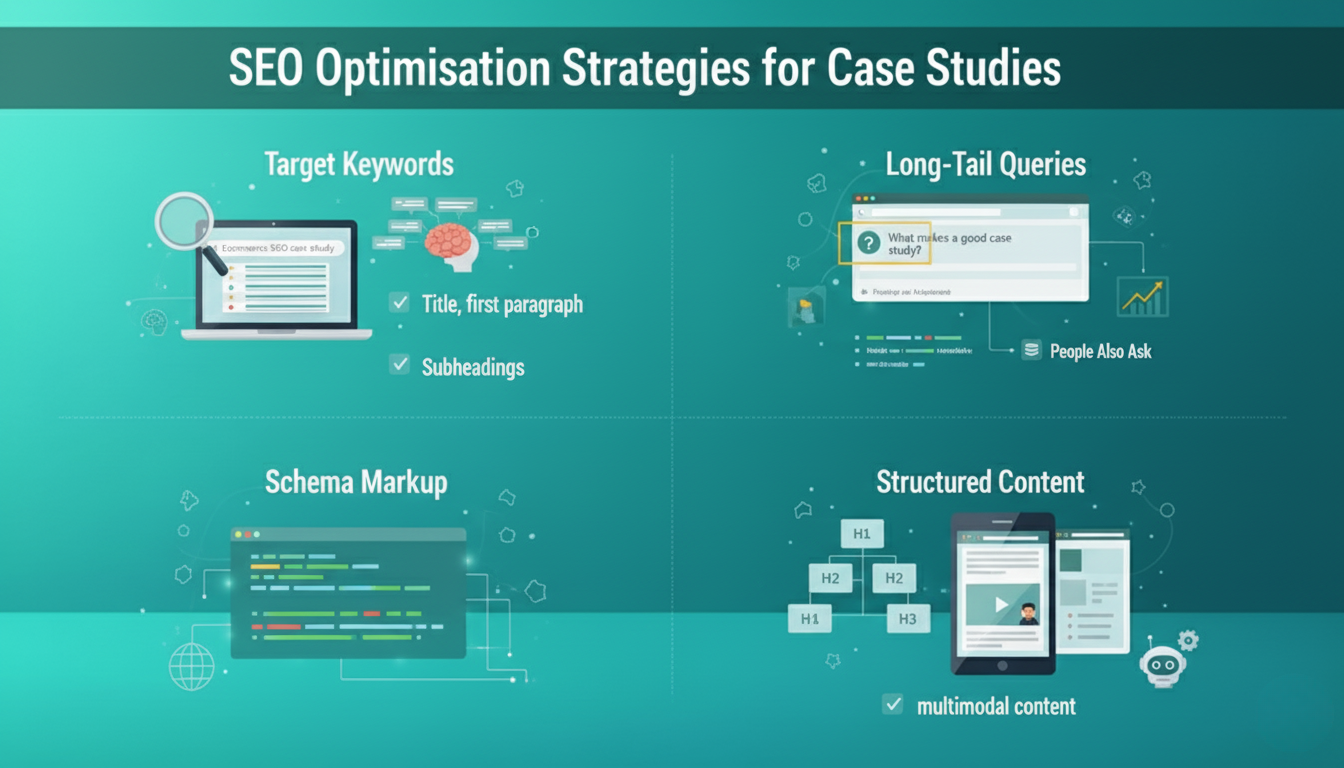
Include your target keyword in the title, first paragraph, and at least two subheadings. Use natural variations throughout the content. For example, mix “case study,” “success story,” “client results,” and “customer example” to avoid repetition, while highlighting SEO Benefits where relevant.
Target long tail keywords that include industry terms and specific outcomes. “Ecommerce SEO case study” or “local business marketing success story” attract more qualified traffic than generic terms. Research what your ideal clients search when looking for proof, ensuring you avoid keyword cannibalisation when selecting similar variations.
Structure your case study to answer common questions from the People Also Ask section. Create subsections that directly address queries like “What makes a good case study?” or “How do you measure marketing ROI?” This increases chances of featured snippet placement and reinforces SEO benefits through clear, helpful answers.
Add schema markup using the Article or Case Study schema type. Include relevant entities like your client’s industry, the services provided, and measurable results. This helps search engines understand and properly index your content.
Best Practices for Writing Compelling Case Studies
Focus on one clear success story per case study rather than multiple projects. Depth beats breadth when building credibility. Readers remember specific details better than general overviews of several projects.
Use actual client names and brands when possible with permission. Real company names add authenticity that “Company X” cannot match. If confidentiality is required, provide enough industry and sise details to make the story believable.
Include direct quotes from clients about their experience and results. Third party validation carries more weight than self ,promotion. Quote specific moments when clients realised the strategy was working or saw unexpected benefits.
Break up text with visuals every 200 to 300 words. Use charts showing performance improvements, screenshots of analytics dashboards, or photos from client meetings. Visual proof reinforces written claims and improves engagement metrics that influence rankings.
Common Mistakes That Weaken Case Studies
Many businesses write case studies that focus too much on their process rather than client outcomes. Readers care about results first. Lead with the transformation and savings rather than detailed methodology descriptions.
Vague metrics destroy credibility instantly. Statements like “significant increase” or “improved performance” mean nothing without numbers. Always include specific percentages, dollar amounts, or time frames that prove your impact.
Writing case studies in overly technical language limits your audience reach. Your content should be understandable to decision makers who may not be industry experts. Explain acronyms and technical terms when first used.
Publishing case studies without client permission creates legal and ethical problems. Always get written approval before sharing any client information or results. Some clients may want anonymity while still allowing you to share sanitised data.
Tools and Resources for Creating Better Case Studies
Google Analytics, Google Search Console aur Ahrefs jaise SEO Tools performance data provide karte hain jo case studies ko credible banate hain. Export specific date ranges showing before and after comparisons. Screenshots from these tools add visual proof to your claims.
Canva or Adobe Express help create professional infographics and data visualisations. Transform spreadsheet data into shareable charts that highlight key improvements. Tools like Google Data Studio bhi visual dashboards banane mein madad karte hain. Visual data presentation increases social sharing and link acquisition.
Grammarly or Hemingway Editor improve readability and catch grammar errors. Case studies must be polished and professional since they represent your brand’s quality standards. Run all drafts through editing tools before publication.
Survey tools like Typeform or Google Forms help gather client testimonials and specific feedback. Create a standard post project questionnaire that collects quotable material and permission to share results. This streamlines the case study creation process.
How to Promote Case Studies for Maximum Impact
Share case studies across all owned channels including email newsletters, social media, and blog sidebars. Create dedicated landing pages for high value case studies rather than burying them in blog archives. Make your best proof easily accessible.
Repurpose case study content into multiple formats. Turn one written case study into a video testimonial, infographic, podcast episode, and social media carousel. This extends reach and accommodates different content consumption preferences.
Include relevant case studies in sales proposals and pitch decks. When prospects see proof that matches their industry or challenge, conversion rates increase significantly. Personalise which case studies you highlight based on prospect needs.
Build internal links from service pages to related case studies. When someone reads about your SEO services, link to case studies showing SEO results. This keeps visitors engaged and provides natural proof points throughout their research journey.
Measuring Case Study Performance and ROI
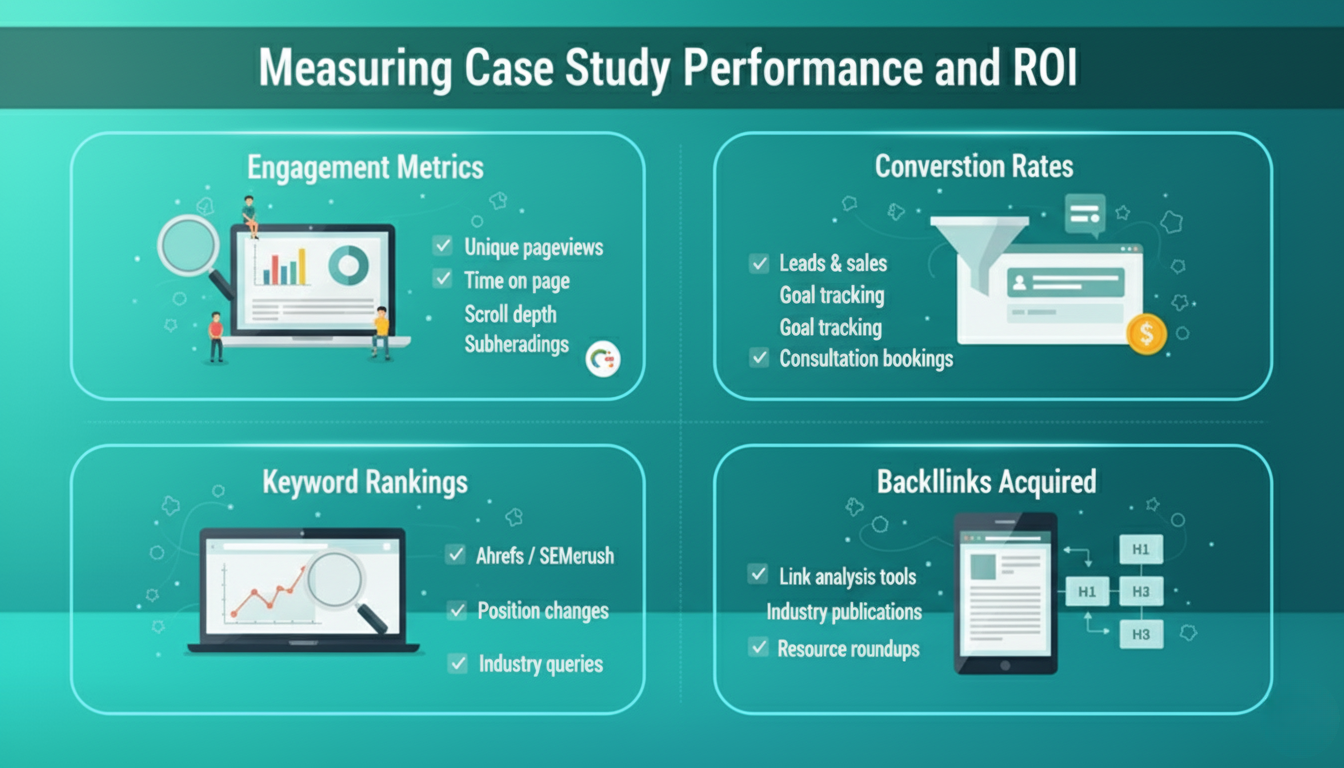
Track unique pageviews, time on page, and scroll depth for each case study. High engagement metrics signal valuable content to search engines. Use Google Analytics 4 to monitor these behavioral signals over time.
Monitor conversion rates from case study pages to contact forms or consultation bookings. Set up goal tracking to attribute leads and sales to specific case studies. This data shows which success stories resonate most with your audience.
Track keyword rankings for case study titles and related long tail terms. Use tools like Ahrefs or SEMrush to monitor position changes over time. Successful case studies often rank for industry specific problem queries.
Measure backlinks acquired by individual case studies using link analysis tools. Quality case studies naturally attract links from industry publications and resource roundups. Link velocity indicates which stories generate the most external validation.
Advanced Case Study Strategies for 2025
Create video case studies featuring client interviews and screen recordings showing actual results. Video content appears in both traditional search results and YouTube rankings. Embed videos within written case studies for multimedia engagement.
Develop interactive case studies with clickable elements revealing different data points or strategy details. Tools like Ceros or Shorthand create immersive experiences that increase time on page and social sharing rates.
Publish updated case studies showing long term results six months or one year after initial publication. This demonstrates sustained performance rather than temporary gains. Updated content also provides fresh crawling opportunities for search engines.
Collaborate with clients to co publish case studies on their websites and yours. This creates natural backlinks and expands your content’s reach to their audience. Co branded case studies build relationships while improving domain authority.
Final Words
Most teams publish case studies as proof points and hope they influence buyers, without integrating them into a revenue driven SEO strategy At DripRanks we take a different approach. We don’t treat case studies as standalone assets we engineer them into a scalable growth system.
Forensic content audits identify where case studies can capture high intent search demand. Intent mapped structure, targeted keywords, and rich data transform success stories into ranking assets that attract qualified buyers actively evaluating solutions. The result? Case studies that build trust, generate pipeline, and convert consistently.
DripRanks specialises in system level content strategies that turn proof into performance. Our framework combines technical SEO with persuasive storytelling to make SEO measurable, repeatable, and revenue focused. Contact us to develop a case study strategy that drives rankings, conversions, and predictable growth.