
Introduction
Local businesses lose thousands of potential customers every month because search engines can’t verify their legitimacy. If your business doesn’t appear in Google’s Local Pack or Maps results, you’re essentially invisible to nearby shoppers actively searching for your services.
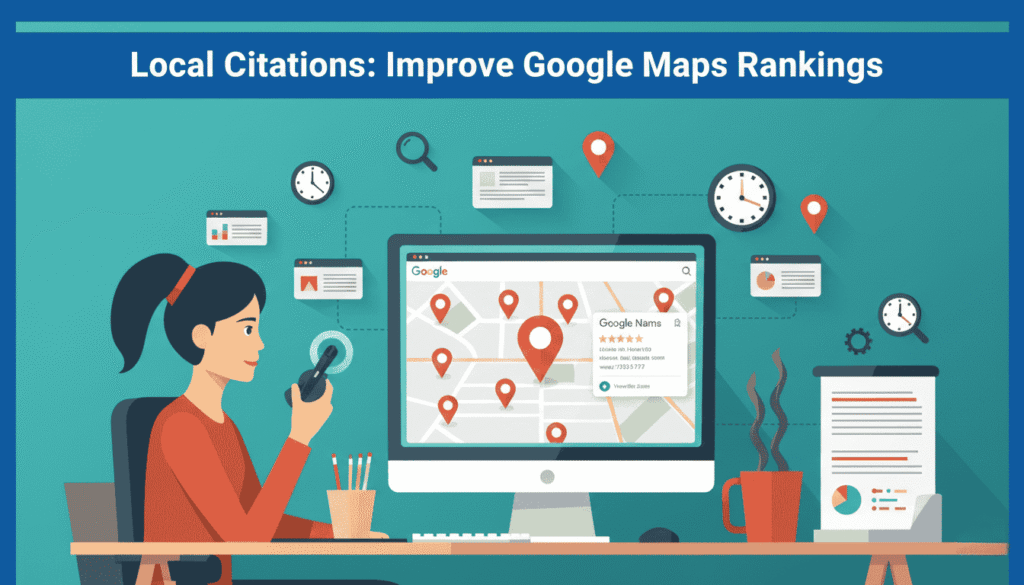
Citations serve as digital proof of your business existence across the web. These online mentions of your business name, address, and phone number tell Google you’re a real, trustworthy company worth ranking. Recent studies show that businesses with 60+ consistent citations rank 47% higher in local search results compared to competitors with fewer mentions.
Managing citations properly separates thriving local businesses from those struggling to get noticed online. This guide reveals exactly how to build, audit, and optimise citations for maximum local SEO impact. You’ll learn which citation sources matter most, how to avoid costly mistakes, and proven strategies that generate measurable ranking improvements within 90 days.
Drip Ranks specialises in building high impact citation profiles that drive local visibility. Our proven citation strategies help businesses dominate Google’s Local Pack and attract more qualified customers searching in their area.
What Are Citations in SEO?
Citations are online references to your business that include your Name, Address, and Phone number (NAP). Think of them as digital footprints that confirm your business exists at a specific location. Search engines crawl these mentions across directories, review sites, and social platforms to validate your business information.
Structured citations appear on business directories like Yelp, Yellow Pages, and industry specific platforms. These listings follow a standard format with dedicated fields for each piece of business information. Unstructured citations show up naturally in blog posts, news articles, or event listings where someone mentions your business through digital pr without a formal directory structure.
Both citation types contribute to local search rankings, but they serve different purposes. Structured citations build foundational trust with search engines, while unstructured mentions demonstrate real world relevance and community engagement. Together, they create a comprehensive digital presence that search algorithms use to determine ranking positions.
Why Citations Matter for Local Rankings
Google uses citations as trust signals when deciding which businesses deserve top positions in local search results. When your business information appears consistently across 50+ authoritative websites, search engines gain confidence in your legitimacy. This verification process directly influences whether you appear in the coveted Local Pack or get buried on page two.
Citation quantity and quality both impact rankings, but consistency matters most. A business with 40 perfectly matched citations typically outranks competitors with 100 inconsistent listings. Search engines interpret conflicting information as unreliable data, which triggers ranking penalties and reduces your visibility for location based searches.
Beyond rankings, citations drive direct customer traffic through directory websites themselves. Platforms like Yelp and TripAdvisor generate millions of monthly searches from consumers ready to buy. Your citation profiles act as additional marketing channels that capture customers at critical decision moments, even when they never visit your website.
How Citation Building Works Step by Step
Start by claiming your Google Business Profile, which serves as your primary citation source. This free listing controls how your business appears in Google Maps and local search results. Complete every section with accurate information, upload high quality photos, and select precise business categories that match your services.
Next, identify 20 30 core citation sources relevant to your industry and location. General directories like Bing Places and Apple Maps Business Connect provide baseline coverage. Add industry specific platforms where your target customers actually search, such as Avvo for attorneys or Healthgrades for medical practices.
Submit your business information manually to each platform, ensuring exact NAP consistency across every listing. Use the same formatting, abbreviation style, and punctuation everywhere. For example, if you use “Street” in one listing, never abbreviate it as “St” in another. Small variations confuse search algorithms and dilute your citation power.
Monitor your citations quarterly to catch and fix inconsistencies that develop over time. Business information changes, third party aggregators introduce errors, and new directories emerge constantly. Regular audits protect your rankings from degradation and identify opportunities to expand your citation footprint strategically, including addressing broken links.
Top Citation Sources That Boost Rankings
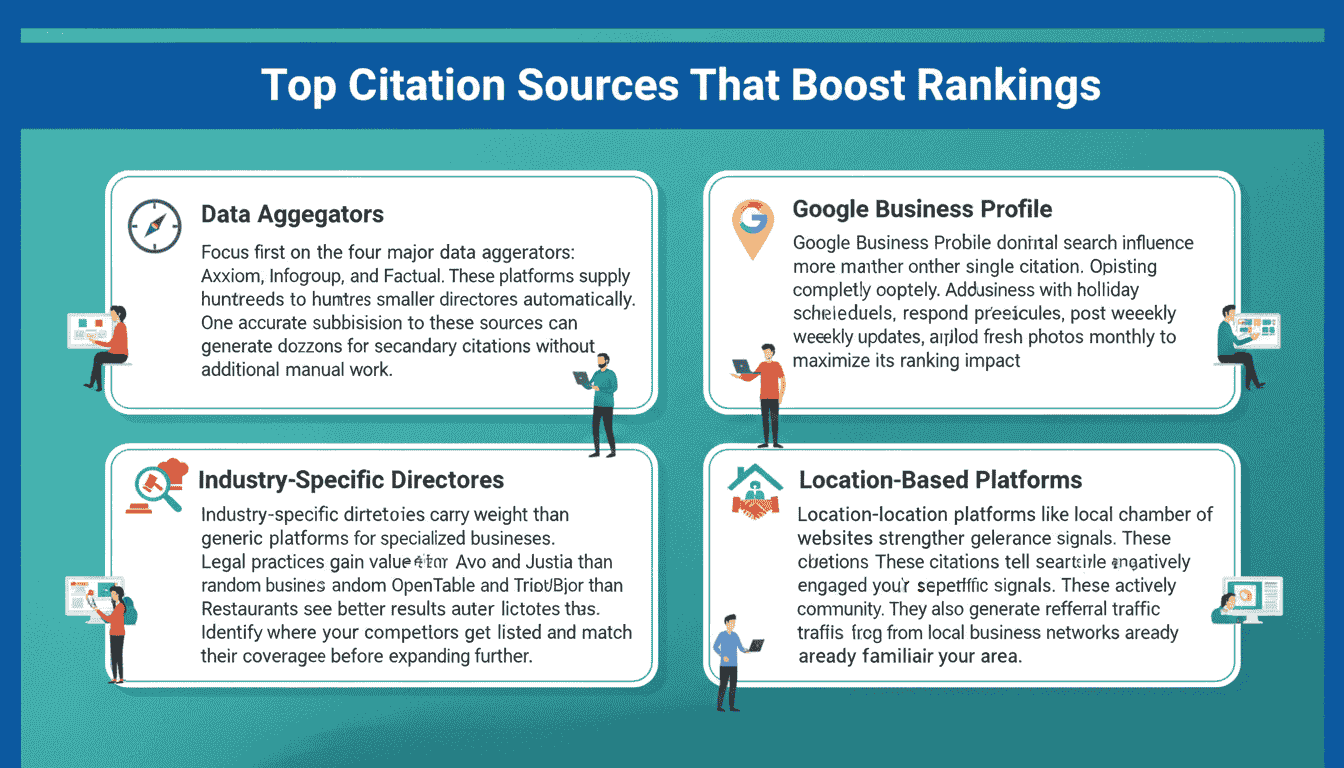
Focus first on the four major data aggregators: Acxiom, Infogroup, Localese, and Factual. These platforms supply business information to hundreds of smaller directories automatically. One accurate submission to these sources can generate dosens of secondary citations without additional manual work.
Google Business Profile dominates local search influence more than any other single citation. Optimise this listing completely before investing time elsewhere. Add business hours with holiday schedules, respond to reviews professionally, post weekly updates, and upload fresh photos monthly to maximise its ranking impact.
Industry specific directories carry more weight than generic platforms for specialised businesses. Legal practices gain more value from Avvo and Justia than random business directories. Restaurants see better results from OpenTable and TripAdvisor than general citations. Identify where your competitors get listed and match their coverage before expanding further.
Location based platforms like Nextdoor and local chamber of commerce websites strengthen geographic relevance signals. These citations tell search engines you’re actively engaged in your specific community. They also generate qualified referral traffic from neighbors and local business networks already familiar with your area.
Common Citation Mistakes That Kill Rankings
Inconsistent NAP information across different platforms confuses search algorithms and triggers ranking penalties. Using “123 Main St” on one site and “123 Main Street” on another creates conflicting data points. Search engines can’t determine which version is correct, so they reduce confidence in all your citations and lower your ranking position.
Duplicate listings for the same business location create serious problems that most owners overlook. Multiple Google Business Profiles at one address violates Google’s guidelines and risks suspension. Duplicate citations on other platforms dilute your ranking power by splitting citation equity across multiple profiles instead of consolidating authority.
Ignoring citation cleanup after moving locations leaves outdated information scattered across the web. Old addresses send potential customers to the wrong place and tell search engines you’re unreliable. These sombie citations actively harm rankings until you claim and update or remove them completely from every platform.
Building citations too quickly triggers spam filters and algorithm penalties. Adding 100 citations in one week looks manipulative to search engines designed to detect artificial link building. Sustainable growth means adding 5 10 quality citations monthly, which appears natural and avoids triggering red flags that could devastate your rankings.
Citation Management Tools and Resources
Moz Local streamlines citation distribution across 15+ high authority platforms simultaneously. The tool also monitors existing citations for accuracy and alerts you when inconsistencies appear. This automation saves 10+ hours monthly compared to manual submission while ensuring formatting consistency across all listings.
BrightLocal offers comprehensive citation building and tracking features with detailed reporting. Their citation finder tool discovers where competitors get listed but you don’t, revealing untapped opportunities. The platform’s audit function scans hundreds of directories to identify errors requiring cleanup before they damage rankings.
Yext provides enterprise level citation management with real time synchronisation across 150+ directories. Their PowerListings network includes major platforms and niche directories specific to various industries. However, citations disappear when you stop paying, making this a rental solution rather than permanent asset building.
Manual citation building through spreadsheet tracking remains the most cost effective approach for small businesses. Create a master list with all platforms, submission dates, login credentials, and verification status. This hands on method ensures perfect accuracy and builds permanent citations you control forever without ongoing subscription fees.
Advanced Citation Strategies for 2026
Video citations through YouTube, Vimeo, and TikTok increasingly influence local rankings as search prioritises multimedia content. Create location specific videos featuring your business address and service area in titles, descriptions, and video content. These video platforms rank independently in Google search while serving as powerful citation sources search engines recognise.
Social media profiles function as authoritative citations when fully optimised with complete NAP information. LinkedIn, Facebook, Instagram, and Twitter all allow business address listings that search engines crawl regularly. Keep these profiles updated and active to maintain their citation value and maximise their contribution to local ranking signals.
Guest posting on local news sites and community blogs generates valuable unstructured citations with contextual relevance. When a neighborhood blog mentions your business in an article about local shopping, it carries more weight than generic directory listings. Pursue these opportunities by connecting with local publishers and offering expert commentary on community topics.
Voice search optimisation requires creating citations that answer spoken queries naturally. Add conversational language to citation descriptions that match how people actually ask questions. For example, instead of just listing services, write “Yes, we’re open weekends and offer emergency appointments” to capture voice search queries about availability.
Measuring Citation Performance and ROI
Track Local Pack rankings for your top 5 10 keywords weekly to measure citation impact. Tools like BrightLocal and Local Falcon show exactly where you rank in the map pack for different search locations. Improved rankings directly correlate with citation building efforts when combined with other local SEO factors.
Monitor organic traffic from citation sources using UTM parameters in your listings. Add tracking codes to website URLs on citation platforms to identify which directories generate actual visitors. This data reveals which citations deliver real business value versus those that only contribute to ranking signals without driving traffic.
Count new customer inquiries that mention finding you through specific directories. Train staff to ask “How did you hear about us?” and record responses systematically. This qualitative feedback identifies high performing citation sources worthy of additional optimisation and content investment.
Calculate citation growth velocity by tracking new citations added monthly. Healthy profiles show steady growth of 5 15 new quality citations each month. Stagnant citation counts often correlate with plateaued rankings, while aggressive expansion during citation campaigns typically precedes ranking improvements within 60 90 days.
Citations vs Other Local Ranking Factors
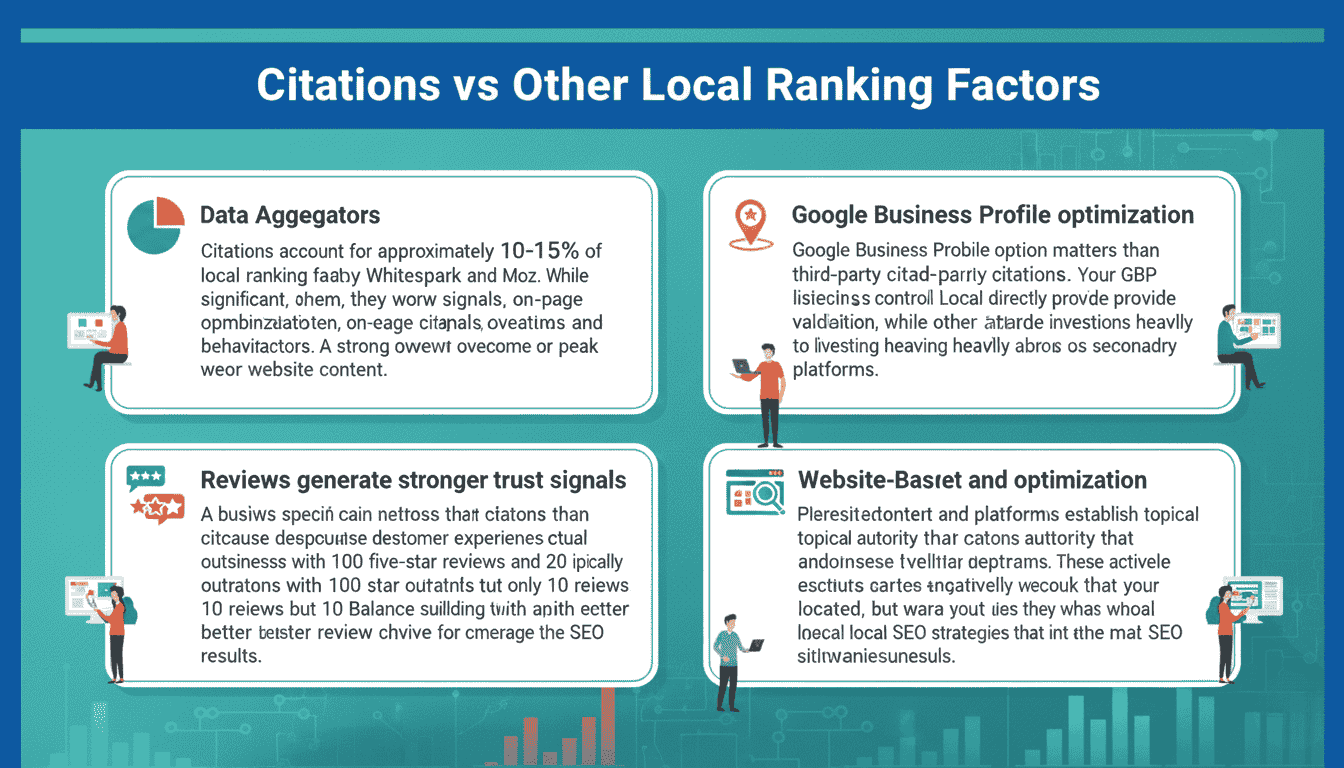
Citations account for approximately 10 15% of local ranking factors according to annual studies by Whitespark and Moz. While significant, they work in combination with review signals, on page optimisation, and behavioral factors. A strong citation profile alone won’t overcome weak Google reviews or poor website content.
Google Business Profile optimisation matters more than third party citations for most businesses. Your GBP listing directly controls Local Pack and Maps visibility, while other citations provide supporting validation. Prioritise perfecting your GBP before investing heavily in citation building across secondary platforms.
Reviews generate stronger trust signals than citations because they demonstrate actual customer experience. A business with 100 five star reviews and 20 citations typically outranks competitors with 100 citations but only 10 reviews. Balance citation building with active review generation for comprehensive local SEO results.
Website content and on page optimisation establish topical authority that citations cannot provide alone. Citations confirm where you’re located, but your website content proves what you do and why you’re the best choice. Integrate citation building into broader local SEO strategies that address all major ranking factors simultaneously.
Industry Specific Citation Opportunities
Healthcare providers must claim Healthgrades, Vitals, and RateMDs to compete in medical search results. These industry specific platforms carry more weight than general directories for doctor searches. Include detailed provider bios, accepted insurance information, and specialty certifications to maximise these citations’ impact on rankings and conversions.
Legal professionals need directory presence on Avvo, Justia, FindLaw, and state bar association websites. Potential clients research attorneys extensively before contact, making these platforms critical for visibility and credibility. Complete profiles with practice area details, case results, and professional credentials strengthen both ranking signals and conversion rates.
Restaurants and food service businesses benefit enormously from citations on Yelp, TripAdvisor, OpenTable, and delivery platforms like DoorDash. These platforms generate direct ordering revenue while contributing to local SEO. Keep menus updated, respond to reviews promptly, and encourage satisfied customers to leave feedback across all food specific platforms.
Home service contractors should prioritise Angi, HomeAdvisor, Thumbtack, and Better Business Bureau listings. These platforms actively connect homeowners with service providers while building citation authority. Maintain excellent ratings and complete detailed service descriptions to convert directory traffic into actual paying customers.
Fixing Citation Errors and Duplicates
Audit your existing citations using BrightLocal or Mos Local to identify inconsistencies requiring correction. These tools scan hundreds of directories and create reports showing exactly where errors exist. Prioritise fixing citations on high authority platforms before addressing smaller directories with less ranking influence.
Claim duplicate listings rather than creating new profiles when you discover existing incorrect entries. Most directories allow ownership verification through phone or email confirmation. Once claimed, update all information to match your master NAP data and request deletion of true duplicates that cannot be consolidated.
Contact directory support directly when automated tools can’t fix persistent errors. Larger platforms like Yelp and BBB have business support teams that manually correct information when standard update processes fail. Document these communications and follow up until corrections appear to prevent recurring problems.
Remove citations from closed locations immediately after business relocation or shutdown. Leaving old listings active sends customers to wrong addresses and confuses search engines about your actual location. Mark old listings as permanently closed or request deletion entirely to eliminate negative ranking impacts from outdated information.
Final Thoughts: Build Citations That Convert
Most local businesses treat citations as a checklist task submit listings, hope rankings improve, and wonder why local leads remain inconsistent. At DripRanks we take a different approach. We built a system, not a service, that turns citations into a predictable local growth lever.
Our forensic local SEO audits uncover citation gaps, NAP inconsistencies, and high authority directory opportunities your competitors are already exploiting. Intent mapped citation placement ensures each listing supports real search demand in your service area, while scalable processes build coverage steadily without triggering spam signals or increasing internal workload. The result is local visibility that compounds into calls, visits, and revenue.
DripRanks delivers end to end citation management that makes local SEO measurable and repeatable. We don’t just submit listings we engineer citation ecosystems that strengthen trust, improve map rankings, and drive qualified local pipeline. Contact DripRanks today for a free citation audit and discover how a systematic citation strategy can help you dominate local search results with confidence, not guesswork.