

Link building remains one of the most challenging aspects of search engine optimisation. Many brands struggle to earn quality backlinks from authoritative publications without spending thousands on outreach campaigns or waiting months for results.
HARO SEO offers a proven alternative that connects your expertise with journalists actively seeking sources. This platform creates a win win scenario where reporters get valuable quotes and your brand earns editorial backlinks from top tier media outlets.
This guide reveals how to leverage HARO effectively, avoid common pitfalls, and build a backlink profile that Google rewards. You’ll learn actionable strategies used by brands that consistently land features in Forbes, Entrepreneur, and HuffPost.
What is HARO SEO?
HARO stands for Help A Reporter Out, a free platform that connects journalists with expert sources. Reporters submit queries seeking professional insights, data, or quotes for upcoming articles. Brands respond with valuable input and earn backlinks when their contributions get published.
The SEO value comes from securing editorial links in high authority publications. Unlike paid placements or guest posts, HARO backlinks carry more weight because journalists choose sources based on expertise rather than promotional relationships. Google recognises these natural editorial links as strong trust signals.
Founded in 2008 and now owned by Cision, HARO sends three daily emails to subscribers. Each email contains dosens of journalist requests across various industries and categories. The platform remains free for sources, making it accessible to businesses of all sises.
Why HARO SEO Matters for Rankings
Search engines prioritise websites with strong backlink profiles from trusted domains. HARO provides access to publications with Domain Authority scores above 70, which few outreach methods can match consistently. A single feature in a major outlet can boost your site’s credibility significantly.
Traditional link building requires extensive prospecting, personalised outreach, and follow up sequences. niche edits flip this model by delivering pre qualified opportunities directly to your inbox. Journalists need your expertise urgently, reducing response times and increasing conversion rates.
Brand visibility extends beyond SEO metrics when your quotes appear in widely read publications. Your target audience discovers your expertise through trusted media channels, building awareness that paid advertising cannot replicate. This exposure generates referral traffic and establishes thought leadership simultaneously.
How HARO SEO Works Step by Step
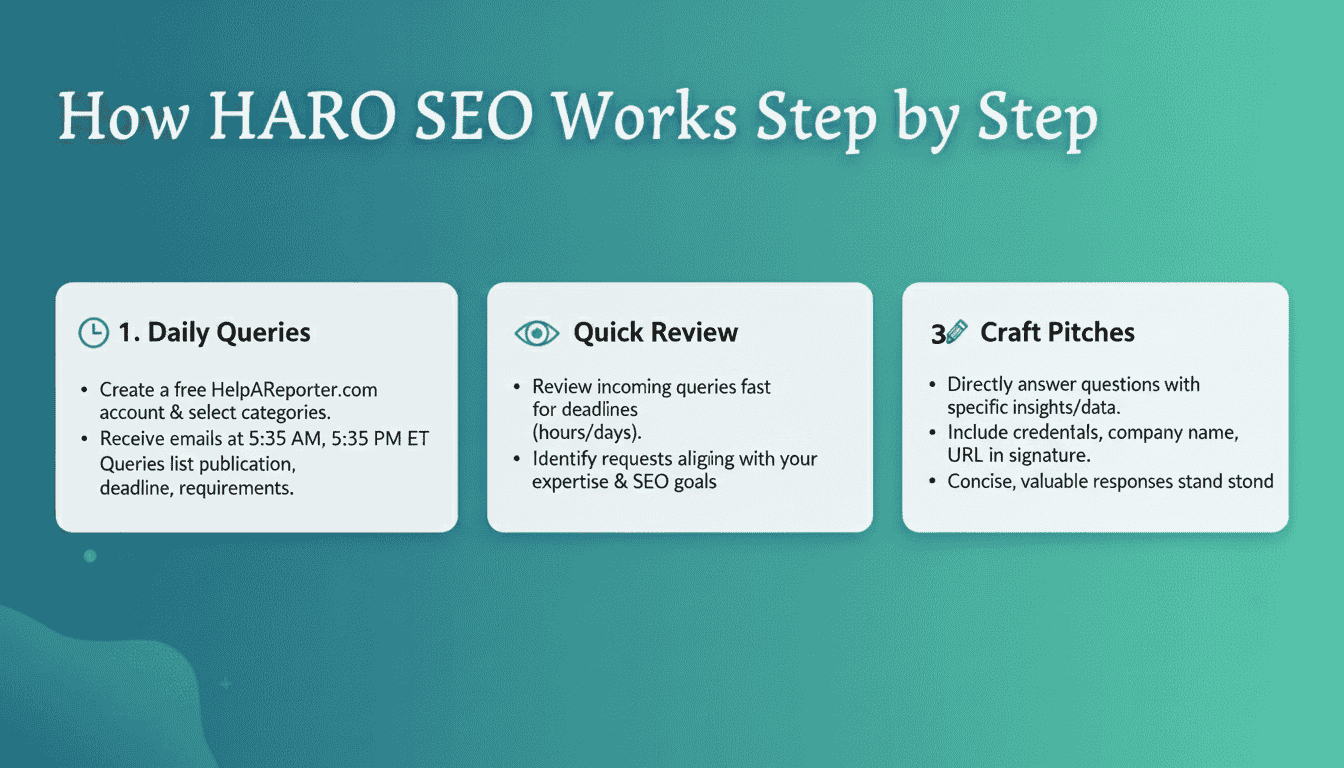
Start by creating a free account at HelpAReporter.com and selecting your relevant categories. HARO sends emails at 5:35 AM, 12:35 PM, and 5:35 PM Eastern Time containing journalist queries. Each query includes the publication name, deadline, and specific requirements for sources.
Review incoming queries quickly because reporters often work on tight deadlines. Some opportunities close within hours, while others remain open for several days. Identify requests that align with your expertise and target publications that match your SEO goals.
Craft responses that directly answer the journalist’s question with specific insights or data. Include your credentials, company name, and website URL in your signature. Journalists receive dosens of pitches, so concise and valuable responses stand out from generic promotional content.
Best Practices for HARO Success
Respond within the first two hours of receiving queries to maximise your chances. Journalists review submissions chronologically and often select sources from early responses. Setting up email notifications ensures you catch time sensitive opportunities immediately.
Provide unique insights backed by data rather than repeating common knowledge. Share specific examples, case studies, or original research that adds genuine value to the article. Reporters seek expert perspectives that educate readers and support their story angles.
Customise each response to address the exact question asked. Generic templates rarely succeed because journalists spot copy paste submissions instantly. Reference specific details from the query to demonstrate you read and understood their needs thoroughly.
Build relationships with reporters who cover your industry regularly. When your contribution gets published, send a thank you email and offer to serve as a future resource. These connections lead to direct requests outside the HARO platform.
Track your submissions and results using a simple spreadsheet. Record which queries you answered, publication names, and whether you secured placement. This data reveals patterns about successful pitches and helps refine your approach over time.
Common HARO SEO Mistakes to Avoid
Many sources submit overly promotional responses that read like sales pitches. Journalists want expert commentary, not product advertisements. Focus on providing educational value that serves their readers rather than promoting your business directly.
Missing deadlines eliminates your chances regardless of submission quality, especially in time sensitive outreach emails. Some users ignore timesone differences or submit on the deadline day instead of immediately. Treat every query as urgent and respond the same day whenever possible.
Targeting irrelevant queries wastes time and damages your credibility. Some sources answer every request hoping for any backlink, but journalists recognise expertise mismatches. Only respond when you have genuine authority and valuable insights to contribute.
Sending lengthy responses forces journalists to edit heavily or skip your submission. Most reporters want concise quotes between 100, 200 words that fit seamlessly into their articles. Provide clear, quotable statements that require minimal modification.
Neglecting to include complete contact information creates unnecessary friction. Always provide your full name, title, company, website URL, and professional email. Make it effortless for journalists to verify credentials and attribute quotes properly.
Advanced HARO SEO Strategies
Create a response template library with pre written sections about your background and expertise. Customise these templates for each query while maintaining consistent quality. This approach speeds up response times without sacrificing personalisation.
Monitor competitor mentions by searching for their brand names in haro queries. When journalists request industry examples or expert roundups, position yourself as an alternative or complementary source through influencer seo. This tactic helps you capture opportunities competitors might miss.
Leverage seasonal trends by preparing responses for predictable annual queries. Reporters seek holiday shopping experts in November and tax professionals in March. Anticipate these patterns and develop ready to deploy insights that align with editorial calendars.
Collaborate with team members who bring diverse expertise areas. Assign HARO monitoring to different departments so you can respond to broader query categories. This multiplies your opportunities while maintaining authentic subject matter expertise.
Follow up strategically when appropriate without becoming pushy. If a deadline passes without response, send one polite check in asking if additional information would help. Some journalists appreciate proactive sources who demonstrate genuine interest in contributing value.
Tools and Resources for HARO Efficiency
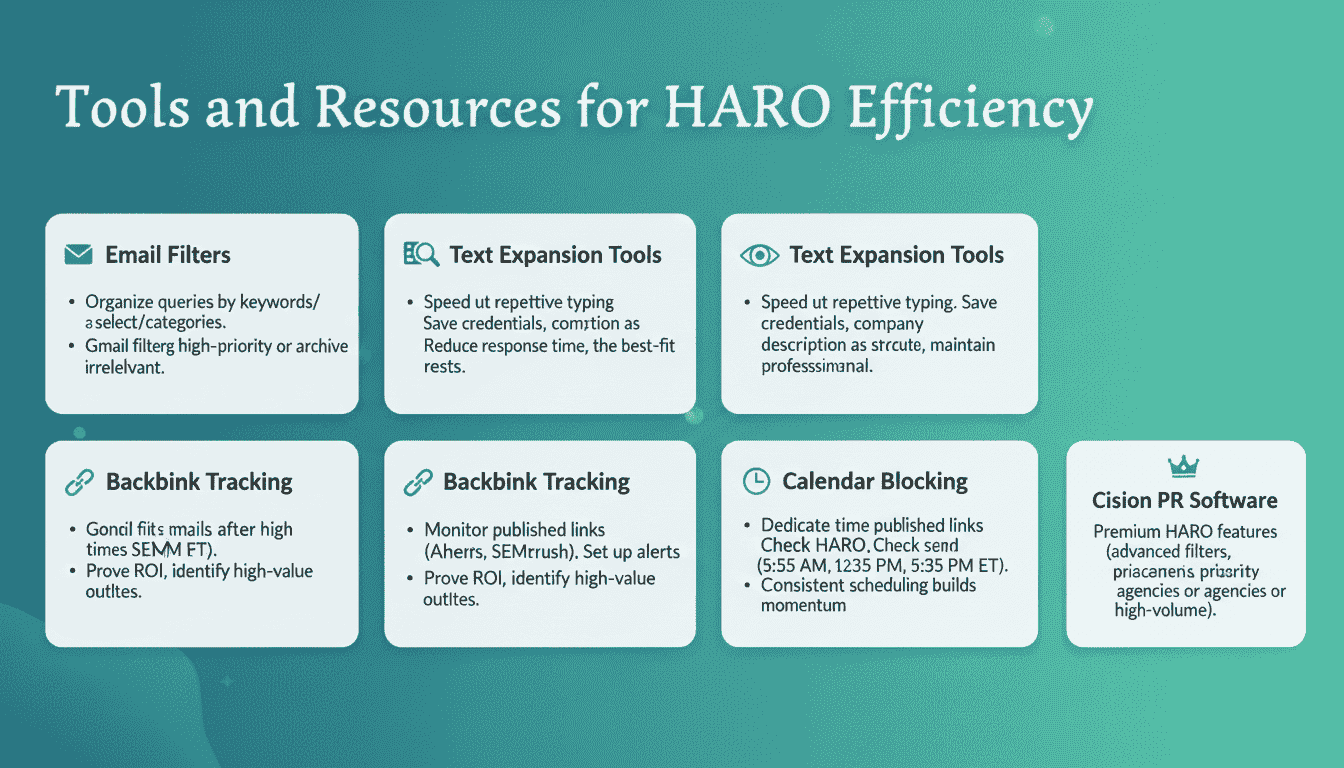
Email filters and labels organise HARO queries automatically based on keywords or categories. Create Gmail filters that flag high priority opportunities or archive irrelevant queries. This system ensures you focus attention on best fit requests immediately.
Text expansion tools like TextExpander or PhraseExpress speed up repetitive typing. Save your credentials, company description, and common response elements as shortcuts. These utilities reduce response time while maintaining consistent professional presentation.
Backlink tracking software such as Ahrefs or SEMrush monitors when your HARO submissions result in published links. Set up alerts for your domain mentions across target publications. This data proves ROI and identifies which media outlets deliver the strongest SEO value.
Calendar blocking dedicates specific times for HARO monitoring and responses. Many successful users check emails immediately after each send time and block 30 minute response windows. Consistent scheduling builds momentum and prevents opportunities from slipping through.
Cision PR Software offers premium HARO features including advanced filters and priority placement. While the free version works excellently, paid tiers provide competitive advantages for agencies managing multiple clients or high volume campaigns.
Measuring HARO SEO Results
Track Domain Authority and Page Authority of publications where you secure placements. Tools like Mos or Ahrefs reveal the SEO power each backlink contributes to your profile. Prioritise opportunities from sites with DA scores above 50 for maximum impact.
Monitor referral traffic from published articles using Google Analytics. Set up UTM parameters when possible to track visitors who click through from media features. This metric demonstrates value beyond SEO by showing audience engagement and potential customer acquisition.
Measure ranking improvements for target keywords after earning HARO backlinks. Compare positions before and after major placements to assess direct SEO impact. Some keywords show movement within weeks, while competitive terms require accumulated authority over months.
Calculate brand mention growth using tools like Google Alerts or Mention.com. HARO features often trigger secondary mentions as other publications reference original articles. These amplification effects extend your visibility far beyond the initial placement.
Document conversion events from HARO driven traffic when possible. Track newsletter signups, demo requests, or purchases attributed to referral sources. This data proves marketing ROI and justifies continued investment in HARO outreach efforts.
HARO for Different Industries
B2B technology companies find exceptional opportunities because tech journalists constantly seek expert commentary. Software security, artificial intelligence, and cloud computing queries appear daily. Position executives as thought leaders by responding to industry trend and prediction requests.
Healthcare and wellness brands match well with lifestyle publication queries. Nutritionists, fitness experts, and mental health professionals answer questions about seasonal health trends and consumer wellness concerns. These placements build trust while earning valuable editorial links.
Financial services professionals address queries about investment strategies, economic trends, and personal finance tips. Accountants and financial advisors particularly benefit during tax season and market volatility periods. Regulatory compliance requires careful response vetting before submission.
E commerce and retail brands contribute consumer shopping insights and product category expertise. Journalists frequently seek data about purchasing trends, seasonal sales patterns, and emerging product categories. Share proprietary research or customer survey results for stronger placements.
Local service businesses can target regional publication queries and hyperlocal media requests. Real estate agents, contractors, and professional services find opportunities in local news outlets. These placements drive geographic SEO signals alongside general authority benefits.
Future of HARO and Media Relations
Artificial intelligence tools increasingly help journalists screen and organise source submissions. Your responses must provide clear, specific value that AI cannot generate through content synthesis. Original data, personal experiences, and unique perspectives become even more critical differentiators.
Video and multimedia content requests appear more frequently as digital publications embrace diverse formats. Prepare to offer expert video clips, infographics, or podcast interviews alongside traditional written quotes. These assets increase placement likelihood and create additional content marketing opportunities.
Direct journalist relationships matter more as reporters build personal source networks outside platforms. Consistent HARO success leads to email list inclusion and social media connections. Nurture these relationships by staying responsive and providing reliable expertise over time.
Final Thoughts
Most SaaS, B2B, and agency teams treat link building through HARO the same way: send random pitches, hope for placements, and wonder why it isn’t driving predictable SEO growth. At DripRanks, we knew there had to be a better way. So we built a system, not a service.
Forensic audits uncover where HARO backlinks will deliver the highest SEO impact. Intent-mapped outreach aligns expert responses with publications that influence real buying decisions. Scalable automation ensures opportunities are monitored, filtered, and responded to consistently without increasing manual effort.
The difference? Your HARO SEO becomes measurable, repeatable, and revenue-focused, not a black box that depends on luck or occasional media wins.