
Toxic backlinks can destroy your website’s search rankings overnight. Google’s algorithms constantly evaluate your link profile, and harmful links from spammy sites trigger penalties that push your pages down in search results. Recent algorithm updates have made link quality more critical than ever before.
Understanding how to disavow links properly protects your site from negative SEO attacks and unintentional bad links. Many businesses unknowingly accumulate toxic backlinks through outdated link building tactics, competitor sabotage, or automated spam campaigns that target vulnerable websites across the internet.
This comprehensive guide reveals exactly how to identify harmful backlinks, when to use Google’s Disavow Tool, and proven strategies to clean your link profile. You’ll learn the step by step disavow process, common mistakes that make problems worse, and expert techniques that restore rankings.
Drip Ranks specialises in advanced link auditing and penalty recovery services that protect client websites from toxic backlink damage. Our SEO experts have successfully restored rankings for hundreds of businesses affected by harmful link profiles.
What Are Disavow Links and Why They Matter
Disavowing links means telling Google to ignore specific backlinks when evaluating your website’s authority and rankings. The Google Disavow Tool allows site owners to upload a file containing URLs or domains they want search engines to exclude from ranking calculations.
This powerful tool became necessary after negative SEO emerged as a real threat. Competitors or malicious actors can build thousands of spammy links pointing to your site, intentionally triggering Google penalties that harm your organic visibility and traffic.
Google introduced the Disavow Tool in 2012 following the Penguin algorithm update that penalised sites with manipulative link profiles. The tool provides website owners a way to distance themselves from harmful backlinks they cannot manually remove through outreach efforts, while still preserving the value of authoritative links earned through ethical strategies such as haro seo.
How Google Evaluates Your Backlink Profile
Google’s algorithms analyse backlink quality using hundreds of signals that determine whether links add value or manipulate rankings. Search engines examine linking domain authority, relevance between sites, anchor text patterns, link velocity, and contextual placement within content.
Natural link profiles grow gradually over time with diverse anchor text and links from topically relevant websites. Unnatural profiles show sudden spikes in backlinks, exact match anchor text repetition, links from irrelevant niches, and patterns suggesting paid or automated link schemes.
The search giant has become increasingly sophisticated at detecting manipulation attempts. Machine learning systems now identify subtle patterns that distinguish earned editorial links from manufactured backlinks designed solely to boost rankings artificially.
Critical Warning Signs Your Site Needs Link Disavowing
Sudden ranking drops across multiple keywords often indicate a link related penalty or algorithmic filter. When your traffic crashes without major on site changes, toxic backlinks frequently cause the problem requiring immediate link profile investigation.
Manual penalty notifications in Google Search Console explicitly state link scheme violations. These messages require urgent action because your site cannot recover until you remove or disavow the problematic links and submit a reconsideration request.
Links from foreign language sites unrelated to your business suggest automated spam campaigns. Thousands of backlinks from Russian, Chinese, or Eastern European sites to an English business site clearly indicate manipulative or negative SEO activity.
Adult content or gambling sites linking to legitimate businesses signal serious problems. These toxic neighborhoods harm your site’s reputation with search engines and visitors, requiring immediate disavowal to protect your domain authority.
Exact match anchor text overuse creates unnatural patterns Google easily detects. When 70% of your backlinks use your primary keyword as anchor text, search algorithms flag your profile as manipulative rather than naturally earned.
Step by Step Process to Disavow Toxic Backlinks
Export your complete backlink profile using Google Search Console, Ahrefs, SEMrush, or Moz Link Explorer. Download CSV files containing all linking domains, URLs, anchor text, and discovery dates to ensure comprehensive analysis.
Analyse each backlink manually or use automated tools to categorise links as toxic, suspicious, or healthy. Evaluate domain authority, spam scores, relevance, placement context, and traffic metrics to make informed decisions about disavowal.
Attempt manual removal first by contacting webmasters of the most harmful linking sites. Send polite emails requesting link removal and document all outreach efforts because Google requires proof you tried manual removal before disavowal.
Create your disavow file as a plain text document using specific syntax requirements. List individual URLs or entire domains depending on toxicity levels, with each entry on a separate line preceded by appropriate formatting commands.
Upload to Google Disavow Tool through Google Search Console by selecting your property and accessing the Disavow Links option. Submit your properly formatted text file and confirm the submission to activate the disavowal process.
Monitor results over 4,8 weeks as Google recrawls and reprocesses your backlink profile. Rankings rarely recover instantly because search algorithms need time to recalculate your site’s authority without the disavowed links.
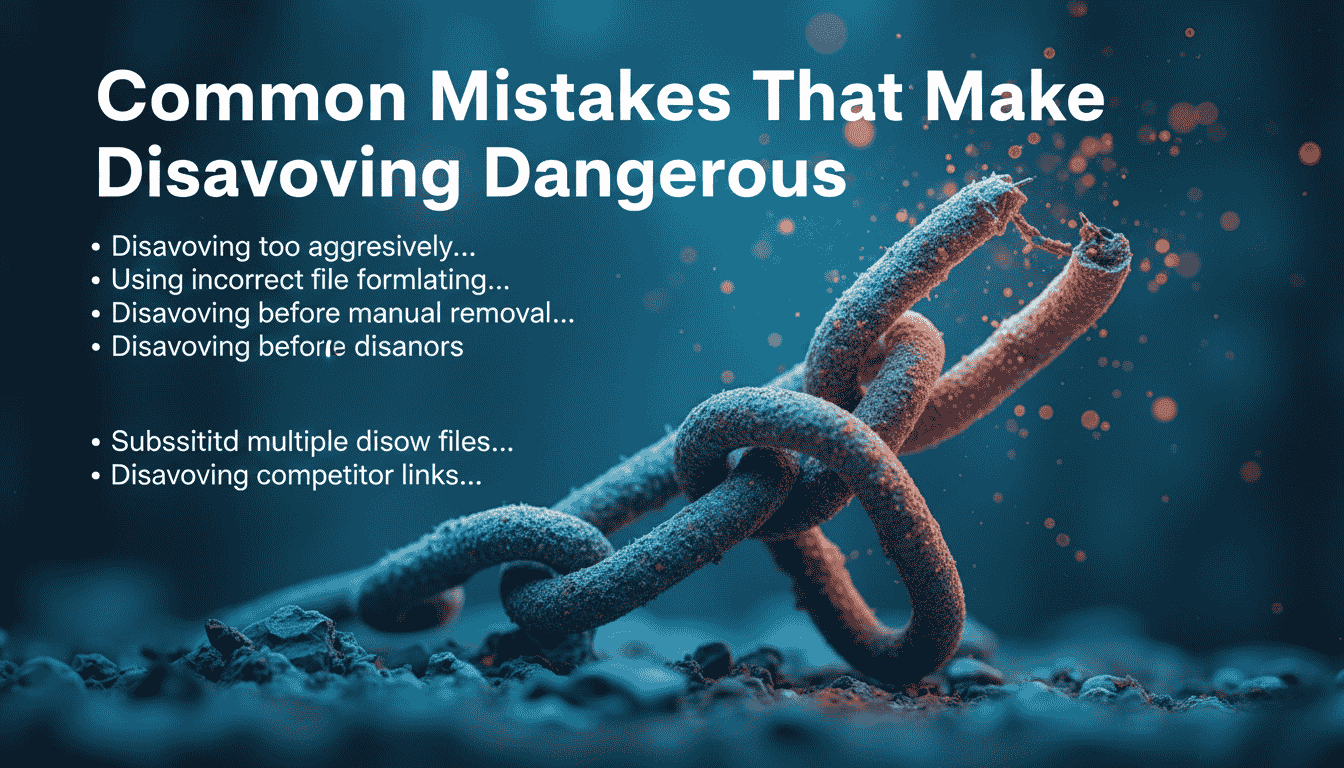
Common Mistakes That Make Disavowing Dangerous
Disavowing too aggressively removes valuable backlinks that actually help your rankings. Many site owners panic and disavow hundreds of links that appear suspicious but provide legitimate ranking benefits when properly evaluated.
Using incorrect file formatting causes Google to reject your disavow submission entirely. Simple errors like wrong syntax, extra spaces, or incorrect file encoding prevent the tool from processing your disavow requests.
Disavowing before manual removal violates Google’s recommended approach that prioritises webmaster outreach. The search giant expects documented removal attempts before resorting to the disavow tool as a last resort option, particularly for links acquired through tactics like niche edits.
Submitting multiple disavow files without including previous entries overwrites your earlier submissions. Each new upload completely replaces the previous file rather than adding to it, potentially undoing months of careful link cleanup work.
Disavowing competitor links from high authority sites backfires by removing valuable ranking signals. Some SEOs mistakenly disavow links from competitors linking to their content, eliminating beneficial backlinks that boost topical authority.
Best Practices for Safe Link Disavowal
Focus on domain level disavows when toxic sites link to you multiple times. Using “domain:” prefix removes all current and future links from that source, preventing ongoing damage from persistent spam networks.
Preserve high quality links even from sites with mixed link profiles. If a legitimate news site hosts some spammy content but links to you from quality editorial content, avoid blanket domain disavows.
Document your disavow rationale in a spreadsheet tracking each disavowed URL or domain. Include spam scores, manual review notes, and removal attempt records to reference during penalty reviews or future audits.
Review disavow files quarterly to update your list based on new toxic backlinks and recovered rankings. Regular audits catch new negative SEO attacks early before they accumulate enough volume to trigger penalties.
Combine with positive link building to replace disavowed backlinks with high quality earned links. Removing toxic links creates ranking gaps that fresh, relevant backlinks from authoritative sources can fill effectively.
Essential Tools for Backlink Analysis and Disavowal
Google Search Console provides free access to backlink data directly from Google’s index. The Links report shows your top linking sites and pages, though coverage remains less comprehensive than paid tools.
Ahrefs Site Explorer offers the largest backlink database with frequent updates and powerful filtering options. The tool’s spam score calculations help identify toxic links quickly across domains with millions of backlinks.
SEMrush Backlink Audit Tool automatically categorises links as toxic, potentially toxic, or safe using multiple quality signals. The platform generates ready to use disavow files based on your review and approval of flagged links.
Moz Link Explorer evaluates backlink quality through proprietary spam score metrics and domain authority calculations. The tool highlights link patterns that suggest manipulation or low quality source sites.
Monitor Backlinks specialises in ongoing link profile monitoring with automatic alerts for new toxic backlinks. The service tracks disavow file changes and measures ranking impacts after submissions.
When You Should NOT Disavow Links
New websites under six months old rarely need disavowal unless targeted by aggressive negative SEO. Young sites naturally have limited backlink profiles, and premature disavowing risks removing the few links they’ve earned.
No manual penalty exists and your rankings remain stable despite some low quality backlinks. Google ignores most spam links automatically without requiring webmaster intervention through the disavow tool.
Links come from relevant industry directories that show some spam characteristics but provide topical relevance. Older directories often accumulate spam over time while maintaining legitimate business listings worth preserving.
You recently launched link building campaigns that haven’t had time to show results. Wait several months before disavowing new backlinks that might appear suspicious but could mature into valuable ranking signals.
Recovering from link removal already improved your rankings without disavowal. If manual outreach successfully removed enough toxic links to restore your positions, additional disavowing becomes unnecessary and potentially harmful.
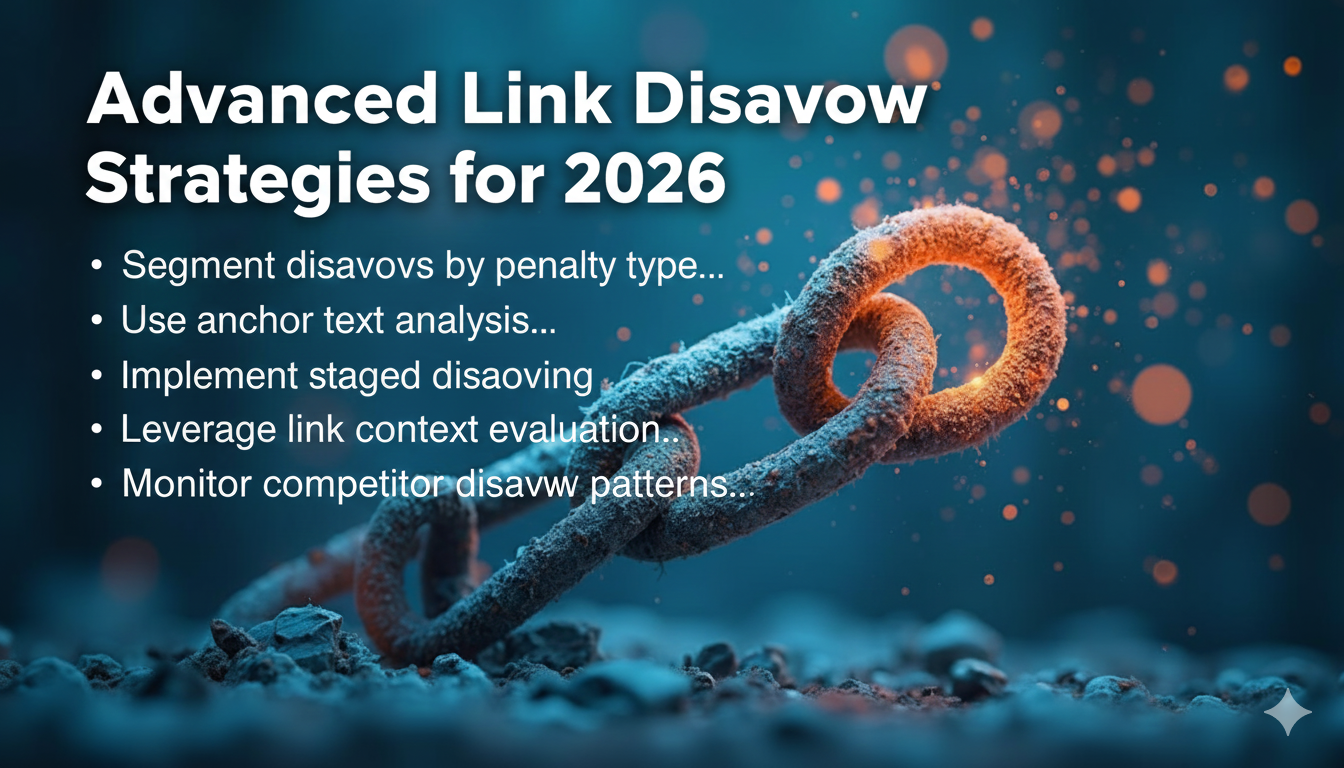
Advanced Link Disavow Strategies for 2026
Segment disavows by penalty type to address specific algorithmic or manual penalties effectively. Penguin related issues require different approaches than manual link scheme penalties or negative SEO attacks.
Use anchor text analysis to identify manipulative patterns requiring disavowal priority. Links with over optimised commercial anchors pose greater risks than brand mentions or generic “click here” text.
Implement staged disavowing for massive toxic link problems affecting thousands of backlinks. Submit the worst offenders first, monitor results for 6,8 weeks, then proceed with additional disavows based on ranking responses.
Leverage link context evaluation to distinguish between toxic sidebar links and valuable content links from the same domain. Contextual placement significantly impacts whether a backlink helps or harms your rankings.
Monitor competitor disavow patterns through reverse engineering their recovered rankings after penalties. Industry specific link quality standards often emerge from observing which backlinks successful competitors choose to disavow.
How Long Does Link Disavowing Take to Work
Initial processing occurs within days as Google acknowledges your disavow file submission. The Search Console interface confirms receipt and displays your uploaded file for verification and future reference.
Full ranking impact requires 4,8 weeks because Google must recrawl linking pages and recalculate your site’s authority. Complex link profiles with thousands of backlinks need more processing time than simpler profiles.
Manual penalty reviews take longer with typical response times of 2,4 weeks after submitting reconsideration requests. Google’s manual review team evaluates whether you’ve adequately addressed the link quality issues causing penalties.
Gradual improvements appear more common than sudden ranking jumps after successful disavowal. Most sites experience steady upward movement over several months as search algorithms rebuild trust in their link profiles.
Repeated submissions may be necessary for ongoing negative SEO attacks that continuously add new toxic backlinks. Monthly or quarterly disavow updates keep your file current against persistent manipulation attempts.
Measuring Success After Disavowing Links
Track organic traffic trends in Google Analytics before and after disavow submissions. Compare weekly visitor patterns to identify recovery signals or continued declines requiring additional link cleanup efforts.
Monitor keyword rankings for your most important commercial terms using rank tracking tools. Recovery typically begins with branded keywords before competitive commercial terms regain their previous positions.
Watch Search Console metrics including impressions, clicks, and average position across your site. Improving trend lines indicate Google’s algorithms are responding positively to your link disavowal efforts.
Analyse referring domain counts to verify Google is processing your disavow file correctly. Your total backlink counts should remain stable while toxic domain percentages decrease in link analysis tools.
Review penalty status regularly in Search Console for manual action removals or algorithmic filter releases. Successful disavowal combined with quality improvements often results in complete penalty reversals within three months.
Preventing Future Toxic Backlink Problems
Implement monthly link audits to catch new toxic backlinks before they accumulate into penalty triggering volumes. Proactive monitoring costs far less than recovering from major Google penalties affecting your entire site.
Diversify anchor text naturally across all link building campaigns to avoid over optimisation patterns. Use branded terms, naked URLs, and varied long tail phrases rather than repeating exact match commercial keywords.
Vet link building partners carefully before engaging in guest posting, directory submissions, or partnership programs. Research their existing clients’ link profiles to ensure tactics align with Google’s quality guidelines.
Set up Google Search Console alerts for unusual backlink activity spikes that might indicate negative SEO attacks. Early detection allows quick response before toxic links damage your hard earned rankings.
Build strong content assets that naturally attract high quality editorial links without manipulation. Comprehensive guides, original research, and valuable tools earn authoritative backlinks that dilute any toxic link impact.
Final Thoughts on Strategic Link Disavowal
Most teams treat link disavowal as a panic response: upload a file, hope penalties disappear, and wonder why rankings don’t recover. At DripRanks we take a different approach. We don’t disavow blindly we integrate link cleanup into a controlled, scalable SEO system.
Forensic link audits distinguish genuinely toxic backlinks from low authority links that still contribute value. Intent driven prioritisation ensures disavowal is used only when necessary, while parallel authority building offsets historical risk. The result? Penalty recovery and link profile stability that is measurable, repeatable, and revenue focused not a gamble based on fear.
DripRanks specialises in system level link auditing and penalty recovery that protects long term search visibility. Our frameworks restore rankings without sacrificing legitimate authority signals, turning risk management into growth leverage. Contact us for a comprehensive link profile audit and a disavow strategy built for sustainable organic performance.