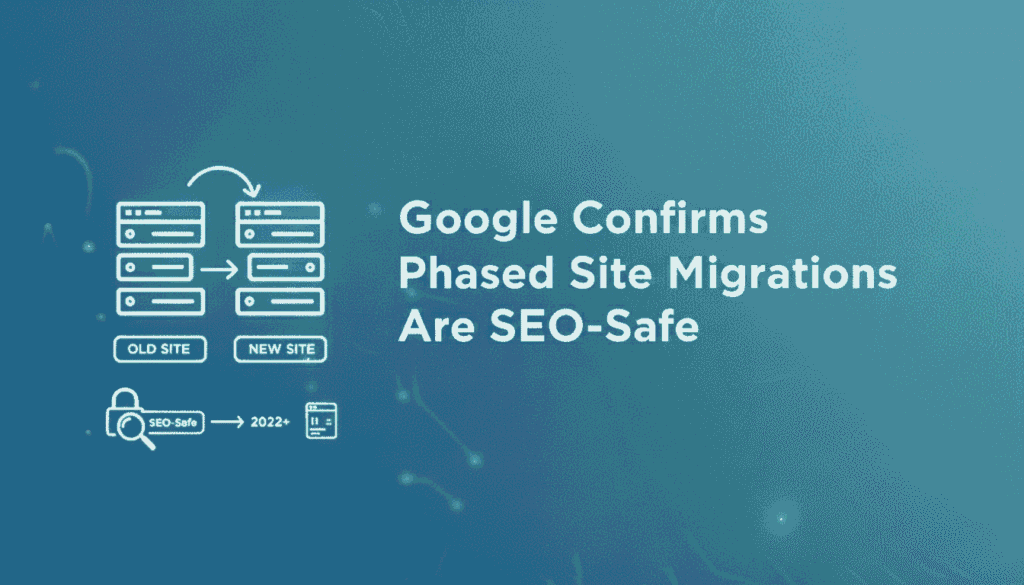

Site migrations don’t have to be all or nothing. Google’s John Mueller has confirmed that staggered, phased migrations are not only acceptable but often preferable for large websites concerned about SEO performance.
The Migration Risk Nobody Talks About
Website migrations whether changing domains, restructuring URLs, or moving to HTTPS remain one of the riskiest SEO manoeuvres. A single misstep can tank organic traffic overnight.
During a recent Google Search Central hangout, Mueller addressed concerns about phased migrations. His advice? Don’t feel pressured to migrate everything at once.
“From our point of view, it’s perfectly fine to do migrations in stages,” Mueller explained. “It’s actually something that I would recommend, especially for larger sites.”
Why Staggered Migrations Work Better
The logic is straightforward. Migrating a massive site in one go creates multiple failure points. Broken redirects, lost content, and crawl budget issues can compound quickly.
A phased approach allows SEO teams to monitor each section’s performance before proceeding. If rankings drop unexpectedly in one category, you can pause, diagnose, and fix issues before migrating the rest.
Mueller specifically noted that Google doesn’t penalise sites for having mixed HTTP and HTTPS pages during migration. The search engine simply processes each URL according to its current state.
This flexibility extends to other migration types partial domain moves, gradual CMS transitions, or section by section URL restructuring.
How to Execute a Phased Migration
Start with lower traffic sections or non critical categories. Monitor Search Console data for crawl errors, indexing issues, and ranking fluctuations.
Successful migrations typically follow this pattern: migrate 10 20% of content, wait 2 4 weeks, analyse performance data, address problems, then proceed to the next phase.
Maintain proper 301 redirects throughout each phase. Update internal links progressively to point to new URLs. Submit updated sitemaps as sections migrate.
The key advantage? You maintain control. If something breaks, only a fraction of your site suffers not your entire organic presence.
What This Means for Enterprise SEO
For large e commerce sites, media publishers, or enterprise platforms with thousands of pages, this guidance changes the migration playbook.
Previously, many SEO teams felt pressured to coordinate massive, risky migrations within tight launch windows. Mueller’s confirmation provides cover for more conservative, staged approaches.
It also highlights Google’s sophisticated crawling infrastructure. The search engine can simultaneously process multiple versions of a site without confusion provided proper signals (redirects, canonicals, sitemaps) are in place.
The takeaway: prioritise safety over speed. A migration that takes three months but preserves rankings beats a one week sprint that loses 40% of organic traffic.
About DripRanks Dubai’s Leading SEO Agency
At DripRanks, we don’t just follow the trends we help you lead them. As one of Dubai’s top rated SEO agencies, we specialise in data driven strategies that boost visibility and conversions. Our technical SEO experts have successfully managed complex site migrations for e commerce platforms, corporate websites, and media properties across the MENA region.
Whether you’re planning a domain migration, platform change, or complete site restructure, our phased migration framework minimises risk while maximising organic performance.