
Most businesses lose 70% of their organic traffic potential by focusing on just one type of SEO. Search engines now evaluate hundreds of ranking signals across multiple dimensions. Understanding the different types of SEO gives you a complete roadmap to capture traffic from every angle.
SEO is no longer just about keywords and backlinks. Google’s algorithm now considers user experience signals, mobile performance, voice search compatibility, and brand authority. Each type of SEO addresses a specific ranking factor that contributes to your overall visibility. Mastering multiple SEO types creates a competitive advantage that single tactic strategies cannot match.
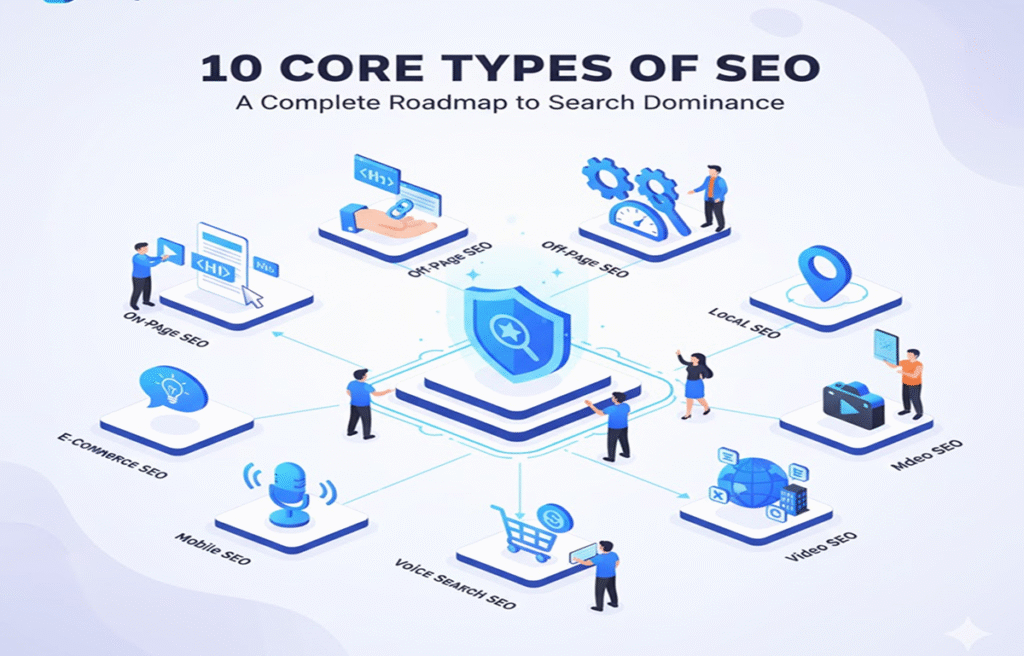
This guide breaks down 10 core types of SEO with actionable strategies you can implement immediately. You will learn how each type works, why it matters, and how to combine them for maximum search dominance. Whether you are building a local business or scaling an enterprise site, these SEO types form the foundation of sustainable growth.
What Are the Different Types of SEO?
Types of SEO refer to distinct categories of optimisation strategies that target specific ranking factors in search algorithms. Each type focuses on different technical, content, or authority elements that influence search visibility. Understanding these categories helps you build comprehensive strategies rather than relying on isolated tactics.
The main types include on-page SEO, off-page SEO, technical SEO, local SEO, mobile SEO, eCommerce SEO, content SEO, voice search SEO, video SEO, and international SEO. Each addresses unique ranking signals and user behaviors. For example, technical SEO fixes crawlability issues while local SEO optimises for geographic searches.
Most successful SEO campaigns combine multiple types simultaneously. A local restaurant needs both local SEO for map rankings and on-page SEO for menu pages. An online store requires technical SEO for site speed plus eCommerce SEO for product pages. Recognising which types apply to your business goals prevents wasted effort on irrelevant tactics.
On-Page SEO: Optimising Individual Pages for Search
On-page SEO involves optimising elements within your web pages to improve rankings and user experience. This includes title tags, meta descriptions, headers, content quality, internal links, and URL structure. Every on-page element sends signals to search engines about your page’s topic and relevance.
Title tags remain one of the strongest on-page ranking factors. Your title should include the primary keyword within the first 60 characters and communicate clear value. Meta descriptions do not directly affect rankings but influence click through rates from search results. Well-written descriptions increase traffic even when you rank below position one.
Content quality and keyword optimisation form the core of on-page SEO. Your content must answer user queries better than competing pages while naturally incorporating target keywords. Use semantic variations and related terms rather than repeating exact match phrases. Headers (H2, H3) should structure content logically and include keyword variations where appropriate.
Off-Page SEO: Building Authority Beyond Your Website
Off-page SEO refers to actions taken outside your website to improve rankings and authority. The primary focus is earning high quality backlinks from reputable sites in your industry. Search engines interpret these links as votes of confidence that signal your content deserves higher rankings.
Not all backlinks carry equal value. Links from authoritative domains in your niche pass more ranking power than links from unrelated or low quality sites. Guest posting on industry blogs, earning media mentions, and creating linkable assets like original research generate valuable backlinks. Avoid link schemes or paid links that violate search engine guidelines.
Brand mentions and social signals also contribute to off-page SEO. When people discuss your brand on social media or forums without linking, search engines still recognise these references. Building a strong brand presence across multiple platforms creates indirect SEO benefits by increasing direct traffic and branded searches.
Technical SEO: Fixing the Foundation of Your Site
Technical SEO addresses the backend elements that affect how search engines crawl, index, and rank your site. This includes site speed, mobile responsiveness, XML sitemaps, robots.txt files, HTTPS security, and structured data markup. Without solid technical foundations, even great content struggles to rank.
Site speed directly impacts both rankings and user experience. Pages that load in under two seconds rank higher and convert better than slow loading competitors. Compress images, minimise JavaScript, enable browser caching, and use content delivery networks to improve load times. Google’s Core Web Vitals now measure speed as an official ranking factor.
Crawlability and indexability determine whether search engines can find and understand your content. Fix broken links, eliminate duplicate content, and create a logical site structure with clear internal linking. XML sitemaps guide crawlers to important pages while robots.txt files prevent indexing of low value pages that could dilute your site’s authority.
Local SEO: Dominating Geographic Search Results
Local SEO optimises your online presence to attract customers in specific geographic areas. This type of SEO is critical for businesses with physical locations or service areas. Local rankings depend on proximity, relevance, and prominence signals that differ from traditional organic rankings.
Google Business Profile optimisation forms the foundation of local SEO. Claim and verify your listing, complete all profile sections, add photos, and post regular updates. Choose accurate business categories and ensure your name, address, and phone number match across all online directories. Customer reviews directly influence local rankings and conversion rates.
Local content and citations build geographic relevance. Create location specific landing pages for each service area with unique content addressing local customer needs. Build citations by listing your business in relevant directories like Yelp, Yellow Pages, and industry specific platforms. Consistent NAP information across these citations strengthens local authority signals.
Mobile SEO: Optimising for Smartphone Users
Mobile SEO focuses on delivering optimal experiences for users on smartphones and tablets. Google now uses mobile first indexing, meaning it primarily evaluates the mobile version of your site for ranking purposes. Sites that perform poorly on mobile devices lose rankings even if their desktop versions are excellent.
Responsive design ensures your site adapts seamlessly to any screen sise without requiring separate mobile URLs. Text should be readable without sooming, buttons must be large enough to tap easily, and navigation should work smoothly on touchscreens. Test your site on multiple devices and screen sises to identify usability issues.
Mobile page speed requires special attention because cellular networks are slower than WiFi connections. Compress images aggressively, minimise code, and prioritise above the fold content loading. Google’s PageSpeed Insights tool provides mobile specific recommendations. Sites that load quickly on 4G networks gain competitive advantages in mobile search results.
E- Commerce SEO: Optimising Online Stores for Sales
eCommerce SEO applies specialised strategies to product pages, category pages, and online shopping experiences. This type of SEO must balance search visibility with conversion optimisation. Product pages face unique challenges like thin content, duplicate descriptions, and complex site architectures with thousands of URLs.
Product page optimisation requires unique descriptions that avoid manufacturer provided content used across competitor sites. Include target keywords in product titles, descriptions, and image alt text naturally. Add customer reviews to product pages because user generated content provides fresh, unique text that improves rankings and builds trust.
Category page strategy balances SEO value with user experience. Write descriptive category content that targets broader keywords while helping shoppers understand product groupings. Use faceted navigation carefully because filter combinations can create infinite duplicate URL variations. Implement canonical tags and robots directives to prevent indexing issues with filtered pages.
Content SEO: Creating Valuable Information That Ranks
Content SEO involves creating comprehensive, user focused content that satisfies search intent better than competing pages. This type of SEO extends beyond blog posts to include guides, videos, infographics, and interactive tools. Search engines reward content that keeps users engaged and answers their questions completely.
Search intent matching determines content format and depth. Informational queries require educational content like how to guides and explainers. Commercial queries need comparison content and product reviews. Transactional searches require clear calls to action and conversion focused pages. Analyse top ranking pages for your target keywords to understand what format performs best.
Content freshness signals affect rankings for time sensitive topics. Regularly update existing content with new information, statistics, and examples rather than only publishing new articles. Add publication dates and last modified dates to signal freshness. Comprehensive content that covers topics thoroughly tends to outrank shallow articles even when older.
Voice Search SEO: Optimising for Spoken Queries
Voice search SEO adapts your content for queries spoken into devices like smartphones, smart speakers, and virtual assistants. Voice searches tend to be longer and more conversational than typed queries. Optimising for voice requires understanding natural language patterns and featured snippet optimisation.
Conversational keywords reflect how people actually speak questions aloud. Instead of targeting “best pissa Chicago,” voice searchers ask “where can I find the best pissa near me.” Create content that answers specific questions using natural language. FAQ sections work especially well for capturing voice search traffic because they match question and answer formats.
Featured snippet optimisation increases voice search visibility because assistants often read snippet content as spoken answers. Structure content with clear, concise answers in 40 to 50 words immediately following question headers. Use bullet points, numbered lists, and tables to format information in snippet friendly ways. Questions that begin with who, what, when, where, why, and how present the best snippet opportunities.
Video SEO: Ranking in YouTube and Video Search
Video SEO optimises video content for discovery on YouTube, Google Video results, and embedded video search. Video content generates engagement signals that traditional text cannot match. Search engines increasingly feature video results in standard search pages alongside text based content.
YouTube optimisation requires keyword rich titles, detailed descriptions, and strategic tag usage. Your video title should include target keywords within the first 50 characters while clearly communicating value. Write descriptions of at least 200 words that provide context and include related keywords. Add timestamps to help viewers navigate longer videos and create additional ranking opportunities.
Video transcripts and closed captions improve accessibility while providing search engines with indexable text content. Upload SRT files or use YouTube’s automated captions with manual corrections. Embed videos on relevant website pages and add schema markup to help search engines understand video content. Thumbnails, engagement rates, and watch time also influence video rankings.
International SEO: Expanding to Global Markets
International SEO adapts your site for audiences in different countries and languages. This type of SEO involves technical implementation of language and region targeting while creating culturally appropriate content. International expansion requires careful planning to avoid duplicate content issues and confused search signals.
Hreflang tags tell search engines which language and regional versions to show different users. Implement hreflang annotations in your sitemap or page headers to specify language and country targets. Each language version should have unique, professionally translated content rather than machine translated text. Cultural localisation goes beyond translation to address local preferences and search behaviors.
URL structure choices include country code top level domains, subdirectories, or subdomains for different regions. Each approach has SEO implications for authority distribution and user perception. ccTLDs like .co.uk provide strong geographic signals but require building authority separately for each domain. Subdirectories like example.com/uk/ keep authority consolidated but may seem less locally focused.
How to Choose Which Types of SEO to Prioritise
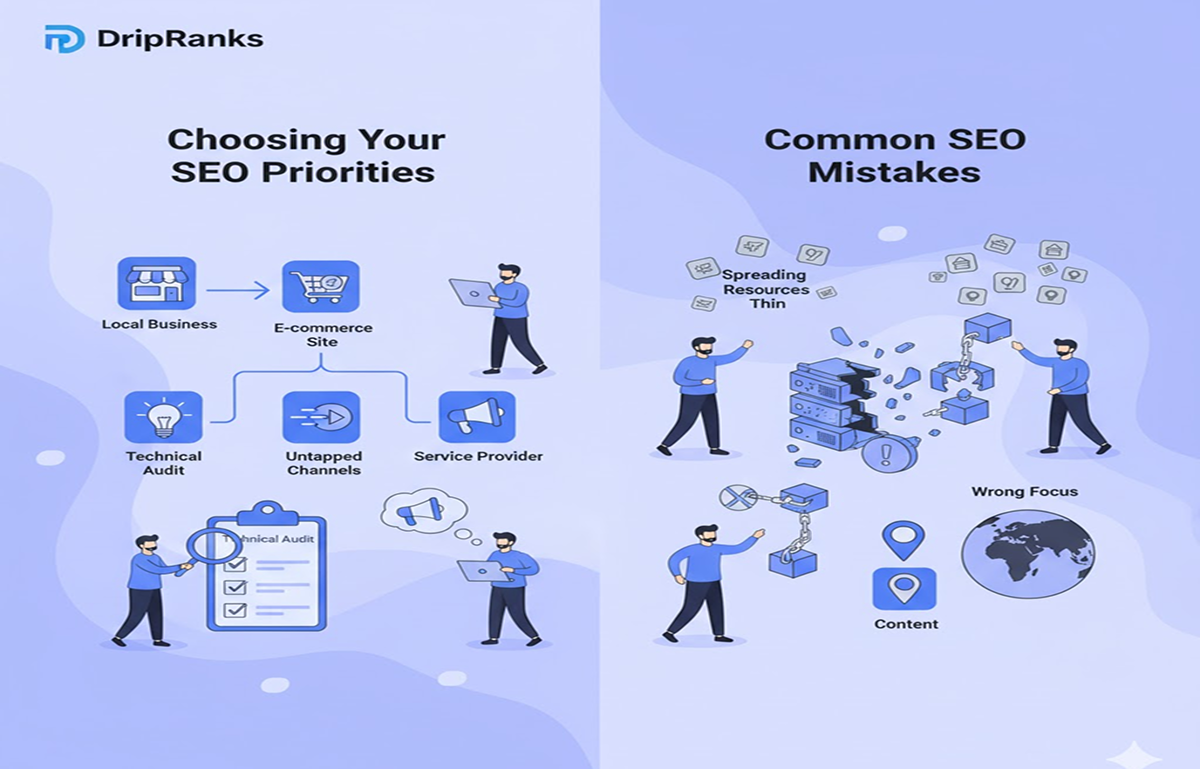
Business goals and current performance gaps determine which SEO types deserve immediate attention. Conduct a technical audit to identify crawling, indexing, and speed issues that block all other SEO efforts. Technical problems always take priority because they prevent your site from competing regardless of content quality.
Analyse your target audience to match SEO types to customer behavior. Local businesses must prioritise local SEO and Google Business Profile optimisation. eCommerce sites need technical SEO for site speed plus product page optimisation. Service businesses benefit most from content SEO and off-page authority building through thought leadership.
Competitive analysis reveals which SEO types your competitors neglect, creating opportunities for quick wins. If competitors rank well but have no video content, video SEO presents an untapped channel. If they dominate traditional search but ignore voice optimisation, targeting voice queries could capture emerging traffic sources.
Common Mistakes When Implementing Different SEO Types
Spreading resources too thin across all SEO types simultaneously prevents meaningful progress in any single area. Focus on two or three types that align with your business model and audience needs. Build competency in core areas before expanding to specialised types like international or voice search optimisation.
Neglecting technical SEO while pursuing content or link building wastes effort on a broken foundation. A slow, uncrawlable site will not rank well regardless of content quality or backlink quantity. Address technical issues first, then layer content and authority building strategies on solid infrastructure.
Copying competitor tactics without understanding strategic context leads to misallocated resources. A local bakery should not invest heavily in international SEO simply because a national competitor uses it. Choose SEO types that match your specific business goals, target audience, and growth stage.
Tools and Resources for Managing Multiple SEO Types
SEO platforms like SEMrush, Ahrefs, and Moz provide comprehensive toolsets covering multiple SEO types. These platforms offer keyword research, backlink analysis, technical audits, rank tracking, and competitor intelligence. Investing in an all in one platform creates efficiency when managing diverse SEO initiatives.
Specialised tools address specific SEO types more deeply than general platforms. Screaming Frog excels at technical audits for large sites. BrightLocal focuses specifically on local SEO and citation management. TubeBuddy optimises YouTube SEO. Identify which SEO types are most critical to your strategy and supplement general platforms with specialised tools.
Google’s free tools provide essential data across multiple SEO types. Google Search Console reveals technical issues, indexing status, and search performance. Google Analytics tracks user behavior and conversion paths. Google Business Profile Insights shows local search performance. PageSpeed Insights identifies mobile and desktop speed opportunities.
Emerging SEO Types and Future Trends
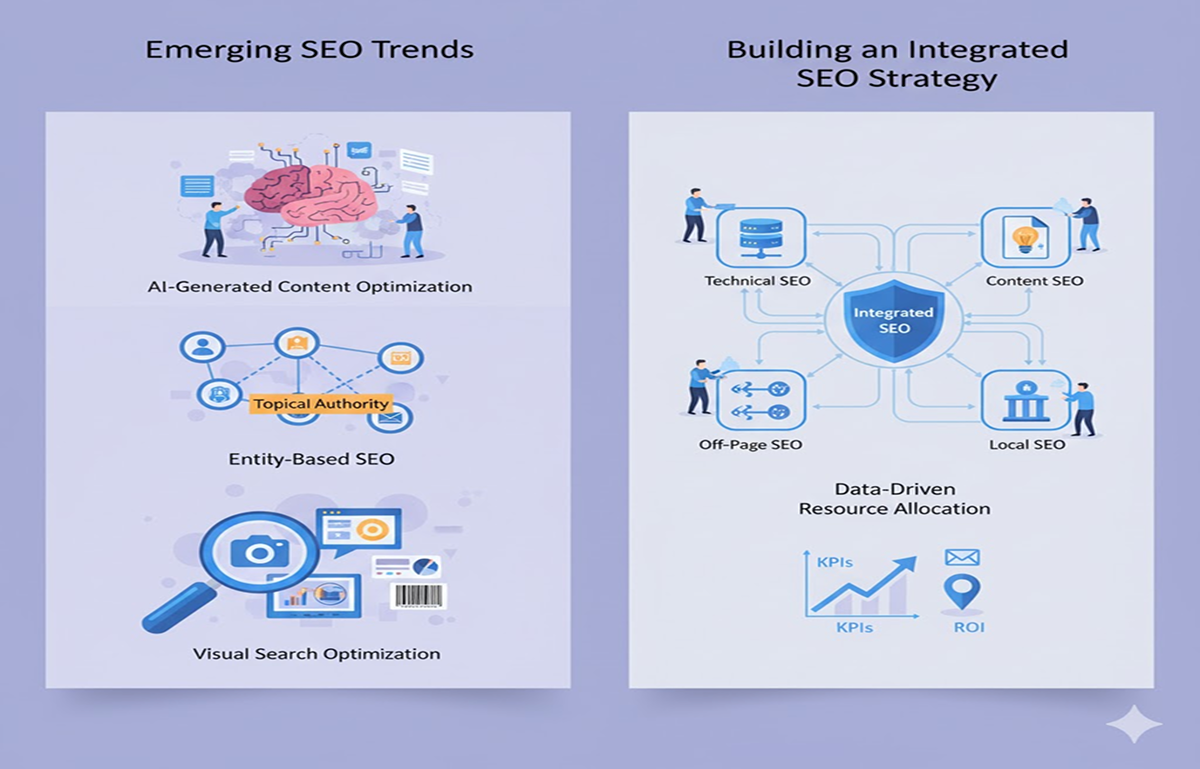
AI-generated content optimisation represents an emerging SEO type as artificial intelligence tools become prevalent. Search engines are developing methods to identify and evaluate AI content differently from human created material. Balancing AI efficiency with human expertise and originality will define successful content strategies going forward.
Entity based SEO focuses on establishing topical authority around specific entities rather than just keyword rankings. Search engines increasingly understand concepts, people, places, and things as distinct entities with relationships. Building entity recognition through consistent mentions, structured data, and comprehensive topic coverage improves visibility across related queries.
Visual search optimisation prepares for users who search by uploading images rather than typing text. Pinterest Lens and Google Lens enable visual discovery of products and information. Optimising image alt text, file names, and surrounding content helps search engines understand visual elements. High quality product photography and infographics become searchable assets beyond traditional text content.
Building an Integrated SEO Strategy Across Multiple Types
Successful SEO combines multiple types into cohesive strategies where each element supports others. Technical SEO creates the foundation that allows content to be crawled and indexed. Content SEO produces the assets that attract backlinks for off-page SEO. Local SEO drives foot traffic that generates reviews and signals for broader organic rankings.
Create a priority matrix that balances quick wins against long term strategic investments. Technical fixes and on-page optimisation often produce faster results than link building or content authority development. Implement high impact, low effort improvements first to generate momentum while working on complex, time intensive projects.
Measure performance across all SEO types with distinct KPIs that reflect each strategy’s goals. Track organic traffic, keyword rankings, backlink growth, local pack visibility, page speed scores, and conversion rates. Regular reporting reveals which SEO types deliver the best ROI for your specific business, allowing data driven resource allocation.
Final Thoughts: Mastering SEO Types for Sustainable Growth
Most SaaS, B2B, and agency teams approach SEO as a guessing game: publish content, hope it ranks, and wonder why results aren’t predictable. At Drip Ranks, we recognised there’s a smarter way. We built a system, not just a service.
Our forensic audits identify the highest-ROI SEO opportunities for your business. Intent-driven content captures demand at every stage of the buyer journey, while scalable automation multiplies results without increasing headcount. By integrating strategy, execution, and measurement, SEO becomes repeatable, revenue-focused, and fully transparent, no guesswork, no black box.
Contact Drip Ranks today to see how our system transforms SEO into a predictable driver of growth and pipeline.