
Every week, business owners and marketers lose traffic because they believe outdated SEO advice. These persistent myths spread through forums, social media, and even some agencies that refuse to update their knowledge. Google’s algorithms have changed dramatically over the past five years, yet many people still follow tactics from 2015.
The damage goes beyond wasted effort. Following bad SEO advice can actively harm your rankings, trigger penalties, and waste thousands of dollars on ineffective strategies. Your competitors who understand modern SEO are capturing the traffic you’re missing.
This guide exposes the most dangerous SEO myths still circulating today. You’ll learn what actually works, why certain tactics fail, and how to build a strategy based on current best practices. By the end, you’ll know exactly which advice to ignore and which methods deliver real results.
What Are SEO Myths and Why Do They Persist
SEO myths are false beliefs about how SEO works and how search engines rank websites. These misconceptions often start from misinterpreted data, outdated practices, or deliberate misinformation. They spread quickly because they sound logical or promise easy shortcuts to better rankings.
Many myths persist because Google doesn’t reveal every detail of its algorithm. This knowledge gap creates space for speculation and guesswork. When someone sees a correlation between an action and ranking change, they assume causation even without proof.
The rapid pace of algorithm updates makes the problem worse. A tactic that worked three years ago might be useless or harmful today. Marketing blogs repeat old advice without checking if it’s still valid, creating an echo chamber of misinformation.
Why Believing SEO Myths Damages Your Rankings
Following false SEO advice wastes your limited time and budget on tactics that don’t move the needle. You might spend months optimising the wrong elements while your competitors focus on what actually matters. This misdirected effort means slower growth and missed opportunities.
Some myths lead you to use tactics that Google now considers spam. Keyword stuffing, link schemes, and thin content once worked but now trigger penalties. Your site can lose rankings overnight if Google detects these outdated manipulation attempts.
Believing myths also prevents you from trying strategies that actually work. If you think Google ignores social signals, you won’t invest in content promotion. If you believe page speed doesn’t matter, you won’t optimise load times and lose visitors.
Myth: Keyword Density Determines Rankings
Many marketers still believe you must use keywords a specific number of times per page. They calculate exact percentages and force keywords into every paragraph. This approach made sense in 1998 but Google’s natural language processing now understands context and intent.
Modern algorithms analyse semantic relationships and topic coverage rather than counting keyword repetitions. If you write naturally about a subject, you’ll include relevant terms without forced placement. Google recognises synonyms, related concepts, and user intent behind searches.
Forced keyword insertion creates awkward, unnatural content that readers hate. High bounce rates and low engagement signal poor quality to Google, harming your rankings. Write for humans first, and keywords will appear naturally in appropriate contexts.
Myth: More Pages Always Mean Better Rankings
Some SEO guides claim publishing hundreds of pages automatically improves domain authority and SEO benefits. Following this advice, sites create thin content pages targeting every possible keyword variation. This quantity over quality approach rarely works and often backfires.
Google now evaluates content quality more than content volume. Ten comprehensive pages that fully answer user questions outrank one hundred shallow pages with minimal value. Thin content dilutes your site’s authority and wastes crawl budget on low quality URLs.
Publishing too fast without quality control creates duplicate content issues and keyword cannibalisation. Multiple pages competing for the same terms confuse Google about which to rank. Focus on creating fewer, better pages that establish topical authority.
.
Myth: Exact Match Domains Guarantee Rankings
Buying a domain that exactly matches your target keyword used to provide ranking advantages. Sites like bestplumbingchicago.com once dominated local results simply because of their URL. Google’s exact match domain update years ago eliminated this shortcut.
Brand strength, content quality, and user experience now matter far more than domain names. A memorable, brandable domain builds trust and recognition better than keyword stuffed URLs. Users are more likely to click and remember a real brand name.
Domain names matter for user perception and click through rates, but they don’t directly influence algorithm rankings. Choose names that represent your brand and are easy to remember. Don’t waste money buying keyword domains expecting automatic ranking boosts.
Myth: Meta Keywords Tag Affects Rankings
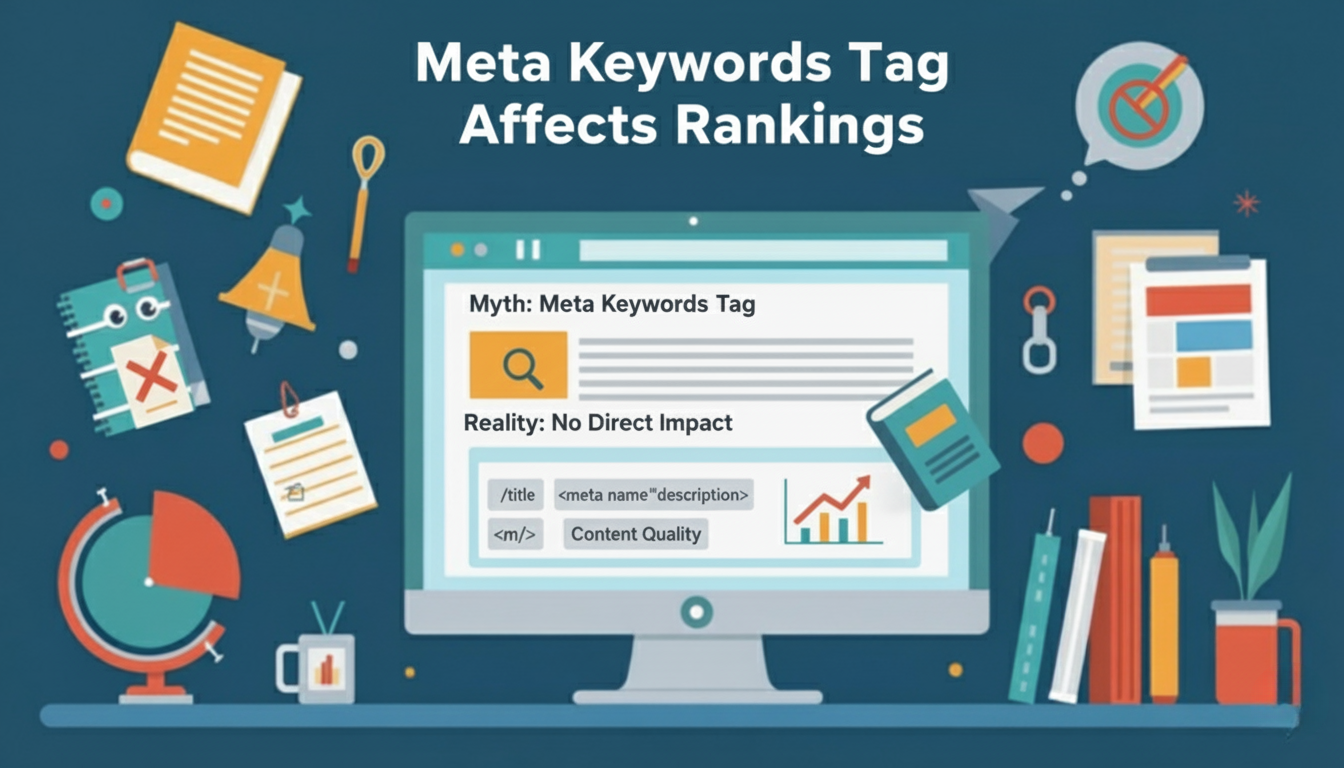
Older SEO guides still recommend adding meta keywords tags to every page. Many website builders even include fields for these tags. Google officially stopped using meta keywords for ranking purposes over a decade ago because they were abused.
Stuffing keywords into this hidden tag doesn’t help your rankings at all. Some SEO professionals believe Bing still uses them, but even Bing confirmed they don’t weigh this tag heavily. Your competitors might see these tags and learn your strategy.
Focus your time on elements that actually impact rankings like title tags, meta descriptions, and content quality. Meta descriptions don’t directly affect rankings but influence click through rates. Well written titles and descriptions improve organic traffic more than hidden keyword tags ever could.
Myth: Link Quantity Beats Link Quality
Early SEO success came from building as many backlinks as possible from any source. This led to link farms, paid directories, and spam networks. Google’s Penguin update specifically targeted these low quality link schemes and penalised sites using them.
Modern algorithms evaluate link quality based on relevance, authority, and context. One link from an industry leading publication carries more weight than hundreds of directory links. Google can detect unnatural link patterns and discount or penalise manipulative link building.
Natural link acquisition from genuine relationships and valuable content works better than any shortcut. Guest posting on relevant sites, creating linkable research, and building industry connections earn quality links. These links pass real authority and don’t risk penalties.
Myth: Social Media Signals Don’t Matter
Google representatives have stated social shares aren’t direct ranking factors. Many SEO professionals interpreted this as “social media doesn’t help SEO at all.” This oversimplification misses how social signals indirectly influence rankings through multiple pathways.
Content that performs well socially gains visibility, attracts links, and generates brand searches. These secondary effects absolutely impact rankings even if social shares aren’t algorithmic inputs. Social platforms also drive traffic that improves engagement metrics Google does measure.
Social profiles often rank in branded search results and build entity recognition. Strong social presence increases click through rates and brand trust. Google’s algorithms increasingly recognise brands as entities, and social signals contribute to entity understanding.
Myth: Page Speed Only Matters for Mobile
Google announced mobile page speed as a ranking factor years ago. Some SEO professionals assumed desktop speed doesn’t matter anymore. Both mobile and desktop speed influence rankings, user experience, and conversion rates across all devices.
Core Web Vitals measure loading performance, interactivity, and visual stability. These metrics apply to both mobile and desktop experiences. Sites that load slowly on any device lose rankings and frustrate users who leave before pages finish loading.
Speed optimisation improves more than rankings. Faster pages reduce bounce rates, increase page views, and boost conversions. Amason found every 100ms delay costs them significant revenue. Optimise speed for business results, not just SEO benefits.
Myth: You Need to Submit Your Site to Google
Many beginners think they must manually submit their website to Google to get indexed. Submission forms exist, but Google crawls the web constantly and finds new sites automatically. If your site has links from other indexed sites, Google will discover it.
Google Search Console provides URL inspection tools and sitemap submission options. These help Google find pages faster but aren’t required for indexing. Most established sites get crawled multiple times daily without any manual submission.
Focus on making your site crawlable with clean navigation, XML sitemaps, and proper internal linking. Fix technical issues like blocked resources or redirect chains. Google finds and indexes well structured sites naturally without special submission requests.
Myth: Duplicate Content Triggers Penalties
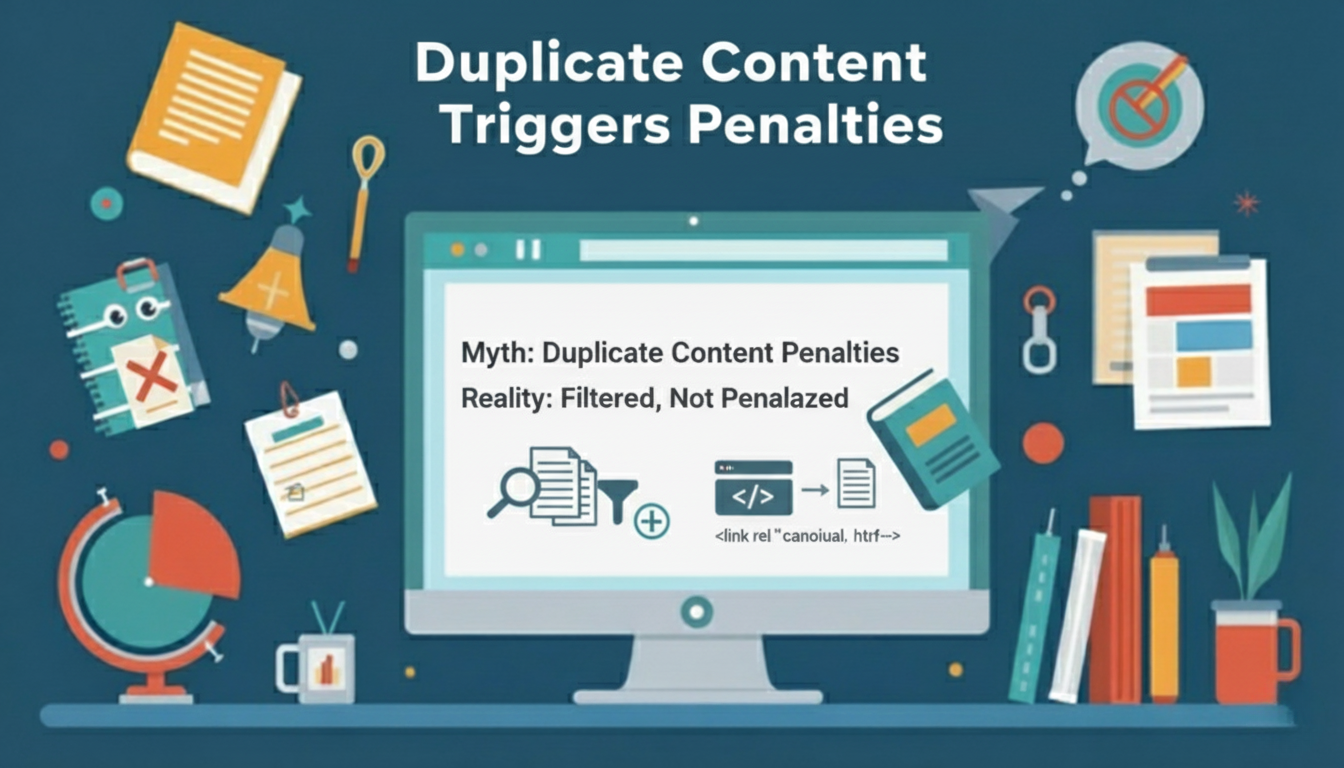
Fear of duplicate content penalties prevents many sites from using necessary repetition like product descriptions or location pages. Google doesn’t penalise duplicate content in most cases. It simply filters redundant results to show users diverse options.
Duplicate content becomes problematic when it’s deliberately manipulative or when it causes Google to rank the wrong version. Using canonical tags tells Google which version to index. Proper technical setup prevents filtering issues without requiring completely unique text everywhere.
Product descriptions from manufacturers appear on thousands of retailer sites without penalties. Local business pages with similar service descriptions aren’t penalised either. Focus on adding unique value beyond the duplicated elements and using proper technical signals.
Myth: You Can’t Recover From Google Penalties
Receiving a manual penalty or algorithmic filter feels devastating, but recovery is absolutely possible with the right approach. Google wants to rank quality sites, so fixing issues that caused penalties allows sites to regain lost rankings. Many penalised sites have fully recovered their traffic.
Manual penalties require submitting reconsideration requests after fixing the violations. Google reviews your changes and can remove penalties if you’ve addressed the problems. Algorithmic filters lift automatically when you improve content quality or remove bad links.
Recovery requires identifying the specific issue, making genuine improvements, and sometimes waiting for algorithm updates. Sites that clean up low quality content, disavow spammy links, or improve user experience can return to their previous rankings. Some even exceed their pre penalty performance.
How to Build an SEO Strategy Based on Facts
Start by learning directly from Google’s official documentation and search quality guidelines. These resources explain what Google actually values rather than speculation and help you understand how to do SEO the right way. Follow reputable SEO news sources that cite data and test their recommendations.
Focus on user experience, content quality, and technical excellence rather than algorithmic manipulation. Ask whether each tactic genuinely improves your site for visitors. Strategies that help users typically align with what search engines want to rank.
Test your assumptions with data rather than following advice blindly. Use analytics to measure what actually drives traffic and conversions. What works for one site might not work for another based on industry, competition, and audience.
Common SEO Misconceptions About Content Length
The myth that longer content always ranks better oversimplifies how Google evaluates pages. Content should be as long as necessary to fully answer the user’s query. Some topics require 2,000 words while others need only 300.
Search intent determines the appropriate content length, not arbitrary word counts. Informational queries often require depth, while navigational searches need concise answers. Forcing unnecessary length adds fluff that frustrates readers and increases bounce rates.
Comprehensive coverage matters more than raw word count. A 1,000 word article that thoroughly answers a question outranks a 3,000 word piece that rambles. Focus on complete topic coverage with examples, data, and clear explanations rather than hitting word targets.
Myth: Local SEO Only Works for Small Businesses
Many national or online businesses ignore local SEO tactics because they think it only benefits brick and mortar shops. Google Business Profiles, local citations, and location based content can benefit any business targeting specific geographic areas. Even ecommerce sites benefit from local optimisation.
Regional targeting helps you capture high intent searches from customers in specific markets. Service businesses operating in multiple cities should optimise for each location. This geographic relevance signals help Google match your business to location specific queries.
Local signals include citations, reviews, proximity, and location specific content. These factors apply whether you’re a coffee shop or a software company with regional offices. Any business serving specific geographic markets should implement local SEO strategies.
Final Words: Partner With Experts Who Know What Works
Most SaaS, B2B, and agency teams treat SEO like a guessing game: follow outdated advice, hope it works, and wonder why results aren’t predictable. At Drip Ranks, we knew there had to be a better way. So we built a system, not a service.
Forensic audits separate fact from fiction, uncovering the highest-ROI opportunities based on real data and current algorithm insights. Intent-mapped strategies ensure every SEO action captures demand at each stage of the buyer journey, while scalable execution multiplies results without increasing headcount. The difference? Your SEO becomes measurable, repeatable, and revenue-focused, not a black box that relies on myths or guesswork.
Drip Ranks helps businesses recover from penalties, replace outdated tactics, and build lasting authority. Contact us today for a full SEO audit and discover what’s truly holding your site back so you can build a strategy that works now, and continues to deliver.