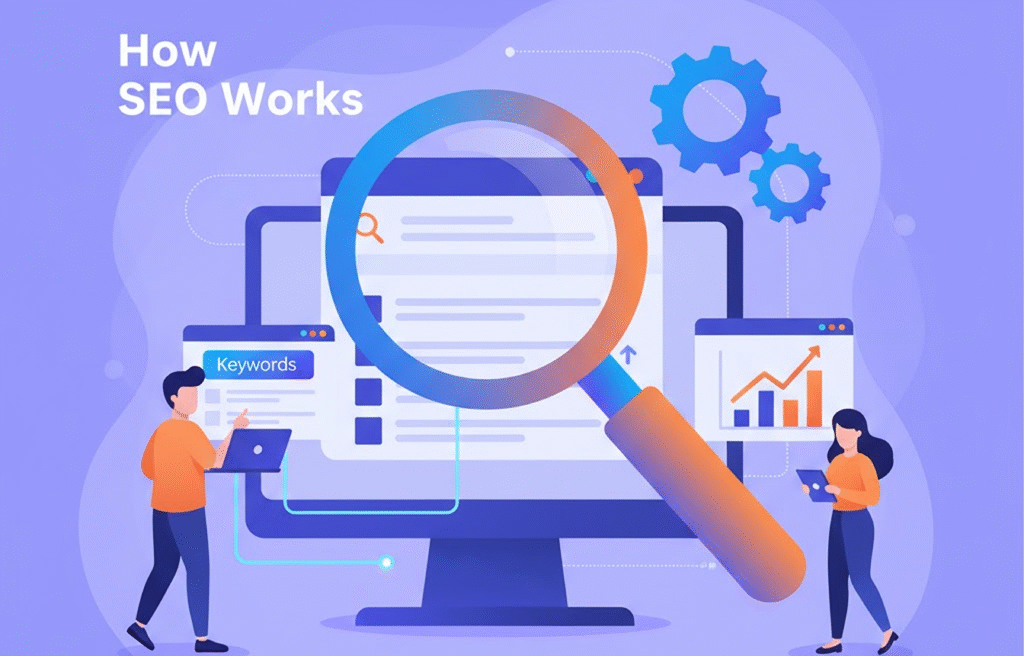

Search engines process over 8.5 billion queries every single day on Google alone. Every business wants to appear in those results, but most never make it past page two. The reason is simple: they don’t understand how SEO works or how Google decides which websites deserve the top spots.
SEO is not a mysterious black box. It operates on specific principles that Google has refined over two decades. When you understand these core mechanisms, you can reverse-engineer the ranking process and apply proven tactics to your own website. This guide breaks down exactly how SEO works from the moment someone types a query to the second Google displays your page.
SEO connects your content with people actively searching for solutions you provide. Unlike paid ads that disappear when budgets run out, organic rankings compound over time. Once you build authority and relevance, you attract qualified traffic month after month without paying per click. The businesses that master how SEO works gain a sustainable competitive advantage that pays dividends for years.
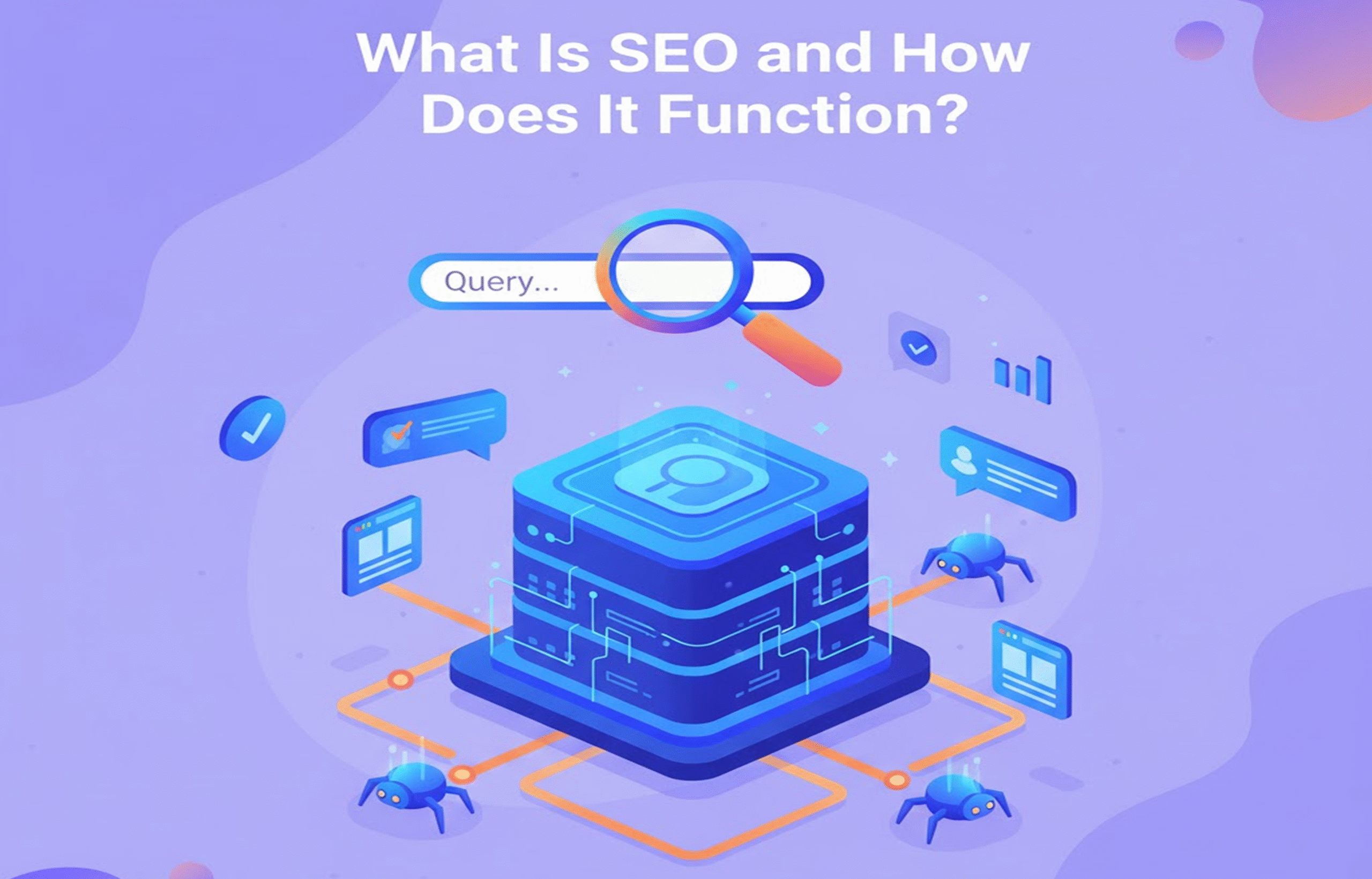
What Is SEO and How Does It Function?
SEO stands for search engine optimisation. It refers to the practice of improving your website so search engines understand your content and rank it higher for relevant queries. Google uses automated programs called crawlers to discover web pages, analyse their content, and store that information in a massive index.
When someone searches, Google’s algorithm evaluates billions of indexed pages in milliseconds. It considers hundreds of ranking factors to determine which pages best match the user’s intent. Pages that demonstrate expertise, authority, and trustworthiness for that specific query rise to the top. SEO is the process of aligning your website with those ranking factors.
Think of Google as a librarian organising the world’s information. SEO helps you label your books correctly, place them in the right sections, and make them easy to find. Without SEO, your website is like an unlabeled book stored in a basement. With SEO, it sits on the front shelf where people actively looking for your topic can discover it instantly.
Why SEO Matters for Business Growth
Organic search drives 53% of all website traffic according to BrightEdge research. This makes SEO the single largest source of visitors for most companies. Unlike social media or paid ads, search traffic comes from people with high intent who are actively looking for products, services, or information you offer.
SEO delivers compounding returns over time. A well-optimised article can rank for years and generate thousands of visitors without additional investment. Paid ads stop the moment you pause your budget, but organic rankings continue working 24/7. This creates predictable, sustainable growth that strengthens your marketing foundation.
Businesses that rank on page one capture the majority of clicks. Studies show that the top three organic results receive over 50% of all clicks combined. If your competitors rank and you don’t, they capture customers who should be yours. SEO levels the playing field and lets smaller companies compete with larger brands based on content quality and relevance.
How Google Crawls and Indexes Websites
Google uses automated bots called crawlers or spiders to discover web pages. These crawlers follow links from one page to another, building a map of the internet. When they find a new page, they download the content and send it to Google’s servers for processing.
Crawlers visit popular sites more frequently than obscure ones. If your website rarely updates or has few backlinks, crawlers may check it only once per month. Fresh content and regular updates signal that your site is active, prompting more frequent crawl visits. Internal linking also helps crawlers discover new pages faster.
After crawling, Google indexes your content by analysing text, images, videos, and code. The algorithm categorises your page by topic and stores it in the search index. Only indexed pages can appear in search results. If a page is blocked by robots.txt or contains a “noindex” tag, it won’t rank no matter how well-optimised it is.
How Google Ranks Pages in Search Results
Google’s ranking algorithm evaluates over 200 factors when deciding which pages to show. These factors fall into three main categories: relevance, authority, and user experience. Relevance measures how well your content matches the search query. Authority assesses how trustworthy your site is based on backlinks and expertise signals.
User experience includes page speed, mobile-friendliness, and engagement metrics. Google tracks how users interact with your page after clicking. If people immediately bounce back to search results, Google interprets that as a poor match. If they stay and engage, it signals high quality and boosts your rankings.
Keyword usage remains critical but works differently than it did ten years ago. Google now understands semantic relationships and context. You don’t need to repeat exact phrases constantly. Instead, use natural language that covers the topic comprehensively. Google rewards depth and clarity over keyword density.
On Page SEO Strategies That Work
On page SEO refers to optimisations you make directly on your website. Title tags are one of the most powerful ranking factors. Include your primary keyword near the beginning and keep titles under 60 characters so they display fully in search results. A compelling title improves click-through rates, which indirectly boosts rankings.
Header tags structure your content for both readers and crawlers. Use one H1 tag per page with your primary keyword. H2 and H3 tags organise subtopics and help Google understand content hierarchy. Well-structured headers make your content easier to scan and improve featured snippet chances.
Content quality matters more than length, but depth correlates with higher rankings. Pages that thoroughly answer user questions tend to outrank shallow content. Use specific examples, data points, and actionable advice. Break up text with short paragraphs and ensure each section covers one clear idea. Internal links to related pages help crawlers discover content and distribute authority across your site.
Off Page SEO and Link Building Fundamentals
Off page SEO refers to actions taken outside your website to improve rankings. Backlinks from other websites act as votes of confidence. When a reputable site links to your content, Google interprets it as an endorsement of your expertise and authority on that topic.
Not all links carry equal weight. A link from a high-authority domain like a major news outlet or university provides more value than dosens of links from low-quality directories. Google evaluates link quality based on the linking site’s authority, relevance, and trustworthiness. Spammy links can actually harm your rankings.
Earning quality backlinks requires creating content other sites want to reference. Original research, comprehensive guides, and unique insights attract natural links over time. Guest posting on reputable industry blogs, participating in expert roundups, and building relationships with journalists also generate valuable backlinks. Avoid buying links or participating in link schemes, as Google penalises these manipulative tactics.
Technical SEO Elements You Must Get Right
Technical SEO ensures search engines can crawl, index, and understand your website efficiently. Site speed directly impacts rankings because Google prioritises fast-loading pages. Compress images, minimise code, and use a content delivery network to reduce load times. Pages that load in under two seconds rank higher and retain more visitors.
Mobile-friendliness is non-negotiable since Google uses mobile-first indexing. Your site must display properly on smartphones and tablets. Responsive design automatically adjusts layouts for different screen sises. Test your site using Google’s Mobile-Friendly Test tool to identify and fix issues.
XML sitemaps help crawlers discover all your important pages. Submit your sitemap through Google Search Console to ensure nothing gets missed. Fix broken links and redirect old URLs properly using 301 redirects. Duplicate content confuses crawlers and dilutes ranking power, so use canonical tags to specify preferred versions of similar pages.
Structured data markup helps Google understand specific content types like recipes, events, products, or FAQs. Implementing schema markup increases chances of rich results like star ratings or featured snippets. These enhanced listings attract more clicks and drive qualified traffic.
Common SEO Mistakes That Kill Rankings
Keyword stuffing makes content unreadable and triggers Google penalties. Repeating the same phrase unnaturally throughout a page looks manipulative. Instead, use variations and related terms that naturally fit the context. Google understands synonyms and semantic relationships better than ever.
Ignoring search intent causes high bounce rates and poor rankings. If someone searches “how to tie a tie” and lands on a page selling ties, they’ll leave immediately. Match your content format to what users expect. Informational queries need how-to guides, while commercial queries need product comparisons or reviews.
Thin content provides little value and rarely ranks. Pages with fewer than 300 words typically don’t cover topics comprehensively enough to satisfy user needs. Expand shallow pages with examples, case studies, or detailed explanations. If a page can’t reach 300 words, consider combining it with related content.
Neglecting local SEO costs businesses customers in their geographic area. Claim and optimise your Google Business Profile with accurate information, photos, and regular updates. Encourage customer reviews and respond to them promptly. Local citations on directories like Yelp and Yellow Pages strengthen local rankings.
SEO Tools and Resources Every Marketer Needs
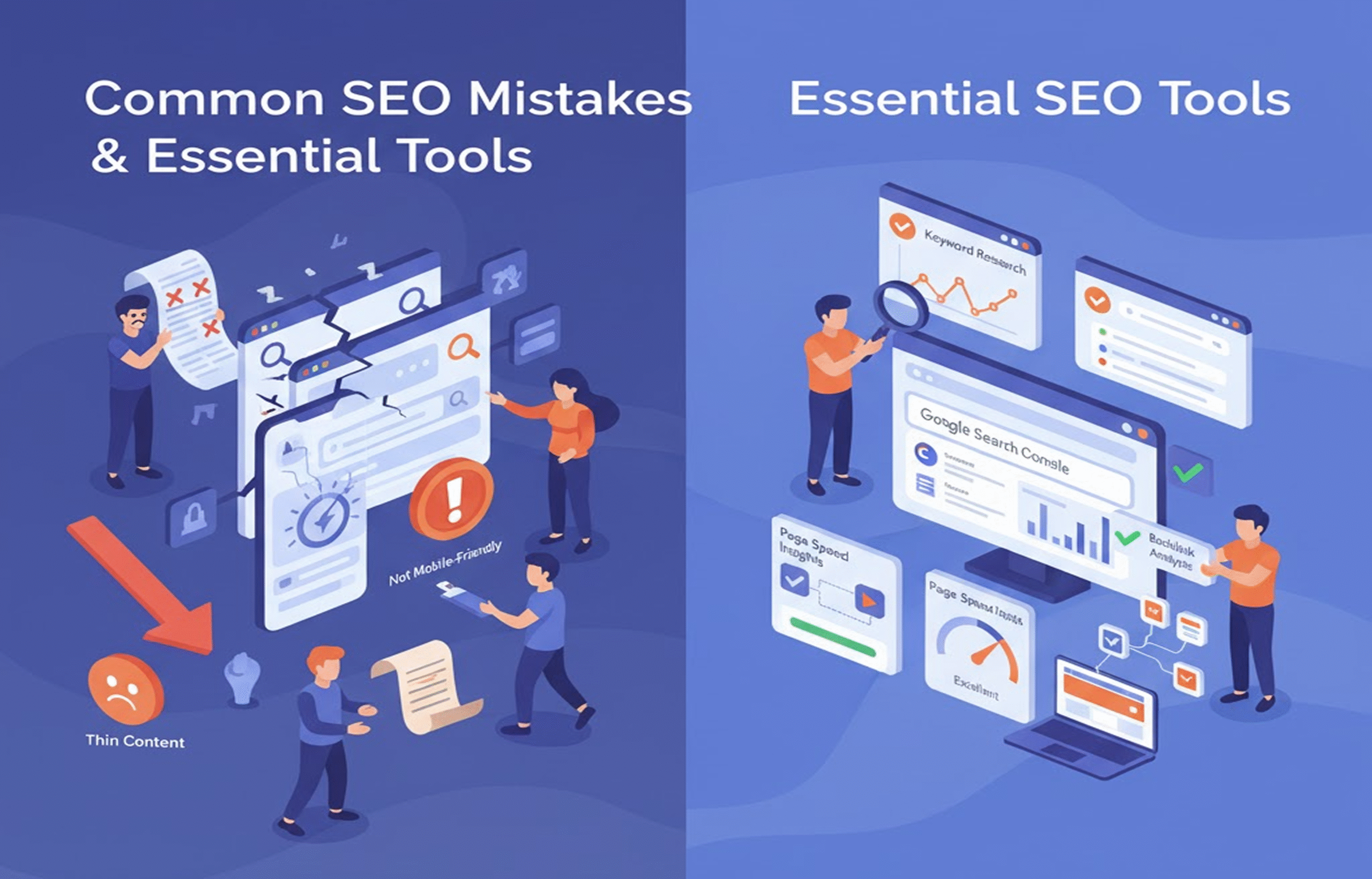
Google Search Console is a free tool that shows how Google views your site. It reveals which keywords drive traffic, identifies crawl errors, and alerts you to security issues. Regular monitoring helps you catch problems before they impact rankings. Submit sitemaps and test page indexing directly within the platform.
Keyword research tools like Ahrefs, SEMrush, and Google Keyword Planner help you discover what people search for. These platforms show search volume, competition levels, and related terms. Target keywords with decent search volume and achievable difficulty based on your site’s current authority.
Page speed tools like Google PageSpeed Insights and GTmetrix analyse load times and provide specific improvement recommendations. Core Web Vitals have become official ranking factors, so monitoring and optimising these metrics directly impacts search performance. Prioritise fixes that offer the biggest speed improvements.
Backlink analysis tools reveal who links to your site and your competitors. Analyse competitor backlink profiles to identify link-building opportunities. If multiple competitors earn links from the same source, that site may accept contributions or partnerships. Disavow toxic links that could harm your site’s reputation.
How Long Does SEO Take to Show Results?
SEO is a long-term strategy that typically shows measurable results within three to six months. New websites with low authority take longer to rank than established sites with existing backlinks and content. Competitive keywords in saturated industries require more time and effort than niche topics with less competition.
Early wins often come from long-tail keywords with lower search volume. These specific phrases face less competition and let you build authority gradually. As you earn more backlinks and publish more content, you can target higher-volume keywords. Consistency matters more than quick fixes when building sustainable rankings.
Algorithm updates can temporarily impact rankings as Google refines its evaluation methods. High-quality sites usually recover quickly or even improve after updates. Focus on creating genuinely helpful content rather than gaming the system, and you’ll weather algorithm changes without major disruptions.
Tracking the right metrics helps you measure progress accurately. Monitor organic traffic growth, keyword rankings, and conversion rates from search visitors. If traffic increases but conversions don’t, you may be ranking for keywords that don’t match buyer intent. Adjust your strategy based on what drives business results, not just vanity metrics.
Final Thoughts on How SEO Works
SEO works by aligning your website with the factors Google uses to evaluate content quality, relevance, and trustworthiness. When you optimise on-page elements, earn authoritative backlinks, and provide genuinely helpful content, rankings improve naturally over time. The businesses that treat SEO as an ongoing investment rather than a one-time project see the greatest returns.
Understanding how SEO works gives you the power to make informed decisions about your digital marketing strategy. You can prioritise high-impact changes, avoid costly mistakes, and build a foundation for sustainable growth. SEO isn’t about tricking algorithms, it’s about making your website the best possible answer to real questions people ask.
Ready to dominate search results and attract qualified traffic consistently? Drip Ranks specialises in data-driven SEO strategies that deliver measurable results. Contact our team today for a comprehensive site audit and customised roadmap to page-one rankings. Let us handle the technical complexities while you focus on running your business and serving customers.