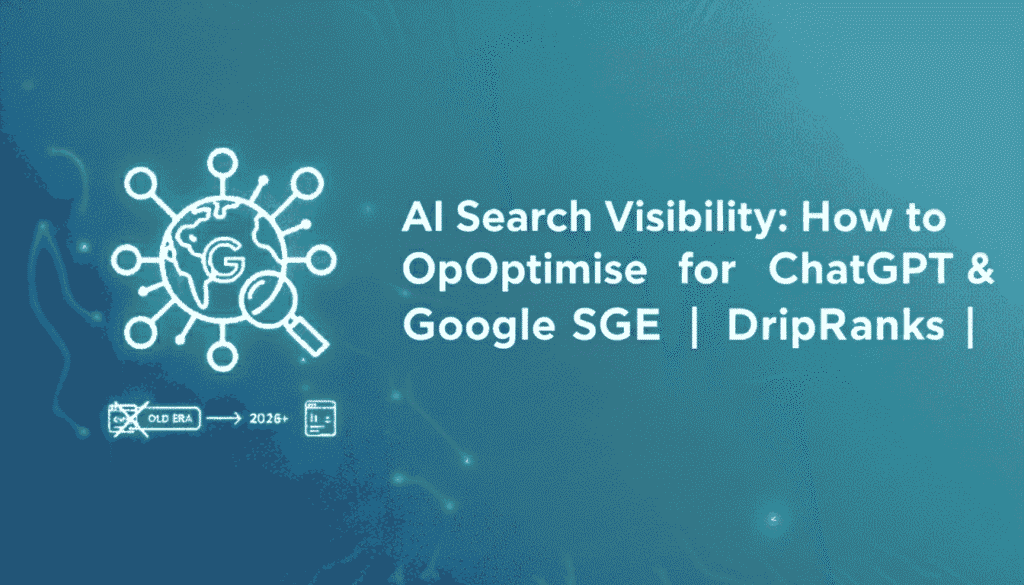

The rise of AI search engines like ChatGPT, Google’s Search Generative Experience (SGE), and Perplexity AI is fundamentally changing how content gets discovered online. According to DesignRush, brands that fail to adapt their SEO strategies for AI-driven platforms risk losing significant visibility in 2026 and beyond.
The Shift from Keywords to Context
Traditional SEO has long focused on keyword optimisation and backlink building. But AI search engines prioritise contextual understanding, natural language processing, and semantic relevance over simple keyword matching.
Google’s SGE, for instance, uses generative AI to provide direct answers at the top of search results, often pulling information from multiple sources. Similarly, ChatGPT and other large language models (LLMs) deliver conversational responses that synthesise content rather than listing links.
This shift means businesses must rethink how they structure and present information. Content needs to be clear, authoritative, and formatted in ways that AI can easily interpret and reference.
Five Strategies to Boost AI Search Visibility
Industry experts recommend several key tactics for optimising content in the age of AI search:
1. Focus on E-E-A-T principles. Google’s emphasis on Experience, Expertise, Authoritativeness, and Trustworthiness remains critical. AI models favour content from credible sources with demonstrated subject matter expertise.
2. Use structured data and schema markup. Adding schema helps AI understand your content’s context, purpose, and relationships. This includes FAQ schema, article markup, and local business data.
3. Write for conversational queries. AI search thrives on natural language. Optimise for question based searches and long-tail keywords that mirror how people actually speak.
4. Create comprehensive, in depth content. AI models prefer well-researched, detailed articles over shallow keyword-stuffed pages. Aim for content that thoroughly addresses user intent.
5. Optimise for featured snippets and “position zero.” Since AI often pulls from featured snippets, structuring content with clear headings, bullet points, and concise answers increases the likelihood of being cited.
Why This Matters for Businesses
The implications extend beyond organic traffic. As AI search becomes mainstream, brands that appear in AI-generated responses gain credibility and authority in their niche. Conversely, those invisible to AI systems may struggle to reach new audiences, even with strong traditional SEO metrics.
DesignRush notes that businesses should also monitor how their brand is represented in AI responses. Inaccurate or outdated information can spread quickly across AI platforms, making reputation management more important than ever.
The Bottom Line
AI search isn’t replacing traditional SEO it’s evolving it. Success in 2026 requires a hybrid approach that balances keyword optimisation with semantic relevance, technical structure, and authoritative content. Businesses that embrace these changes early will have a competitive advantage as AI powered search continues to grow.
The key is to think beyond ranking on Google’s first page. The new goal is becoming the source AI trusts and references when users ask questions in your industry.
About DripRanks
At DripRanks, we don’t just follow the trends we help you lead them. As one of Dubai’s top-rated SEO agencies, we specialise in data-driven strategies that boost visibility and conversions, including AI search optimisation.
→ Get a Free SEO Consultation Today