

Introduction
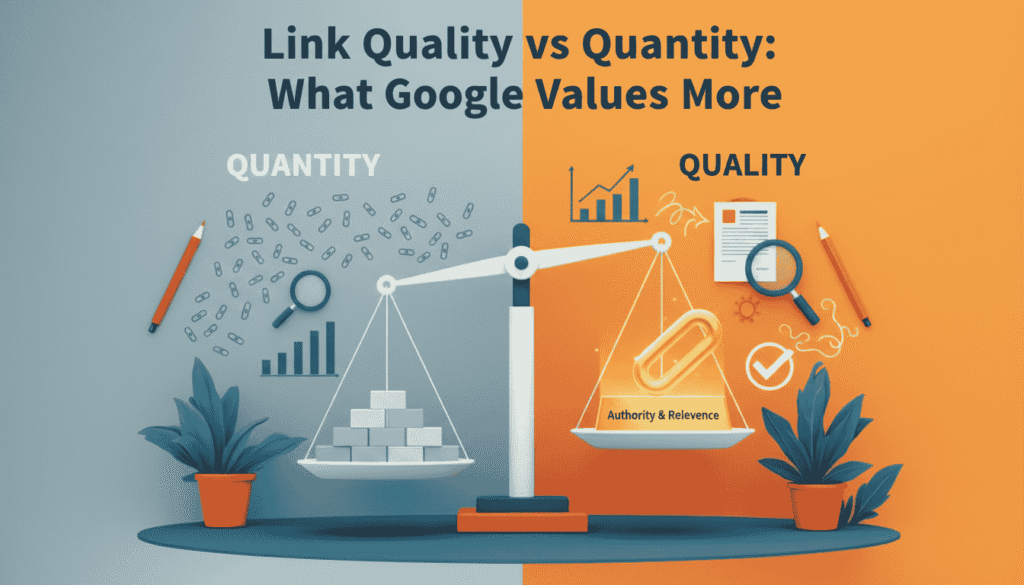
Content marketing faces a constant debate that shapes every digital strategy. Should businesses publish more articles to dominate search results, or focus on fewer pieces that deliver exceptional value? The answer isn’t simple.
Google’s 2024 algorithm updates prioritised helpful, authentic content over mass produced pages. Websites producing 50 thin articles monthly saw rankings drop while competitors with 8 deep guides climbed. This shift changed everything.
The quality versus quantity debate affects your ROI, team resources, and long term visibility. Understanding this balance determines whether your content investment drives sustainable growth or wastes budget. This guide reveals proven strategies for building content that ranks and converts through strategic volume and depth. You’ll learn when to scale production and when to double down on comprehensive resources.
What Quality Content Means in SEO
Quality content solves specific user problems with accurate, well researched information. It demonstrates subject matter expertise while matching the searcher’s true intent. Google evaluates quality through engagement metrics, backlink patterns, and semantic depth.
High quality articles feature original research, updated statistics, and practical examples readers can implement immediately. They maintain readability between grade 8, 9 levels while addressing complex topics. Quality means comprehensive coverage that eliminates the need to visit competitor pages.
The Content Quality Score depends on factors including source credibility, factual accuracy, and user satisfaction signals. Pages earning featured snippets typically answer questions within 40,50 words while supporting claims with authoritative data. Quality content earns natural backlinks because it provides unique value others want to reference.
What Quantity Strategy Looks Like
Quantity focused strategies prioritise publishing frequency over individual article depth. Teams produce multiple shorter pieces targeting long tail keywords and niche topics. This approach aims to capture more SERP real estate through sheer volume.
High volume content calendars might schedule 20,30 posts monthly across different keyword clusters. Each piece addresses narrow topics with 600 800 words. The strategy works when targeting informational queries with limited competition and clear search intent.
However, quantity without minimum quality standards creates thin content that Google’s algorithms penalise. Sites must maintain baseline standards including accurate information, proper formatting, and genuine helpfulness. Volume becomes effective only when each piece meets core quality thresholds and serves actual user needs.
Why Quality Trumps Quantity for Modern SEO
Google’s Helpful Content System rewards expertise and genuine value over generic mass production. One comprehensive 2,000 word guide often outranks ten 400 word articles targeting similar keywords. Search algorithms now detect content depth through semantic analysis and entity recognition.
Quality content generates stronger engagement signals including longer dwell time and lower bounce rates. Users bookmark helpful resources, share them on social platforms, and return for updates. These behavioral patterns signal relevance to ranking systems more effectively than publishing frequency alone.
The ROI metrics prove quality’s advantage. High value content attracts qualified leads who convert at 3, 5 times the rate of thin content visitors. Authoritative pieces earn backlinks naturally, reducing outreach costs while building domain authority. One exceptional resource delivers compounding returns for years while quantity plays require constant production to maintain rankings.
How to Create High Quality Content That Ranks
Research User Intent Thoroughly
Analyse the top 10 results for target keywords to understand what Google considers relevant. Identify content gaps competitors miss and questions they answer incompletely. Use tools like AnswerThePublic and Google’s People Also Ask to discover semantic variations.
Examine search intent categories including informational, commercial, navigational, and transactional queries. Match your content format to intent patterns such as ho to guides for process queries or comparison charts for commercial research. Quality begins with understanding exactly what searchers need when typing specific keywords.
Structure for Featured Snippets
Format sections to answer common questions in 40,50 word paragraphs that Google can extract easily. Use descriptive H2 headings phrased as questions that match voice search patterns. Include numbered lists, comparison tables, and definition boxes optimised for rich results.
Position direct answers near the beginning of relevant sections with supporting details following. Structure how to content with clear step by step formatting and action verbs. Quality content architecture makes information scannable for both users and search algorithms.
Add Original Data and Examples
Include case studies from real campaigns with specific metrics and outcomes. Reference current industry statistics from authoritative sources with proper citations. Original research differentiates your content from competitors rehashing the same generic advice.
Provide practical examples readers can adapt to their situations immediately. Use before and after scenarios, code snippets, or template downloads that add tangible value. Quality content transforms abstract concepts into actionable strategies through concrete demonstration.
Optimise for Entity Recognition
Mention relevant industry terms, brand names, and concept relationships that establish topical authority. Use semantic variations and LSI keywords naturally throughout the content. Connect related entities through contextual references that demonstrate subject expertise.
Structure content around core topics Google recognises as authoritative themes. Quality pieces establish clear entity relationships through proper noun usage, definitions, and explanatory context. This semantic depth signals comprehensive coverage to ranking algorithms.
When Quantity Makes Strategic Sense
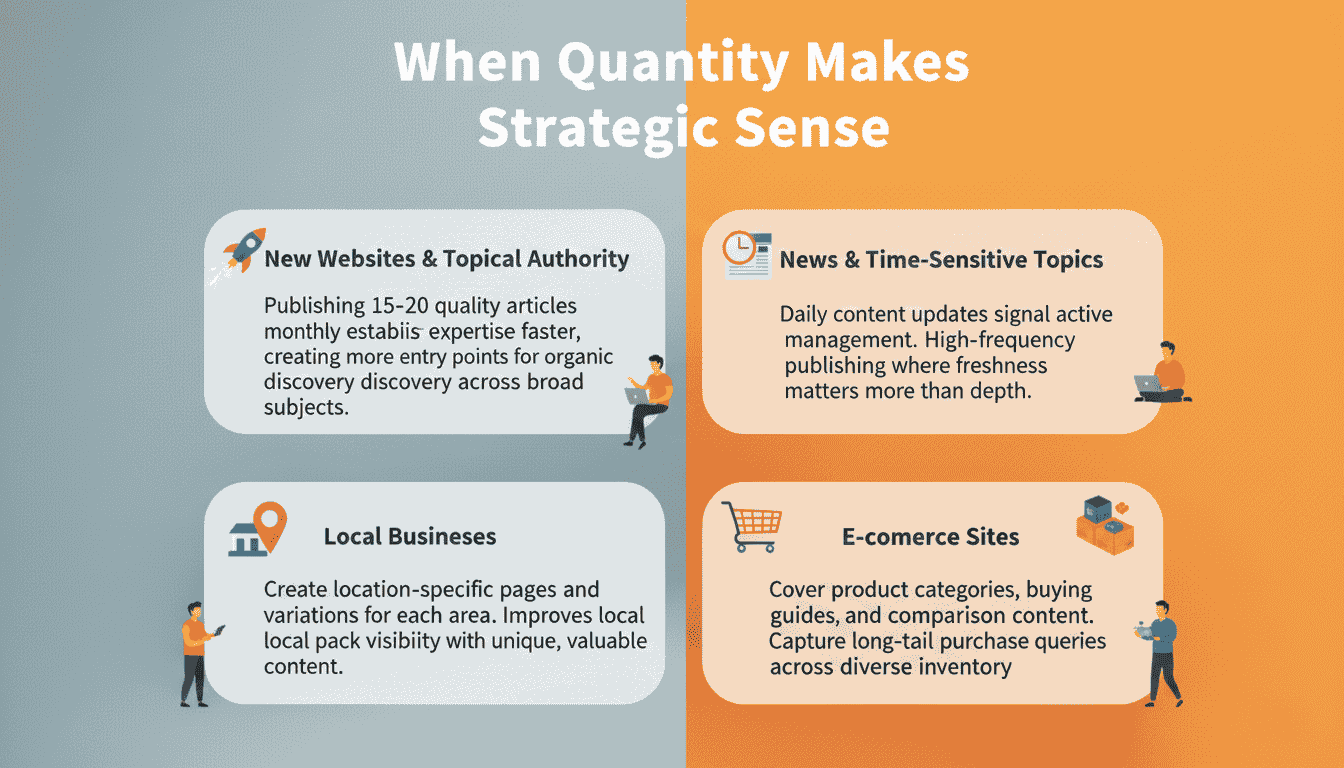
Quantity strategies work effectively when targeting new websites building topical authority across broad subjects. Publishing 15,20 quality articles monthly establishes expertise faster than 3,4 pieces in competitive niches, supported by natural link building to strengthen authority. Volume creates more entry points for organic discovery.
High frequency publishing suits news sites, trend coverage, and time sensitive topics where freshness matters more than depth. Daily content updates signal active management and current information. Quantity becomes viable when your team maintains quality standards across accelerated production schedules.
Local businesses benefit from quantity when creating location specific pages and service variations. Publishing separate optimised pages for each service area improves local pack visibility. The strategy requires maintaining unique, valuable content for each page rather than thin doorway pages.
E commerce sites need quantity to cover product categories, buying guides, and comparison content. Each product page and category requires optimisation to capture commercial intent searches. Strategic volume captures long tail purchase queries across diverse inventory.
Common Mistakes in Content Production
Prioritising Speed Over Value
Teams rushing to meet arbitrary publishing quotas sacrifice research depth and factual accuracy. Quick production leads to surface level coverage that fails to differentiate from existing content. This approach wastes resources on pages that never rank or convert.
Google’s Quality Rater Guidelines penalise thin content lacking expertise or original perspective. Rushed articles miss opportunities for comprehensive coverage that earns featured snippets. Speed without substance produces content that requires constant updates rather than evergreen resources.
Ignoring Content Updates
Publishing new articles while neglecting existing high performers wastes compounding value opportunities. Updating top ranking content with fresh data often delivers better ROI than creating new pieces. Outdated statistics and broken examples erode trust and rankings over time.
Regular content audits identify refresh opportunities that boost rankings with minimal effort. Adding new sections, updating examples, and improving formatting extends content lifespan. Quality maintenance strategies outperform endless new production for established sites.
Mismatching Format to Intent
Creating long form guides for quick answer queries frustrates users seeking immediate solutions. Conversely, short listicles fail searchers needing comprehensive understanding of complex topics. Format misalignment causes high bounce rates regardless of content quality.
Analyse SERP features to determine ideal content length and structure for target keywords. Match your format to what already ranks while adding unique value. Quality means appropriate depth for specific search intent rather than arbitrary word counts.
Tools and Resources for Quality Content
Content Research Platforms
SEMrush Topic Research identifies content gaps and semantic keywords competitors miss. Ahrefs Content Explorer reveals top performing content in your niche by social shares and backlinks. These tools inform quality strategies by showing what resonates with audiences.
BussSumo analyses trending topics and content formats generating engagement across platforms. Use these insights to create quality pieces addressing proven demand. Research tools reduce guesswork by revealing what your audience actually wants.
Quality Assessment Tools
Hemingway Editor improves readability by highlighting complex sentences and passive voice. Grammarly catches grammar errors and suggests clarity improvements. Quality content maintains professional standards through proper editing and proofreading.
Surfer SEO analyses top ranking content to recommend optimal keyword density and semantic terms. Use these insights as guidelines while maintaining natural writing flow. Quality optimisation balances algorithmic factors with genuine user experience.
Performance Tracking
Google Search Console reveals which content attracts impressions, clicks, and rankings. Monitor engagement metrics including dwell time and bounce rate to assess quality performance. Track conversions to measure content ROI beyond vanity metrics.
Google Analytics shows user behavior patterns including page depth and return visits. Quality content generates strong engagement signals across these metrics. Use performance data to identify your highest value content for strategic updates and promotion.
Advanced Quality Content Strategies
Pillar Page Architecture
Create comprehensive pillar content covering broad topics with 3,000+ words of expert guidance. Link to supporting cluster content addressing specific subtopics in depth. This architecture establishes topical authority while maintaining manageable content depth.
Pillar pages target high volume keywords while cluster content captures long tail variations. The internal linking structure signals semantic relationships to search algorithms. Quality pillar strategies outperform isolated articles by demonstrating comprehensive subject expertise.
Content Refreshes Over New Production
Audit existing content quarterly to identify update opportunities for top performers. Add new sections addressing emerging trends or commonly asked questions. Refresh statistics, examples, and screenshots to maintain accuracy and relevance.
Updated content often reclaims lost rankings faster than new articles gain traction. Google rewards freshness signals on established pages with existing authority. Quality maintenance delivers better ROI than constant new production for mature sites.
User Generated Quality Signals
Encourage detailed reviews, comments, and questions that add unique perspectives to your content. Moderate and respond to engagement to build community around quality resources. User contributions signal active communities and helpful content to ranking algorithms.
Feature expert quotes and original interviews that competitors cannot replicate. These elements establish unique value while building relationships with industry authorities. Quality content leverages multiple voices and perspectives rather than single author viewpoints.
Measuring Content Success Beyond Rankings
Conversion Rate Analysis
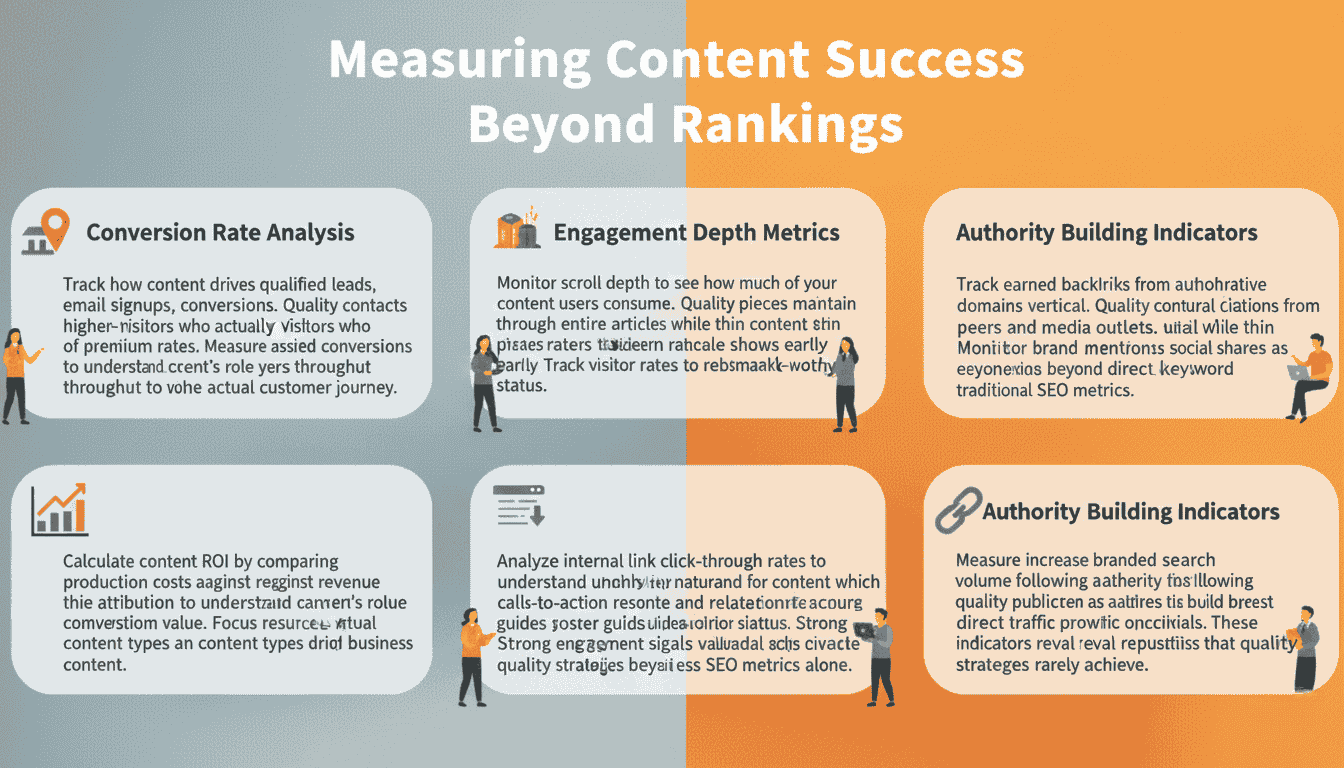
Track how content drives qualified leads, email signups, and sales conversions. Quality content attracts higherintent visitors who convert at premium rates. Measure assisted conversions to understand content’s role throughout the customer journey.
Calculate content ROI by comparing production costs against revenue attribution. Quality pieces generate returns for years while thin content delivers minimal conversion value. Focus resources on content types and topics driving actual business outcomes.
Engagement Depth Metrics
Monitor scroll depth to see how much of your content users actually consume. Quality pieces maintain attention through entire articles while thin content shows early exit patterns. Track return visitor rates to identify content earning bookmark worthy status.
Analyse internal link click through rates to understand which calls to action resonate. Quality content guides users naturally to related resources and conversion opportunities. Strong engagement signals validate quality strategies beyond keyword rankings alone.
Authority Building Indicators
Track earned backlinks from authoritative domains in your industry vertical. Quality content attracts natural citations from peers and media outlets. Monitor brand mentions and social shares as authority signals beyond traditional SEO metrics.
Measure increase in branded search volume following quality content publication. Authoritative content builds name recognition that drives direct traffic growth. These indicators reveal reputation benefits that quantity strategies rarely achieve.
Final Thoughts
Most brands still approach SEO with a quantity first mindset publishing content, hoping it ranks, and waiting for results that rarely compound. At Drip Ranks we take a different approach. We focus on building a quality led SEO system, not one off content pieces.
In depth research, intent driven topics, and expert level execution ensure every asset serves a clear purpose across the buyer journey. Modern search algorithms reward depth, accuracy, and real value, meaning one exceptional piece can outperform dosens of generic articles in rankings, backlinks, and conversions.
The result? SEO that is measurable, scalable, and conversion focused. By balancing strategic content volume with uncompromising quality, Drip Ranks helps businesses turn SEO into a predictable growth channel, not a guessing game. Ready to see what quality first SEO can deliver? Start with a free content audit today.