

Google ranks websites with strong backlink profiles higher than those without quality links. Traditional link building takes months to show results, leaving many businesses frustrated and invisible in search rankings. Niche edits offer a faster alternative by placing your links into existing content that already has authority and traffic.
This strategy bypasses the lengthy content creation and approval process that guest posting requires. You get immediate placement in aged articles that search engines already trust. The result is faster indexing, quicker ranking improvements, and better domain authority growth.
Whether you run an ecommerce store, local service business, or SaaS company, niche edits can accelerate your SEO timeline. This guide covers everything from finding quality placements to measuring ROI and avoiding common pitfalls.
At Drip Ranks, we help businesses scale their organic visibility through strategic link building that delivers measurable results. Our proven systems combine niche edits with content marketing to create sustainable growth.
What Are Niche Edits
Niche edits involve adding your backlink to an existing published article on another website. The publisher updates their content to include your URL with relevant anchor text. This differs from guest posts where you create entirely new content from scratch.
The host article typically has been live for months or years and already ranks for keywords. Search engines have crawled and indexed these pages multiple times. Your link benefits from this established trust and authority immediately upon placement.
Publishers charge fees based on their site’s domain rating, traffic volume, and niche relevance. You avoid spending time writing articles or waiting weeks for editorial approval, making outreach-emails a more efficient part of the process. The turnaround time ranges from 48 hours to two weeks in most cases.
Why Niche Edits Matter for SEO
Search engines evaluate backlinks based on relevance, authority, and naturalness of the linking domain. Niche edits provide all three factors when executed correctly. Your link appears in content that already attracts organic traffic and social shares.
The age of the host article adds credibility that new guest posts cannot match. Google’s algorithms reward links from established pages more than fresh content, making influencer-seo placements especially valuable. This aging factor accelerates your ranking velocity compared to traditional outreach methods.
Budget efficiency makes niche edits attractive for growing businesses and agencies. You eliminate content writing costs and reduce outreach time by 60,70%. The cost per acquired link often runs 30,40% lower than full guest posting campaigns.
How Niche Edits Work
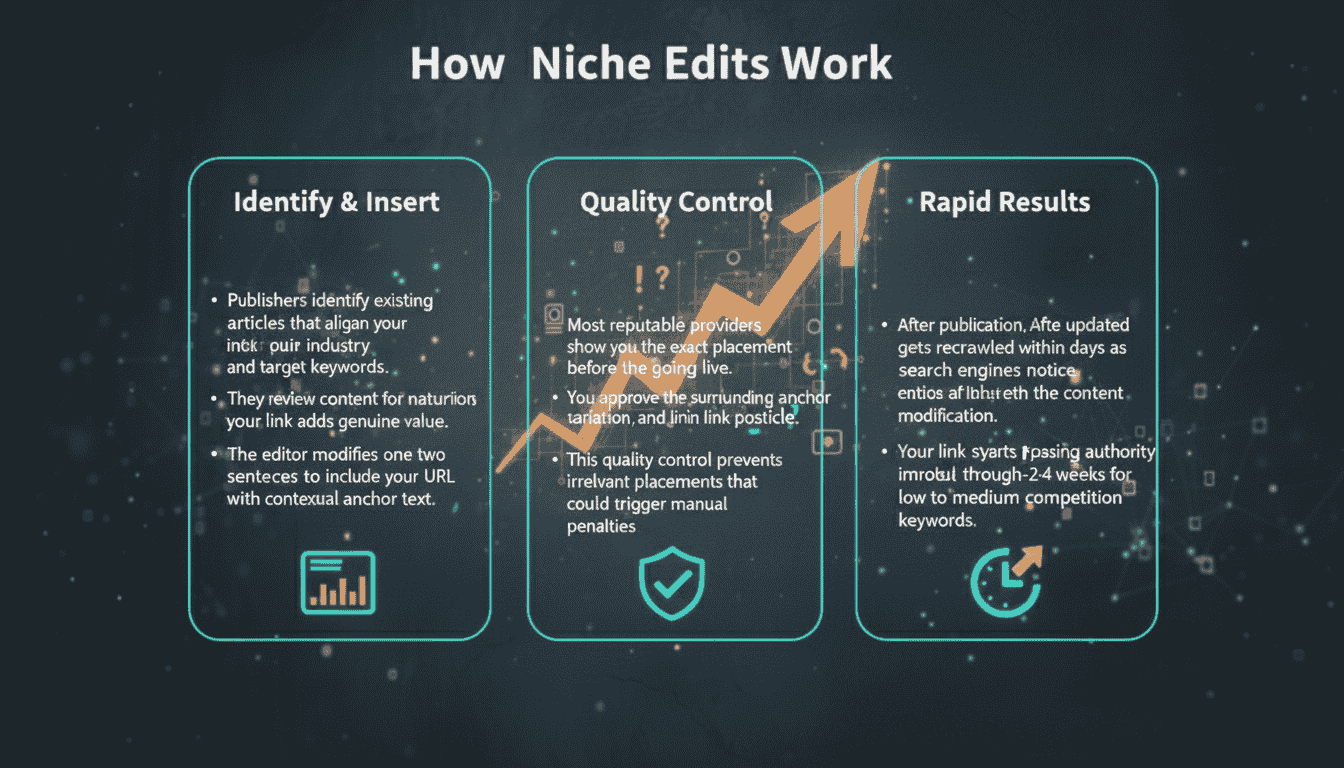
Publishers identify existing articles that align with your industry and target keywords. They review content for natural insertion points where your link adds genuine value. The editor modifies one or two sentences to include your URL with contextual anchor text.
Most reputable providers show you the exact placement before going live. You approve the surrounding content, anchor text variation, and link position within the article. This quality control prevents irrelevant placements that could trigger manual penalties.
After publication, the updated article gets recrawled within days as search engines notice the content modification. Your link starts passing authority immediately through the established page equity. Rankings typically improve within 2,4 weeks for low to medium competition keywords.
Best Practices for Niche Edit Success
Target High Authority Domains
Focus on websites with domain rating above 40 and organic traffic exceeding 5,000 monthly visitors. These metrics indicate real authority that transfers link equity effectively. Avoid private blog networks disguised as legitimate publishers.
Check the site’s traffic trends using tools like Ahrefs or SEMrush before purchasing. Declining traffic signals potential algorithm penalties or abandoned websites. Growing or stable traffic indicates healthy domains worth investing in.
Match Content Relevance Precisely
Your link should appear in articles covering topics directly related to your industry. A financial services link placed in a cooking blog raises red flags with search algorithms. Contextual relevance determines how much authority your link receives.
Review the full article before agreeing to placement to ensure topical alignment. The surrounding paragraphs should discuss concepts related to your landing page. This natural connection prevents the link from appearing manipulative or paid.
Diversify Anchor Text Naturally
Use a mix of exact match, partial match, branded, and generic anchor text across your niche edit portfolio. Overusing exact match keywords triggers over optimisation filters. A natural link profile includes varied anchor text that mimics organic linking behavior.
Branded anchors like your company name should comprise 40 ,50% of your total links. Partial match and LSI variations make up another 30-40%. Exact match keywords should never exceed 10,15% of your anchor text distribution.
Prioritise Editorial Placements
Links embedded within the main body text carry more weight than sidebar or footer placements. Search engines discount links from non editorial sections as less valuable. Insist on in content placement during negotiations with publishers.
The ideal position sits in the first half of the article where reader engagement remains highest. Links placed after 75% of the content receive less click through and authority transfer. Specify preferred placement zones when ordering niche edits.
Verify Site Legitimacy
Run a backlink audit on potential host domains using Ahrefs Site Explorer or Majestic. Sites with spammy backlink profiles will taint your own link profile. Look for natural referring domain growth and diverse anchor text in their profile.
Check for Google manual actions or de indexing issues before purchasing placements. A site penalised by Google provides zero SEO value and may harm your rankings. Use the site:domain.com search operator to confirm proper indexing.
Common Mistakes That Kill Results
Buying Links from PBN Networks
Private blog networks create fake authority through interlinked low quality sites, often relying on artificial brand-mentions rather than real trust signals. Google identifies these patterns easily and devalues all links from the network. Stick with legitimate publishers who have real audiences and natural traffic sources.
PBN sites typically show no social signals, minimal organic traffic, and templated content. They exist solely to sell links rather than serve readers. These red flags make detection straightforward for modern algorithms.
Ignoring Content Quality
Placing links in poorly written articles with grammar errors damages your brand perception. Readers associate your business with the low quality content hosting your link. This reputation harm outweighs any short term SEO gains.
Review the writing quality, formatting, and value proposition of host articles. Content should provide genuine information that users find helpful. Thin content under 800 words rarely ranks well or passes meaningful authority.
Over Concentrating Link Velocity
Acquiring 50 niche edits in one week creates an unnatural link growth spike. Search engines expect gradual link acquisition that matches your content publication rate. Sudden surges trigger closer algorithm scrutiny and potential penalties.
Spread your niche edit purchases over 8,12 weeks for natural velocity. Acquire 4,6 links per week maximum when starting a new campaign. This pace mimics organic link earning and avoids velocity-based filters.
Neglecting Link Monitoring
Publishers sometimes remove links without notice during content updates or site migrations. You lose the SEO value and waste your investment. Set up monthly link checks using tools like Monitor Backlinks or Ahrefs Alerts.
Contact publishers immediately if links disappear to request reinsertion. Most reputable vendors offer replacement guarantees for removed links. This monitoring protects your investment and maintains your backlink profile integrity.
Tools and Resources for Niche Edits
Ahrefs Content Explorer helps identify high authority articles in your niche that accept link insertions. Filter by domain rating, organic traffic, and content age to find ideal targets. Export lists of potential publishers for outreach campaigns.
SEMrush Link Building Tool streamlines the prospecting and outreach process for niche edit campaigns. Track placement status, anchor text distribution, and ROI metrics in one dashboard. Automated follow ups reduce manual outreach time by 60%.
Authority Builders and Fatjoe provide vetted niche edit marketplaces with quality control. These platforms pre screen publishers to eliminate PBNs and low quality sites. Pricing transparency and placement guarantees reduce campaign risk.
Google Search Console monitors your backlink profile growth and identifies any toxic links. Review new links monthly to catch low quality placements early. Disavow files help protect your site from algorithmic penalties.
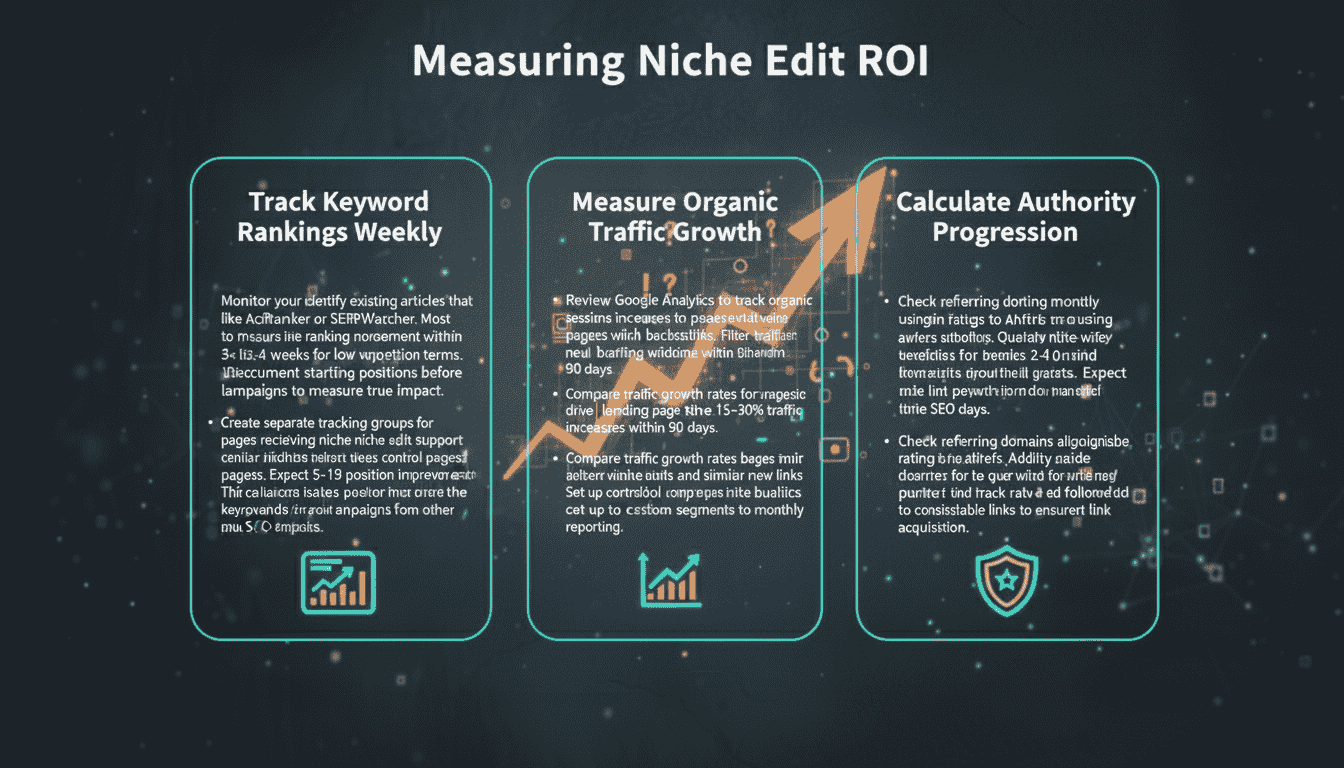
Measuring Niche Edit ROI
Track Keyword Rankings Weekly
Monitor your target keywords using tools like AccuRanker or SERPWatcher to measure ranking improvements. Most niche edit campaigns show movement within 3,4 weeks for low competition terms. Document starting positions before launching campaigns to measure true impact.
Create separate tracking groups for pages receiving niche edit support versus control pages. This comparison isolates the impact of your link building from other SEO efforts. Expect 5,15 position improvements for medium competition keywords within 60 days.
Measure Organic Traffic Growth
Review Google Analytics to track organic session increases on pages with new niche edit backlinks. Filter traffic by landing page to see specific impact. Quality niche edits should drive 15,30% traffic increases within 90 days.
Compare traffic growth rates between pages with niche edits and similar pages without new links. This controlled comparison proves link building effectiveness. Set up custom segments in Analytics to streamline monthly reporting.
Calculate Domain Authority Progression
Check your overall domain rating monthly using Ahrefs or Moz to measure site wide authority improvements. Quality niche edits contribute to domain level growth that benefits all pages. Expect 1,3 point increases per quarter with consistent link acquisition.
Monitor referring domain growth alongside domain rating for complete visibility. Adding 20,30 quality referring domains per quarter creates sustainable authority gains. Track the ratio of followed to nofollowed links to ensure equity transfer.
Advanced Niche Edit Strategies
Tier Your Link Structure
Build tier 2 links to your niche edit pages to amplify their authority transfer. Create supporting content on Web 2.0 platforms and social bookmarking sites. This pyramid structure pushes more equity through your primary backlinks.
Limit tier 2 building to 3,5 links per niche edit to maintain naturalness. Focus on relevance over volume when selecting tier-2 properties. This layered approach accelerates ranking velocity without triggering filters.
Target SERP Features
Place niche edits in articles that already rank for featured snippets or People Also Ask boxes. Your link benefits from the enhanced visibility and authority these SERP features provide. The host page’s snippet status indicates high content quality and topical authority.
Review SERP features for your target keywords to identify ideal placement opportunities. Articles holding position zero pass exceptional authority to embedded links. Prioritise these high value placements when budgets allow premium pricing.
Combine with Content Marketing
Publish high quality content on your own site that naturally attracts editorial links. Use niche edits to accelerate initial rankings for this content. The combination of earned and built links creates the strongest backlink profiles.
Create linkable assets like original research, tools, or comprehensive guides. Point niche edits to these resources to maximise long term value. The assets continue earning organic links after your paid campaign ends.
Niche Edits vs Guest Posts
Niche edits require no content creation, reducing production time by 5,8 hours per link. Guest posts demand original articles ranging from 1,000,2,000 words plus multiple revision rounds. The time savings allow you to scale link acquisition faster with niche edits.
Cost per link typically runs 20,40% lower for niche edits compared to full guest posting. You avoid writing fees and the opportunity cost of staff time. This efficiency makes niche edits ideal for businesses with limited budgets or resources.
However, guest posts offer greater control over anchor text, context, and supporting content. You create the exact messaging and positioning around your link. This control matters when building thought leadership or targeting competitive keywords that require precise optimisation.
How to Find Quality Niche Edit Vendors
Check Portfolio Samples
Request 10,15 example placements before committing to any provider. Review the actual articles, domain metrics, and link positions. Quality vendors proudly share their work and provide transparent access to past campaigns.
Run each sample domain through Ahrefs to verify traffic and backlink profile quality. Sites with organic traffic above 3,000 monthly and clean link profiles indicate legitimate publishers. Reject vendors who refuse to share detailed examples.
Read Client Testimonials
Look for case studies showing before and after ranking improvements from niche edit campaigns. Specific data points like keyword positions and traffic gains indicate real results. Generic testimonials without metrics raise credibility concerns.
Check independent review platforms like Trustpilot or Google Reviews for unfiltered feedback. Consistent complaints about link removals or poor placements signal unreliable vendors. Positive reviews spanning 6+ months demonstrate sustained quality.
Verify Replacement Policies
Reputable vendors guarantee link replacements for removals within 6,12 months. This warranty protects your investment from content updates or site changes. Get replacement terms in writing before purchasing any packages.
Ask about the replacement timeline and selection process for new placements. Same quality replacements within 30 days indicate strong vendor relationships with publishers. Vague policies or long replacement windows suggest weak partnerships.
Pricing Guide for Niche Edits
Domain rating 40,50 sites typically charge $150,$300 per niche edit placement. These mid-tier domains provide solid authority transfer for local and small businesses. Expect 2 , 4 week turnaround times and moderate traffic levels.
Premium placements on DR 60+ sites range from $400, $800 depending on niche competitiveness. Finance, legal, and health niches command higher prices due to demand and compliance requirements. These investments make sense for competitive markets and high-value keywords.
Bulk packages offer 10, 15% discounts when ordering 10+ placements upfront. Monthly retainer arrangements reduce per-link costs by 20,25%. These volume approaches work best for agencies or businesses with ongoing link building needs.
Final Words
Most SaaS, B2B, and agency teams struggle with link building because they treat it as a one-off tactic instead of a scalable system. At Drip Ranks, we approach niche edits strategically, not randomly. Our forensic analysis identifies high-authority pages where links deliver the highest ROI. We place niche edits based on search intent and keyword value, ensuring faster ranking improvements that directly support pipeline growth. This turns link building into a measurable, repeatable, and revenue-focused process.
Instead of relying on shortcuts like PBNs or low-quality placements, we build natural link profiles that compound authority over time. Every placement is tracked, optimized, and aligned with your broader SEO system. Start with a small set of high-impact niche edits, measure keyword movement and traffic growth, then scale what works. This is how niche edits become part of a predictable growth engine, not just another SEO experiment.