

Introduction
Getting quality backlinks feels impossible when everyone ignores your outreach emails. You craft personalised pitches, offer great content, and still hear nothing back. Traditional link building can be frustrating and time consuming.
Broken link building changes this dynamic completely. Instead of asking for favors, you offer genuine value by helping site owners fix errors on their websites. This approach works because you solve a real problem while earning a backlink.
Drip Ranks has helped over 200 businesses build authoritative link profiles using ethical tactics like broken link building. Our clients see ranking improvements within 60 to 90 days by focusing on quality over quantity.
This guide walks you through the complete broken link building process. You will learn how to find broken links, create replacement content, and write outreach emails that get responses. You will also discover common mistakes to avoid and advanced strategies to scale your results.
What is Broken Link Building?
Broken link building is an SEO strategy where you find dead links on other websites and suggest your content as a replacement. When a website links to a page that no longer exists, it creates a poor user experience and hurts their SEO.
You provide value by alerting the site owner to the broken link. Then you offer your relevant content as a helpful replacement. This creates a win win situation where they fix their site and you earn a quality backlink.
The strategy works best when you target websites in your niche with high domain authority. A single backlink from an authoritative site can boost your rankings more than dosens of low quality links, guest posting.
Why Broken Link Building Matters for SEO
Backlinks remain one of the top three ranking factors in Google’s algorithm. Quality backlinks signal to search engines that your content is trustworthy and valuable. Broken link building helps you earn these signals ethically.
This strategy has a higher success rate than cold outreach. Site owners appreciate when you help them maintain their website quality. Response rates for broken link outreach average 15 to 25 percent compared to just 5 to 8 percent for generic guest post requests.
Broken link building also helps you connect with relevant websites in your industry. These relationships can lead to future collaboration opportunities beyond just one backlink. The connections you build become long term SEO assets.
How Broken Link Building Works
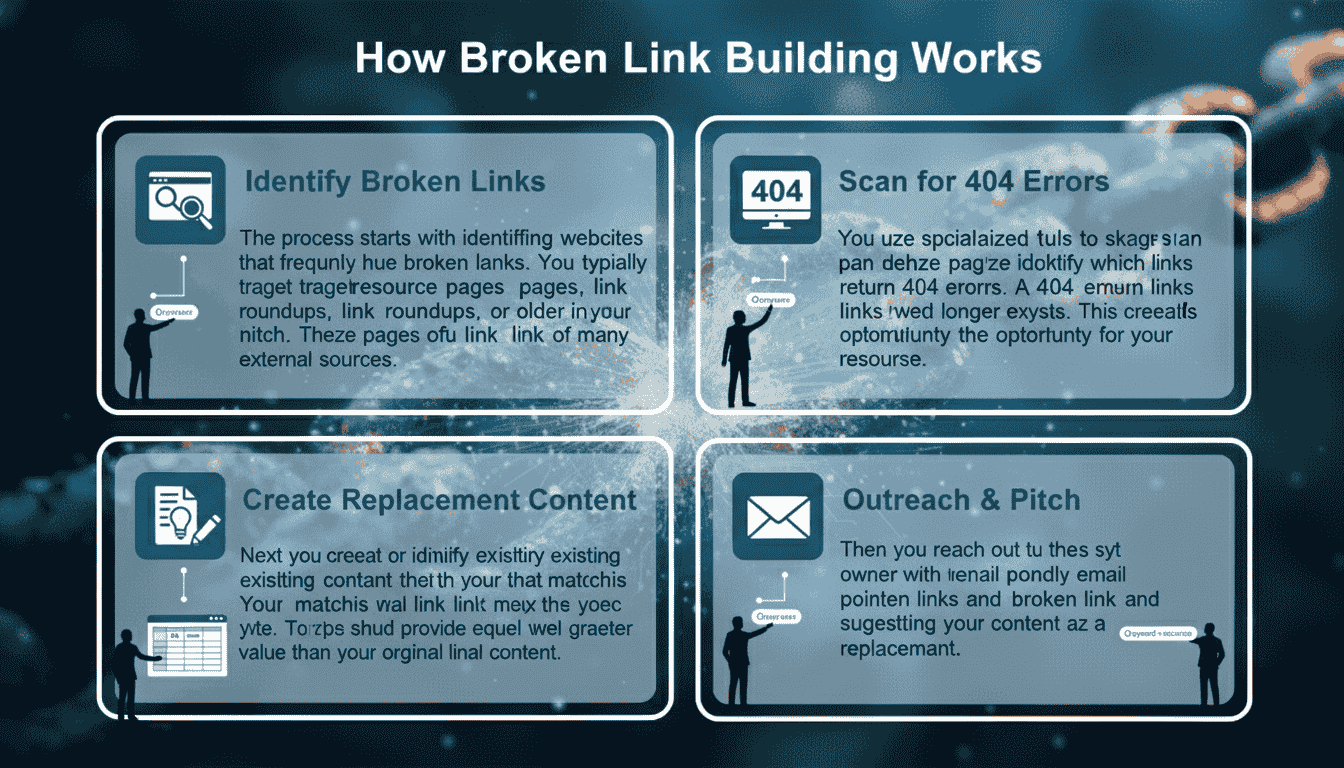
The process starts with identifying websites that might have broken links. You typically target resource pages, link roundups, or older blog posts in your niche. These pages often link to many external sources.
You use specialised tools to scan these pages and identify which links return 404 errors. A 404 error means the linked page no longer exists. This creates an opportunity for your content.
Next, you create or identify existing content on your site that matches the topic of the broken link. Your content should provide equal or greater value than the original resource. Then you reach out to the site owner with a friendly email pointing out the broken link and suggesting your content as a replacement.
Step by Step Broken Link Building Process
Find Target Websites in Your Niche
Start by identifying websites that frequently link to external resources. Look for resource pages that compile helpful links for their audience. Use search operators like “keyword + resources” or “keyword + useful links” to find these pages.
Industry blogs and educational institutions often maintain extensive resource lists. These sites care deeply about user experience and are more likely to fix broken links quickly. Target sites with Domain Authority above 30 for maximum SEO benefit.
Create a spreadsheet to track potential target websites. Include columns for domain authority, contact information, and relevance to your niche. This organisation saves time as you scale your broken link building efforts.
Use Tools to Identify Broken Links
Check My Links is a free Chrome extension that scans any webpage for broken links instantly. It highlights dead links in red so you can spot opportunities quickly. This tool works well when you manually review individual pages.
Ahrefs Site Explorer offers a more powerful approach for finding broken links at scale. Enter a competitor’s domain and navigate to the “Best by Links” report, then filter by 404 errors. This shows you which broken pages earned the most backlinks.
Screaming Frog SEO Spider crawls entire websites to identify all broken links. This desktop tool is ideal when you want to audit larger sites. The free version crawls up to 500 URLs, which suffices for most broken link building campaigns.
Analyse the Broken Link Context
Not every broken link presents a good opportunity. Review the page where the broken link appears and understand why the original resource was included. The context tells you what type of content would make an appropriate replacement.
Check the anchor text used for the broken link. This reveals what topic or angle the original content covered. Your replacement content should match this intent closely to make your suggestion relevant.
Look at the other links on the page to gauge the quality standards. If the page links to authoritative sources, your content needs to meet that same quality bar. Low effort content will get ignored even if you found a broken link.
Create or Identify Replacement Content
Review your existing content library to see if you already have a suitable replacement. An exact match saves you from creating new content. Even content that covers 70 to 80 percent of the original topic can work with minor updates.
When you need to create new content, study the original broken page using the Wayback Machine. This tool shows archived versions of deleted pages. Understanding what made the original content valuable helps you create a superior replacement.
Make your replacement content more comprehensive than the original. Add updated statistics, fresh examples, and clearer formatting. Your goal is to provide an obviously better resource that makes the site owner eager to link to you.
Write Personalised Outreach Emails
Your outreach email should be brief and helpful rather than salesy. Start by genuinely complimenting something specific about their website or a recent article. This shows you actually visited their site rather than sending mass emails.
Point out the specific broken link by referencing the exact page title and URL. Many site owners appreciate when you include a screenshot showing the 404 error. This makes it easier for them to verify and fix the issue.
Suggest your content as a potential replacement without being pushy. Frame it as a helpful option rather than a demand. Always offer to send additional suggestions if your content does not fit their needs.
Follow Up Strategically
Send a polite follow up email after seven to ten days if you do not receive a response. Many site owners want to help but get busy with other priorities. A gentle reminder often results in a positive response.
Keep your follow up brief and reference your previous email. Avoid sounding frustrated or entitled to a response. Maintain a friendly and professional tone that makes collaboration easy.
Limit yourself to two follow ups maximum per prospect. More than that becomes spam and damages your reputation. Move on to other opportunities if you still do not hear back after the second follow up.
Track and Measure Results
Use Google Search Console to monitor new backlinks pointing to your site. Check the “Links” report weekly to see which broken link outreach efforts succeeded. This data helps you identify which types of sites respond best.
Track your outreach metrics in a spreadsheet or CRM. Record emails sent, responses received, and links earned. Your conversion rate from outreach to backlink typically improves as you refine your templates and targeting.
Calculate the domain authority of sites that link to you. One backlink from a DA 60 site provides more SEO value than ten links from DA 20 sites. Focus your efforts on quality over quantity for better ranking results.
Best Practices and Proven Strategies
Prioritise relevance over authority when selecting target websites. A backlink from a highly relevant DA 35 site helps your rankings more than an irrelevant DA 50 site. Topical relevance signals to Google that your content truly deserves to rank.
Create link worthy assets before starting outreach. Your content needs to genuinely deserve a backlink. Invest time in research, design, and examples that make your resource stand out. Quality content dramatically increases your success rate.
Build relationships instead of just collecting links. Engage with site owners on social media before sending outreach emails. Comment on their blog posts and share their content. Warm prospects respond better than cold contacts.
Scale systematically with templates and tools. Create email templates that you personalise for each prospect. Use tools like Hunter.io to find contact information and Mailshake to manage outreach campaigns. Systems allow you to reach more prospects without sacrificing quality.
Common Mistakes and How to Avoid Them
Suggesting irrelevant content is the fastest way to get ignored. Many marketers find a broken link and immediately suggest their loosely related content. Take time to ensure your content truly matches the topic and quality of the original resource.
Sending generic mass emails destroys your credibility. Site owners can spot template emails instantly. Even small personalisations like mentioning a recent article or specific broken link dramatically improve response rates.
Ignoring relationship building limits your long term success. One off backlinks help, but ongoing relationships with site owners create compounding benefits. They may link to you again in future articles or introduce you to other contacts.
Forgetting to verify broken links before outreach wastes everyone’s time. Sometimes tools show false positives or site owners already fixed the issue. Always manually check that the link returns a 404 error before sending your email.
Essential Tools and Resources
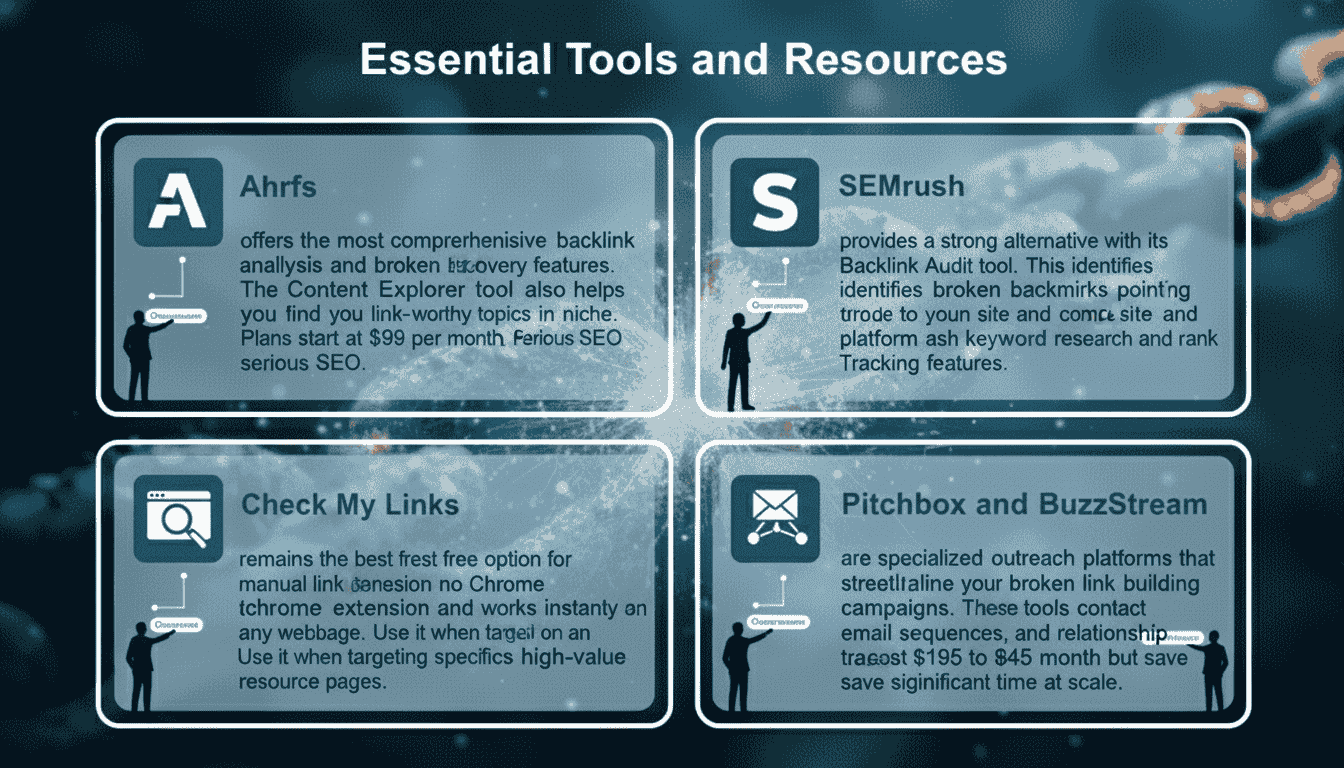
Ahrefs offers the most comprehensive backlink analysis and broken link discovery features. The Content Explorer tool also helps you find link worthy topics in your niche. Plans start at $99 per month for serious SEO practitioners.
SEMrush provides a strong alternative with its Backlink Audit tool. This identifies broken backlinks pointing to your own site and competitors. The platform also includes keyword research and rank tracking features.
Check My Links remains the best free option for manual broken link prospecting. This Chrome extension requires no subscription and works instantly on any webpage. Use it when targeting specific high value resource pages.
Pitchbox and BuzzStream are specialised outreach platforms that streamline your broken link building campaigns. These tools manage contact discovery, email sequences, and relationship tracking. They cost $195 to $495 per month but save significant time at scale.
Advanced Tactics to Maximise Results
Target broken resources from competitors who rank for your desired keywords. Use Ahrefs to find broken pages on competitor sites that earned quality backlinks. Recreate superior versions of that content and reach out to all the linking sites.
Leverage broken links on Wikipedia for authoritative backlinks. Wikipedia articles often contain broken citation links. Find broken links relevant to your expertise, create authoritative content, and suggest it as a replacement citation.
Monitor brand mentions without links using tools like Brand24 or Mention. When sites mention your brand or content without linking, reach out and kindly request a link. This combines broken link principles with brand building.
Create visual assets that naturally attract links. Infographics, charts, and custom illustrations get linked more often than text only content. These assets work especially well as replacements for broken image or data visualisation links.
Measuring Success and ROI
Track links earned per 100 outreach emails as your primary success metric. A conversion rate of 5 to 10 percent indicates healthy performance. Rates below 3 percent suggest you need better targeting or improved content.
Monitor referring domain growth in Google Search Console and your SEO tools. Steady increases in quality referring domains directly correlate with improved rankings. Look for month over month growth of 10 to 20 new domains.
Measure ranking improvements for target keywords 60 to 90 days after earning backlinks. Quality backlinks often take several weeks to impact rankings. Track position changes for your most important commercial keywords.
Calculate estimated traffic value from improved rankings. If a keyword moves from position 8 to position 3, estimate the additional monthly visitors and their potential conversion value. This demonstrates ROI to stakeholders.
Future Trends in Link Building
AI powered personalisation will become essential as site owners receive more outreach emails. Tools that analyse site owner interests and automatically customise emails will outperform generic templates. Human oversight remains critical for maintaining authenticity.
E E A T signals will make link quality matter even more than quantity. Google increasingly evaluates the expertise and trustworthiness of linking sites. Focus on earning links from recognised authorities in your field.
Link building integration with content marketing will replace isolated campaigns. Successful strategies will create naturally linkable content as part of ongoing content production. Broken link building becomes one tactic within a comprehensive content strategy.
Relationship first approaches will dominate as transactional link building becomes less effective. Building genuine connections with industry peers creates sustainable link acquisition. These relationships compound over time and generate opportunities beyond just backlinks.
Final Thoughts
Most SaaS, B2B, and agency teams treat broken link building the same way: send cold emails, hope for replies, and wonder why it never contributes to predictable pipeline. At DripRanks we knew broken link building needed more than scattered outreach. So we built a system, not a service.
Forensic link audits uncover the highest ROI broken link opportunities within your niche. Intent mapped replacement content is created to genuinely improve the host page while aligning with buyer intent and authority signals. Scalable, relationship first outreach multiplies earned placements without multiplying headcount or risk.
The difference? Broken link building becomes measurable, repeatable, and revenue focused. No spam. No guesswork. Just authoritative backlinks that strengthen trust and drive consistent organic growth. Contact DripRanks to implement a broken link building system that turns missed links into predictable SEO performance.