
Introduction
Most websites struggle to rank not because their content is weak, but because they lack authoritative backlinks pointing to their pages. Link prospecting solves this problem by identifying the right websites and contacts who can provide valuable link placements. This targeted approach transforms random outreach into strategic relationship building.
Google’s algorithm still treats backlinks as critical ranking signals. However, not all links carry equal weight. A single link from a trusted industry publication can outperform dosens of low quality directory listings. Smart link prospecting focuses your efforts on opportunities that actually move the needle.
At Drip Ranks, we’ve helped hundreds of clients build powerful backlink profiles through systematic link prospecting. Our proven framework identifies high value targets while avoiding spam traps and low authority sites that waste time. This guide reveals the exact strategies we use to find link opportunities that drive real results.
You’ll learn what link prospecting truly means, why it matters for SEO success, and how to implement a repeatable process. We’ll cover practical tactics, essential tools, common pitfalls to avoid, and advanced techniques that separate average campaigns from exceptional ones.
What Is Link Prospecting?
Link prospecting is the systematic process of identifying websites and content creators who might link to your site. This research phase happens before any outreach begins. You’re essentially building a qualified list of potential link sources that match your niche and quality standards.
The process involves analysing competitorbacklinks, searching for relevant content gaps, and evaluating domain authority metrics. Good prospecting considers editorial standards, audience overlap, and topical relevance. You’re not just looking for any website with a contact form, you’re finding partners whose audiences genuinely benefit from discovering your content.
Think of link prospecting like sales prospecting. You wouldn’t pitch every business in the phone book. Instead, you identify ideal customer profiles and prioritise high value targets. Link prospecting applies this same strategic filtering to backlink acquisition, dramatically improving your outreach success rates while reducing wasted effort.
Why Link Prospecting Matters for SEO Success
Backlinks remain one of Google’s top three ranking factors according to multiple industry studies. But random link building rarely works anymore. Search engines now evaluate link quality through dosens of signals including domain authority, topical relevance, and natural anchor text patterns. Proper prospecting ensures you pursue links that actually improve rankings.
Targeted prospecting also protects your site from penalties. Google’s algorithms can detect unnatural link patterns from spammy directories and paid link networks. By focusing on editorially given links from relevant sources, you build a backlink profile that withstands algorithm updates and manual reviews.
Beyond SEO, quality backlinks drive referral traffic from engaged audiences. A link from an industry blog sends visitors who already trust the source and want to learn more. These referrals often convert better than cold traffic because they arrive pre qualified and interested in your topic area.
How Link Prospecting Works Step by Step
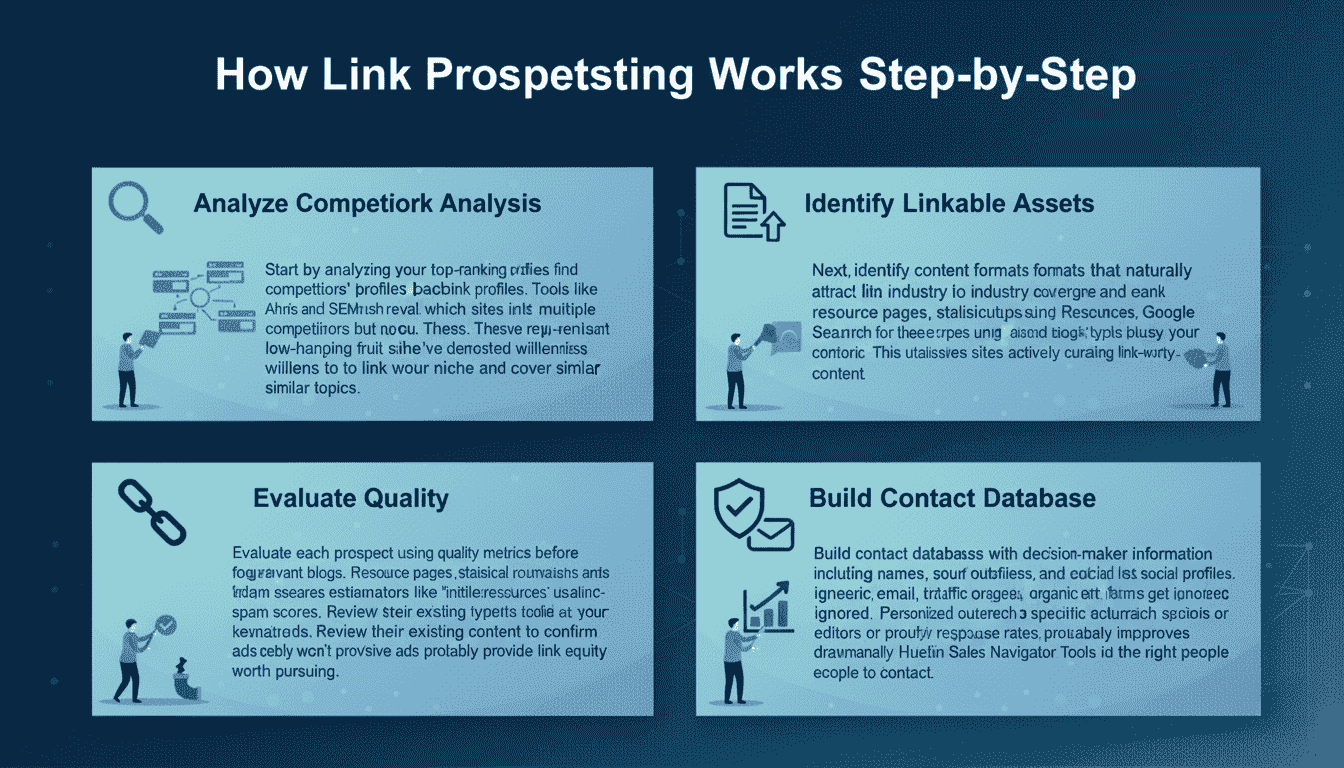
Start by analysing your top ranking competitors’ backlink profiles. Tools like Ahrefs and SEMrush reveal which sites link to multiple competitors but not to you. These represent low hanging fruit since they’ve already demonstrated willingness to link within your niche and cover similar topics.
Next, identify content formats that naturally attract links in your industry. Resource pages, statistical roundups, and original research consistently earn backlinks. Search for these content types using advanced Google operators like “intitle:resources” plus your keyword or “statistics” combined with your topic. This uncovers sites actively curating link worthy content.
Evaluate each prospect using quality metrics before adding them to your outreach list. Check domain authority, organic traffic estimates, and spam scores. Review their existing content to confirm topical alignment and editorial standards. A site with thin content or excessive ads probably won’t provide link equity worth pursuing.
Build contact databases with decision maker information including names, email addresses, and social profiles. Generic contact forms get ignored. Personalised outreach to specific editors or content managers dramatically improves response rates. Tools like Hunter.io and LinkedIn Sales Navigator help identify the right people to contact.
Best Link Prospecting Strategies That Work
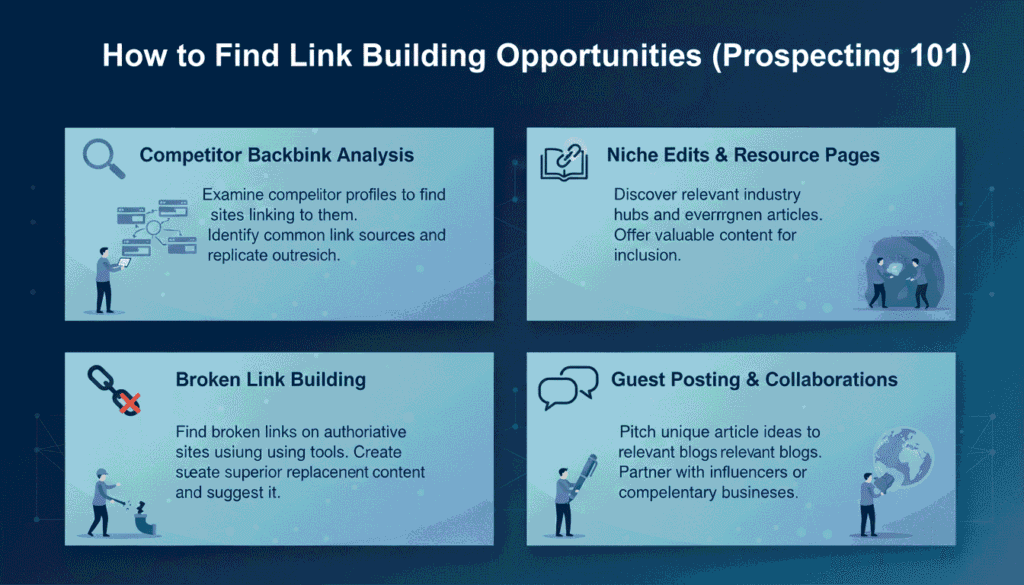
Broken link building finds dead links on authoritative sites and offers your content as a replacement. Use tools like Check My Links to scan resource pages in your niche. When you find broken links to content similar to yours, reach out suggesting your updated alternative. Site owners appreciate the help and you earn a relevant backlink.
Guest posting prospecting identifies publications accepting contributor content. Search for “write for us” combined with your industry keywords. Review their submission guidelines and recent posts to understand their audience and quality standards. Focus on sites where your expertise adds genuine value rather than pure link placement.
Competitor gap analysis reveals opportunities your rivals haven’t claimed yet. Export their backlink profiles and filter for high authority domains. Cross reference these lists to find sites linking to multiple competitors but missing your brand. These prospects already cover your topic and simply need awareness of your content.
Unlinked brand mentions represent easy wins since the site already references your company. Use Google Alerts or Brand 24 to monitor when publications mention your brand without linking. Politely request they convert the mention into a hyperlink, providing the exact URL to make their job easier.
Common Link Prospecting Mistakes to Avoid
Many teams waste time on low quality prospects because they prioritise quantity over quality. Building a list of 500 mediocre sites produces worse results than 50 excellent targets. Focus on domain authority above 30, organic traffic above 1,000 monthly visits, and topical relevance to your niche.
Ignoring editorial context kills outreach campaigns before they start. Just because a site exists in your industry doesn’t mean they’ll link to commercial content. Review their linking patterns to understand what content formats they prefer. Educational resources and data driven content earn more links than product pages.
Generic outreach templates generate low response rates because recipients immediately recognise mass emails. Personalisation goes beyond using someone’s first name. Reference their recent articles, compliment specific work, and explain why your content specifically benefits their audience. This research takes time but dramatically improves success rates.
Failing to track prospect interactions leads to awkward duplicate outreach and missed follow ups. Use a CRM or spreadsheet to log all contacts, responses, and outcomes. Note which prospects require follow up, who declined, and which sites successfully placed links. This data informs future prospecting and prevents relationship damage.
Essential Tools for Efficient Link Prospecting
Ahrefs Site Explorer provides comprehensive backlink data including referring domains, anchor text distribution, and link growth over time. The Content Explorer feature finds popular content in your niche that earned substantial backlinks. You can filter by domain rating, traffic, and publication date to find relevant prospects quickly.
SEMrush Backlink Analytics offers competitive gap analysis showing domains linking to competitors but not your site. The Link Building Tool automates prospect discovery based on keywords and competitor domains. It also tracks outreach campaigns and monitors when prospects place your links.
Hunter.io locates professional email addresses associated with any domain. Instead of wasting time with contact forms, you reach decision makers directly. The tool also verifies email validity to protect sender reputation and improve deliverability rates.
BuzzSumo identifies content creators and influencers actively sharing content in your space. Search by topic to find journalists, bloggers, and publishers covering relevant subjects. The platform shows social engagement metrics helping you prioritise the most influential prospects.
Respona combines prospecting and outreach in one platform. It automatically finds contact information, personalises email templates using AI, and tracks campaign performance. The tool integrates with major SEO platforms to pull backlink data directly into your workflow.
Advanced Link Prospecting Techniques
Reverse engineering successful campaigns reveals proven link sources in your industry. When competitors publish content that earns dosens of backlinks quickly, analyse which sites linked and why. Often they tapped into journalist databases, leveraged existing relationships, or created newsworthy angles you can replicate with your own spin.
Creating linkable assets first flips traditional prospecting. Instead of finding sites then pitching existing content, identify gaps in available resources that authoritative sites need. Build the definitive guide, comprehensive dataset, or useful tool that solves a real problem. Then prospect sites already linking to inferior alternatives.
Monitoring industry movements uncovers timely opportunities. When regulations change, new research publishes, or industry events occur, journalists need expert sources. Set up Google News alerts for industry keywords and respond quickly with expert commentary, original data, or unique perspectives that warrant citation.
Leveraging HARO and journalist requests connects you with reporters actively seeking sources. Sign up for Help A Reporter Out and similar services that send daily queries from journalists. Respond promptly with valuable insights and you’ll earn authoritative backlinks from major publications without cold outreach.
Measuring Link Prospecting Success
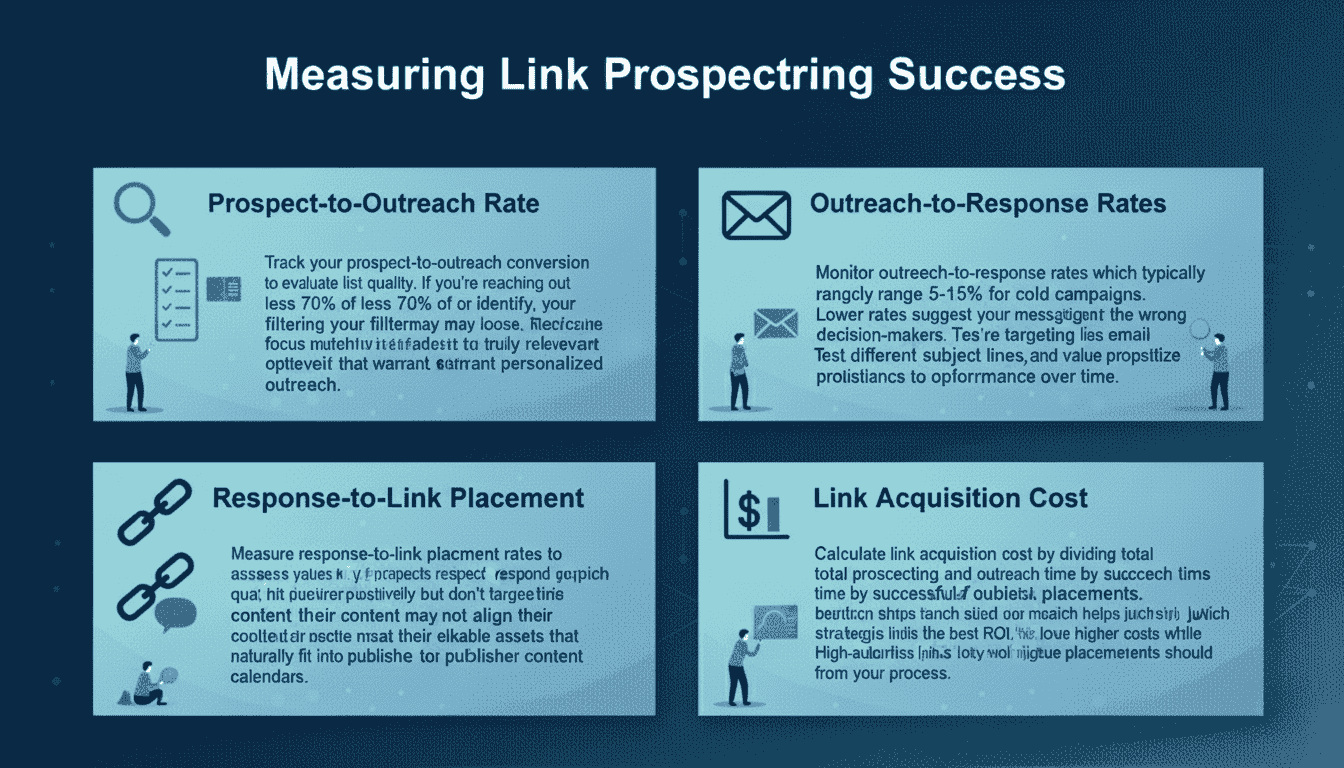
Track your prospect to outreach conversion rate to evaluate list quality. If you’re reaching out to less than 70% of prospects you identify, your filtering criteria may be too loose. Refine your quality standards to focus efforts on truly relevant opportunities that warrant personalised outreach.
Monitor outreach to response rates which typically range from5 ,15% for cold campaigns. Lower rates suggest your messaging needs improvement or you’re targeting the wrong decision makers. Test different subject lines, email lengths, and value propositions to optimise performance over time.
Measure response to link placement rates to assess your pitch quality. If prospects respond positively but don’t place links, your content may not align with their editorial needs. This feedback helps you create more linkable assets that naturally fit into publisher content calendars.
Calculate link acquisition cost by dividing total prospecting and outreach time by successful placements. This metric helps justify link building budgets and identify which strategies deliver the best ROI. High authority links justify higher costs while low value placements should be eliminated from your process.
Link Prospecting for Different Industries
Local businesses should prioritise geographic relevance over pure domain authority. Chamber of commerce sites, local news outlets, and community blogs may have lower metrics but drive targeted traffic. Prospect local directories, business associations, and neighborhood publications that influence your actual customers.
B2B companies benefit from industry publication prospecting and thought leadership content. Trade journals, professional associations, and conference organisers actively seek expert contributors. These niche sites often carry more weight for commercial keywords than general interest publications with higher traffic.
E commerce sites need creative prospecting since product pages rarely earn natural links. Focus on content marketing assets like buying guides, comparison tools, and industry reports. Prospect lifestyle blogs, gift guides, and review sites where your products solve specific customer problems.
SaaS platforms should target technology blogs, software review sites, and integration marketplaces. Create free tools, publish original usage data, and develop API documentation that developers naturally reference. These technical resources earn links from engaged communities that influence purchasing decisions.
Final Words: Start Building Your Link Prospect List Today
Most teams approach link building the same way: mass outreach, low response rates, and backlinks that fail to move rankings. At Drip Ranks we knew link acquisition needed a smarter approach. So we built a link prospecting system, not random outreach.
Forensic competitor analysis reveals proven link sources in your niche. Data driven prospecting identifies high authority, relevant opportunities before a single pitch is sent. Relationship led outreach secures links that compound over time not short term wins that disappear after algorithm updates.
The difference? Your backlink strategy becomes measurable, repeatable, and rankings focused. With custom prospect lists, advanced tools, and hands on research, Drip Ranks turns link building into a predictable growth engine no guesswork required. Ready to build links that actually move rankings? Start with a custom link prospecting strategy today.