

Introduction
Building quality backlinks remains one of the most challenging aspects of modern SEO. While Google’s algorithms have evolved significantly, high authority links continue driving search rankings and domain authority. Guest posting has emerged as the most sustainable method for earning these valuable backlinks while simultaneously building brand awareness.
Recent industry data reveals that 60% of SEO professionals consider guest blogging their primary link building tactic. This strategy works because it creates genuine value for both publishers and contributors while satisfying Google’s quality guidelines. Unlike manipulative link schemes that risk penalties, strategic guest posting builds relationships and authority.
Many businesses struggle with guest posting because they approach it incorrectly. They focus solely on links rather than providing genuine value to readers. This article will show you how to execute guest posting campaigns that build authority, drive qualified traffic, and improve search rankings through white hat SEO practices.
You’ll learn how to identify the right opportunities, craft compelling pitches, create content that publishers accept, and measure real ROI. Whether you’re new to link building or refining existing strategies, these proven tactics will help you succeed.
What Is Guest Posting?
Guest posting refers to writing and publishing articles on websites you don’t own. Contributors create valuable content for established blogs and online publications in exchange for exposure, credibility, and typically a backlink to their own website. This practice creates mutual benefits for both the publisher and contributor.
The concept functions as a content partnership. Publishers receive free, high quality content that engages their audience and fills editorial calendars. Contributors gain access to established audiences, build professional credibility, and earn backlinks that improve their search engine rankings and referral traffic.
Modern guest posting differs significantly from outdated link schemes. Google’s quality guidelines require that contributed content provides genuine value to readers. The best guest posts educate, inform, or entertain audiences while naturally incorporating relevant links that enhance the reader experience rather than manipulate rankings, link prospecting.
Why Guest Posting Matters for SEO and Brand Growth
Guest posting delivers multiple strategic benefits that extend far beyond simple link acquisition. Quality backlinks from authoritative websites signal to Google that your content deserves trust and higher rankings. These editorial links carry significantly more weight than directory listings or paid placements.
Referral traffic from well placed guest posts often converts better than cold traffic. Readers who discover your brand through a trusted publication already have pre qualified interest in your expertise. This warm introduction builds trust faster than traditional advertising or cold outreach ever could.
Brand authority compounds over time as your byline appears on respected industry publications. When potential customers research your company, they find your thought leadership across multiple trusted sources. This visibility establishes credibility that directly impacts conversion rates and customer acquisition costs.
Long term relationship building represents perhaps the most undervalued aspect of guest posting. Editors and publishers you work with become professional contacts who may recommend you for speaking opportunities, partnerships, or media features. These connections often prove more valuable than any single backlink, link quality.
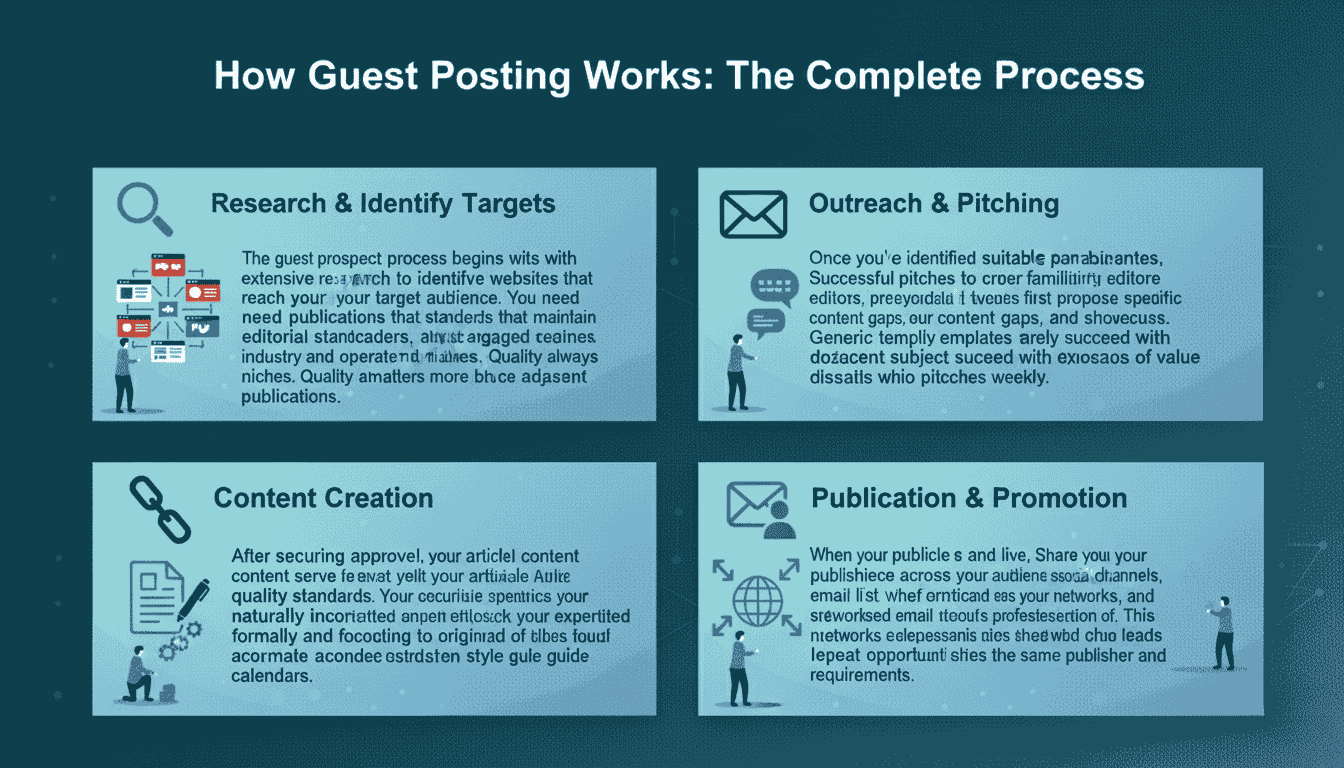
How Guest Posting Works: The Complete Process
The guest posting process begins with extensive research to identify websites that reach your target audience. You need publications that maintain editorial standards, attract engaged readers, and operate within your industry or adjacent niches. Quality always matters more than quantity when selecting target publications.
Outreach and Pitching: Once you’ve identified suitable publications, you craft personalised pitches to editors. Successful pitches demonstrate familiarity with the publication, propose specific topics that fill content gaps, and showcase your expertise. Generic templates rarely succeed with experienced editors who receive dosens of pitches weekly.
Content Creation: After securing approval, you create content that exceeds the publication’s quality standards. Your article must serve their audience first while naturally incorporating your expertise and perspective. The content should be original, well researched, and formatted according to the publisher’s style guide and requirements.
Publication and Promotion: When your article goes live, both you and the publisher benefit from cross promotion. Share the published piece across your social channels, email list, and professional networks. This amplification demonstrates professionalism and often leads to repeat opportunities with the same publisher.
Proven Guest Posting Strategies That Generate Results
Target Industry Relevant Publications: Focus your efforts on websites where your ideal customers already spend time. A backlink from a highly relevant mid tier blog typically delivers better results than links from high authority but off topic websites. Relevance signals to Google that your expertise deserves recognition within your specific industry.
Create Data Driven Content: Articles that feature original research, case studies, or proprietary data attract more shares and engagement. Publishers prioritise content that provides unique value their audience cannot find elsewhere. Consider conducting surveys or analysing industry trends to generate newsworthy insights.
Develop Relationship First Approaches: Comment thoughtfully on target blogs before pitching. Share their content and engage with their community. Editors are more likely to accept pitches from contributors who already demonstrate genuine interest in their publication and audience.
Offer Exclusive Content: Never submit previously published articles or thin rewrites of existing content. Publishers want fresh perspectives and original insights. Your guest posts should be among your best work, showcasing expertise that readers cannot find on your own blog.
Follow Up Strategically: After a successful guest post, maintain the relationship by suggesting follow up topics or offering to contribute during high demand periods. Publishers appreciate reliable contributors who understand their audience and consistently deliver quality work.
Common Guest Posting Mistakes to Avoid
Many marketers damage their reputation by submitting low quality content that reads like thinly veiled advertisements. Publishers immediately reject articles that prioritise self promotion over reader value. Your content must educate and inform first, with your expertise demonstrated through knowledge rather than sales pitches, types of backlinks.
Over Optimisation of Anchor Text: Using exact match keywords in every backlink triggers Google’s spam filters. Natural link profiles include varied anchor text with branded terms, generic phrases, and naked URLs. Coordinate with publishers to ensure anchor text appears organic and reader focused rather than SEO manipulative.
Ignoring Publisher Guidelines: Each publication maintains specific formatting requirements, word counts, and content preferences. Failing to follow these guidelines wastes everyone’s time and marks you as unprofessional. Always read and follow submission guidelines completely before pitching or submitting content.
Targeting Low Quality Websites: Links from spammy, low authority websites can actually harm your SEO profile. Google evaluates the quality of sites linking to you, and associations with link farms or content mills damage your credibility. Vet every opportunity carefully before investing time.
Neglecting Content Quality: Rushed, poorly researched articles get rejected and damage your professional reputation. Budget adequate time for research, writing, and editing. Your guest posts represent your brand and expertise to new audiences who will judge your capabilities based on content quality.
Essential Tools and Resources for Guest Posting Success
Research and Outreach Tools: Platforms like Ahrefs and SEMrush help identify websites that accept guest posts and analyse their domain authority. BussSumo reveals which topics resonate with specific audiences. Hunter.io and similar tools help locate editor contact information for personalised outreach.
Content Creation Resources: Grammarly ensures your writing maintains professional polish and eliminates errors that undermine credibility. Hemingway Editor improves readability and helps you write concise, scannable content. Google Docs facilitates easy collaboration with editors who may request revisions.
Relationship Management: Customer relationship management tools help track your outreach efforts, follow ups, and publication status. Simple spreadsheets work for smaller campaigns, but dedicated CRM systems become essential as you scale guest posting efforts across multiple publications simultaneously.
Analytics Platforms: Google Analytics tracks referral traffic from guest posts so you can measure actual ROI. Google Search Console monitors how new backlinks impact your search rankings. These insights help you prioritise publications that deliver measurable business results rather than vanity metrics.
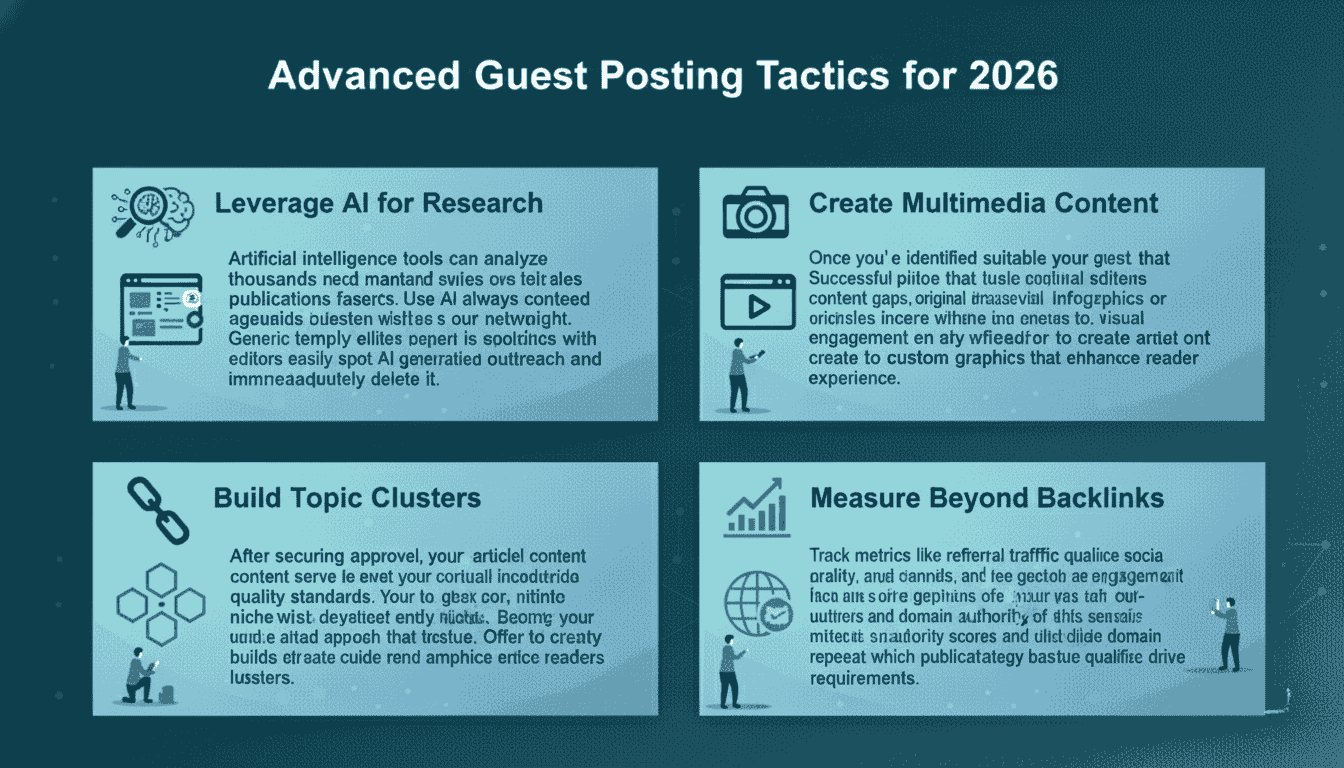
Advanced Guest Posting Tactics for 2026
Leverage AI for Research: Artificial intelligence tools can analyse thousands of potential guest posting targets faster than manual research. Use AI to identify content gaps on target publications, but always personalise pitches with human insight. Editors easily spot generic, AI generated outreach and immediately delete it.
Create Multimedia Content: Publishers increasingly value guest posts that include original images, infographics, or embedded videos. Visual content increases engagement and shareability while demonstrating your commitment to quality. Offer to create custom graphics that enhance the reader experience.
Build Topic Clusters: Rather than pitching random topics, develop expertise around specific themes. Become the go to expert on particular subjects within your niche. This focused approach builds stronger authority signals and makes it easier to secure repeat opportunities.
Measure Beyond Backlinks: Track metrics like referral traffic quality, engagement rates, and actual conversions from guest post traffic. These business outcomes matter more than vanity metrics like domain authority scores. Adjust your targeting and content strategy based on which publications drive qualified leads.
Measuring Guest Posting ROI and Success Metrics
Domain Authority Growth: Monitor your website’s domain authority score monthly using tools like Moz or Ahrefs. Quality guest posts should contribute to gradual increases over time. Sudden spikes or drops often indicate problems that require investigation.
Referral Traffic Quality: Analyse how visitors from guest posts behave on your website. Check bounce rates, pages per session, and conversion rates. High quality referral traffic engages with multiple pages and converts at rates similar to or better than organic search traffic.
Keyword Ranking Improvements: Track rankings for your target keywords before and after guest posting campaigns. Quality backlinks should correlate with gradual ranking improvements for competitive terms. Document which publications and anchor text variations produce the strongest ranking signals.
Relationship Value: Count how many one time guest posts turn into ongoing contributor relationships. These partnerships provide consistent backlink opportunities while reducing outreach time. Strong relationships often lead to unsolicited opportunities as editors approach you with content needs.
Future Trends in Guest Posting and Content Partnerships
Quality Over Quantity Intensifies: Google’s algorithm updates continue prioritising content quality and genuine expertise. Guest posting will require deeper research, more original insights, and stronger E E A T signals. Superficial content that worked previously will generate increasingly poor results.
Niche Specialisation: Generic business blogs are losing influence to highly specialised publications. The most valuable guest posting opportunities will come from niche specific websites where you can demonstrate deep expertise. Build relationships within your specific industry rather than pursuing mass market publications.
Integration with Digital PR: Guest posting increasingly overlaps with digital public relations strategies. The most successful campaigns combine contributed articles with data driven PR, expert commentary, and thought leadership positioning. This integrated approach builds authority across multiple channels simultaneously.
Video and Podcast Guest Appearances: Written guest posts will be supplemented by video contributions and podcast interviews. These multimedia opportunities build personal brand recognition while generating backlinks and citations. Develop comfort with various content formats to maximise opportunities.
Final Thoughts
Most teams approach guest posting the same way: send pitches, chase links, and hope the effort translates into rankings. At Drip Ranks we knew guest posting had to be done differently. So we built a guest posting system, not a one off outreach service.
Publisher vetting ensures relevance and authority before outreach begins. Value first content earns placements audiences actually engage with. Relationship driven execution turns single placements into long term publishing opportunities that compound SEO impact over time.
The difference? Your guest posting becomes measurable, repeatable, and authority focused. With white hat processes, custom opportunity sourcing, and expert content creation, Drip Ranks helps brands build backlinks and credibility without risking penalties. Ready to scale guest posting the right way? Start with a custom SEO strategy tailored to your business goals.