
Introduction
Google processes over 8.5 billion searches daily, and backlinks remain one of the top three ranking factors determining which websites appear first. Yet most website owners struggle to understand which types of backlinks actually move the needle on their search visibility.
Not all backlinks carry equal weight. A single editorial link from an authoritative news site can deliver more ranking power than hundreds of low quality directory submissions. Understanding the distinct types of backlinks helps you focus your link building efforts where they create measurable results.
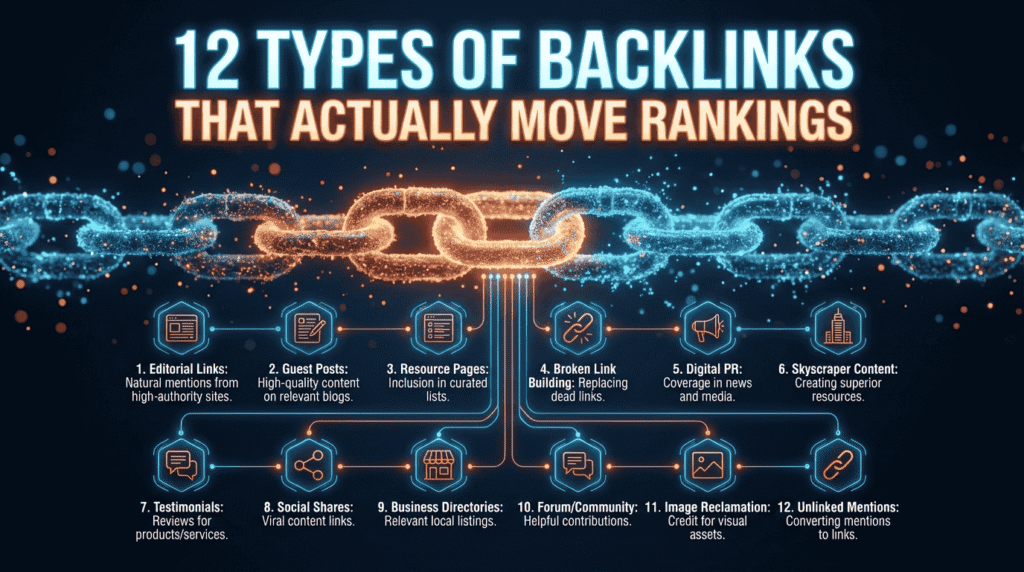
This guide breaks down the 12 most important types of backlinks, explains how Google evaluates each type, and provides actionable strategies for acquiring links that strengthen your domain authority. You’ll learn which link types to pursue, which to avoid, and how to build a diverse backlink profile that withstands algorithm updates.
Whether you’re building your first backlink campaign or refining an existing strategy, mastering these link types separates successful SEO from wasted effort.
What Are Backlinks and Why Do They Matter?
Backlinks are hyperlinks from one website pointing to another website. Google’s algorithm treats these links as votes of confidence, signaling that your content provides value worth referencing. When authoritative sites link to your pages, search engines interpret this as evidence of credibility.
The relationship between backlinks and rankings has been confirmed through numerous industry studies. Backlinko’s analysis of 11.8 million search results found that the number one result has an average of 3.8 times more backlinks than positions two through ten. This correlation demonstrates why link building remains essential for competitive keywords.
Beyond rankings, backlinks drive direct referral traffic from users who click through to explore your content. A well placed link from a popular industry blog can send hundreds of qualified visitors who are already interested in your topic. This makes backlinks valuable for both search visibility and audience development.
Editorial Backlinks
Editorial backlinks occur when other content creators voluntarily link to your website because your content adds value to their article. These links appear naturally within the body text of blog posts, news articles, or research papers without any request or exchange from your side.
Google assigns the highest trust value to editorial links because they represent genuine endorsements. A journalist citing your original research or a blogger referencing your tutorial demonstrates that real humans find your content useful enough to recommend to their readers.
How to earn editorial backlinks: Create original research, publish comprehensive guides that serve as definitive resources, or develop unique tools that solve specific problems. When your content becomes the best answer for a topic, other creators naturally reference it when writing related material.
Guest Post Backlinks
Guest post backlinks come from articles you write for other websites in your industry. These links typically appear in the author bio or contextually within the article body when relevant. Guest posting allows you to tap into established audiences while building relationships with site owners.
Quality guest post opportunities should target websites with genuine readership and editorial standards. The host site should review submissions for quality and relevance rather than accepting any content with payment. Your contributed article should provide substantial value to their audience, not just serve as a vehicle for links.
Best practices for guest posting: Research sites that your target audience already reads, pitch unique topic angles that fill content gaps, and write at the same quality level as your own blog. Include one to two contextual links maximum, ensuring they genuinely support the points being made rather than forcing mentions.
Resource Page Backlinks
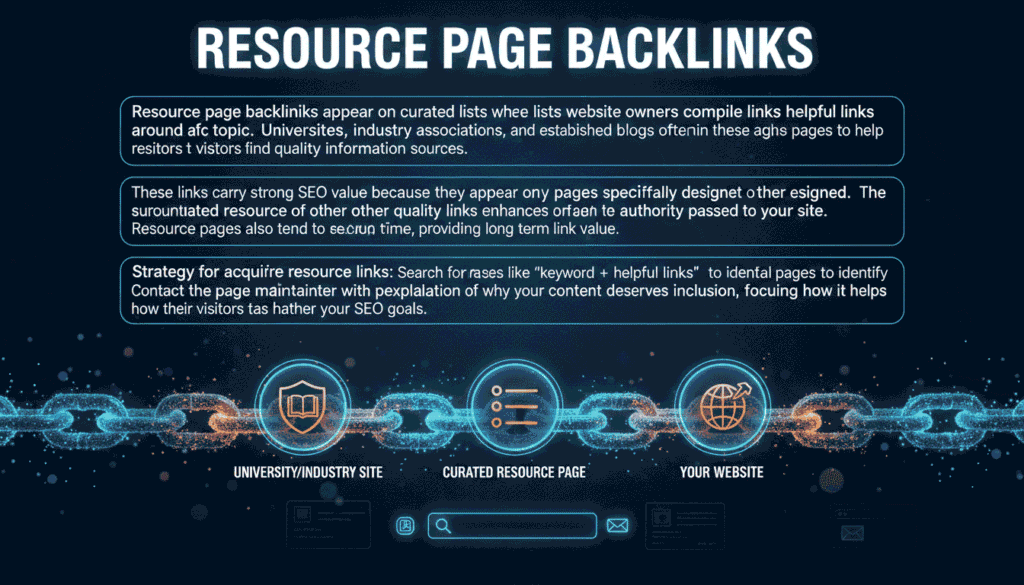
Resource page backlinks appear on curated lists where website owners compile helpful links around a specific topic. Universities, industry associations, and established blogs often maintain these pages to help their visitors find quality information sources.
These links carry strong SEO value because they appear on pages specifically designed to showcase trusted resources. The surrounding context of other quality links enhances the authority passed to your site. Resource pages also tend to remain stable over time, providing long term link value.
Strategy for acquiring resource links: Search for phrases like “keyword + resources” or “keyword + helpful links” to identify relevant pages. Contact the page maintainer with a personalised explanation of why your content deserves inclusion, focusing on how it helps their visitors rather than your SEO goals.
Business Profile Backlinks
Business profile backlinks come from online directories, review sites, and local business listings where you create a company profile. Google Business Profile, Yelp, Better Business Bureau, and industry specific directories all provide opportunities for these links.
While individual directory links carry less weight than editorial links, they contribute to your overall link diversity and help establish your business entity across the web. For local businesses, citations from directory sites also reinforce geographic relevance for local search rankings.
Directory selection criteria: Focus on established directories with domain authority above 30, sites relevant to your industry or location, and platforms that actual consumers use to find businesses. Avoid bulk directory submission services that place your link on hundreds of low quality sites simultaneously.
Social Media Backlinks
Social media backlinks originate from platforms like Facebook, Twitter, LinkedIn, and Instagram where users share links to your content. Most social media links include the “nofollow” attribute, meaning they don’t directly pass PageRank, but they still provide indirect SEO benefits.
High social engagement signals to Google that your content resonates with audiences, which can influence rankings indirectly. Social shares also increase content visibility, leading to more page views and higher likelihood that bloggers or journalists will discover and link to your work.
Maximising social link value: Create highly shareable content formats like original data visualisations, controversial opinion pieces backed by evidence, or practical how to guides. Include click to tweet snippets with key statistics, and make sharing buttons prominent without being intrusive.
Forum and Community Backlinks
Forum and community backlinks appear in discussion threads on platforms like Reddit, Quora, industry forums, and niche communities. When you answer questions thoroughly and reference your content as a supporting resource, these links can drive targeted traffic and demonstrate expertise.
Most forums add nofollow attributes to prevent spam, but the referral traffic and brand exposure still make these links valuable. Users browsing forum threads are actively seeking solutions, making them more likely to engage deeply with helpful content you share.
Community linking guidelines: Participate genuinely in discussions before sharing any links, ensure your linked content directly answers the question being asked, and provide substantial value in your response beyond just dropping a link. Moderators and community members quickly identify and reject self promotional spam.
Comment Backlinks
Comment backlinks come from leaving thoughtful comments on blog posts with a link in your comment signature or within the comment text. While comment sections almost universally use nofollow links today, strategic commenting builds relationships with influential bloggers and increases your visibility to their audiences.
The key distinction separates valuable comment engagement from spam. Generic comments like “great post” add no value and damage your reputation. Thoughtful comments that extend the conversation or add additional perspectives demonstrate expertise and encourage the blog author to check out your site.
Effective commenting approach: Read the full article before commenting, add a unique insight or related example that enhances the discussion, and use your real name rather than keyword stuffed anchor text. Visit the same blogs regularly to become a recognised community member rather than a one time link dropper.
Image Backlinks
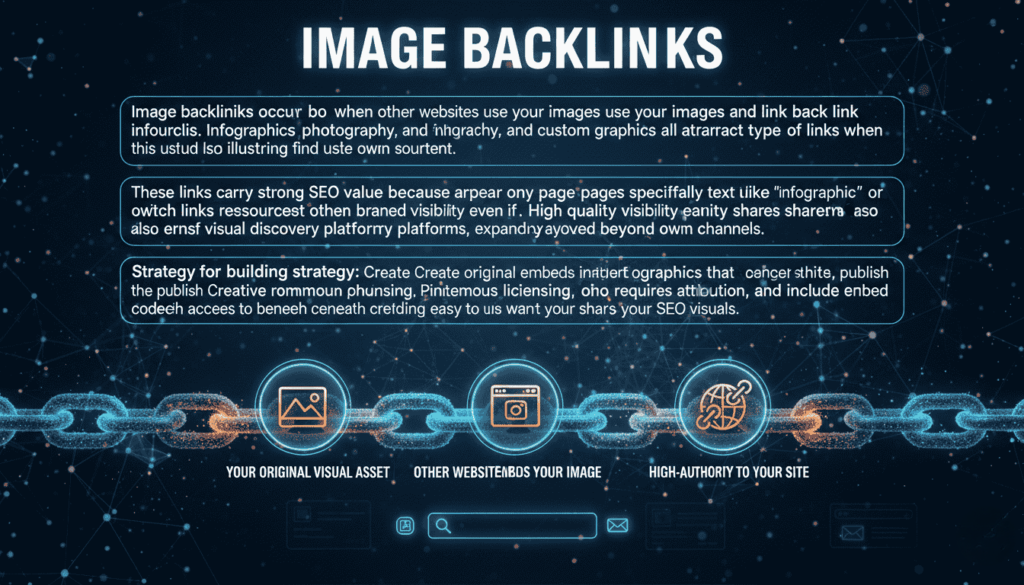
Image backlinks occur when other websites use your images and link back to your site as the source. Infographics, charts, original photography, and custom graphics all attract this type of link when other creators find them useful for illustrating their own content.
These links often include descriptive anchor text like “image source” or “infographic by,” which provides branded visibility even if the anchor text doesn’t contain target keywords. High quality visual content also earns shares on Pinterest and visual discovery platforms, expanding reach beyond traditional text based channels.
Image link building strategy: Create original infographics that visualise complex data in your industry, publish high resolution photos with Creative Commons licensing that requires attribution, and include embed codes beneath images to make proper crediting easy for users who want to share your visuals.
Press Release Backlinks
Press release backlinks come from distributing newsworthy announcements through press release distribution services or direct media outreach. When journalists pick up your story, the resulting coverage includes links back to your website within news articles and media mentions.
Google’s algorithm distinguishes between spammy press release links (widely distributed identical releases with keyword rich anchor text) and genuine news coverage earned through legitimate stories. Focus on newsworthy announcements like product launches, significant company milestones, or original research findings.
Press release best practices: Write releases about genuinely newsworthy events rather than routine business operations, target journalists who cover your industry specifically, and include one natural link to your homepage or relevant landing page rather than multiple keyword optimised links throughout the release.
Broken Link Building Backlinks
Broken link building backlinks replace dead links on other websites with links to your relevant content. You identify broken outbound links on resource pages or articles, create content that matches what the broken link originally pointed to, then suggest your content as a replacement.
This strategy works because website owners want to maintain quality user experiences by fixing broken links. You’re solving a problem for them while gaining a link, creating a mutually beneficial exchange. The context of the original broken link also ensures relevance between their content and yours.
Implementation process: Use tools like Ahrefs or Check My Links to find broken outbound links on high authority sites in your niche, create comprehensive content that serves as a suitable replacement, and reach out with a helpful tone that emphasises fixing their user experience rather than your link acquisition goals.
Tiered Link Building Structure
Tiered link building creates a structured approach where you build links to your important pages (tier 1), then build links to those linking pages (tier 2), and potentially continue the pattern for additional tiers. This amplifies the authority passed to your main site through multiple link layers.
Tier 1 links point directly to your money pages and should come from high authority, editorially earned sources. Tier 2 links point to your tier 1 sources, helping to boost their authority, which indirectly benefits your site. Tier 3 links support tier 2 pages through an additional authority layer.
This strategy requires careful execution to avoid appearing manipulative. The supporting tiers should consist of legitimate content marketing efforts like promoting your guest posts on social media or building links to your published case studies. Avoid using automated link networks or low quality spam links at any tier level.
Toxic Backlinks to Avoid
Toxic backlinks harm your search rankings rather than helping them. Google’s algorithm identifies unnatural link patterns and can apply manual or algorithmic penalties that drastically reduce visibility. Recognising and disavowing these harmful links protects your site’s reputation.
Link types that damage rankings: Paid links from link farms or private blog networks, exact match anchor text links from low quality directories, sitewide footer or sidebar links from irrelevant websites, links from penalised domains, and automatically generated links from scraper sites or spam comments.
How to handle toxic backlinks: Regularly audit your backlink profile using Google Search Console or third party tools, attempt to remove harmful links by contacting site owners, and use Google’s Disavow Tool for links you cannot remove manually. Focus removal efforts on the most obviously manipulative links rather than every slightly questionable link.
How to Build a Balanced Backlink Profile
A balanced backlink profile includes diverse link types from varied sources rather than relying on a single acquisition method. This diversity appears more natural to Google’s algorithm and protects you from algorithm updates that might devalue specific link types.
Profile diversity indicators: Mix of dofollow and nofollow links, varied anchor text including branded terms and natural phrases, links from different domain authority levels, geographic diversity in linking domains, and links from multiple content formats like blogs, news sites, and directories.
Track the growth rate of new backlinks to maintain a natural pattern. Sudden spikes of hundreds of new links within days trigger red flags for unnatural link building. Steady acquisition of 10,20 quality links monthly appears more organic than irregular bursts of link activity.
Monitoring your backlink health: Set up Google Search Console to receive notifications about manual actions, review your top linking domains quarterly to ensure they maintain quality standards, and analyse competitor backlink profiles to identify link opportunities you might be missing in your strategy.
Final Thoughts
Most SaaS, B2B, and agency teams approach link building the same way: chase random backlinks, hope rankings improve, and wonder why traffic doesn’t turn into predictable pipeline. At DripRanks we knew backlink acquisition needed structure. So we built a system, not a service, designed around ROI and authority growth.
Our forensic link audits identify the backlink types that actually move rankings editorial links, contextual placements, and high authority resources while filtering out low impact noise. Intent mapped link acquisition ensures every earned link supports a specific stage of the buyer journey, not just vanity metrics. Scalable outreach and relationship frameworks multiply high quality placements without multiplying headcount or risk.
The result is link building that’s measurable, repeatable, and revenue focused. No guesswork. No manipulative tactics. Just backlinks Google rewards and buyers trust. Contact DripRanks today for a comprehensive backlink audit and custom acquisition roadmap that turns authority into consistent organic growth.