
Introduction
Google’s algorithm updates have made link building more challenging than ever. Many website owners still struggle to climb search rankings despite creating great content. The problem often lies in weak or missing backlink profiles that fail to signal authority to search engines.
Backlinks remain one of Google’s top three ranking factors according to recent search quality evaluator guidelines. A Backlinko study analysing 11.8 million search results confirmed that pages ranking in the top positions have significantly more referring domains than lower ranking competitors.
The right backlinks can transform your organic visibility within months. This guide reveals exactly how to acquire quality SEO backlinks that drive rankings without risking penalties. You’ll discover proven strategies, common pitfalls to avoid, and expert tactics that work in today’s competitive search landscape.
What Are SEO Backlinks?
SEO backlinks are hyperlinks from external websites pointing to your domain. Search engines interpret these links as votes of confidence, signaling that your content provides value worth referencing. Each quality backlink passes authority and relevance signals that help pages rank higher in search results.
Not all backlinks carry equal weight. A link from an authoritative industry publication delivers far more ranking power than hundreds of low quality directory listings. Google evaluates backlink quality based on the linking site’s domain authority, topical relevance, and editorial standards.
The anchor text used in backlinks also influences rankings. When reputable sites link using keywords related to your target topics, it reinforces topical relevance. However, over optimisation with exact match anchors can trigger spam filters, making natural link text variations essential.
Why SEO Backlinks Matter for Rankings
Backlinks function as the internet’s voting system for content quality. Websites with robust backlink profiles consistently outrank competitors with similar content but fewer quality links. This relationship between backlinks and rankings has remained constant across every major Google algorithm update.
Search engines use backlinks to discover new content and assess credibility. Pages without backlinks rarely rank beyond the second search page, regardless of content quality. The PageRank algorithm still underlies Google’s evaluation of link authority, though modern systems consider hundreds of additional signals.
Quality backlinks also drive referral traffic from relevant audiences. A single link from an industry leader can generate hundreds of targeted visitors who convert at higher rates than cold traffic. This dual benefit makes backlink acquisition one of the highest ROI SEO activities.
How SEO Backlinks Influence Search Performance
Search engines crawl the web by following links between pages. When authoritative sites link to your content, crawlers discover and index it faster. This improved crawl frequency helps new pages rank within days instead of weeks or months.
Backlinks transfer authority through a concept called link equity or link juice. High authority domains pass more ranking power than newer or less trusted sites. The proximity of your link within the source content also matters, with contextual editorial links carrying more weight than sidebar or footer placements.
Topical relevance amplifies backlink effectiveness. A link from a marketing blog provides stronger signals for marketing related content than an unrelated technology site. Google’s algorithms analyse semantic relationships between linking and linked pages to assess relevance and prevent manipulation.
Types of SEO Backlinks Worth Pursuing
Editorial backlinks come from organic mentions when content creators reference your work without solicitation. These represent the gold standard because they indicate genuine value recognition. Publishing original research or data driven insights dramatically increases editorial backlink opportunities.
Guest post backlinks result from contributing content to relevant industry publications. This strategy provides controlled anchor text opportunities while demonstrating expertise to new audiences. The key is prioritising quality platforms over volume and creating genuinely useful content.
Resource page backlinks appear on curated lists of helpful tools or information. Libraries, educational institutions, and industry organisations maintain these pages. Outreach campaigns targeting resource page curators can secure highly relevant links from authoritative domains.
Broken link backlinks replace dead links on external sites with working alternatives from your content. This win win approach helps site owners fix user experience issues while earning quality placements. Tools like Ahrefs identify broken link opportunities at scale.
HARO backlinks connect journalists seeking expert sources with knowledgeable professionals. Responding to relevant Help A Reporter Out queries can earn authoritative links from major publications. Consistent participation builds relationships that yield ongoing opportunities.
Best Practices for Acquiring Quality Backlinks
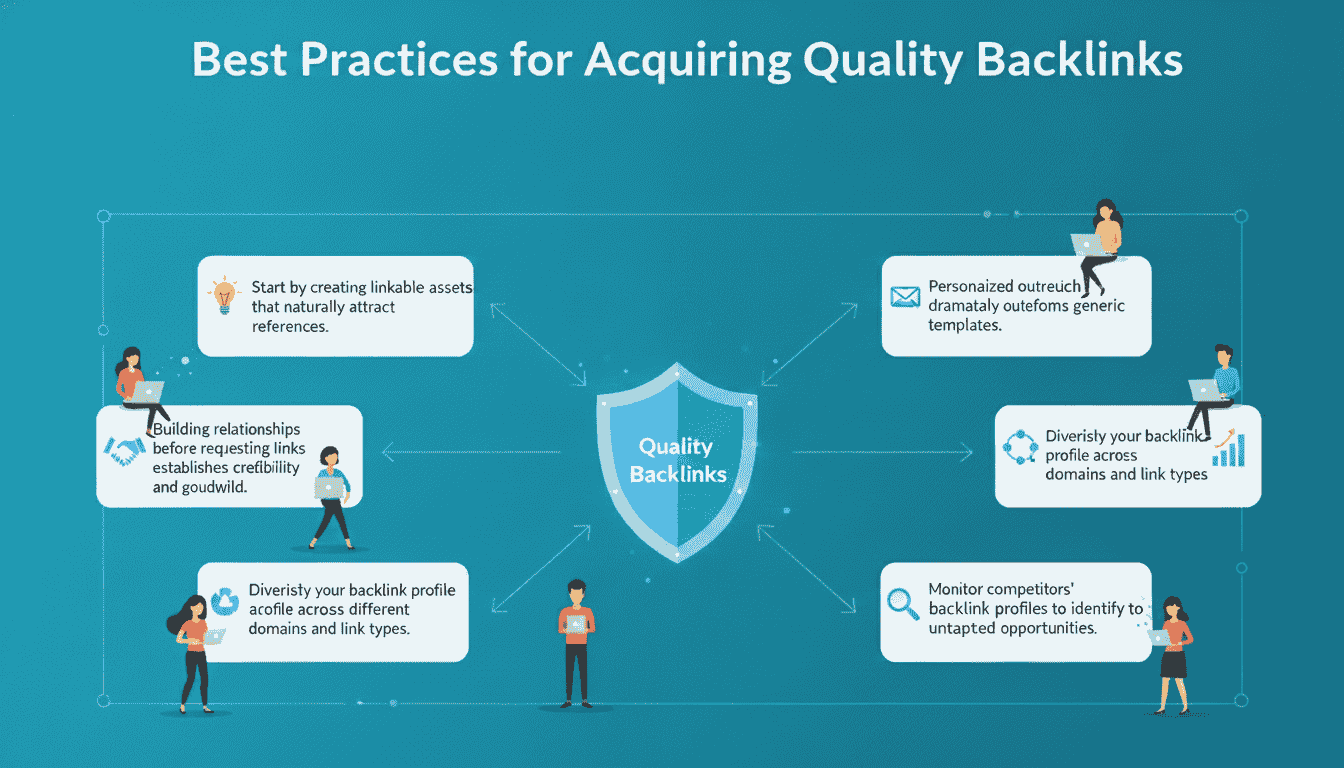
Start by creating linkable assets that naturally attract references. Comprehensive guides, original research studies, industry surveys, and interactive tools consistently earn backlinks. These assets provide value other content creators want to share with their audiences.
Personalised outreach dramatically outperforms generic templates. Research each target site’s content focus and recent publications before reaching out. Reference specific articles and explain exactly why your content benefits their readers. This approach yields 3 5x higher response rates.
Building relationships before requesting links establishes credibility and goodwill. Engage authentically with target sites by sharing their content, leaving thoughtful comments, and connecting on social platforms. When you eventually request a backlink, you’re a familiar name rather than a stranger.
Diversify your backlink profile across different domains and link types. Search engines view natural link profiles as containing various anchor texts, link placements, and source types. Profiles dominated by exact match anchors or single tactics trigger spam detection algorithms.
Monitor competitors’ backlink profiles to identify untapped opportunities. Tools like SEMrush reveal which sites link to competitors but not to you. These sites already cover your topic and may welcome quality alternatives or complementary resources.
Common Backlink Acquisition Mistakes to Avoid
Buying low quality bulk backlinks from link farms guarantees penalties rather than rankings. Google’s algorithms easily detect unnatural link patterns from spammy networks. Recovery from manual penalties can take months and requires removing thousands of toxic links.
Exact match anchor text over optimisation creates obvious manipulation signals. Natural backlink profiles contain mostly branded anchors, URLs, and generic phrases like “click here.” Target keywords should appear in fewer than 10 15% of total backlinks.
Ignoring topical relevance dilutes backlink effectiveness and risks algorithmic devaluation. Links from completely unrelated niches provide minimal ranking benefit. Focus outreach on sites serving similar audiences or covering complementary topics.
Neglecting link velocity patterns raises red flags. Acquiring hundreds of backlinks overnight after months of inactivity appears unnatural. Maintain steady, sustainable link building that mirrors organic growth patterns.
Overlooking existing backlink profile health undermines new acquisition efforts. Toxic backlinks from past campaigns or negative SEO attacks drag down overall domain authority. Regular backlink audits identify harmful links requiring disavowal through Google Search Console.
Essential Tools for Backlink Research and Analysis
Ahrefs provides the industry’s largest backlink index with near real time updates. Its Site Explorer feature reveals comprehensive backlink profiles including anchor text distribution, referring domains, and link quality metrics. The Content Explorer identifies high performing content in your niche that attracts backlinks.
SEMrush combines backlink analysis with competitive intelligence features. The Backlink Gap tool identifies sites linking to multiple competitors but not to you. This reveals warm prospects already interested in your topic who may welcome quality alternatives.
Moz Link Explorer evaluates link quality through Domain Authority and Page Authority metrics. These proprietary scores predict ranking potential based on backlink profiles. The Spam Score feature helps identify potentially harmful links requiring removal.
Majestic specialises in link context analysis through Trust Flow and Citation Flow metrics. These measurements assess link quality versus quantity. The Historic Index provides years of backlink data for tracking profile evolution over time.
Google Search Console reports backlinks Google actually counts toward rankings. This free tool reveals which pages attract the most links and identifies potential manual action issues. Regular monitoring ensures you catch and address problems before rankings suffer.
Advanced Strategies for Scaling Backlink Acquisition
Develop repeatable content systems that consistently generate linkable assets. Create monthly industry reports, quarterly surveys, or annual benchmark studies. Regular publication schedules establish your brand as a reliable data source worth citing.
Build strategic partnerships with complementary businesses serving similar audiences. Co create content like webinars, research reports, or tools that benefit both brands. Partner promotion generates backlinks from their network while expanding your reach.
Leverage digital PR to earn authoritative media coverage with built in backlinks. Newsjacking trending industry topics positions your experts as go to sources. Distribution through services like PR Newswire amplifies reach to hundreds of publications.
Create scholarship programs that naturally earn backlinks from educational institutions. Universities and colleges maintain scholarship resource pages with high domain authority. This long term strategy builds authoritative links while supporting education.
Develop free tools or calculators that solve specific audience problems. Interactive resources attract sustained backlink growth as users discover and reference them. ROI calculators, assessment tools, and generators provide ongoing link earning potential without additional outreach.
How to Evaluate Backlink Quality Before Acquiring
Assess domain authority using metrics from Ahrefs, Moz, or SEMrush. Target sites with domain ratings above 40 for meaningful ranking impact. However, topical relevance often matters more than raw authority scores.
Examine organic traffic levels to verify the linking site attracts real visitors. Tools like SimilarWeb estimate monthly traffic volumes. Sites with significant organic search traffic demonstrate established authority and audience engagement.
Review content quality and editorial standards on potential linking sites. Professional writing, original insights, and regular publication schedules indicate legitimate operations. Avoid sites with thin content, excessive ads, or obvious link selling.
Check for spam signals like unnatural outbound link patterns or irrelevant anchor text. Sites linking to hundreds of unrelated domains using exact match anchors likely participate in link schemes. These associations can harm your profile.
Verify topical alignment between the linking page and your target content. Links embedded within relevant editorial content pass stronger signals than generic placements. The surrounding context should naturally support mentioning your resource.
Measuring Backlink Campaign Performance and ROI
Track ranking improvements for target keywords after acquiring new backlinks. Quality links typically impact rankings within 4 8 weeks as Google recrawls and processes new signals. Monitor position changes in rank tracking tools like SEMrush or Ahrefs.
Measure referral traffic from new backlinks using Google Analytics UTM parameters. High quality links generate engaged visitors who explore multiple pages and convert at higher rates. This traffic value often exceeds direct ranking benefits.
Calculate domain authority growth over time as your backlink profile strengthens. Gradual increases in metrics like Moz DA or Ahrefs DR indicate successful profile improvement. Expect incremental growth rather than dramatic jumps.
Monitor total referring domains as a key performance indicator. New unique linking domains matter more than additional links from existing sources. Aim for steady monthly growth in referring domains from quality sources.
Assess conversion impact from organic traffic increases driven by better rankings. The ultimate ROI comes from business results, not vanity metrics. Track how ranking improvements translate to leads, sales, or other conversion goals.
The Future of Backlink Building in Modern SEO
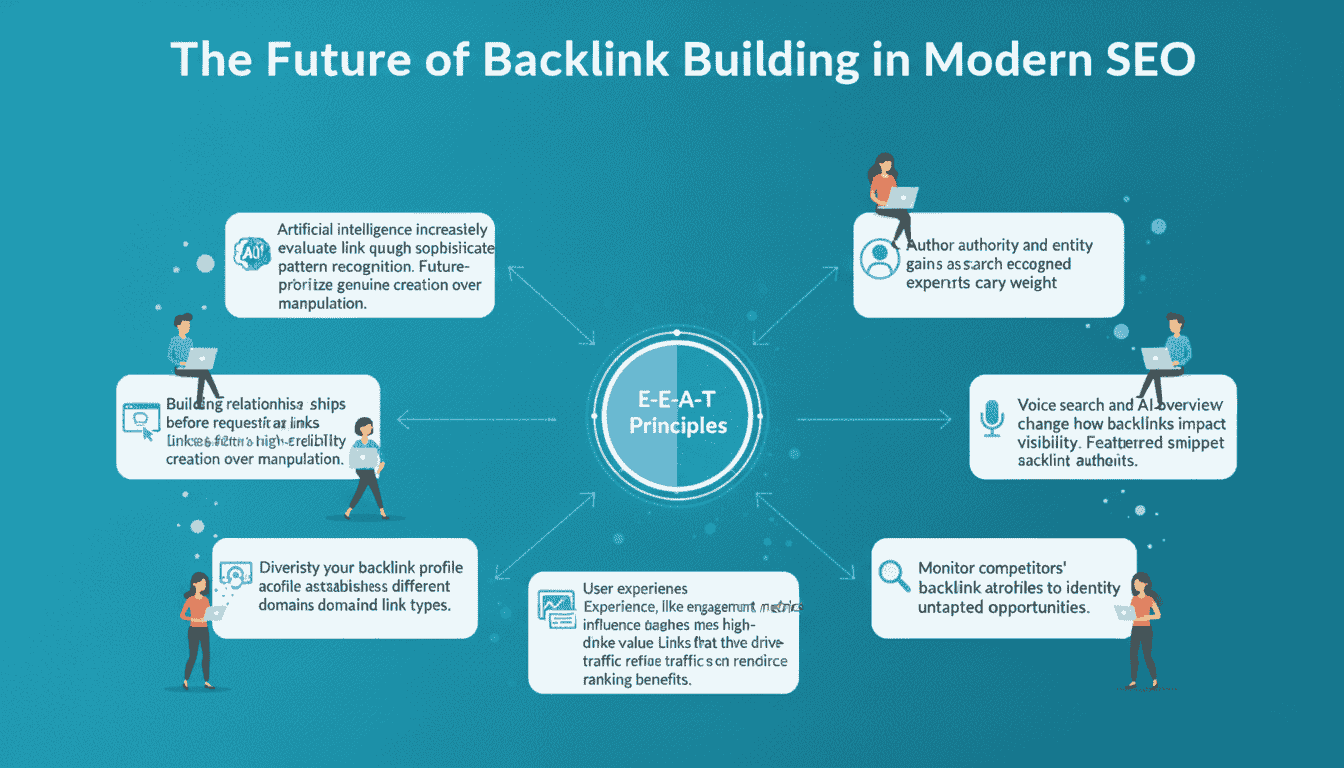
Artificial intelligence increasingly evaluates link quality through sophisticated pattern recognition. Google’s algorithms now assess user behavior signals, content depth, and entity relationships alongside traditional link metrics. Futureproof strategies prioritise genuine value creation over manipulation.
Author authority and entity associations gain importance as search evolves. Links from recognised experts and established brands carry additional weight. Building personal brand recognition enhances the effectiveness of every backlink earned.
User experience signals like engagement metrics influence how search engines value backlinks. Links that drive high quality traffic with strong engagement signals reinforce ranking benefits. This shift rewards backlinks from genuinely relevant sources over manufactured placements.
Voice search and AI overview features change how backlinks impact visibility. Featured snippet placements and knowledge panel appearances increasingly depend on backlink authority. Strategies must adapt to capture these emerging search result formats.
E E A T principles (Experience, Expertise, Authoritativeness, Trustworthiness) now explicitly guide quality evaluation. Backlinks from sources demonstrating these qualities provide maximum ranking impact. Building links through expertise demonstration rather than manipulation aligns with these standards.
Final Thoughts
Most businesses treat backlinks like a numbers game: chase any link, hope rankings improve, and wonder why traffic stays flat. At Drip Ranks we knew there had to be a better way. So we built a system, not a service.
Forensic audits uncover the high ROI linking opportunities that actually move the needle. Strategic, white hat link acquisition combines content creation, relationship building, and personalised outreach to authoritative sources. Scalable processes multiply results without increasing headcount or risk.
The difference? Your backlink strategy becomes predictable, repeatable, and revenue focused not a blind gamble with uncertain results. Contact Drip Ranks today for a custom link building plan that accelerates organic growth and strengthens your search authority.