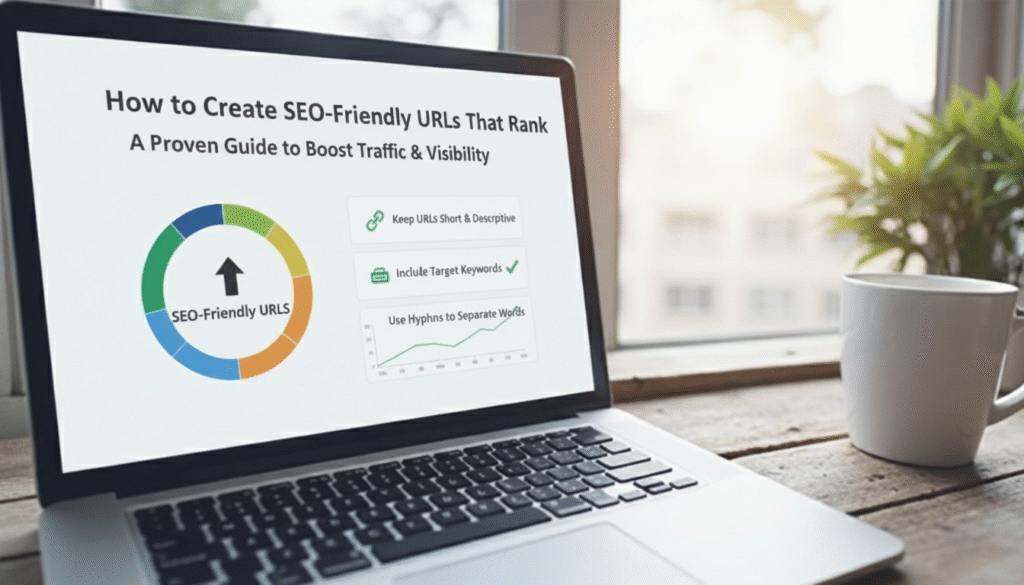

Many website owners overlook one of the most powerful ranking signals sitting right in their browser bar. URLs contribute directly to how search engines interpret page content and how users decide whether to click your link. Poor URL structure creates confusion for both algorithms and visitors, while optimised URLs deliver clarity that improves rankings and click through rates.
Google processes billions of searches daily, and each result includes a visible URL that influences user behavior. Research shows that descriptive URLs can increase click rates by up to 25% compared to generic parameter heavy alternatives. Modern search algorithms use URL patterns as contextual signals to understand page hierarchy and topical relevance across your entire domain.
This guide reveals the exact methods professional SEO specialists use to structure URLs for maximum performance. You’ll discover technical requirements, keyword placement strategies, and common errors that silently damage your search visibility. Whether you’re launching a new site or auditing an established domain, these principles will help you build URL architecture that supports long term organic growth.
What is URL Optimisation?
URL optimisation refers to the strategic process of structuring web addresses to improve search engine understanding and user experience. An optimised URL clearly communicates page content through descriptive words while maintaining technical standards that support crawling and indexing. This practice transforms generic strings of characters into meaningful pathways that guide both visitors and search bots through your site architecture.
Effective URL optimisation balances human readability with machine parseability. Search engines analyse URL components including protocol, domain, path segments, and parameters to establish content relationships and topical authority, which aligns with what is SEO. Users scan URLs in search results to verify destination relevance before clicking, making clarity a conversion factor as well as a ranking signal.
The optimisation process involves selecting appropriate keywords, removing unnecessary elements, and establishing consistent patterns across your domain. Unlike meta tags that remain hidden, URLs appear prominently in search results, browser bars, and social shares. This visibility makes them a critical touchpoint where technical SEO meets user psychology.
Why URL Optimisation Matters for Search Rankings
Optimised URLs directly influence how search algorithms classify and rank your content. Google’s crawlers parse URL structures to understand site hierarchy, identify content themes, and detect duplicate pages. Clean, descriptive URLs help search engines categorise pages correctly, which improves your chances of ranking for relevant queries and appearing in targeted search features.
User behavior metrics tied to URLs affect ranking performance over time. When searchers see clear, trustworthy URLs in results, they click more confidently and bounce less frequently. Higher engagement signals tell search engines your content satisfies user intent, creating a positive feedback loop that elevates rankings. Conversely, suspicious looking URLs with random parameters trigger avoidance and lower CTR.
URL structure impacts technical SEO factors that determine crawl efficiency and indexation success. Well organised URL hierarchies help search bots discover new content faster and allocate crawl budget effectively. Consistent patterns reduce duplicate content issues and consolidate ranking signals within proper canonical versions. These technical advantages compound over time, giving optimised sites sustained competitive benefits.
Core Elements of an Optimised URL Structure
Several fundamental components work together to create search friendly web addresses. The protocol (HTTPS) establishes security credentials that Google now treats as a ranking factor. Your domain name provides brand identity and topical context, while subdirectories organise content into logical categories that reflect site architecture.
The URL path contains individual segments separated by slashes, each representing a level in your content hierarchy. Optimised paths use lowercase letters, hyphens instead of underscores, and descriptive keywords that match page topics. Shorter paths generally perform better because they’re easier to remember, share, and display in search snippets without truncation.
Parameters and special characters should appear only when absolutely necessary for functionality. Query strings with session IDs, tracking codes, or dynamic filters create duplicate content problems and dilute ranking signals. Static URLs without parameters earn preference in both search algorithms and user psychology, projecting stability and authority.
How to Choose Keywords for URL Slugs
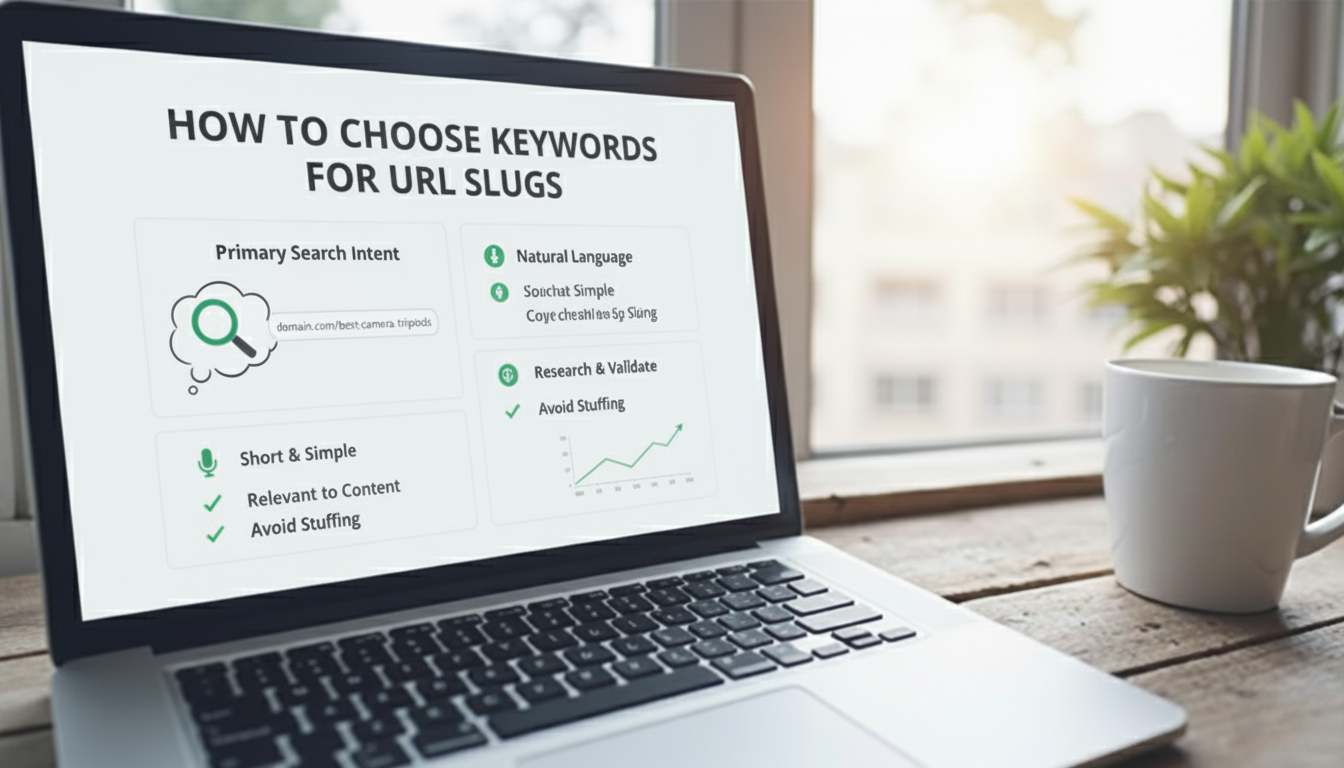
Keyword selection for URLs requires focusing on primary search intent rather than stuffing multiple terms. Identify the single most important keyword phrase that represents page content and user search behavior. This primary term should appear near the beginning of your URL path, ideally in the first or second segment after the domain.
Use natural language that matches how real people search and speak. Voice search optimisation benefits from conversational URL structures that mirror question formats and specific queries. Avoid keyword variations or synonyms within the same URL, as this creates redundancy and weakens topical focus.
Research actual search volume and competition before finalising URL keywords. Tools like Google Search Console reveal which terms users actually type to find content similar to yours. Select keywords with proven search demand rather than guessing at theoretical phrases. Aligning URLs with validated search behavior increases relevance signals and ranking potential.
Best Practices for URL Length and Format
Shorter URLs consistently outperform longer alternatives in both rankings and user engagement. Aim for 50-60 characters maximum to ensure full display in search results without truncation. Each additional word beyond necessity dilutes keyword strength and reduces memorability, making concise URLs a strategic advantage that contributes to SEO benefits.
Use hyphens to separate words rather than underscores or spaces. Search engines treat hyphens as word separators but interpret underscores as connectors, potentially reading “seo tips” correctly but “seo_tips” as a single term. This technical distinction affects how algorithms parse and credit keywords within your URL structure.
Maintain consistency in capitalisation by using all lowercase letters. Mixed case URLs can create duplicate content issues since servers may treat “SEO Guide” and “seo guide” as different pages. Lowercase standardisation prevents indexation problems and consolidates all ranking signals into a single canonical version.
.
Technical URL Structure Requirements
Proper URL architecture follows a hierarchical pattern that mirrors site organisation. Parent categories should appear before child pages in the path structure, creating a breadcrumb trail that search engines use to understand content relationships. This logical flow helps distribute authority from broad category pages down to specific articles.
Avoid using dates in URL paths unless you publish time sensitive news content. Evergreen articles perform better with dateless URLs that remain relevant indefinitely and avoid perceived staleness. Readers and search algorithms both prefer content that appears current rather than tied to outdated publication periods.
Implement canonical tags to manage duplicate content when URL variations exist. Parameters for sorting, filtering, or tracking often create multiple URLs pointing to identical content. Canonical tags tell search engines which version deserves ranking credit, preventing dilution across duplicate pages.
Common URL Optimisation Mistakes to Avoid
Dynamic parameter heavy URLs represent one of the most damaging errors in modern SEO. Strings like “page.php?id=123&session=xyz” provide zero context to users or search engines while creating infinite duplicate content possibilities. These database driven URLs sacrifice all optimisation benefits for programming convenience that harms ranking performance.
Changing established URLs without proper redirects destroys accumulated ranking equity. When you modify a URL that already ranks, implement 301 redirects from the old path to the new location. This technical step transfers ranking signals and prevents 404 errors that damage user experience and search visibility.
Using stop words and filler terms wastes valuable URL space on non descriptive elements. Words like “and,” “the,” or “of” add length without contributing keyword value or clarity. Streamlined URLs that eliminate unnecessary words communicate more efficiently while staying within optimal character limits.
URL Optimisation Tools and Resources
Several specialised SEO tools help analyse and improve URL structures across your domain. Screaming Frog SEO Spider crawls websites to identify problematic URLs including duplicates, broken links, and overly long paths. This desktop application provides bulk analysis that reveals patterns and issues invisible during manual review.
Google Search Console offers URL inspection tools that show exactly how Google sees and processes individual pages. This official resource displays indexation status, mobile usability, and structured data validation. Checking URLs through Search Console verifies they meet technical requirements before expecting ranking performance.
URL shortening services like Bitly provide tracking analytics for shared links while creating memorable alternatives to long addresses. These tools work well for social media and marketing campaigns but should never replace properly optimised URLs on your actual website. Use shorteners only for distribution channels that benefit from compact links.
How URL Structure Affects User Experience
Clear URLs build immediate trust by showing visitors exactly where they’re headed. When users hover over links or view them in search results, descriptive paths confirm destination relevance before the click happens. This transparency reduces bounce rates by aligning expectations with actual content, improving engagement metrics that influence rankings.
Memorable URLs facilitate direct navigation and word of mouth sharing. People can recall and type clean URLs like “agency.com/seo services” far more easily than “agency.com/p=789&cat=14.” This practical advantage turns URLs into verbal recommendations and branded references that drive type in traffic.
Accessible URL structures support users with disabilities who rely on screen readers. Assistive technologies read URLs aloud when navigating links, making descriptive paths essential for inclusive design. Optimised URLs serve accessibility requirements while simultaneously improving SEO performance through clearer semantic meaning.
Migrating and Updating Existing URLs Safely
Planning URL changes requires comprehensive mapping of old paths to new destinations. Create a spreadsheet documenting every URL that will change, along with its corresponding new location. This migration map guides 301 redirect implementation and serves as a reference for troubleshooting if issues arise after launch.
Implement 301 redirects at the server level rather than through meta refresh or JavaScript methods. Server side redirects pass the maximum amount of ranking equity to new URLs while providing the fastest user experience. Configure redirects in your .htaccess file, nginx configuration, or content management system settings.
Monitor search performance closely for 3,6 months following URL changes. Track rankings, organic traffic, and indexation status through Google Search Console and analytics platforms. Expect temporary fluctuations as search engines discover redirects and transfer signals, but watch for problems requiring additional technical intervention.
Mobile URL Considerations for 2025
Responsive design eliminates the need for separate mobile URLs, consolidating ranking signals into single pages. Avoid m dot subdomains or dynamic serving that create URL variations for different devices. Modern SEO best practices favor responsive layouts that serve identical URLs regardless of screen size.
Mobile first indexing means Google primarily uses the mobile version of URLs for ranking evaluation. Ensure all URLs load quickly on mobile connections and display properly on small screens. Page speed and mobile usability directly affect how URLs perform in search results for the majority of queries.
Accelerated Mobile Pages (AMP) create alternate URL versions that require careful canonical implementation. If using AMP, properly configure canonical tags so the standard URL receives ranking credit while AMP versions provide speed benefits. Misconfigured AMP canonicals cause indexation confusion that damages search visibility.
URL Optimisation for E-commerce Sites
Product URLs should include descriptive names rather than SKU numbers or database identifiers. A URL like “store.com/blue wireless headphones” communicates more value than “store.com/product/45782.” Descriptive product URLs improve rankings for long tail searches and increase click confidence in shopping results.
Category hierarchies in e commerce URLs should reflect logical browsing paths customers actually use. Place broad categories before specific subcategories, like “store.com/electronics/headphones” rather than flat structures. This organisation helps search engines understand product relationships and supports internal linking strategies.
Avoid session IDs and tracking parameters in public facing product URLs. These dynamic elements create duplicate content and prevent proper social sharing since each visitor sees unique URLs. Use cookie based tracking instead of URL parameters to maintain clean, shareable product addresses.

International and Multilingual URL Strategies
Subdirectories provide the most SEO friendly structure for international content targeting. Using paths like “site.com/en/” and “site.com/es/” keeps all language versions on one domain, consolidating authority. This approach simplifies management compared to country specific domains or subdomains that fragment ranking signals.
Implement hreflang tags to specify language and regional targeting for different URL versions. These technical signals tell search engines which URL variant to serve users based on location and language preferences. Proper hreflang implementation prevents duplicate content issues across international pages.
Translate URL slugs into target languages when appropriate for user experience. A Spanish page about SEO services benefits from “site.com/es/servicios seo” rather than “site.com/es/seo services.” Localised URLs improve relevance for regional searches while maintaining clear site structure.
Tracking URL Performance and Making Improvements
Monitor individual URL rankings through position tracking tools that show keyword performance over time. Platforms like SEMrush, Ahrefs, and Google Search Console report which URLs rank for which terms. This data reveals optimisation opportunities and validates whether URL changes improve visibility.
Analyse click through rates for different URL patterns in your search appearance. Compare CTR between URLs with different length, keyword placement, or structure formats. This empirical testing identifies which URL characteristics drive more clicks within your specific industry and audience.
Conduct periodic URL audits to identify emerging problems as sites evolve. Check for broken links, redirect chains, and newly created parameter URLs that bypass optimisation standards. Quarterly reviews maintain URL quality and catch issues before they significantly impact search performance.
Final Words: Transform Your SEO with Strategic URL Optimisation
Most SaaS, B2B, and agency teams treat URLs like an afterthought: publish pages, hope the structure doesn’t hurt rankings, and wonder why results aren’t consistent. At Drip Ranks, we knew there had to be a better way. So we built a system, not a service.
Forensic audits uncover your highest ROI opportunities, showing exactly where URL optimisation can improve sitewide authority, user experience, and technical efficiency. Intent-mapped strategies ensure every page’s structure supports search visibility at every stage of the buyer journey, while scalable implementation multiplies results without adding headcount. The difference? Your SEO becomes measurable, repeatable, and revenue-focused, not a black box that relies on guesswork.
Drip Ranks specialises in advanced URL optimisation as part of comprehensive SEO strategies. Our team conducts in-depth audits, implements best-practice structures, and monitors performance to ensure your URLs deliver maximum value for organic growth and establish dominant search presence. Contact us today to see how professional URL optimisation can accelerate your results.