
Google no longer relies on exact match keywords to determine what your page deserves to rank for. Modern search algorithms prioritise understanding the meaning behind queries, the relationships between concepts, and the context surrounding every piece of content. This shift represents the core principle of semantic SEO, a strategy that helps your website align with how search engines actually interpret information.
If your content still focuses solely on keyword density and repetition, you’re already falling behind competitors who embrace topic modeling and entity based optimisation. Search engines like Google use natural language processing and machine learning to connect ideas, recognise synonyms, and reward content that demonstrates comprehensive topical authority. Semantic SEO bridges the gap between what users search for and what they truly need.
At Drip Ranks we’ve helped countless businesses transform their content strategies by implementing semantic SEO frameworks that increase visibility, traffic, and conversions. This guide walks you through everything you need to know about semantic search optimisation, from foundational concepts to advanced implementation tactics that deliver measurable results in 2026.
You’ll discover how search engines interpret meaning, why traditional keyword stuffing fails, and which proven strategies help you build topical authority that ranks. Whether you’re optimising existing content or planning new pages, these insights will help you create content that satisfies both users and algorithms.
What Is Semantic SEO
Semantic SEO refers to the practice of creating content that aligns with the way search engines understand meaning, context, and relationships between topics. To understand Semantic SEO, it’s essential to know What is Seo — the process of optimising web content to improve visibility and rankings in search results. Instead of focusing exclusively on individual keywords, this approach considers the broader subject matter, related concepts, and user intent behind every search query. Search engines use semantic analysis to deliver more accurate results that match what users actually want.
This methodology emerged as Google and other search engines developed more sophisticated natural language processing capabilities. Algorithms like RankBrain, BERT, and MUM analyse the context surrounding words to understand nuance, synonyms, and conceptual connections. Semantic SEO strategies help your content align with these advanced ranking systems by demonstrating comprehensive topical coverage.
Traditional keyword based SEO treats search terms as isolated signals, while semantic SEO recognises that topics exist within interconnected networks of meaning. For example, a page about “running shoes” might naturally discuss gait analysis, pronation types, cushioning technologies, and training schedules. These related concepts signal to search engines that your content provides thorough, authoritative information on the broader topic.
Why Semantic SEO Matters for Modern Search Rankings
Search engines prioritise content that demonstrates deep understanding of topics rather than shallow keyword targeting. When your pages cover related subtopics, answer common questions, and use natural language variations, they signal expertise that algorithms reward with higher rankings. Semantic optimisation helps you capture traffic from longer queries and conversational searches that exact match targeting would miss.
User behavior has shifted toward more conversational, question based queries thanks to voice search and mobile usage. People ask complete questions like “what type of running shoes prevent shin splints” rather than typing “running shoes shin splints.” Semantic SEO ensures your content matches these natural language patterns, making it more likely to appear in featured snippets and voice search results.
Google’s algorithm updates consistently move toward understanding entities and relationships rather than just keywords. The Knowledge Graph, entity recognition systems, and context aware ranking factors all depend on semantic signals. Pages that ignore these factors struggle to compete with content that demonstrates comprehensive topical authority through semantic optimisation techniques.
How Search Engines Use Semantic Analysis
Modern search algorithms use natural language processing to break down content into entities, concepts, and relationships. Entities represent specific people, places, things, or ideas that search engines can identify and connect to broader knowledge bases. When your content clearly defines and connects relevant entities, algorithms can better understand what your page covers and when to show it.
Search engines analyse co occurrence patterns to understand which concepts naturally relate to each other. If pages about “coffee brewing” frequently mention terms like “grind sise,” “water temperature,” and “extraction time,” the algorithm learns these concepts connect. Your content gains semantic relevance by including these naturally related terms without forced keyword repetition.
Context windows help search engines determine meaning based on surrounding words and phrases. The word “apple” could refer to fruit or technology depending on nearby terms like “orchard” or “iPhone.” Semantic SEO requires writing clearly to help algorithms correctly interpret your meaning through proper context signals.
Building Topical Authority Through Semantic Content
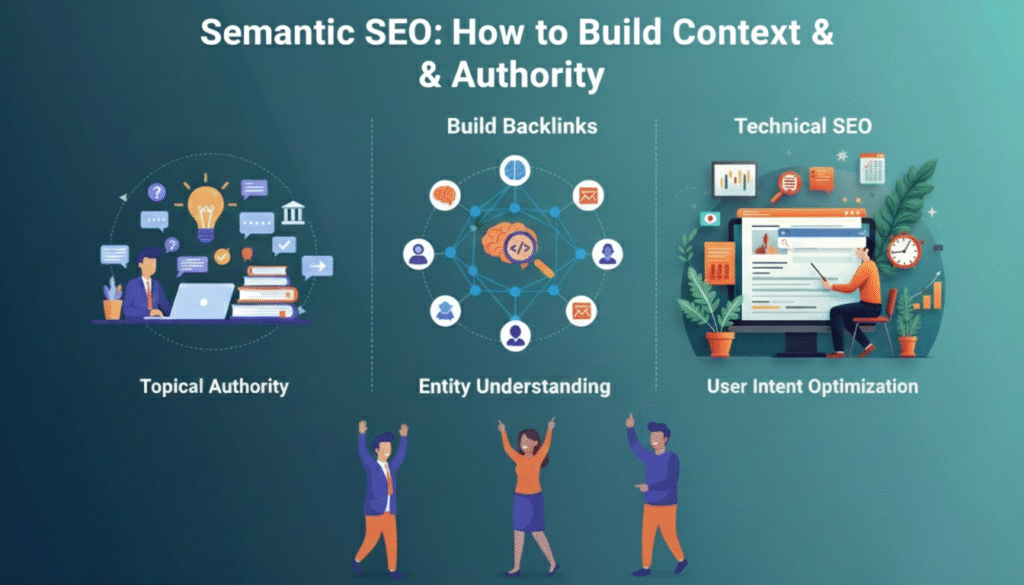
Topical authority develops when your website consistently publishes comprehensive content across related subjects within a specific niche. Rather than creating isolated pages for individual keywords, semantic SEO involves building content clusters that cover all aspects of broader topics. This structure signals to search engines that your site serves as a reliable resource.
Start by identifying pillar topics that represent core subjects your audience cares about. Create comprehensive pillar pages that provide broad overviews of these topics, then develop supporting content that explores specific subtopics in depth. Link these cluster pages back to the pillar content to reinforce topical relationships and help search engines understand your site’s expertise.
Content mapping tools help you identify gaps in your topical coverage and opportunities to strengthen semantic connections. Analyse competitor content to discover which related concepts they address that you’ve missed. Cover these subtopics to build more comprehensive topical authority that outranks competitors.
Optimising for Entity Recognition and Knowledge Graphs
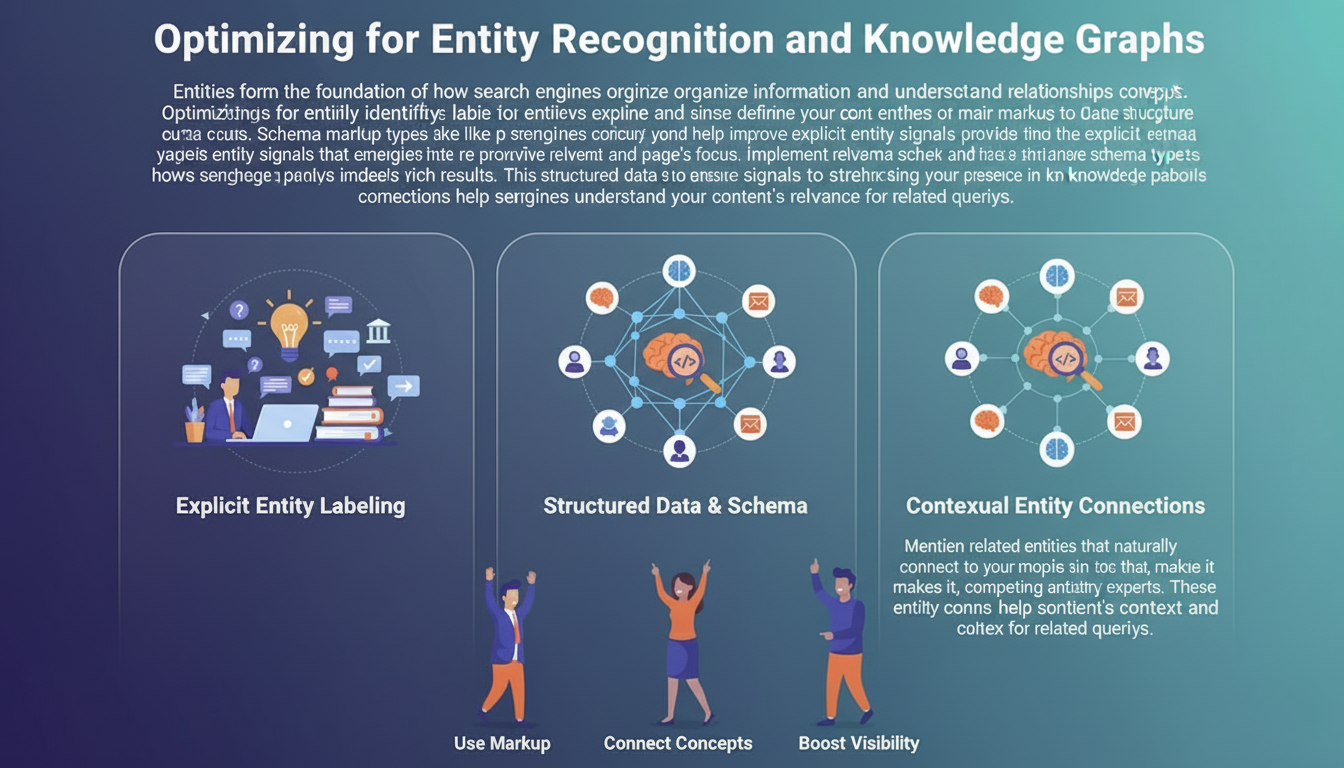
Entities form the foundation of how search engines organise information and understand relationships between concepts. Optimising for entity recognition involves clearly identifying and defining the main subjects your content covers. Use schema markup to explicitly label entities and help search engines correctly interpret your page’s focus.
Schema markup types like Organisation, Person, Product, and Article provide explicit entity signals that improve how search engines index your content. Implement relevant schema types to enhance your presence in knowledge panels and rich results. This structured data helps search engines connect your content to broader knowledge graphs.
Mention related entities that naturally connect to your main topic to strengthen semantic signals. If you’re writing about a specific software tool, mention the company that makes it, competing products, use cases, and industry experts. These entity connections help search engines understand context and increase your content’s relevance for related queries.
Creating Content That Answers User Intent
User intent classification divides searches into informational, navigational, transactional, and commercial investigation categories. Semantic SEO requires matching your content format and depth to the specific intent behind target queries. Informational searches need comprehensive guides, while transactional queries require clear product information and conversion paths.
Analyse search engine results pages to understand what type of content Google believes satisfies specific queries. If featured snippets and how to articles dominate results, users want educational content. If product pages and comparison charts appear, searchers are closer to making purchase decisions. Align your content format with these intent signals.
Address multiple intent layers within single pieces of content when appropriate. Someone searching “email marketing software” might want to understand what it is, compare options, and see pricing. Comprehensive semantic content covers these different intent levels to capture traffic across the decision journey.
Using LSI Keywords and Semantic Variations
Latent Semantic Indexing keywords represent terms and phrases that commonly appear together in content about specific topics. Rather than repeating exact match keywords, semantic SEO incorporates natural variations and related terms that demonstrate comprehensive topical coverage. This approach satisfies algorithms trained to recognise authentic expertise versus keyword manipulation.
Identify LSI keywords by analysing top ranking content for your target topics and noting commonly used related terms. Tools like Google’s “related searches” and “People Also Ask” boxes reveal semantic variations that users actually search for. Include these naturally throughout your content without forced repetition.
Synonyms and contextual variations improve content readability while strengthening semantic signals. Instead of repeating “Semantic SEO” twenty times, use variations like “semantic search optimisation,” “meaning based SEO,” and “context driven search strategies.” This natural language pattern matches how real experts write about topics.
Advanced Semantic SEO Strategies for 2026
Topic modeling tools use machine learning to identify semantic relationships between concepts across large content sets. These platforms analyse your existing content to reveal gaps in topical coverage and suggest related concepts to address. Implementing topic model recommendations helps you build more comprehensive semantic coverage than competitors, which ultimately improves your overall SEO performance and ranking potential.
Natural language generation tools now assist with creating semantically rich content outlines based on top ranking pages and user questions. These AI powered platforms identify which subtopics and questions your content should address to maximise semantic relevance, leading to better SEO visibility and enhanced user engagement. Use these insights to guide content creation while maintaining authentic expertise and unique value.
Voice search optimisation requires semantic SEO strategies that match conversational query patterns. Structure content to directly answer specific questions using natural language that matches how people speak. Featured snippet optimisation and FAQ schema markup increase your chances of appearing in voice search results, further boosting SEO Benefits through higher visibility in search results.
Common Semantic SEO Mistakes to Avoid
Keyword stuffing remains a persistent mistake that directly contradicts semantic SEO principles. Repeating exact match terms damages readability and triggers algorithm filters designed to detect manipulation. Focus on comprehensive topical coverage with natural language instead of forcing keyword repetition.
Ignoring related subtopics creates semantic gaps that weaken your content’s authority signals. Pages that narrowly focus on single keywords without addressing related concepts appear thin to algorithms trained on comprehensive content patterns. Cover related aspects of topics to demonstrate true expertise.
Failing to update content as topics evolve leaves your pages semantically outdated. Search engines favor fresh content that reflects current understanding of topics. Regular content audits and updates ensure your semantic signals remain relevant and accurate.
Tools and Resources for Semantic Optimisation
Semantic analysis platforms like MarketMuse, Clearscope, and other SEO Tools analyse top ranking content to identify which topics and terms your pages should include. These tools provide content briefs that guide semantic optimisation based on competitive analysis. They help you match or exceed the topical depth of currently ranking pages and improve overall url optimisation.
Natural language processing APIs from Google and other providers let you analyse how algorithms interpret your content’s entities and sentiment. Testing your content through these tools reveals whether search engines correctly understand your intended meaning and topical focus. Adjust content based on these semantic analysis results.
Topic research tools like AnswerThePublic, AlsoAsked, and similar SEO Tools reveal the questions and related searches people actually use. These platforms help you identify semantic variations and related concepts to address in your content. Build content outlines that answer these related queries to maximise semantic relevance.
.
Measuring Semantic SEO Performance
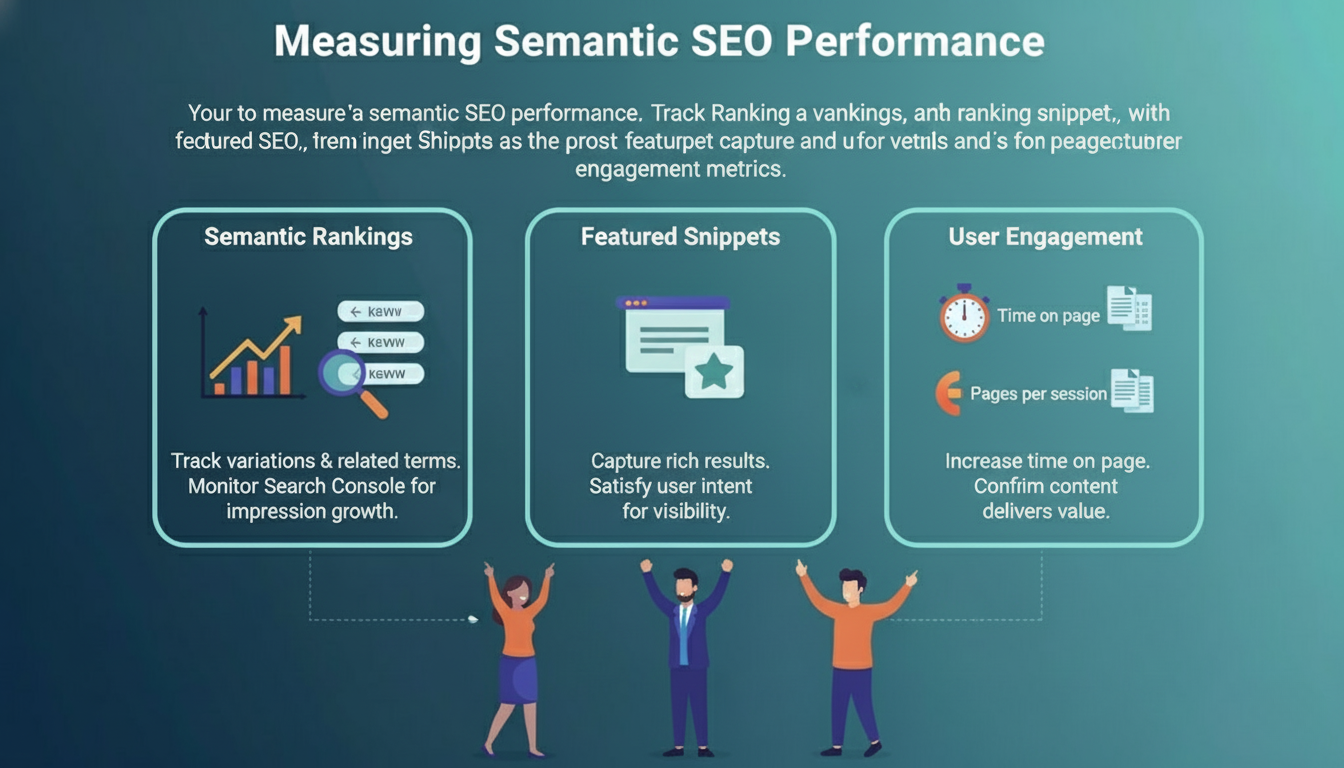
Track rankings for semantic variations and related terms, not just primary keywords. Semantic SEO success shows up as increased visibility for topic related queries you didn’t explicitly target. Monitor Google Search Console for impression growth across related search terms that indicate improved topical authority.
Featured snippet capture rates indicate how well your content satisfies semantic search intent. Pages that earn featured snippets demonstrate semantic alignment with user questions and search engine understanding. Track which queries trigger featured snippets from your content to identify semantic optimisation successes.
Engagement metrics like time on page and pages per session reveal whether your semantically optimised content actually satisfies users. High engagement rates confirm that your semantic approach delivers value, while quick exits suggest misalignment between content and user intent despite semantic optimisation efforts.
Future of Semantic Search and AI Understanding
Multimodal search systems that analyse images, video, and text together require semantic optimisation across content types. Future semantic SEO will involve ensuring visual content connects semantically to surrounding text through descriptive captions, alt text, and proper image optimisation. These signals help algorithms understand how different content types relate.
Large language models continue improving search engines’ ability to understand nuance, context, and complex relationships. As these systems become more sophisticated, semantic SEO will increasingly reward content that demonstrates genuine expertise through comprehensive, accurate topical coverage. Surface level optimisation tactics will become less effective.
Personalised search results based on user context and history make semantic relevance even more critical. Search engines will prioritise content that semantically matches not just query terms, but also user intent signals derived from search history and behavior patterns. Building comprehensive topical authority positions your content to appear across these personalised result sets.
Final Thoughts
Most teams still approach SEO as a keyword exercise: publish content, chase rankings, and hope traffic turns into results. At DripRanks, we take a different approach. We don’t treat semantic SEO as a tactic we build it into a scalable system.
Forensic audits reveal how search engines interpret meaning, context, and entity relationships within your niche. Topical authority frameworks replace isolated keywords with intent mapped content that satisfies users at every stage of the journey. The outcome? Higher rankings, richer SERP features, and visibility that compounds across entire topic clusters.
DripRanks specialises in system level semantic SEO that transforms content into a predictable growth engine. Our frameworks turn relevance into authority and authority into conversions making SEO measurable, repeatable, and revenue focused. Contact us to discover how semantic optimisation can help you dominate your niche.
Internal Linking Opportunities
1. Anchor text: “topical authority” → Link to: pillar content strategy guide (place in “Building Topical Authority” section)
2. Anchor text: “featured snippets” → Link to: featured snippet optimisation guide (place in “Creating Content That Answers User Intent” section)
3. Anchor text: “schema markup” → Link to: structured data implementation guide (place in “Optimising for Entity Recognition” section)
4. Anchor text: “content clusters” → Link to: content cluster strategy article (place in “Building Topical Authority” section)
5. Anchor text: “voice search optimisation” → Link to: voice search SEO guide (place in “Advanced Semantic SEO Strategies” section)