
Are you struggling to stand out on search engine results pages even when you rank on page one? Studies show that featured snippets capture over 35% of all clicks on desktop searches, stealing traffic from traditional first position results. Google now displays these answer boxes for nearly 19% of all queries, making them a critical battleground for visibility and authority.
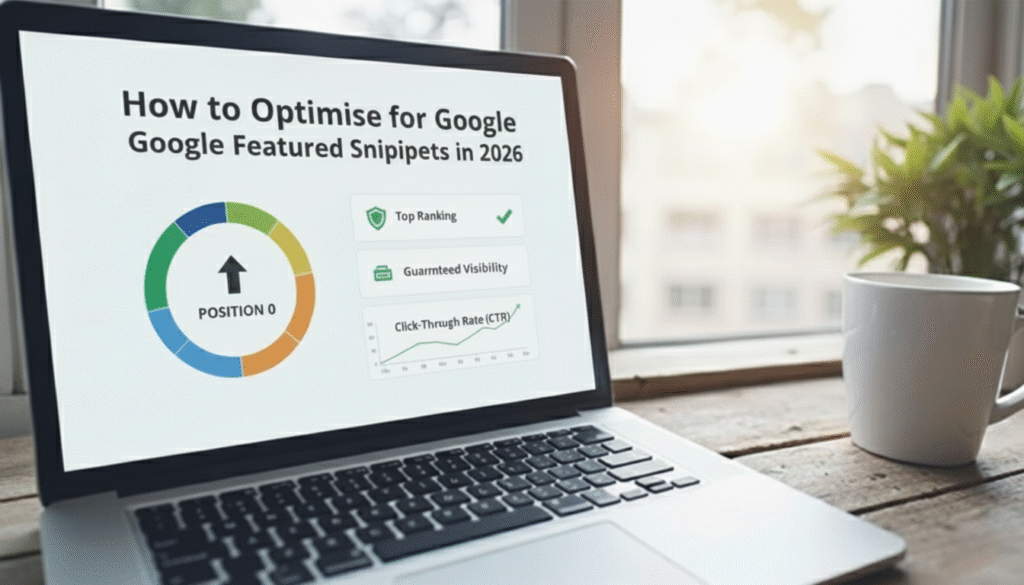
Featured snippets represent the fastest path to dominating search visibility without waiting months for traditional ranking improvements. They appear above organic results in what many SEO professionals call Position 0, giving your brand instant credibility and massive exposure. When users search for quick answers, how to guides, or definitions, your content can become the authoritative source Google trusts most.
This guide reveals exactly how to optimise your content for featured snippets, which formats perform best, and what technical signals Google uses to select winners. You will learn the precise content structures that trigger snippet selection, common formatting mistakes that disqualify otherwise strong content, and advanced tactics used by top ranking websites to maintain their Position 0 status across hundreds of keywords.
Whether you manage a local business website or run content strategy for an enterprise brand, mastering featured snippets will transform your organic traffic results faster than any other SEO tactic available today.
What Are Featured Snippets and Why Do They Matter
Featured snippets are selected search results that appear inside a special box above traditional organic listings on Google. They provide direct answers to user queries, including questions like what is SEO, without requiring a click, displaying content extracted from third party websites. Google algorithmically selects these snippets based on relevance, formatting, url optimisation, and perceived authority for specific question based searches.
These answer boxes typically include a short text excerpt, the page title, and the URL of the source website. Unlike paid ads or knowledge panels, featured snippets pull content from standard organic results, usually from pages ranking in positions one through five. Winning a featured snippet can increase your click through rate by 20 to 30 percent compared to ranking in traditional position one without the snippet.
The strategic value extends beyond immediate traffic gains. Featured snippets position your brand as the definitive expert on specific topics, building trust before users even visit your site. They dominate mobile search results where screen space is limited, and they feed voice search responses on devices like Google Home and Siri, multiplying your content’s reach across multiple platforms simultaneously.
Types of Featured Snippets You Need to Target
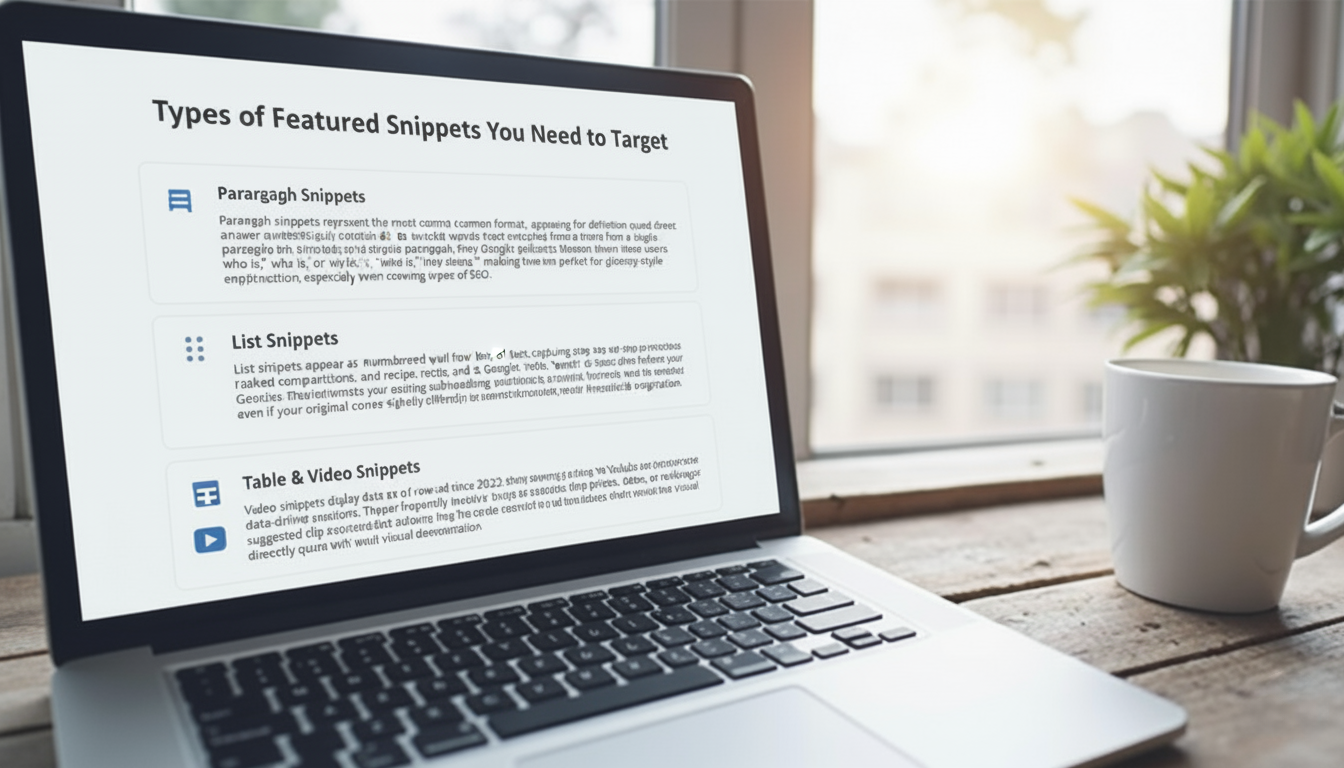
Paragraph snippets represent the most common format, appearing for definition queries and direct answer questions. They typically contain 40 to 60 words of text extracted from a single paragraph, providing concise explanations. Google selects these when users search phrases like “what is,” “who is,” or “why does,” making them perfect for glossary style content and conceptual explanations, especially when covering types of SEO.
List snippets appear as numbered or bulleted lists, capturing step by step processes and ranked comparisons. These perform exceptionally well for how to queries, recipe instructions, and “best of” searches. Google often reformats your existing subheadings or list items into snippet format, even if your original content uses slightly different structure, rewarding clear hierarchical organisation.
Table snippets display data in rows and columns, answering comparison queries and data driven questions. They appear frequently for searches involving prices, specifications, dates, or rankings across multiple items. Video snippets have grown rapidly since 2023, showing a suggested clip from YouTube or embedded video content that directly addresses the search query with visual demonstration.
How Google Selects Featured Snippet Winners
Google’s algorithm prioritises content that directly answers the specific question in the search query using clear, concise language. Pages must already rank on the first search results page, typically within the top five positions, to qualify for snippet selection. The algorithm analyses semantic relevance, content structure, and user engagement signals to determine which result provides the most accurate and useful answer.
Content formatting plays a decisive role in selection. Google favors well structured HTML with proper heading structure, heading tags, clean paragraph breaks, and logical information hierarchy. Pages using descriptive H2 and H3 tags that mirror common question patterns significantly outperform those with generic headings or poor semantic markup, even when both contain similar information.
Page authority and trustworthiness influence snippet selection more than traditional ranking factors. Google cross references information against established knowledge bases and evaluates site wide expertise signals like author credentials, editorial standards, and topical authority. Sites demonstrating consistent accuracy across multiple queries earn preferential treatment for snippet consideration, creating a compounding advantage over time for quality publishers.
User behavior metrics provide real time feedback on snippet quality. When users frequently click through to read more or spend significant time on the page after clicking, Google interprets this as confirmation of snippet value. Conversely, immediate back to search results behavior triggers algorithmic reassessment, potentially causing snippet loss even for previously stable rankings.
Proven Strategies to Optimise Content for Featured Snippets
Start by identifying question based keywords your target audience actively searches. Use tools like AnswerThePublic, Google’s People Also Ask section, and keyword research platforms to discover queries with existing snippet results. Target keywords where competitors currently hold snippets, as these represent proven opportunities with established search volume and clear user intent.
Structure your content to answer the target question within the first 100 words of a relevant section. Create dedicated H2 or H3 headings that exactly match or closely mirror the question phrasing users type into search. Follow immediately with a concise 40 to 60 word paragraph that provides a complete, standalone answer without requiring additional context from surrounding content.
Format information using HTML elements Google recognises and rewards. Use numbered OL tags for sequential steps, bulleted UL tags for non sequential lists, and proper table markup for comparative data. Avoid using CSS styling that creates visual lists from paragraph text, as Google’s algorithm parses actual HTML structure rather than visual presentation when extracting snippet content.
Include specific data points, statistics, and concrete examples within your answers. Generic advice rarely wins snippets against competitors providing actionable details and measurable outcomes. For instance, instead of writing “email marketing delivers good ROI,” specify “email marketing generates an average return of $42 for every dollar spent according to DMA research.”
Optimise for both the featured snippet and the subsequent click. While snippets provide immediate answers, compelling preview text encourages users to visit your page for deeper information. Include a clear value proposition or intriguing detail that creates curiosity gaps, prompting click throughs from users who want comprehensive understanding beyond the snippet answer.
Create comparison tables for product related and specification queries. Structure tables with clear column headers describing attributes being compared and row headers naming specific items. Keep tables concise with five to eight rows maximum, focusing on the most relevant comparison points users care about when making decisions.
Common Mistakes That Prevent Snippet Success
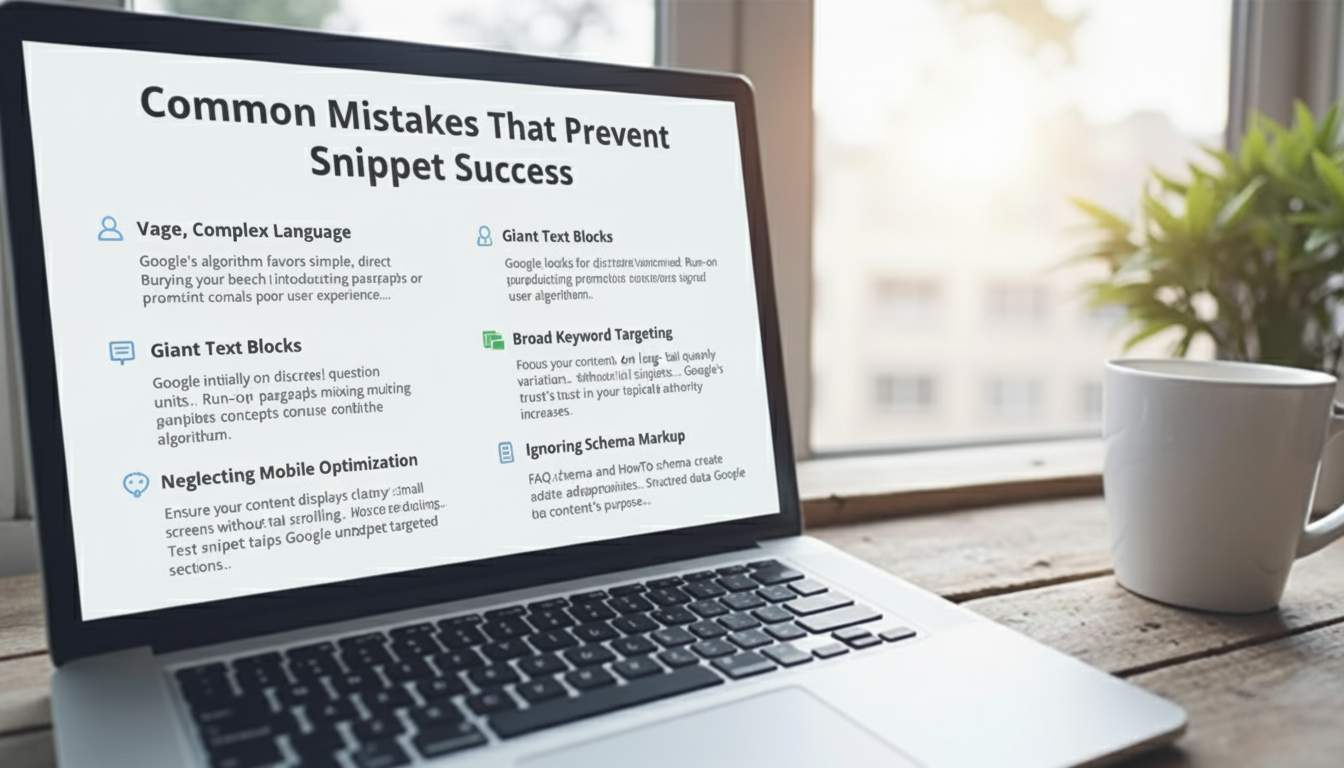
Using vague or overly complex language kills snippet potential faster than any other content error. Google’s algorithm favors simple, direct answers written at eighth grade reading level that immediately address the core question. Burying your answer beneath introductory paragraphs or surrounding it with promotional content signals poor user experience and disqualifies otherwise strong content from consideration.
Formatting answers as giant text blocks without clear paragraph breaks confuses Google’s content extraction algorithms. The algorithm looks for discrete, self contained units of information that can be pulled cleanly into snippet format. Run on paragraphs mixing multiple concepts force the algorithm to guess which portion best answers the query, usually resulting in snippet loss to better structured competitors.
Targeting extremely broad, competitive keywords without building topical authority first wastes resources and delivers poor results. Focus initially on long tail question variations where competition is lower and your content can demonstrate expertise. As you accumulate snippets for related queries, Google’s trust in your topical authority increases, making broader keyword targets progressively more achievable.
Neglecting mobile optimisation undermines snippet performance since Google uses mobile first indexing for ranking decisions. Ensure your content displays cleanly on small screens without horisontal scrolling, excessive whitespace, or formatting breaks. Test snippet targeted sections specifically on mobile devices to confirm readability and proper HTML rendering across different viewport sizes.
Ignoring schema markup represents a missed opportunity to provide explicit content structure signals. While not directly required for snippet selection, FAQ schema and HowTo schema create additional snippet opportunities and reinforce content organisation. Structured data helps Google understand your content’s purpose and relationship between different information elements, improving overall snippet eligibility.
Failing to monitor and defend existing snippets leads to gradual traffic loss. Snippet rankings are dynamic, with competitors constantly optimising to steal Position 0. Set up rank tracking specifically for snippet keywords, monitoring weekly for position changes. When you lose a snippet, immediately analyse the new winner’s content structure and answer format to identify improvement opportunities.
Advanced Tactics for Dominating Multiple Snippets
Build comprehensive topic clusters that target related question variations around core subjects through strategic keyword placement. Create a detailed pillar page covering broad topic fundamentals, then develop supporting pages answering specific sub questions with detailed expertise. Internal linking between these pages signals topical authority, increasing snippet win probability across the entire cluster simultaneously rather than for isolated keywords.
Analyse competitor snippets to identify content gaps and improvement opportunities. When a competitor holds a snippet you want, study exactly how they formatted their answer, what specific details they included, and how concise they made their response. Create superior content that provides more accurate information, better formatting, or additional context that makes your answer more valuable.
Leverage user generated content and real questions from customer interactions. Sales teams, support tickets, and social media conversations reveal exactly how your audience phrases questions and what specific details they need. Transform these authentic queries into H2 headings and optimise answers based on real user language patterns rather than keyword research tool suggestions alone.
Test different answer formats for the same query to discover what Google prefers. Create both paragraph and list versions of your answer in different sections, monitoring which format Google selects for snippet display. This experimental approach reveals format preferences for specific query types, informing your optimisation strategy across similar keywords.
Essential Tools and Resources for Snippet Optimisation
SEMrush and Ahrefs both offer dedicated featured snippet tracking tools that identify keywords where you rank on page one without holding the snippet. These represent your highest probability opportunities, requiring minimal additional optimisation to capture Position 0. Filter reports by search volume and ranking position to prioritise keywords offering maximum traffic potential with lowest optimisation effort, especially when evaluating seo tools.
Google Search Console provides invaluable data about which queries already trigger your pages in results and how users engage with your content. Analyse the Performance report to identify high impression, low click queries where adding a featured snippet could dramatically improve click through rates. This first party data source reveals actual user behavior rather than estimated metrics from third party tools.
AnswerThePublic visualises question based searches around any keyword, revealing exactly how users phrase queries across different question types. Use this tool to discover “what,” “why,” “how,” “when,” and “where” questions you should address with dedicated optimised sections. The visual question maps help identify content gaps in your existing coverage and prioritise new content creation.
Measuring Featured Snippet Performance and ROI
Track click through rate changes specifically for keywords where you win snippets compared to traditional rankings. Use Google Search Console to compare CTR before and after snippet acquisition, documenting the traffic lift attributable directly to Position 0. Most websites see 20 to 35 percent CTR increases, though results vary by query intent and snippet format.
Monitor brand awareness metrics alongside direct traffic improvements. Featured snippets build authority and recognition even when users don’t click immediately, creating delayed conversion value. Survey customers about how they discovered your brand, tracking increases in unprompted brand recall and direct navigation traffic that correlates with expanded snippet presence.
Calculate the ranking equivalent value of each snippet. A Position 0 snippet from a page ranking in position three or four delivers traffic comparable to traditional position one without the snippet. Quantify this ranking acceleration benefit by comparing estimated traffic from your actual position versus traffic received with the snippet, revealing the competitive advantage gained.
Assess snippet stability over time to identify vulnerable positions requiring defensive optimisation. Snippets lost within 30 days indicate weak content differentiation or superior competitor answers. Snippets held for six months or longer signal strong topical authority and content quality, justifying reduced monitoring frequency for those stable positions while focusing resources on vulnerable or new snippet targets.
Featured snippets represent the single fastest method to increase organic visibility and establish topical authority in 2025‘s competitive search landscape. By targeting question based keywords, formatting content for algorithmic selection, and continuously monitoring performance, you can capture Position 0 rankings that deliver outsized traffic returns relative to optimisation effort invested.
Success requires consistent application of proven tactics rather than one time optimisation efforts. Build topical authority through comprehensive content clusters, refine answers based on performance data, and defend existing snippets against competitive threats. The compound effect of multiple snippet wins creates sustainable competitive advantages that grow stronger over time as Google recognises your site wide expertise.
Most SaaS, B2B, and agency teams treat featured snippets like luck: create content, hope it appears, and wonder why traffic isn’t predictable. At Drip Ranks, we knew there had to be a better way. So we built a system, not a service.
Forensic audits uncover your highest ROI opportunities for snippet capture, and intent-mapped optimisation ensures content targets demand at every stage of the buyer journey. Scalable execution multiplies results without increasing headcount. The difference? Your SEO becomes measurable, repeatable, and revenue-focused, not a black box that relies on guesswork.
Drip Ranks specialises in advanced snippet optimisation strategies that turn search visibility into measurable business growth. Contact us today for a custom audit and a systematic roadmap to capture Position 0 opportunities and drive predictable organic traffic.