


Did you know that 75% of users never scroll past the first page of search results? Where you place keywords determines whether your content climbs to the top or disappears into obscurity. Most website owners make one critical mistake with keyword placement. They either stuff keywords everywhere or hide them where search engines can’t find them.
Modern search algorithms have become incredibly sophisticated at understanding content context and user intent. Google’s RankBrain and BERT updates changed how search engines process keyword signals. They now evaluate semantic relationships and content quality beyond simple keyword matching.
Getting keyword placement right can boost your organic traffic by 200% within six months. Poor placement means your content struggles to rank regardless of quality. This guide reveals exactly where to position keywords for maximum SEO impact.
At Drip Ranks, we’ve helped hundreds of businesses transform their keyword strategy from guesswork to science. Our data driven approach focuses on strategic placement that signals relevance without triggering spam filters. You’ll learn proven techniques that work across different content types and search intents.
What is Keyword Placement
Keyword placement refers to the strategic positioning of target search terms throughout your content and website structure. This technique involves placing keywords in specific locations where search engines expect to find them. Proper placement helps algorithms understand your content’s topic and relevance to user queries.
The practice goes beyond simply inserting words into random sentences. Search engines analyse keyword proximity to related terms and contextual signals. They evaluate whether keywords appear in high priority areas like titles, headers, and opening paragraphs.
Modern keyword placement balances optimisation with natural language flow. You need to satisfy both algorithmic requirements and human readability standards. Content that reads naturally while hitting key placement points performs best in today’s search environment.
Why Keyword Placement Matters for SEO Performance
Strategic keyword placement directly impacts how search engines index and rank your content. When you position keywords in critical locations, you send strong topical signals to crawlers. These signals help search engines quickly identify what your page is about and who should see it. This becomes even more important when discussing what is SEO, because keyword placement directly shapes how search engines interpret your content.
Research shows that pages with keywords in the title tag rank 15% higher on average. The location matters more than simple keyword frequency or density. Search algorithms assign different weight values to various page elements based on historical ranking factors.
Poor placement forces search engines to guess your content’s focus. This ambiguity leads to lower rankings or mismatched search intent. Your content might rank for irrelevant queries while missing your target audience entirely.
User experience also benefits from smart keyword placement. Readers scanning your content can immediately identify if it matches their needs. Clear keyword usage in headings and opening sentences reduces bounce rates and increases engagement time.
How Keyword Placement Works in Search Algorithms
Search engines use complex algorithms to evaluate keyword signals across multiple page elements. They assign varying importance to different placement locations based on historical performance data. Title tags and H1 headings carry the most weight because they traditionally indicate main topics.
Crawlers analyse keyword density within specific content sections rather than entire pages. They look for natural distribution patterns that indicate genuine expertise rather than manipulation. Algorithms also measure keyword proximity to related semantic terms and entities.
Google’s natural language processing examines how keywords fit within sentence structure and paragraph flow. Forced or awkward placement triggers quality filters that can suppress rankings. The system rewards content where keywords appear in grammatically correct and contextually appropriate positions.
Machine learning models now predict user satisfaction based on keyword placement patterns. They compare your content structure to top ranking pages for similar queries. Pages that match successful placement patterns earn ranking boosts while outliers face scrutiny.
Title Tag Keyword Placement Strategy
Your title tag represents the single most important placement opportunity for your primary keyword. Place your target term within the first 50 characters to ensure full visibility in search results. Front loading keywords in titles produces measurably better click through rates and ranking performance.
Include your exact match primary keyword naturally within a compelling headline. Add power words or numbers to increase appeal while maintaining keyword prominence. Test different title variations to find the balance between optimisation and click appeal.
Avoid keyword stuffing multiple variations into your title tag. Search engines may view this as manipulation and apply ranking penalties. Stick to one primary keyword phrase and potentially one related modifier or location term.
Your title should match user search intent while incorporating your keyword naturally. Transactional searches need action oriented titles with keywords near the beginning. Informational queries work best with question based or how to formats featuring the keyword.
Meta Description and URL Keyword Optimisation
While meta descriptions don’t directly influence rankings, they affect click through rates significantly. Include your primary keyword within the first 120 characters of your meta description. This placement ensures visibility even when search engines truncate longer descriptions.
Write meta descriptions that expand on your title’s promise while featuring the keyword naturally. Use action verbs and clear benefits to encourage clicks from search results pages. Remember that higher click through rates send positive engagement signals that can improve rankings over time, especially when paired with strong Url Optimisation practices.
Your URL structure should feature your primary keyword in a clean, readable format. Place keywords early in the URL path for maximum impact. Shorter URLs with obvious keyword placement perform better than long, convoluted paths with keywords buried deep.
Separate words in URLs with hyphens rather than underscores or spaces. Keep URL slugs under 60 characters when possible to maintain readability. Remove stop words like “and” or “the” unless they’re part of your exact keyword phrase.
Header Tag Hierarchy and Keyword Distribution
Header tags create content structure that both users and search engines rely on. Your H1 tag should contain your primary keyword and appear only once per page. This single H1 signals your main topic and sets expectations for the content below.
Distribute related keywords and semantic variations across H2 and H3 subheadings. Each header should preview the content in that section while incorporating relevant terms. This approach helps search engines understand your content’s depth and topical coverage.
Maintain logical hierarchy with H2 tags for main sections and H3 tags for subsections. Never skip heading levels or use headers solely for styling purposes. Search algorithms expect proper nesting that reflects genuine content organisation.
Include long tail variations and question based keywords in subheadings when relevant. These placements help capture featured snippet opportunities and voice search queries. Natural header placement also improves scannability for readers who skim content.

Opening Paragraph Keyword Integration
Your first 100 words carry exceptional weight in search algorithms. Place your primary keyword within the opening paragraph, ideally in the first sentence. This early placement immediately signals your content’s focus to both readers and crawlers.
Write opening paragraphs that establish context while incorporating keywords naturally. Avoid forcing keywords into awkward sentences just to meet placement requirements. The introduction should flow smoothly while clearly stating what users will learn.
Consider including a secondary keyword or related term in the second or third paragraph. This approach expands your semantic footprint without creating density problems. Balance optimisation with genuine value delivery in your opening content.
Test different opening strategies to find what resonates with your audience. Some niches respond better to question based openings featuring keywords. Others perform best with bold statements or surprising statistics that incorporate target terms.
Body Content Keyword Frequency and Spacing
Distribute your primary keyword naturally throughout body paragraphs at a 1-2% density rate. This frequency provides sufficient signals without triggering spam filters. Focus on semantic variations and related terms rather than exact match repetition.
Place keywords in topic sentences that introduce new concepts or sections. This positioning helps search engines understand how each paragraph relates to your main theme. Avoid clustering multiple keyword instances in single paragraphs or sentences.
Include keywords in examples, case studies, and data points when relevant. These contextual placements strengthen topical authority and expertise signals. Natural keyword usage in explanatory content performs better than forced insertion.
Space keyword appearances evenly throughout your content rather than front loading or back loading. This distribution pattern appears more natural to algorithmic analysis. Mix exact match keywords with partial matches and synonyms for semantic richness.
Image Alt Text and Multimedia Keyword Usage
Image alt text provides crucial accessibility features while offering keyword placement opportunities. Include your primary or related keywords in alt text descriptions naturally. Describe what the image actually shows while incorporating relevant terms.
Avoid generic alt text like “image1” or keyword stuffed descriptions that don’t match image content. Search engines can now verify alt text accuracy through image recognition technology. Mismatched descriptions may trigger quality filters.
Use keywords in image file names before uploading to your content management system. Replace spaces with hyphens and keep filenames descriptive yet concise. This practice reinforces topical signals across multiple page elements.
Video content offers placement opportunities in titles, descriptions, and transcript text. Include keywords in video chapter markers and caption files when applicable. These placements help video content rank in both traditional and video search results.
Internal Linking Anchor Text Placement
Internal links with keyword rich anchor text distribute ranking power throughout your site. Use your target keywords as anchor text when linking from related content. This practice helps search engines understand the linked page’s topic and relevance.
Vary your anchor text to include exact match keywords, partial matches, and branded terms. Natural link profiles include diverse anchor text rather than repetitive exact match phrases. Balance optimisation with organic linking patterns that users might create.
Place internal links within body content rather than solely in sidebars or footers. Contextual links carry more weight than navigational or supplementary link sections. Link from relevant paragraphs where the connection makes sense to readers.
Limit internal links to 3-5 per thousand words to maintain link equity distribution. Too many links dilute the value passed to each destination page. Focus on strategic connections that genuinely help users find related information.
Mobile Optimisation and Keyword Visibility
Mobile first indexing means Google primarily uses your mobile version for ranking signals. Ensure keywords remain visible and prominent on smaller screens. Test how your title tags, headers, and opening content appear on mobile devices.
Mobile users often scan content differently than desktop readers. Place keywords in easily scannable elements like bullet points and short paragraphs. This approach improves both user experience and keyword signal strength.
Check that your mobile site doesn’t hide keyword rich content behind tabs or accordions. Search engines may discount hidden content when evaluating page relevance. Keep primary keyword placements visible without requiring user interaction.
Page speed affects mobile rankings significantly. Optimise images and multimedia elements that contain keywords to load quickly. Slow loading content may not get fully indexed even with perfect keyword placement.
Common Keyword Placement Mistakes to Avoid
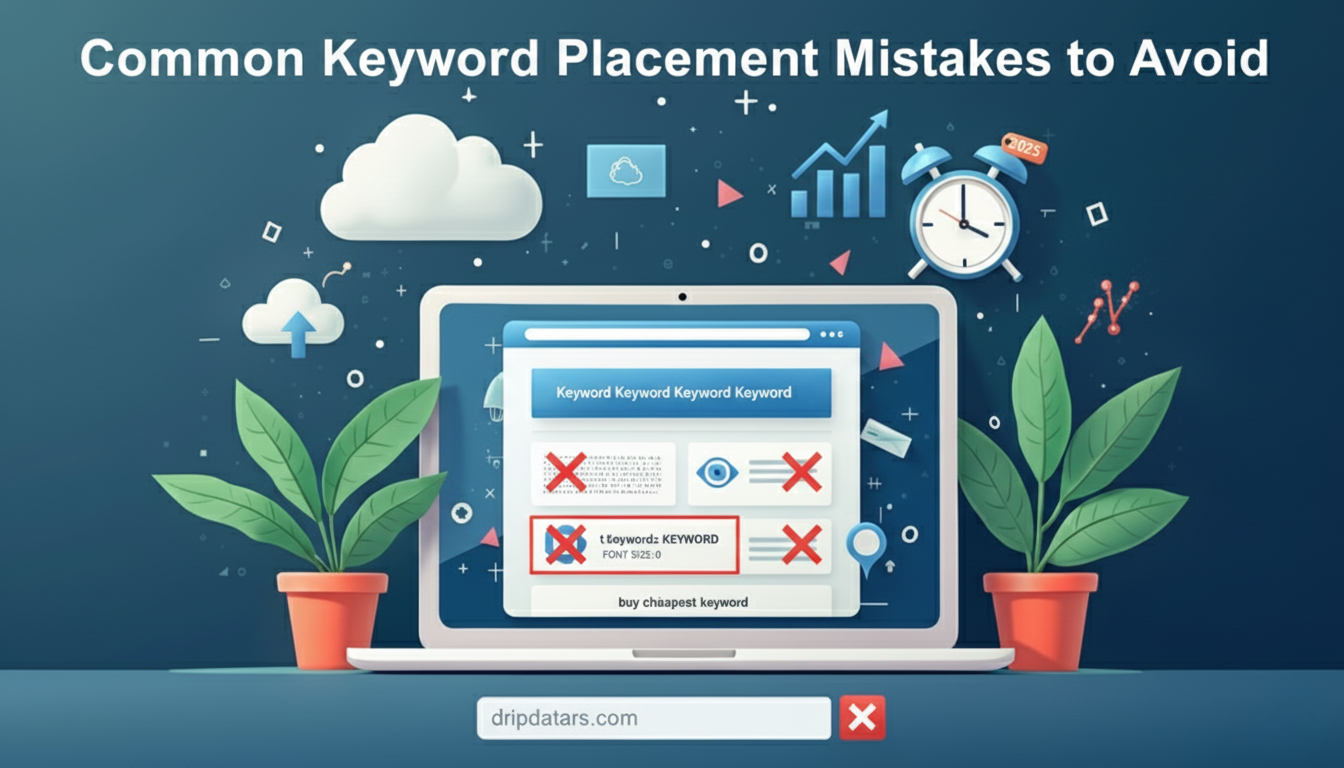
Keyword stuffing remains the most frequent placement error despite years of algorithm updates. Repeating keywords unnaturally triggers spam filters and creates terrible user experiences. Search engines now penalise obvious over optimisation rather than rewarding it.
Hiding keywords in white text, tiny fonts, or off screen elements violates search guidelines. These black hat techniques can result in manual penalties or algorithmic suppression. Focus on legitimate placement strategies that add genuine value.
Many content creators neglect keyword placement in crucial elements like title tags and H1 headers. They focus solely on body content while missing high impact opportunities. This approach leaves easy ranking improvements on the table.
Using only exact match keywords without semantic variations limits your content’s reach. Modern algorithms reward topical depth through related terms and concepts. Expand beyond single keywords to cover topic clusters comprehensively.
Placing keywords in illogical locations where they don’t fit context confuses both users and algorithms. Every keyword instance should serve a purpose and read naturally. Forced placement damages credibility and engagement metrics.
Advanced Keyword Placement Techniques
Schema markup provides structured data placement opportunities for keywords and entities. Implement FAQ schema with keyword rich questions and answers. This technique increases featured snippet chances while reinforcing topical signals, allowing you to capture additional SEO benefits through enhanced visibility.
Create content clusters with strategic keyword placement across interconnected articles. Use primary keywords on pillar pages and related terms on cluster content. This architecture builds topical authority through coordinated keyword distribution.
Analyse top ranking competitors to identify successful placement patterns for your keywords. Use SEO tools to see where they position terms in titles, headers, and content. Adapt these patterns to your unique content and brand voice.
Test keyword placement variations using different content versions or A/B testing tools. Measure which placement strategies produce better rankings and engagement metrics. Continuously refine your approach based on performance data.
Tools and Resources for Keyword Placement Analysis
Surfer SEO analyses keyword placement patterns in top ranking content for your target terms. The tool provides specific recommendations for where and how often to use keywords. This data driven approach removes guesswork from placement decisions and shows how an effective SEO tool can simplify optimisation.
Clearscope offers real time keyword placement suggestions as you write content. The platform highlights opportunities to add related terms in optimal locations. Writers can optimise placement without sacrificing content quality or flow.
SEMrush Position Tracking monitors how placement changes affect your search rankings over time. Track specific pages to see which placement adjustments improve performance. This feedback loop helps refine your placement strategy continuously.
Yoast SEO provides basic keyword placement analysis for WordPress users. The plugin checks title tags, meta descriptions, headers, and content distribution. While less sophisticated than premium tools, it covers fundamental placement requirements.
.
Measuring Keyword Placement Success
Track rankings for your target keywords before and after implementing placement changes. Use rank tracking tools to monitor position movements over 30-60 day periods. Look for correlation between placement optimisation and ranking improvements.
Analyse organic traffic growth to pages where you’ve optimised keyword placement. Compare traffic patterns to similar pages without optimisation. This comparison reveals the real world impact of your placement strategy.
Monitor click through rates from search results as an indicator of effective title and meta placement. Higher CTRs suggest your keyword placement appeals to searchers. Test different placements to maximise click appeal.
Review engagement metrics like time on page and scroll depth after placement optimisation. Better keyword placement should help users find relevant information faster. This improved experience typically reduces bounce rates and increases conversions.
Final Thoughts
Most SaaS, B2B, and agency teams treat keyword placement like guesswork: sprinkle terms, hope it ranks, and wonder why results aren’t consistent. At Drip Ranks, we knew there had to be a better way. So we built a system, not a service.
Forensic audits uncover your highest ROI opportunities, revealing exactly where strategic keyword placement can improve rankings and capture demand at every stage of the buyer journey. Intent-mapped content ensures keywords are naturally integrated in titles, headers, and opening paragraphs, while scalable execution multiplies results without increasing headcount. The difference? Your SEO becomes measurable, repeatable, and revenue-focused, not a black box that relies on guesswork.
Drip Ranks analyses your content structure and implements proven keyword placement strategies that drive measurable ranking improvements. Contact us today for a free SEO audit and discover how strategic keyword placement can multiply your organic traffic.