
Search engine optimisation feels overwhelming when you first start. You hear terms like meta tags, backlinks, and crawl budgets, and wonder if you need a computer science degree to make sense of it all. The truth is simpler than you think. SEO for beginners starts with understanding how Google works and what your audience searches for online.
Over 90% of online experiences begin with a search engine, yet most small businesses never rank on page one. They create content, launch websites, and wait for traffic that never arrives. The problem isn’t their products or services. They simply don’t know the fundamental rules that search engines use to decide which pages deserve the top spots.
This guide walks you through every essential SEO concept you need to start ranking. You’ll learn how to find the right keywords, optimise your pages, build authority, and track your progress. No technical jargon, no confusing theories, just practical steps that work in 2026.
By the end of this article, you’ll know exactly how to compete for visibility, attract qualified visitors, and grow your online presence. Whether you run a local bakery or a consulting firm, these SEO principles apply to your business right now.
What is SEO for Beginners?
SEO for beginners refers to the foundational practices that help websites rank higher in search engine results pages. It explains what is SEO and involves optimising your content, technical setup, and online reputation so Google understands what your site offers. When done correctly, SEO brings targeted visitors to your pages without paying for ads.
Think of SEO as a conversation between your website and search engines. Google sends automated bots called crawlers to read your pages, analyse your content, and determine if you deserve to rank for specific queries. Your job is to make that conversation clear, relevant, and trustworthy.
Unlike paid advertising, SEO builds long term value. Once you rank for a keyword, you can maintain that position for months or years with minimal ongoing effort. This makes SEO one of the most cost effective marketing channels for new businesses and established brands alik
Why is SEO Important for Your Business?
SEO drives organic traffic, which converts at higher rates than almost any other channel. People who find you through search already have intent. They typed a question or problem into Google, and your page appeared as the solution. This built in relevance means they’re more likely to trust you and take action.
Ranking on page one establishes credibility and authority. Studies show that users perceive top ranking websites as more trustworthy and professional. Even if your competitor has a bigger budget, you can outrank them by following SEO best practices and providing better content.
SEO also delivers measurable ROI. You can track every visitor, keyword, and conversion using free tools like Google Analytics and Search Console. This data shows you exactly which pages perform well and where to focus your efforts next.
How Does SEO Work?
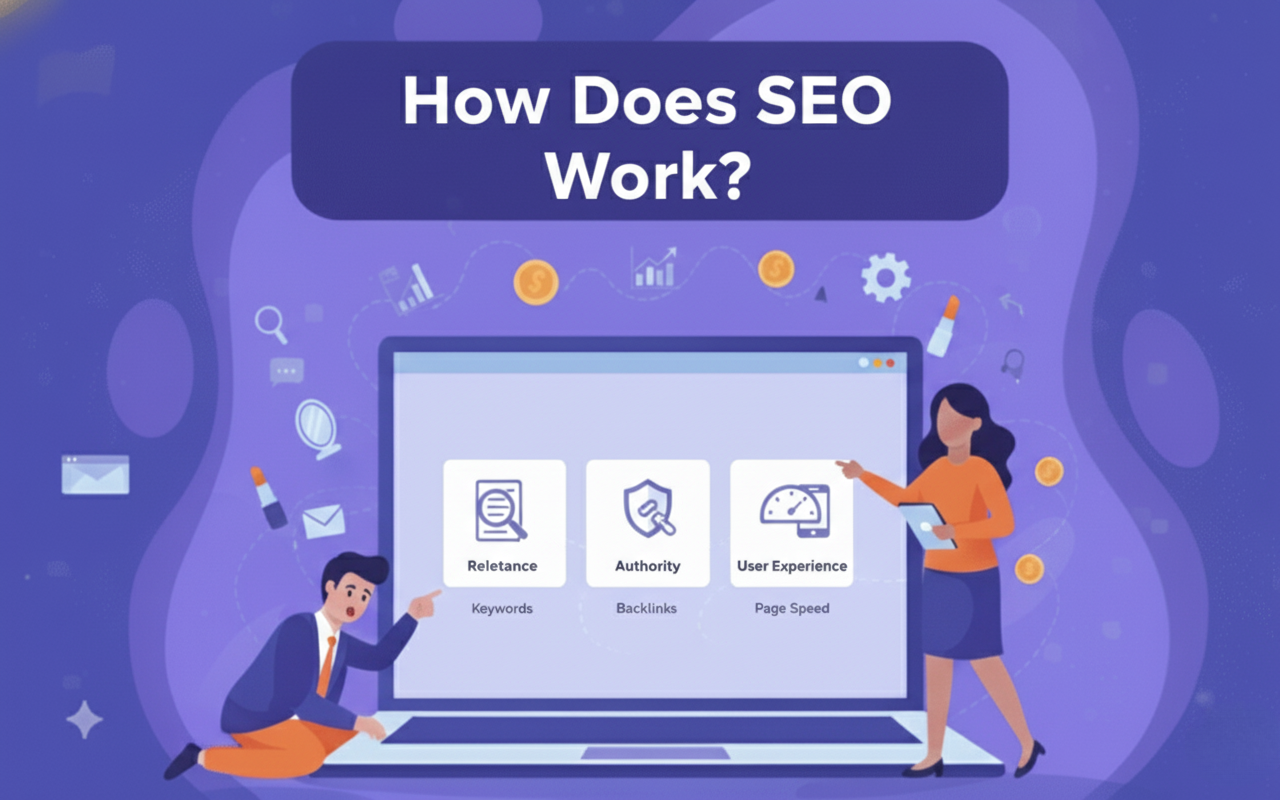
Search engines use complex algorithms to evaluate billions of web pages and decide which ones to show for each query. Understanding how SEO works helps you align your site with these algorithms. Google considers over 200 ranking factors, but most fall into three main categories. These are relevance, authority, and user experience.
Relevance means your content matches what the searcher wants. Google analyses your title tags, headings, body text, and images to understand your topic. If someone searches “best running shoes for flat feet,” Google looks for pages that specifically address that need, not just general shoe reviews.
Authority refers to your website’s trustworthiness and expertise. Google measures this through backlinks, which are links from other websites pointing to yours. High quality backlinks from respected sites signal that your content deserves attention. Social proof, brand mentions, and consistent publishing also contribute to perceived authority.
User experience includes page speed, mobile friendliness, and content structure. Google tracks how visitors interact with your pages. If users click your result and immediately return to search, Google assumes your page didn’t satisfy their query. Pages that keep visitors engaged and provide clear answers rank higher over time
Finding the Right Keywords for Your Content
Keyword research is the foundation of every successful SEO campaign. You need to know what phrases your potential customers type into search engines. These phrases become your target keywords, guiding your content creation and optimisation efforts.
Start by brainstorming topics related to your business. If you sell organic skincare products, your topics might include “natural face moisturiser,” “organic acne treatment,” or “chemical free sunscreen.” Use free tools like Google Keyword Planner or Ubersuggest to check search volume and competition for each phrase.
Focus on long tail keywords when you’re just starting out. These are longer, more specific phrases like “best organic moisturiser for sensitive skin.” They have lower search volume but also less competition. You can rank for these terms faster and attract highly qualified visitors who know exactly what they want.
Look for keywords with commercial or transactional intent. These phrases indicate someone ready to buy or take action. Words like “buy,” “best,” “review,” “near me,” and “affordable” signal strong purchase intent. Ranking for these terms brings customers, not just browsers.
Optimising Your Pages for Search Engines
On-page SEO refers to everything you control directly on your website. This includes your content, HTML tags, images, and internal links. Proper on-page optimisation tells search engines what each page is about and why it deserves to rank.
Place your primary keyword in your title tag, preferably near the beginning. Keep titles under 60 characters so they display fully in search results. Write compelling titles that include benefits or hooks to improve click through rates. Your meta description should be 75 to 155 characters, include your keyword, and provide a clear reason to click.
Use H2 and H3 headings to structure your content logically. Include your primary keyword in at least one H2 heading. Headings break up text, improve readability, and help search engines understand your content hierarchy. Each heading should introduce a new subtopic or answer a specific question.
Write naturally while including your keyword and related terms throughout your content. Aim for 1 to 2% keyword density. Avoid stuffing keywords unnaturally into sentences. Google recognises semantic relationships, so use variations and synonyms to cover your topic comprehensively.
Optimise images by compressing file sises and adding descriptive alt text. Alt text helps visually impaired users and tells search engines what your images show. Include your keyword in alt text when relevant, but always describe the image accurately.
Building Authority Through Link Building
Backlinks remain one of the strongest ranking factors. When reputable websites link to your content, they pass authority to your site. This vote of confidence tells Google your pages provide value worth sharing.
Create linkable assets that naturally attract backlinks. These include original research, comprehensive guides, infographics, and tools. Content that provides unique value earns links because others want to reference it. Case studies, data driven articles, and expert roundups also perform well.
Reach out to relevant websites in your industry. Offer to write guest posts or collaborate on content. Make sure any site you target has genuine authority and relevance to your niche. One quality backlink from an industry leader beats dosens of links from low quality directories.
Monitor your backlink profile using tools like Ahrefs or Moz. Disavow toxic links from spammy sites that could harm your rankings. Build relationships with other website owners and content creators. Networking leads to natural link opportunities and partnerships that benefit both parties.
Common SEO Mistakes Beginners Make
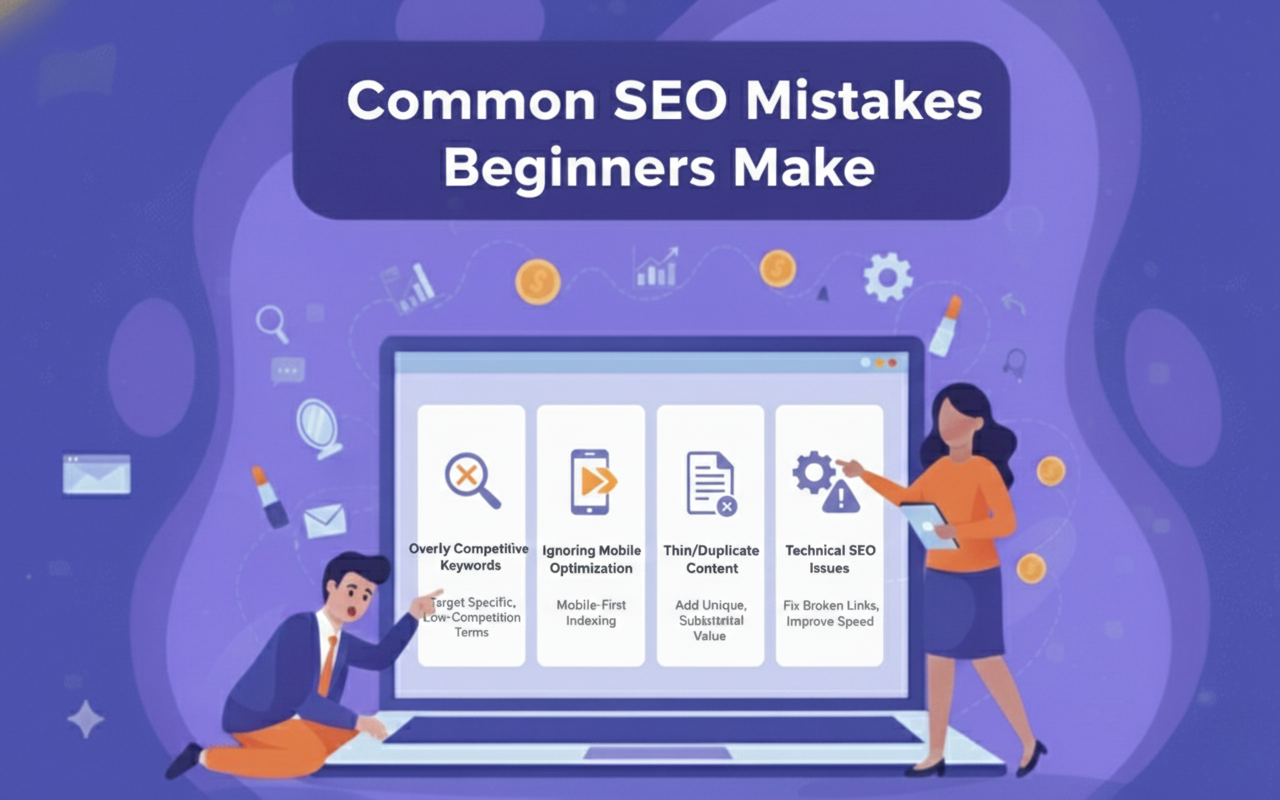
Targeting keywords that are too competitive wastes time and resources. New websites rarely rank for broad, high volume terms like “marketing services” or “best laptops.” Start with specific, low competition keywords where you can actually compete. Build authority gradually before targeting harder terms.
Neglecting mobile optimisation hurts your rankings and user experience. Over 60% of searches now happen on mobile devices. Google uses mobile first indexing, meaning it evaluates your mobile site first. Make sure your site loads quickly and displays properly on smartphones and tablets.
Publishing thin or duplicate content damages your credibility. Every page should offer substantial, unique value. Aim for at least 300 words on basic pages and 1,200 plus words for cornerstone content. Avoid copying content from other sites or duplicating your own pages with slight variations.
Ignoring technical SEO issues creates barriers for search engines. Broken links, slow page speed, and poor site structure confuse crawlers and frustrate visitors. Use Google Search Console to identify errors. Fix crawl issues, improve load times, and create a clear site hierarchy with internal links.
Measuring Your SEO Success
Google Analytics shows you how much organic traffic your site receives and which pages perform best, highlighting the SEO benefits of your efforts. Set up goals to track conversions like form submissions, phone calls, or purchases. Monitor bounce rate and time on page to gauge content quality and user engagement.
Google Search Console provides data directly from Google about your search performance. You can see which keywords drive impressions and clicks, your average position for each query, and any technical issues affecting your site. Use this data to identify opportunities and fix problems quickly.
Track keyword rankings using tools like SEMrush or Ahrefs. Monitor your position for target keywords weekly or monthly. Watch for trends rather than daily fluctuations. Rankings change constantly, but overall upward movement indicates your SEO efforts are working.
Measure backlinks acquired over time. Growing your backlink profile steadily shows increasing authority. Focus on the quality of linking domains, not just quantity. A few links from high authority sites matter more than hundreds from irrelevant or low quality sources
Advanced Tips for Faster Results
Schema markup helps search engines understand your content better and can earn rich snippets in search results. Add FAQ schema to question and answer content, How To schema to step-by-step guides, and Article schema to blog posts. Rich snippets increase visibility and click through rates significantly.
Target featured snippets by answering common questions clearly and concisely. Use a direct answer format of 40 to 50 words. Structure content with numbered lists, bullet points, and tables when appropriate. Featured snippets appear above position one, giving you maximum visibility.
Optimise for voice search by targeting natural, conversational queries. People speak differently than they type. Include question based keywords like “how do I,” “what is,” and “where can I find.” Voice search often pulls from featured snippets and local results.
Update and refresh old content regularly. Google favors fresh, current information. Add new sections, update statistics, and improve formatting on your existing pages. This signals continued relevance and can boost rankings without creating entirely new content.
SEO for beginners doesn’t require advanced technical skills or huge budgets. You just need to understand what search engines want and consistently apply proven strategies. Start with thorough keyword research, optimise your pages properly, and build authority through quality content and backlinks.
Track your progress using free tools and adjust your approach based on real data. SEO takes time, but every small improvement compounds. Most businesses see meaningful results within three to six months of consistent effort.
Most SaaS, B2B, and agency teams treat SEO like a guessing game: publish content, hope it ranks, and wonder why it doesn’t generate predictable leads. At Drip Ranks, we knew there had to be a better way. So we built a system, not a service.
Forensic audits uncover your highest-ROI opportunities, and intent-mapped strategies capture demand at every stage of the buyer journey. Scalable execution multiplies results without increasing headcount. The difference? Your SEO becomes measurable, repeatable, and revenue-focused, not a black box that requires blind faith.
Drip Ranks handles the technical complexity so you can focus on running your business. Contact us today for a free SEO audit and discover exactly what’s holding your site back from page-one rankings.